Friday, January 7, 2022

Another Important Dimension of Army Life: Food

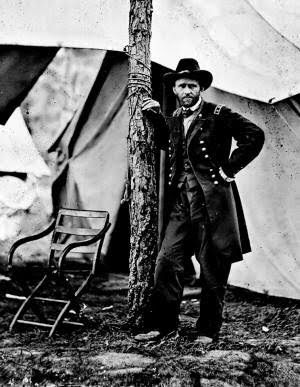
General U.S. Grant
In the Autobiography of Ulysses S. Grant, published by Mark Twain, the 18th president showed that although he was a man of few words in real life, he knew how to tell stories. And he had plenty to tell. 

Grant, like many of the Generals who fought in America's Civil War, learned about leadership and strategy while serving in the Mexican War. Like Lee, he had been a captain under General Zachary Taylor. Grant's skill with horses played an important role in the Battle of Monterrey, which was a major victory in the Northern Campaign. 

During his time in the service of General Taylor, Grant observed first-hand the importance of managing and protecting your supply lines. The key supplies necessary for waging war at that time were guns and artillery, and food. Soldiers need nourishment and an army of any size won't last all that long without it.

* * * 

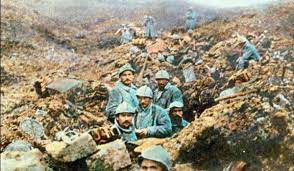
French soldiers in the trenches of WWI
The above came to mind as I was reading Poilu: The World War I Notebooks of Corporal Louis Barthas, Barrelmaker. The horrors of that first "great war" were many. In part, they were amplified by the lack of experience with the new technologies that were put into effect during that war, chief of these being the machine gun. For some insane reason the French and British generals imagined that if you sent enough soldiers with bayonets across open fields into enemy gunfire, some would succeed in getting through. The futility of this tactic took its toll, and took a long time to register.

What's worse is how many times the fundamental realities of warfare were neglected by those in command. The need for nourishment and the need for rest. Sometimes, Barthas writes, the men would go five days without eating. Sometimes they would be kept awake all night digging more trenches and then be expected to fight all day.

* * *

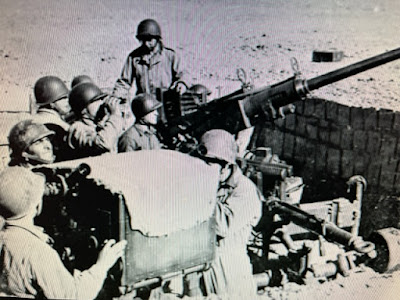
U.S. troops in North Africa, WW2
When my father-in-law served in World War II his initial role was as a cook. He had been a market gardener here in Duluth, and when the call came to serve overseas, he appreciated the opportunity to "see the world." He crossed the Atlantic on the first transport convoy of untested G.I.s heading to the European Theater. Their first stop was Northern Ireland where everything was green and the memories rich. During their months there the soldiers continued training. 

"Bud" (as he was called) became a cook. His role in the army was to make the meals that would keep the army strong. 

After their time in Northern Ireland was complete the troops were deployed to Northern Africa. Bud continued as a cook until the army switched from making meals to opening cans. Bud complained about this, evidently, and he was re-assigned to be an anti-aircraft machine gunner. 

Here is a poem Bud wrote about that period in which he was a cook.

The Cook's Life

We're just crummy cooks that slave every day,

From two in the morning, till nine P.M. with little more pay.

No one appreciates whatever we cook,

"Stew and beans again!" they holler with just one look.


I wish some would starve or start eating hay,

It would lessen our work, and shorten our day.

They think we’ll bake cake, what will be next?

For the appreciation we get, what do they expect?


They come around crying for a bite to eat,

It's between meals now, don't try to cheat.

The Quartermaster is stingy about a man's ration,

So we dish it out after that fashion.


Stew and beans is what they gave us,

So please don't make such a big fuss.

Eat it and like it, or starve on the way,

Because that’s what’s on the menu today.


Wilmer A. "Bud" Wagner
And There Shall Be Wars


* * * 

I am imagining that one day wars will be fought with drones. 

Wednesday, January 5, 2022

Turning the Page on 2021--Topics I Started to Write about but Didn't Follow Through On or Publish

Yes, I'm gonna be a star! How 'bout you?
Photo courtesy Gary Firstenberg
I don't always post something every day, though most days I've made an attempt. Usually there are two or three ideas waiting in the wings. Sometimes I develop them a little, other times I just make an outline with a URL directed to the trigger story that sparked the idea.  

Sometimes I go back and finish an idea that I'd previously set aside. Other times, the seed thoughts whither and die on the vine. What follows is a list of these incomplete or undeveloped ideas. I find it interesting that in January I'd planned to write about Peter Jackson's upcoming Get Back project involving The Beatles, and that by year's end everyone was talking about it. 

If this list bores you, feel free to turn the page. I won't be offended.

TOPICS I STARTED BUT DID NOT COMPLETE OR PUBLISH 


JANUARY

The Incredible Variety and Depth of the Dylan Catalog

Watching the Wheels Go Round: John Lennon Sidesteps the Rat Race

The Beatles: Peter Jackson and Get Back.  (Jan 6)

Bohemian Rhapsody

Too Much Regulation

A Brief History of My Car Accidents

Fallout

On January 20: Stay Home

Peter Schweizer Reveals the Depressing Degree of Corruption in Washington

Budget Deficits: When Should We Begin to Be Concerned

The Biggest Problem with Cancel Culture: There’s No Mercy

More Russell (as in Bertrand)

Politics and Dogma

The Duke Lacrosse Case

200 Motels: Zappa Revisited

You’re Aging Well

Still in Awe of Dylan


FEBRUARY

Fresh Ideas in Taxation: Universal Minimum Wage and Flat Tax Thoughts

Fun with Numbers: The Numeral 3

Orwell's Road to Wigan Pier

Facts vs. Interpretations

Financial Thoughts

Housing the Poor

More Thoughts On Cancel Culture

Our Schools Are a Mess, So We Tell Americans How Bad China Is

Notes from C.S. Lewis, A Life: Eccentric Genius, Reluctant Prophet

The Important Role of a Father

Tolstoy's The Forged Coupon

Weather Modification: Is Someone Playing with the Weather?

Daniel Botkin’s Psurrealistic Psalms

EVs and the Future of Transportation

Another Cut from Empire Burlesque—I’ll Remember You

Only Lovers Left Alive Is No Ordinary Vampire Flick

Eugenics and Socialism

Vasily Kandinsky

It’s Getting Scarier and Scarier

The Value of Rituals and Routines

Intelligence Doesn't Necessarily Make One Compassionate or Wise: The Eugenics Movement

Executive Orders: The Good, the Bad and the Ugly

The Brouhaha Over When Harry Became Sally

The Three Worst Supreme Court Decisions In U.S. History

The Future of Public Education


MARCH

Are You Feeling Lucky?

Tech Tuesday: The Genomic Revolution

The Marvin Hagler Many Never Knew

Michael Lewis' The Fifth Risk Sheds Light on Part of What Went Wrong These Past Four Years in Washington

Cry Me A River

I Am Not Your Negro--The James Baldwin Documentary

Reedley Relocation Camps of World War II

Sam Cooke & Dylan

A Few Personal Thoughts on the American Revolution, Viet Nam and History: Comparisons, Contrasts

Some Thoughts Regarding Appropriate Timing 


APRIL

Financial Euphoria and the Madness of Crowds

There Are No Guarantees

Recalls Continue to Be a Bane to the Auto Industry

An Example of Spin or Just an Oops?

How to Make a Living as a Writer

A to Z Challenge: Blonde On Blonde

A to Z Challenge: Abortion

A to Z Challenge: Boko Haram

Low Income Housing: Is It Time to Stop Jawboning?

The Fall of Rome 

Billy Collins, Roze & Blud

Interesting Lines from Recent Movies

My Own Version of You: Dylan's Frankenstein Story

Ah Look at All the Lonely People

Mixed Messages

Starting with This: A Quote from The Rules of the Game


MAY

Specificity and Ambiguity: A Trademark Dylan Technique

A Deeper Dive: I Pity the Poor Immigrant

Frost Museum To Show Most Comprehensive Display of Dylan's Art 

Ernest J. Breton and the Secret to Creative Innovation and Invention

Standing Up for Nuclear

My Take on Yesterday (The Movie)

12 Monkeys: Hollywood Entertainment or Prescience?

A Half Hour Happy Hour with the Folks from Heaven’s Door

Interesting and Unusual People I’ve Known Across the Years

The 1619 Project Creates New Narrative that Is Crafted and Crafty


JUNE

The War Poems of C.S.Lewis and Bob Dylan’s Staunch Anti-War Stand

The Jobs Situation: Another Illustration of the Law of Unintended Consequences

WSJ Review of “Damage” Is Right On Target, So Direct

Favorite Borges Short Stories

The Influence of Johnny Cash, the Connector

Ripples in a Pond: Finding Our Own Identity and Making Our Own Mark

Cronkite 

Community Reacts Negatively to More Jobs Coming

A Little Bit Scary? Report Your Friends and Family Members Who Might…

A Few Insights About Quarreling

The Interconnectedness of the Global Economy

Reputation Can Be an Asset or Liability: The E.F. Hutton Scandal

Tales of Brave Ulysses

It’s My Life, Do I Know What I Want?

“My Country Right Or Wrong” Is Wrong

Bob Dylan’s “The Wicked Messenger”

Favorite Films of All Time


JULY

Things We Don’t Like to Talk About: Suicides and Nervous Breakdowns

Massive College Debt: When Illusion Meets Reality

Wally Funk and the Blue Origin

Why Are We Still Wearing Masks?   

Ohio University Commencement Exercise Music, 1974

Orwell’s Homage to Catalonia: A Review

Injustice and Violence: First Hand and Second Hand

Orwell, Churchill and Totalitarianism

What Will the Year 2040 Look Like in America?

The Future: Frightful or Delightful? The Power of the State Continues to Expand

Churchill and Orwell: Insights and Takeaways


AUGUST

10 Great Dylan Songs? By What Criteria?

Why Punctuality Matters

The Board Game Market

Everything Is Broken

It’s a White, White, White, White World

The Future of Education

A Strategy for Standing Out from the Herd

Kentaro Kobayasha, The Rolling Stones and the PC Police

Penny Lane, the Oxbow Incident and the Problem of Mobs

The EV Dilemma

Springtime in New York: Just In Time for Fall


SEPTEMBER

A Pair of Orson Welles Anecdotes

Is the Cancel Culture Craze America’s Latest Fad? How Long Will It Continue

A Glimpse of Bob Dylan’s Malibu by Martin Newman

Harvard Prof Richard Thomas Says, “Start Your Dylan Tour In Duluth”

Are Homeless Camps the New Normal?

Rex Lex: What It Means and Why It Is Important

The EV Reality Check

Re-Thinking Universal Basic Income

Colonel Parker

A Shoplifting Epidemic


OCTOBER

Who Knows Where the Time Goes

An Hour of Poetry for People Who Say Are Not Into Poetry

Virtue Signaling

Clickbait Headlines

Planning to Go Carbon Free? Say Goodbye to Bubble Gum

My Favorite Things: Movies (Updated)


NOVEMBER

The Roberto Clemente Museum in Pittsburgh: Worthy Tribute to a Great Ballplayer and a Great Human Being

The Rough and Rowdy Road Tour Is Underway: Dylan Still Has That Old Black Magic

Bad Grammar (Examples)

Greenwashing: What It Is and How It Happens
Minyades: Richard Höglund’s Breakthrough Paintings Excavate the Darkness

Tech Tuesday: A.I. Is Already Taking White Collar Writing Jobs. Who's Next?

AI Writes a Review of a Book About AI

Jack Dorsey Steps Down from Twitter Leadership

The Sheer Madness of the Battle of the Somme


DECEMBER

The Great Escape: Estonia 1944

Of Boosters, Vaxx Mandates and Government Hypocrisy

Bob Dylan 'Retrospectrum' artwork show opens Nov. 30 in Miami

Niall Ferguson on the Gods of History

L A Confidential Brings to Mind Stories from Nevada Bob's Memoir

Immersive Art Outside of Museums -- Why Are the Critics Cringing?

Redistricting: The Times’ Spin Seems Misleading To Me

Northland Influences on Bob Dylan


* * * 

Looking at the photo of the starfish at the top of the page has me wondering why, why, why are there so many stars in the sky? And what is the point of all this beauty under the sea? What an amazing universe. 
Tuesday, January 4, 2022

A Battalion Agent: War Poems Tell Stories

I recently mentioned that since Christmas day I've been wading through several books on World War One. In addition to Poilu (Barthas) and The Great War (G.J. Meyer), I've been dabbling in Goodbye To All That by Robert Graves. 

Graves, who was an officer in that First World War, became a career writer and poet. It's interesting to me how many soldiers were inspired by their wartime experiences to write poetry. Somehow simply writing descriptive sentences feels inadequate to the emotions unearthed by life's biggest disruptions, whether it be love or standing on death's door. 

Hence the great number of poets that emerged from those inexpressible experiences on the Western Front. Graves is numbered among a long list of poets from that war, many whose lives ended there. Wilfred Owen, Siegfried Sassoon, Charles Sorley, Edward Thomas, Rudyard Kipling, Ford Maddox Ford, Jessie Pope, Guillaume Apollinaire, Robert Service, Archibald MacLeish and countless others felt a compulsion to capture their inward angst in poetic verse.

Robert Graves served as an officer at the nightmare known at the Battle of the Somme. He was so badly wounded in this conflict that a notice was sent home to his family that he had died. Days later he wrote a letter home and the family announced in the paper that he was not dead, but alive. 

* * * 

Reading about Robert Graves has led me to read some of the poetry of others from that war. Ultimately this brought to mind the poetry my father-in-law wrote during his 3+ years of service in World War Two. 

Wilmer "Bud" Wagner was a cook, machine gunner and ultimately a battalion agent in the North Africa and Italy campaigns. Throughout the war he kept a diary in pocket-sized notebooks. He also took photos and wrote poetry. The following is titled The Battalion Agent. You will notice that he uses the word "peep" here and throughout his memoir And There Shall Be Wars. When the soldiers returned to the States after the war, they were surprised to find these all purpose vehicles were now called jeeps. 

Here is his poem about life as a battalion agent.

A Battalion Agent


He works at night, in rain and grime,

Moonlight or not, he tries to find

His Battalion's position, it's quite a game.

Good roads or bad, it's all the same.


He's tired as heck, when he lays down at night,

Then someone wakes him, he's in for a fight.

He's given a message, what he doesn't know.

He starts for his peep, he's off to the show.


The road is rough, and it might be wet,

But he's rough and tough, he's always set.

His peep will respond at the slightest touch,

For he's bound to get there, it matters much.


If the road's under shell-fire, or being strafed by a plane,

Through wheat or mine field, it's still the same.

His faithful peep must take him through,

It's his very best friend, he keeps it like new.


He can use the lights, but he'd rather not,

Perhaps they would get him on the spot.

He travels along at a pretty good clip,

In spite of the roads, with all those dips.


He's wide awake now for he has to be,

There's a truck stalled on the road, so hard to see.

He slams on his brakes, missed it by an inch,

Turns to his left, off again, this job is no cinch.


It's still the right road, seems he tells by the smell,

With all these turns and trails, it's hard to tell.

He gets through the bomb craters, lucky as yet. 

Lucky this African Campaign hasn't cost him his neck.


There's the road, that he takes to the right,

But what meets his eyes, is an awful sight.

A bridge blown out, where the water is deep,

But nothing can stick his faithful peep.


He throws it in low, the motor roars,

Shoves the front wheels in gear, as he nears the shore.

Puts the transfer in low range, tramps down the gas,

He's going through, and he's going fast.


Now where is the place where this officer  lives?

He has a sealed message to him he must give.

There's his pup tent, but he's sound asleep.

How can he do it, with the noise of that peep?


The message is taken, and he starts back,

It's cold and raining, the night is still black,

So again he goes through, it's the same either way,

Oh, why can't he do this during the day?


He finally gets back, his nerves are on edge,

Turns off his peep, heads for his bed,

Drops on the ground and prepares for a snooze.

Leaves on his clothes, he's too tired to move.


He awakes in a daze, someone yelling his name,

"You have a message to deliver, don't mind the rain."

He jumps in his peep; his mind is still hazy,

For he's a Battalion agent, and it's driving him crazy.


Wilmer Wagner
And There Shall Be Wars


* * * 

I think it noteworthy that at the war's end he received a commendation for always having gotten the message through. A portion of the citation reads:
o
"Cpl. Wagner continuously drove blackout over unfamiliar roads that were almost impassable due to rainfall. Cpl. Wagner furnished valuable information as to the conditions of the roads and the location and use of short cuts. Frequently roads traversed by Cpl. Wagner were subjected to heavy enemy harassing fires and information regarding minefields was lacking, but Cpl. Wagner never failed to reach his destination in time for operational changes and new plans to be effected. Cpl. Wagner's
 courage and devotion to duty reflect great credit upon himself and the military service."

Charles L. Bolte
Major General, U.S. Army,

Commanding.

Monday, January 3, 2022

Niall Ferguson On Disasters and What We Can Learn from History

This past year I discovered the writings of Niall Ferguson, a Scottish historian and author of numerous insightful books about the growth and decay of civilizations and the challenges we have lived through and will face again tomorrow. Here are some notes from a YouTube video I listened to titled "Humanity must learn from its mistakes."

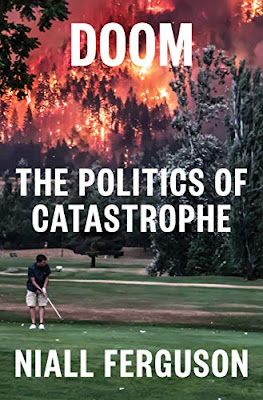
He had been invited to Budapest to discuss his most recent book, Doom: The Politics of Catastrophe. The discussion took place in September 2021, which helps give context to the introductory portion about Covid-19. I will leave a link at the end of this page in the hopes that you will watch it in its entirety. 

* * *
Ferguson began by reminding us that from the start of this pandemic we have seen two narratives in operation. On the one hand there were those who said it was not a big deal, or maybe even a hoax. On the other hand we had those saying that the pandemic is as bad as the Spanish Flu and we must lock people in their homes or millions and millions will die. Some experts estimated that it would kill 2.2 million people in the U.S. alone.

By September last fall it was apparent that the Covid-19 impact lies somewhere between the extremes. How bad has it been? 

Clearly is has been as bad as the H2N2 SARS outbreak of 1957-58. But it has not been nearly as deadly at the Spanish Flu. According to Ferguson, the Spanish Flu of 1918-19 killed two percent of the population of the whole world. By way of contrast, the death toll for Covid-19 has been only 0.06 percent, less than one-tenth that of the Flu of a century ago.

* * * 
Ferguson states that even if we don't accept the lab leak theory for Covid-19, China is culpable because of its attempt to cover-up the disaster in its early stages.  The cover-up helped enable the spread.

The point he drives home, however, is that there will always be disasters and we can't predict when they will happen. We don't know when the next war or major earthquake will occur, but we do know they will come. It then becomes our responsibility to improve the ways we cope. 

The U.S. Health Department had a 36-page preparedness plan on hand in the event of a pandemic like this. It became useless in real life. Things don't unfold as anticipated. It only provided officials with a false sense of security. Why do these big government agencies fail?

The host of the program asked Niall Ferguson why he didn't wait till the pandemic was past before publishing this book. Then he could have had more information about how it was resolved.

Ferguson replied that he is 57 years old and Covid will be here for another century. There is plenty to be learned from the past with regards to disasters, and to be gleaned from the past 18 months that can be applied here and now. "Applied history really matters," he said. "We must learn from these disasters."

Niall Ferguson is a Senior Fellow at Stanford and Harvard. The 48 minute talk has many insights that are worth pondering.

* * * 
Related Links

Saturday, January 1, 2022

The British Generals at the Dawn of World War One

Generals French, Joffre and Haig
taking a tour of the front. Joffre (center)
was leader of the armies of France.
"Apparently, with the possible exception of Field Marshal Lord Herbert Horatio Kitchener, Secretary of State for War in 1914, none of principal British generals clearly foresaw the scale and industrial intensity of the war that descended on Europe. Or the technological changes that would transform the nature of the battlefield, the role of the soldiers who fought there, and the minds of the men who commanded them."--Western Front Assn.

Heading into Christmas I had three books recommended to me about World War One. On Christmas day I began reading Poilu, and the next day G.J. Meyer's comprehensive A World Undone. Poilu is a memoir and a view of the war through a single lens. Meyer's book is an epic documentation of the war from all the various fronts, including the political leaders, the soldiers, the battles, and the weapons of each nation involved. 

At various interludes throughout the book the author inserts concise overviews of the caliber of generals leading the various armies, including their backgrounds and their readiness for what they were about to experience. This is an excerpt from Meyer's chapter on the British generals.

General John French
August 3, 1914. The Times of London reported that Field Marshal Sir John French had been chosen to lead the British expeditionary force to France and the war. The newspaper was eager to make its readers understand that this was the best of all possible appointments in the best of all possible armies.

As an exercise in wartime propaganda, and helping the public take pride and its Armed Forces in the man chosen to lead them, this report was exemplary. As a reflection of the truth, it did not fall far short of absurd. In the art of generalship, French was rarely better than ordinary.


Meyer's description of the British generals is almost comical. With one exception they were all gentlemen from the gentleman class who knew nothing about war. Here's what he had to say about these leaders of the British Expeditionary Forces (BEF).

This was the system that had produced John French and the other generals at the head of the BEF. They were gentleman almost to a man, the only exception being the aforementioned William Robertson, who by then had risen, almost miraculously, to Major General. As gentlemen they adhere to a code that elevated amateurism in all things to a supreme virtue. Hunting, shooting, polo and weekend gatherings at country estates were proper activities. Too much seriousness--for example, too much reading, even about military history and strategy--definitely was not. The kinds of disputes over theory that wracked the French officer corps were unimaginable north of the Channel, where nobody in uniform cared about theories. The right connections, and a proper degree of aristocratic insouciance, were highways us to advancement. They made the army and especially attractive career for the less intelligent sons of the very best families.  (page 214)

In short, they were willfully ignorant, yet gloried in their stature as "generals."

How many American businesses are run by the same kind of leaders? Just curious.

* * * 

Related Links

The Great War: So Much Sorrow and for What? Lessons from the Horror.


Popular Posts