Showing posts with label CES. Show all posts

Tuesday, January 11, 2022

CES 2022: Welcome to the Future

Photo courtesy Karl Strom
For 20 years I attended the Specialty Equipment Market Association (SEMA) trade show in Las Vegas which takes place the first week of November each year. Many of those years I would be on a shuttle or bus and would here someone say, "CES must be in town." SEMA was one of the few shows that rivaled the Consumer Electronics Show when it came to drawing mobs of that size to Vegas. 

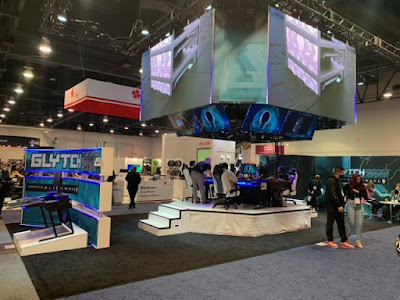
CES is the perfect way to kick off a new year. The scale of this show is mind-boggling. Over 2200 exhibitors were on hand this year, with media representatives in the thousands flying in from 159 countries. 

It must have been around 20 or so years ago that the top six companies in the Fortune 500 were automakers and oil companies. How things have changed. Tech companies like Apple, Microsoft, Google and others have become fixtures as the world's leading brands. Ironically, cars are becoming tech companies. Before 1968, when VW introduced the first transistorized, electronically controlled fuel injection system, cars were essentially mechanical devices. 

Photo courtesy Karl Strom
This year's CES showed just how sophisticated technology has become with regards to motor vehicles, autos and trucks. The future was on display in all its forms. 

I asked Karl Strom, editor-in-chief of The Hearing Review, to send me his impressions of this year's CES. Here's a brief summing up that he provided this past weekend.

"The CES conference is like walking into the future. Lots of dazzling displays from the huge corporations like Sony, Panasonic, and Samsung, but also a couple thousand exhibits from established companies to start-ups. My beat is hearing healthcare but it’s difficult not to get sidetracked by the incredible ideas that range from self-driving cars to watering the lawn. There are essentially 3 giant convention halls with one of them being almost completely devoted to fledgling companies and start-ups from all over the world, often grouped by countries or geography. It’s a physically and mentally exhausting event, but fascinating!"

* * * 
TECHNOLOGY touches us in such a wide variety of ways today. Here are some of the categories of products you will find at CES:
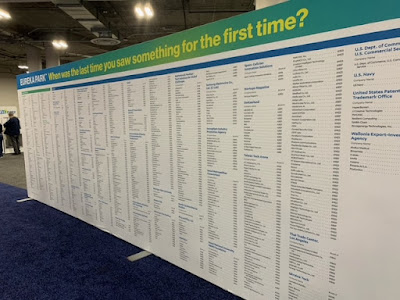
Photo: courtesy Karl Strom
Accessibility

Products and services with innovative features that enable ease of use by disabled persons to improve accessibility for seniors and persons with disabilities, regardless of cognitive, mobile, hearing or visual abilities.


Computer Hardware & Components

All desktop and notebook computer systems and internal components, including tablets, e-readers and mobile computing devices.


Computer Peripherals & Accessories

Products designed to connect to and extend the functionality of desktop or portable computer systems or to enable, enhance, connect, power and/or maintain desktop or portable computer systems.


Cybersecurity & Personal Privacy

Products that serve to protect, enhance, manage or analyze digital security. This is a category that has really grown in recent years. Our next war may be a cyber war rather than nuclear.


Digital Imaging/Photography

Products designed to enhance the visual experience and/or allow the user to capture, store and edit still images or video.


Drones & Unmanned Systems

Consumer drones, consumer UAVs and other unmanned systems that are able to fly, or otherwise move and be operated from a remote location. May include secondary features such as photo/video recording, movement of materials, mapping, wayfinding, search/rescue or other capabilities. It even includes agriculture an energy applications. 


Embedded Technologies

Silicon chips and integrated components designed to provide functionality to finished products or subassemblies.


Fitness & Sports

Products designed to test, monitor or analyze the fitness and/or sports performance of an individual. May also include sports apparel and equipment that incorporate sensors or other technology.


Gaming

Products (hardware, software, services) designed to allow one or more users to interact with electronic games.


Headphones & Personal Audio

Devices that allow users to listen to audio content, such as music, radio, video, TV, gaming and/or telephone conversations. The devices may incorporate microphones for user voice response or input and do not have to be designed for use with any specific type of device. 


Health & Wellness

Consumer devices, mobile apps and other technologies designed to monitor and analyze health, support well-being, manage disease or provide a therapeutic benefit.  


High-Performance Home Audio/Video

Separate audio components and speakers that provide for optimal performance and sound reproduction. Items are typically produced in limited quantities and are often handcrafted.


Home Appliances

Products that have a primary function of being used in the home, including major and portable appliances. Products technology may provide home heating and cooling, comfort, aesthetics, convenience, food storage and preparation, and/or cleaning. Products should have significant electronic functionality as a central part of the item’s operation. 


Home Audio/Video Components & Accessories

Systems and/or speakers designed to provide playback, storage and/or distribution of audio and video signals and content in the home, as well as products designed to enable, enhance, connect, and/or maintain home audio/video systems and components. 


In-Vehicle Entertainment & Safety

Products and components designed to be part of an in-vehicle entertainment and information systems.


Mobile Devices & Accessories

Smartphones (iOS and Android) and other mobile handsets. Also includes accessories designed to work with mobile devices, such as cases or chargers. 


Portable Media Players & Accessories

Well as the accessories for enabling, enhancing, connecting, carrying and/or maintaining them.


Robotics

Programmable or otherwise Intelligent machines capable of performing specific tasks or replicating human movement or interactions.


Smart Cities

Products, applications and technologies designed to be incorporated in a smart city, or smart venue, technology ecosystem. Smart cities are designed to improve and enhance the lives of the citizens and businesses who inhabit them.


Smart Home

Products and accessories that provide a home's inhabitants with sophisticated monitoring and control over the building's functions, and/or enable users to maintain a wired or wireless data network. May also include products and software that provide for remote or conditional access.


Photo credit: Greg Bulla. Creative Commons
Software & Mobile Apps

Programs or operating systems meant to be used on a computer system or mobile device, whether being distributed for free or at a cost.


Streaming

Devices, apps or services that allow a user to transmit audio and/or video over a network. Offerings can be free or at a cost.


Sustainability, Eco-Design & Smart Energy

Innovative features incorporated into products that are environmentally-friendly. For example, efficient and clean energy use, manufacturing processes that reduce use of harmful environment substances (e.g., lead, mercury), durability/end of-life (e.g., reuse, refurbish, remanufacture, recycle), resource conservation, facilitate the powering and/or charging of consumer electronic products.


Vehicle Intelligence & Transportation

Automotive and other transportation products and services that integrate technology into the driving or riding experience, whether by enhancing safety, navigation, improving the passenger experience or enabling self-driving functionality.


Video Displays

Devices whose primary purpose is the display of video content, excluding items marketed and sold primarily as computer monitors.


Virtual & Augmented Reality

Products (hardware) designed to provide a virtual or augmented reality experience for one or more users.


Wearable Technologies

Electronic devices worn by the user that may include sensors, processors, displays or other technology for the purpose of sensory enhancement, measurement, computing or data-collection/transmission.

* * * 

So many things go through my mind when I read through this list. Here are few off the cuff, not in order of importance:

In a world where there has been a fair amount of criticism of consumerism, how much of this technology is necessary and how much is luxury? As we become increasingly immersed in technology--from social media to virtual reality to streaming media and interactive games--is there a danger of becoming so removed from nature and the natural world that it will damage our humanity in some way? 

On the question of luxury and necessity, what are our expectations for the future of consumption and natural resources? How does this impact the have nots of our world? 

I personally find all this applied creativity to be a dazzling spectacle. Will the next generation be dazzled or simply take it for granted? 

When I read about the decline in math skills in our country, what impact will this have in the advances and maintenance of all these incredibly complex systems? When everything we own requires technical knowledge in order to fix it, what then? Auto mechanics who wrench engines will not be qualified to fix EVs. Will we have a shortage of qualified people to keep all our cars and toys running?

What does all this say about the jobs of the future? One thing is apparent, there is going to be no end of opportunity for those willing to hit the books and stay abreast of the changes that are coming. In 20 years from now there will be jobs that don't even have a name yet. 

For optimists, this is an amazing time to be coming of age. For pessimists, the future is shrouded in a fog of doom. 

When I was in school there were doomsayers as well. That didn't stop the possibility thinkers. Its probable that a visit to CES will offer ammunition for both camps. As the saying goes, we'll see what happens. 

How many of you who were coming of age in the Sixties could have imagined Bob Dylan or the Rolling Stones still performing concerts in 2021? 

May you stay forever young!

Sunday, August 15, 2021

Classic Car Shows Are American as Apple Pie

The Mustang was introduced at the 1964 World's Fair

There is really nothing more quintessentially American than the car.
--Warren Buffet

As I drove up to the recycle center yesterday I saw that all the fire engines and equipment were lined up in front. The recycle bins are located behind the Munger Volunteer Fire Department.

I drove past the trucks and clustered fire fighters and saw that the Munger Town Hall parking lot was full of vehicles as well, filled with an array of classic street rods, rat rods, muscle cars and more. 

Here are a few images that may give you a feel for what these kinds of events consist of: eye candy.

Tuesday, January 7, 2020

TechTuesday: Cars Go High-Tech at CES

I've been attending trade shows and conventions for more than three decades and the one constant in every industry has been change, much of it driven by technology. I attended my first trade shows while working for a manufacturer in the screen printing industry. The Screen Printing Association held an annual SPAI convention at various locations around the country from Houston to L.A. to Atlanta and elsewhere. As the digital world expanded, this association had to change as well and became the Screen Graphics Association with its annual convention called the SGAI.

While with AMSOIL I attended the Specialty Equipment Manufacturing Association (SEMA) show in Las Vegas each year from 1986 till my semi-retirement in 2017. SEMA is an association of companies in the automotive aftermarket. The first shows were held in the basement of the Los Angeles Dodger baseball stadium. Eventually they outgrew this space and moved to Las Vegas where it continued to flourish, becoming the third largest event in this city that never sleeps.

When SEMA is in full bloom every hotel is occupied as more than 160,000 people come into town. 3300 members of the media show up from countries all over the world to see what's new from the 2400 exhibiting companies showcasing their wares on 1.2 million square feet of exhibit space.

The big daddy of Las Vegas conventions, however, is CES, the Consumer Electronics Show. I remember once being on a bus in Vegas during SEMA and having someone ask me, "Is CES in town?" The man asked because the city was bursting with people and he knew CES was always a massive disruption. I replied that CES is at the beginning of January, that "this week is SEMA."

Mustang Mach E. I'm thinking of Corinthian towers when I look at this.
THE BIG EVOLUTION in the auto industry is how much technology is embedded in cars these days. As result, we have automakers attending the CES show in order to show off the inroads they've made incorporating consumer electronics into their new and future designs.

We've been hearing about the Internet of Things (IoT) for a while now. If you were at CES this week, you'd have a chance to see just how far this brave new world has come.

According to a story on Seeking Alpha, here are the four main themes related to auto-tech development:
Automated driving today and Autonomous mobility of the future
Data monetization and the transformation of the Connected Car
Evolution of in-vehicle user experience, from software to virtual assistants
Architecture transformation from ECUs to servers on wheels

These cars ain't what they used to be. They know what you want even before you know.

One paragraph in the story concerned me, though. Advertisers will be zeroing in on your car as another way to send you marketing messages. It's one thing to get ad-blocking for your TV and you iPhone. Do we now have to buy and download ad-blocking services on our cars now, too?

I'm curious about a few other issues, such as how often we'll be stuck somewhere because our car is updating its software or running checks on its operating system (OS).

At least 10 automakers are here in Vegas this week. Here are the first four listed in an Autonews story.

BMW will tease an interior concept for its i3 EV. The "BMW i3 Urban Suite," said to have the "relaxed feel of a boutique hotel," features a large seat with footrest, a screen that flips down from the headliner and a "personal Sound Zone."

Fisker will debut the Ocean all-electric crossover, powered by an 80-kWh lithium ion battery pack and with an expected range of up to 300 miles. Production should begin at the end of 2021.

Ford will show its 2021 Mustang Mach-E crossover. The highly anticipated mass-market EV, with a 300-mile range, is Ford's answer to Tesla, General Motors and others that beat it to the electric market with long-range EVs.

GM will demo integration of Amazon's Alexa Auto voice-controlled virtual assistant in a new Cadillac CT5. "Alexa. Find me the nearest public bathroom."

Other manufacturers with cool goodies at this show include Honda, Hyundai, Mercedes, Nissan, Renault and Toyota.

Read the rest of this story here.

"Alexa. Fetch my car and take me to the river." 

Tuesday, January 8, 2019

Tech Tuesday: CES Takes Over Las Vegas

For the past 20 years I've been going to Las Vegas each November for the Specialty Equipment Manufacturers Association (SEMA) show, the third largest week-long trade show each year. It's the auto aftermarket, and at one time the automobile industry was indeed the heartbeat of America.

There are so many trade shows in Vegas you really can't keep track of them all. A few are so enormous that they strain the resources of this city that never sleeps. One of these is the Consumer Electronics Show (CES).  Here are last year's numbers.*

Number of exhibiting companies: 4400
Square feet of show space utilized: 2.7 million
Number of industry attendees: 182,000
Number of these from outside U.S.: 63,000

This is a tech show, so you know that there's a social media explosion.

@CES and #CES mentions: 1 million
Views of Snapchat Live Story: 49 million
Views of official CES videos on Facebook: 224,000

Last year, media impressions exceeded 71 billion.*

* * * *
Having fun yet?
People love trade shows because this is where the action takes place as regards what's new. In fact, they have a Eureka Showcase in which 1000 startups show their latest creations.

High tech toothbrushes, headbands and kitchen utensils are among the variety of ways technology is touching every conceivable part of our lives. If you live in an urban area where UPS leaves packages on your doorstep, you may wish to consider the Maximus Answer DualCam Video Doorbell, which  has two cameras to watch for guests and people stealing packages off your doorstep. (My son lost a bicycle once in Savannah. It was chained to the front porch railing. A thief took the whole railing. If only he'd had this video doorbell.)

The latest from SONY.
If you're deep into Green tech, there's a power watch that runs on solar and body heat. That's pretty futuristic, and it is already now.

And let's not forget video games and VR, laptops and foldable phones, computers and graphics cards, and upgrades to every kind of device you already have. "Alexa, can you get that for me?"

* * * *
You can track the action as it unfolds by following #CES2019 on Twitter.

Here's something you may want for your aging parents, a connected shoe that sends message if you fall.  The inventor was probably worrying about his mother one night.

My guess is they have a number of tools for counting how many steps you take while you're out there. At SEMA there were 10 miles of aisles to see it all. CES is even larger. And if you're out there, make sure you bring a change of shoes. I always found liner pads on inside to be helpful as well.

One more tip. The maxim "What happens in Vegas stays in Vegas" has been replaced by a new one. "What happens in Vegas stays on Facebook." A word to the wise.

Enjoy the show. Especially knowing that the rest of the world is jealous.

* CES 2018 by the numbers

Tuesday, January 10, 2017

Tech Tuesday: On the Cutting Edge of A.I. Research with Kathryn Hume of Fast Forward Labs

Our human fascination with the future is nothing new. 19th century dreamer Jules Verne's imagination ran far ahead of what 19th century science could pull off. Was that a nuclear-powered submarine Captain Nemo was commandeering? Isaac Asimov, sci fi and hard sci author of more than 300 books wrote about travel in outer space as well as the evolution of intelligent machines. Today we have whole career fields in areas that once lived only in the realm of imagination.

With the 2017 Consumer Electronics Show behind us, it seems a good time to introduce Kathryn Hume, Director of Sales for Fast Forward Labs, a leader in the realm of artificial intelligence.

EN: I like your slogan “Reporting on the Recently Possible.” It implies that you’re on the cutting edge. What are a couple examples of the “recently possible” that you have been sharing or involved with.

KH: By "recently possible," we refer to technologies for which it's more possible to build working, real-world software products today than it was one year ago, and for which it will be even more possible to build great products in the next few years. Our expertise lies in artificial intelligence (A.I.), so we focus our research on software that uses data (as opposed to other new technologies like the blockchain). And it's very exciting to work in A.I. these days, as it's recently gotten the attention not only of geeks interested in cognition, but also of the investment and enterprise community.

One trend that excites us is deep learning, a particular machine learning technique that does a great job processing rich, complex data like images and text. We've built two prototypes using deep learning. The first automatically classifies the pictures on a user's Instagram feed according to their content, enabling users to organize visual information in a different way than the chronological stream. This is similar to tools Google is offering to organize your photos according to who's in them (separating, say, friends and family). These techniques have wide applications for medicine (automated radiology), insurance (automated claims adjustments), self-driving cars (processing environmental data), and robotics (improving usability at home or in manufacturing lines). We also studied using deep learning to automatically summarize text, in our Brief prototype. This uses a slightly different deep learning architecture that can track long-term dependencies in a sequence of data. If we think about it, text is basically a sequence of letters combined together to make meaning: neural networks make mathematical models of language, and use properties of these models as proxies for the linguistic meaning we use to communicate with one another.

EN: What are some ways that businesses are applying A.I. today?

KH: The first generation of A.I. products largely consisted of recommender systems (with companies like Amazon recommending products based on past behavior of similar buyers) and classification systems (things like spam filters or sentiment analysis to help brands monitor consumer preferences). These past few years have opened up a host of new and exciting A.I. applications: we now see companies using things like natural language generation to automatically write factual news articles from structured data sets (like company earnings reports) or using conversational bots to answer standard customer service inquiries.

That said, A.I. is vastly overhyped. We find that most of the large enterprises we work with are just beginning to build solid data programs, and having a lot of data, formatted in a way that's digestible by algorithms, is a condition to succeed with A.I. Many companies are starting to form intuitions about processes they may automate using A.I., but simply lack the data required to train a system that will perform reliably. We encourage companies to think hard about collecting as much data as possible now so they can eventually mimic human processes using machines in the future. Once this happens, it could lead to automation of many routine processes, including those that seem to require specialized human judgment, like finding relevant documents for a lawsuit.

EN: What is currently happening in publishing in the realm of A.I.?

KH: One of the big publishing trends is automated article writing using natural language generation. Software can now write company earnings reports, local weather reports, sports reports, basic crime reports, and other factual, descriptive news. But these systems are far from being able to do interpretative journalism, and companies like the Associated Press have developed ethical standards for when it's right - and not right - to use natural language generation, given the nuances of including subjective viewpoints.

We are also seeing publishers explore automated summarization tools to provide readers as many articles as possible about a relevant topic. For example, we're working on a project with a financial news provider that will summarize news about a particular stock ticker for investors.

The biggest concern right now in publishing and A.I. are filter bubbles and fake news. Many algorithms based on recommender techniques optimize for user engagement, and end up showing people content that aligns with polarizing ideologies, curtailing our ability to be empathetic, democratic citizens. In the wake of the 2016 election, there are efforts across the A.I. community to develop tools that can identify false content and encourage higher-quality journalism in the new networked age.

EN: What are some ways that A.I. will make the world a better place?

KH: A.I. research is a wonderful, meaningful activity. The very process of developing systems that seem to think, that seem to be intelligent, forces us to ask deep questions about how our minds work, who we are, and what society we want to create and inhabit. I entered into this discipline because I was fascinated by the fact that computers processed meaning in language so much different than we do. Neural networks, the linear algebra matrices behind deep learning, transform words into long strings of numbers (vectors), adding them and multiplying them in ways that mirror analogies and predicate logic in words. How amazing is that? How amazing is it to see the abstract structure we can tease out of the messy world of communication?

And yet, we should not think that A.I. systems, just because they are computational, are somehow more objective and rational than we subjective humans are. A.I. systems are built on data, and data contains the traces of human actions and human society. There is a lot of attention being paid these days to the ethical pitfalls of A.I. systems, which can perpetuate social biases, denying credit to individuals based on socioeconomic factors, advertising lower-paying jobs to women than men based on historic salary data, or even recommending a longer sentence to a criminal based on their race. These algorithms are not evil. They are neutral magnifying glasses of the inequalities in society we don't want to admit exist. As with many challenging experiences in life, we need to have the courage to look these issues head on and do what we can to address them. Only then can we empower ourselves to use A.I. to create the society we want, not the one we have.

Besides that, A.I. will lead to wonderful conveniences and opportunities for discovery in our personal lives. We can use data to navigate cities we visit, allowing the system to find the restaurant we'd want based on our historic preferences or draw our attention to a movie we'd regret missing. Mobilizing trends across populations will improve cancer research, which currently suffers from a dearth of clinical trial information. Personalized medicine is another huge avenue that will take off in the next 10 years. Self-driving cars are poised to change how we live in cities. The possibilities are endless.


EN: What is the mission of Fast Forward Labs?

KH: Fast Forward Labs is an applied research company focused on commercializing A.I. research coming out of academia. We build prototypes that transform ideas presented in abstract academic research papers into tangible, real-world products, and write reports that explain how these technologies work. We also advise large enterprises and startups building cutting-edge products on their A.I. strategies, helping them apply new A.I. techniques in their own business environments.

EN: What will be the big A.I. story from the Consumer Electronics Show in Vegas this year? (Asked last week going into CES.)

KH: The big A.I. story at CES this year will exist somewhere in the realm of robotics, but likely be hidden from view. There will be an amazing product with an intuitive user interface that solves a big problem, and this product will be powered by data without the end user's even knowing it involves A.I. A good example of this is Google Maps, a seemingly boring, deceptively simple tool that has literally changed the way we navigate physical space. The backend includes complex data and engineering work we don't see, as we're focused on the tool solving the problem it was built to solve.

* * * *
Fast Forward Labs is based in Brooklyn, New York. Learn more and see the near future here.

These are very exciting times we live in. Let's see what happens next.

Tuesday, January 5, 2016

To Catch a Glimpse of the Future Go To CES

Las Vegas is the trade show capital of the world. Not only are there shows in the Las Vegas Convention Center year round, there and shows in many of the casinos in town. The first trade show I attended in Vegas was a trade show on trade shows at Bally's Casino. For 19 years I have had the privilege of attending the Specialty Equipment Manufacturers Association (SEMA) Show, one of that city's major annual events featuring companies in the auto aftermarket. Shows like SEMA give companies a chance to tell their stories and show off their new product. Historically this show generates much of the content that ends up in magazines that enthusiasts and people in the auto industry read.

Times have changed though. In the old days the announcements and energy generated by trade shows took months to filter into the pages of publications you subscribed to. Today we live in a world of instant everything, and that includes trade show news and stories about what's new.

This week Las Vegas is host to one of its biggest shows, the Consumer Electronics Show (CES). People who love gadgets love the CES. Who doesn't want to see what's new at Apple and Sony and Samsung? What will the next smart phones look like?

Sometimes there's a lag between idea and reality so that what whets our appetite doesn't appear till ten or twenty years later. One example is VR, Virtual Reality. I guess this has developed significantly since first toyed with in the early 90s. The magic of voice recognition software that I first read about in the 90's is almost commonplace now. Take Siri, for example.

Me: Siri, what is the future of voice recognition software?
Siri: Let me have a look. Here's what I found on the web for "the future of voice recognition software."

I had my first Mac in 1987, and my first experience with the World Wide Web in the spring of 1994 (several months before Netscape). It's apparent when you read about what's happening in the realm of technology, we've come a long way, baby.

Wired magazine has been a major resource for staying up-to-date with what's happening, continuously showing us what is coming and when. One article a few years ago in Wired was about how all our devices would be talking to each other. I scoffed, and am being proven wrong. Bluetooth and sensors are changing the world.

All this to say is the Computer Electronics Show is a-happening this week, and if you get a chance take a few minutes to see what your tomorrows will look like by reading the stories coming out of Vegas this week. Here's a link to one place you can start.

Meantime, life goes on all around you. And it's increasingly electronic. Are you ready?

Popular Posts