Showing posts with label More Blood More Tracks. Show all posts

Sunday, May 14, 2023

Jeff Slate, Revisited -- Celebrating Dylan and More

I first interviewed Jeff Slate in the spring of 2019. Minnesota Dylan fans were still on a high regarding the release of Dylan's More Blood More Tracks, Volume 14 in the Bootleg Series, of which Slate wrote the extensive liner notes that accompanied this set. His considerable writing credits include work in such high-profile publications as The New Yorker, Wall Street Journal, Esquire and Rolling Stone. 

One gets the impression that his real joy comes from performing as a New York City-based musician. This coming Friday Jeff Slate and friends will be be celebrating Bob Dylan's 82 birthday at Hill Country Live! on 30 West 26th Street in the Big Apple. I suspect it will be another night to remember, with classic Dylan along with the deep cuts Slate likes to bring to the foreground. 

He'll then take it to the road, joining in on some of the action here during Duluth Dylan Fest, including a May 25 evening at Sacred Heart where he'll be joined by Mark Bosch. That particular event will open with Paul Metsa and Sonny Earl. (Details below)

EN: The last time we spoke was in 2019. A LOT has happened since that time including the pandemic as well as the opening of the Bob Dylan Center in Tulsa. How did the pandemic impact you? Did you do more writing because performing venues were on hold?

Jeff Slate: Like everyone, I was hugely affected by the pandemic. And as a musician, I was out of work, at least until outdoor shows returned, midway through. In the meantime, I did about 50 online concerts, and recorded and released them. In fact, it was a 2-disc set, and the second disc was all Dylan covers. I also wrote and recorded a new album, The Last Day of Summer, which will be out later this year, with a bunch of my musician friends who were also sitting around with nothing to do. We then finished it up in person once the pandemic had eased up and everyone was vaccinated. I was also able to write about music, including some pieces about the effects on the industry with people like Jeff Tweedy, Jon Batiste and Brandi Carlile.
 
EN: What impressed you most about what you saw at the Bob Dylan Center in Tulsa? 

JS: Wow, that's a hard one. I suppose the handwritten lyrics are the most special to me, as are little things like Dylan's 60s address book. But I think what impressed me most was the sheer volume and scale of what's there. We knew Dylan worked a lot and worked hard throughout his career, but seeing the breadth of that in real terms -- in all the many items they have from across his 60-plus year career -- really brought that home.

EN: You've had the privilege of getting to know quite a few important names in the music industry. Did you say that it was a chance meeting with Ringo of the Beatles that opened those doors? How did that come about? 
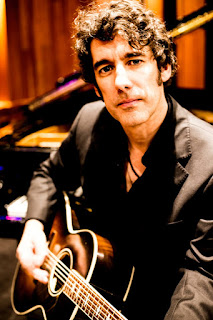
JS: I've had very good luck throughout my life and career of meeting good people -- and the right people, I guess -- at the right time. I met Steve Jones of the Sex Pistols when I was a teenager, and he named my first professional band. I met Pete Townshend in the early 90s and he and his brother Simon helped produce some recordings for me that helped launch me to a wider audience. But when the business changed in the mid 00s, and I had young children at home, I turned to writing about music to supplement my income. I had a pretty formidable Rolodex, and through Pete I had met Zak Starkey, Ringo's son, who drums for The Who. I had met Ringo through him a few times, so I was able to connect early on in my writing career. Once I'd interviewed him for Esquire, things really started to happen.

EN: You're performing at a May 19 Bob Dylan Birthday Bash in New York before joining us in Duluth. Is this a traditional event you've been part of or something new? Who's on the slate for that one? 

JS: We've been doing a birthday show here for nearly a decade. It started out as a show called Dylan Obscura, in which we'd do only songs that were deep cuts, or that Dylan hadn't played live in forever, or that he'd never even recorded. That morphed into a much broader themed show that celebrates his artistry and entire legacy. The band is great -- Mark Bosch from Mott the Hoople on guitar, who will be with me in Duluth, Johnny Pisano from Dylan's friend Willie Nile's band -- and we invite some of our favorite performers to do a few songs. It's about a three hour show, but honestly, with all the great songs to choose from, we could go on much longer.

EN: Who are the nicest people in show business that you've worked with or interviewed? 

JS: I know they say don't meet your heroes, but that simply hasn't been my experience. Obviously, everyone has their bad days, but even then you can tell that's all it is. If that's the case, and you're genuinely interested and sincere, more often than not they loosen up and enjoy the moment with you. So, there have been one or two memorable run-ins with stars I just didn't like, personally, but by and large everyone I've crossed paths with has been exceedingly gracious and kind.

EN: When Dylan wrote "Political World" he also wrote "Everything's Broken." Both songs were featured on Oh Mercy. What's the relationship between music and politics in your career? 

JS:
(George, Paul, John and Ringo each went different directions on that rocky divide.) My first band were influenced by The Beatles and The Who and The Kinks and the Small Faces. But we soon discovered The Clash and The Jam, and that really changed the equation for me. John Lennon and Joe Strummer and Paul Weller and Bob Marley were each revolutionaries at heart, even though they were also pop stars. They didn't check their intellect or politics at the door, nor did they resort to dumbing things down to appeal to a broader audience. So, that's always been my model. Not to be that famous, necessarily, but to be true to myself and be honest about my feelings about the world, both in interviews and in my music. In the 00s that was probably less obvious, but during those lockdown shows I mentioned I spoke openly about my view of the world and even raised money for social justice causes that I thought were crucial to bettering the world around us. As always, whenever I opened my mouth, I'd get some hate mail. But the overwhelming response was remarkably supportive. Even the people who didn't 100% agree with me told me how much they appreciated my openness and honesty. Given the political climate we're all living in that was incredibly heartwarming.
  
EN: Bob Dylan's relationship with George Harrison seems to have been pretty special. What have you learned from writing about George that the average person might not know? 

JS: George really was a dark horse, as he called himself. He was open and inquisitive and funny but also didn't suffer fools. He was both Yin and Yang. He also, even among the other Beatles, grew incredibly over the course of his career and life. I guess that's obvious to most people, but I don't think it's appreciated enough because, as a Beatle, it was almost expected.

* * * 

Join us May 25 at Sacred Heart for An 
Evening with Jeff Slate

with Paul Metsa & Sonny Earl Opening
Sacred Heart Music Center
201 West Fourth Street, Duluth
7:00-9:00 PM | Tickets $15 in advance at Eventbrite


You can follow Jeff at https://jeffslatehq.com/

See the full Duluth Dylan Fest schedule here at 
https://duluthdylanfest.com/duluth-dylan-fest-2023/

Wednesday, December 15, 2021

Almost Wordless Wednesday: Paul Metsa and Sonny Earl at the Brewhouse

"Paul is a great artist. I always look forward to playing with him.”--Lyle Lovett 

"The boys are back in town." 

After a lifetime making music in the Twin Cities, Paul Metsa has now made his residence in Duluth. For the time being he is living in the downstairs portion of the duplex where young Bobby Zimmerman lived (upstairs) in the house now owned and being renovated by Dylan memorabilia collector and archivist Bill Pagel.

A few weeks back I caught wind that Metsa was performing at the Brewhouse. What made the event a treat was that he was accompanied by his sideman Sonny Earl on harmonica. If you've never heard Sonny Earl play the blues harp... well, to put it straight, I'm willing to bet there ain't no one you'll ever hear that is better. Yes, there are some great players out there, and I won't suggest Sonny is the best that ever was, but he's equal to that guy, and he was here at the Brewhouse.

Paul Metsa pulled in an appreciative crowd and did his thing, looking at home in the space he occupied, singing songs he'd written and shedding a few copies of his 2011 memoir Blue Guitar Highway to make room for his latest volume which should be available soon. 

The caliber of people he has associated with and performed with says a lot about who he is. Since I've already said more than I intended for this "Almost Wordless Wednesday" I'll post a few photos and leave my book review for another time.


"The beauty of obscurity is you never go out of style."
--Paul Metsa


I first met Sonny Earl on the set of Paul Metsa's Wall of Power show in Minneapolis when they were celebrating the release of Bob Dylan's Bootleg #13, More Blood, More Tracks. The occasion was special because the Minnesota musicians who did the session work with Dylan were finally being acknowledged for their contributions to an album which some have called Dylan's best work, Blood on the Tracks.

You can read some of the stories from that afternoon in the Wall of Power studio here:

Inside the Studio: Still More Blood and Tracks as Paul Metsa's Wall of Power Features MN Music Luminaries

Paul Metsa's Wall of Power Featuring Dylan's BOTT Studio Musicians from Sound 80 (Part 2)

Lives Touched and Energized: Dylan, Blood, Tracks, Metsa--Part 3

Monday, March 4, 2019

A Rewarding Visit with Writer-Musician Jeff Slate, Author of the Liner Notes for More Blood More Tracks

"I think hustle is highly underrated. If you work really, really hard, good things will come to you."--Jeff Slate

Jeff Slate. Photo: Rachel Naomi.
Last fall was a pretty dramatic time here in Minnesota Dylan circles. The Bootleg Series Vol. 14: More Blood More Tracks was almost here. Rumors of this vindication for the Minnesota musicians who contributed to half the songs on Blood on the Tracks, via detailed session notes and corrected credits, were about to be validated. I must have heard rumblings since early spring, always with the accompanying whisper, “Don’t put it on your blog yet.”

In October, by the time I saw Jeff Slate’s article in The New Yorker, I’d already pre-ordered my copy, like every other Dylan fan, no doubt. Slate’s piece, titled Bob Dylan’s First Day with “Tangled Up in Blue,” did what it was supposed to do: It whet the appetite.

Slate, who had been tapped to write the liner notes for More Blood, More Tracks, was the perfect choice to write this Culture Desk intro to Dylan’s latest Bootleg Series set. This wasn’t Slate’s first high level byline, though. He’s been producing strong copy for Esquire, the Wall Street Journal and other high profile publications for quite some time. As a musician himself—selected to appear at Tulsa’s Bob Dylan Symposium in June—he also has an insider’s edge in writing about the music scene.

This past week I caught up with Jeff in order to learn more about his story. For young people with a passion and a dream, there are some real takeaways here.

EN: Every fan has an entry point into Dylan. What was yours?

Jeff Slate: My brother-in-law was a jazz musician, and a Dylan fan, too. I inherited a number of records from my brother and sister, and him. He had the Great White Wonder and a lot of the lesser known work, but he gave up on Dylan around Slow Train Coming, so I ended up with his collection. I was 12. I didn’t come to Slow Train with any baggage, and I loved it, along with everything else. At that age you’re listening to the record more than the words. At that same time I was discovering The Clash, Small Faces and The Who, I was discovering Dylan. It was an amazing time and a real education.

Photo: Rachel Naomi.
EN: When did you see Dylan for the first time?

JS: In the mid-80s I was in school in New York City and Bob was coming through with Tom Petty. I couldn’t get anyone to go with me so I went by myself; scalped tickets. So the first time seeing him was July 1986. When he performed alone with an acoustic guitar it felt like you could hear a pin drop, and it was like he was speaking directly to me.

This was something completely different for me. So I poured through the used record bins and picked up everything I didn’t have.

EN: What sets Dylan apart from everyone else?

JS: Dylan was one of the people who more than any other people – outside Lennon – seems to be an endless well of inspiration. But I don’t care about the details of his biography. I am a real believer in accepting the person that he wants to present to us. That character is such a unique and special artistic creation. The depth of those characters… he’s ever changing, ever morphing. In 200 years all the other contemporaries will be forgotten, except Dylan and The Beatles. We have had the rare opportunity to have this first-hand experience.

When the 90s came along, the Bootleg Series and the explosion of CD and DVD bootlegs made it possible for us all to have this endless treasure trove of inspiration. That wealth of information has set him apart, too, and he stands apart from almost all the other icons of the past 100 years. This isn’t like some small cultural character. His music speaks to everyone, from my kids to my mom.

EN: Do you have any favorite Dylan albums?

JS: I go through spurts where I might be listening to everything by The Clash or Cream. But if you listen to Dylan, in different eras it’s as though he’s a different artist. From the start Dylan re-created himself in all these different eras. John Wesley Harding is extremely timely in 2019. It is an album that resonates right now in this crazy political world. But it’s also completely unlike anything he did before or after. He’s gone through so many characters and evolutions. Then he re-created himself as a torch singer in this decade. Any artist would give their right lung to be able to reinterpret someone else’s music in that way.

EN: What are you listening to now?

JS: I’ve been listening to bootlegs from the Never Ending Tour, but mostly 1988-2003. Some fans deride the early days of the Never Ending Tour, but there’s a lot that is worth digging into. I have a theory that when Bob plays with a really great band, he lays back a bit, and when the band isn’t great, Bob really is.

Earl Slick (L) from Bowie's band, who played with Lennon.
Jeff Slate in the red light district. Photo: Joe Del Tufo
EN: You’re both a writer and a musician yourself. How do these two passions play out?

JS: It’s a challenge, only because they’re parallel lives in many respects. But I don’t work on assignment. So I am interviewing people that I’m passionate about because I’m interested. So selfishly it deepens my own knowledge of the artists I interview and often gives me inspiration. Also, as a musician, I think I bring something different to the conversation than other journalists.


EN: When did you begin writing?

JS: When I was teenager I would write for our high school newspaper. I would call artists coming through town (New London CT) – like The Clash and the Kinks – and interview them. I later went to NYU where I continued writing, but then I took a long break from writing.

Around the time the bottom dropped out of the music business, I needed other income. I always loved writing, so I dug into my Rolodex and started interviewing musicians that I’d crossed paths with. I called publications that would potentially print me. I had a good agent who helped get me on the right track, too.

(On one occasion) I wrote a review for The New York Times that was not used. I was able to get it into Esquire. Then they asked, “What else have you got?” I replied, “How about interview with Ringo?” My Ringo connection opened doors.

I have to say that I do work 24/7, whether it’s on my own music or writing about music. I think hustle is highly underrated. If you work really, really hard, good things will come to you.

Once you get to a certain level of competence and are hustling you can make your own opportunities, one of them being my relationship with Dylan’s team, which came from a few reviews. I got on the radar and, when I had coffee with the team, we hit it off. If we didn’t like each the rest would not have happened.

EN: Let’s talk about the liner notes for More Blood, More Tracks.

With (L) Mark Bosch, of Ian Hunter's Rant Band &
Mott the Hoople. Photo: Rachel Naomi.
JS: Very early on everyone on the Sony team and the Dylan team made it clear that they wanted to get it accurate. It was also important to get this story right for history, because as part of the Bootleg Series the narrative becomes Dylan’s official story.

By and large I was allowed to write whatever I wanted to. Bob’s team was very supportive. I was driven by a desire to tell the story as completely and empathetically as able.

They (the Minnesota musicians) have always been denigrated as an afterthought. That needed to be rectified. It was a passion of Kevin’s (Odegard) to get the story right, too, and I felt it was important to tell the story that he wanted to tell. Also, the New York story is an interesting one. Ratso Sloman interviewed the NY musicians right around the time of the sessions and they were happy to be a part of them. It only became sour grapes later, over time… They felt they never got their due, so over many years a narrative developed, I think, based on a lot of hurt feelings.

Everyone loves to give their viewpoint on Bob Dylan, especially people who have played with him. But Dylan’s mission is to create his art… After listening to the Cutting Edge box set, and the Blood On The Tacks sessions, it’s clear, I think, that when Bob is in the studio, he’s not lackadaisical. He is focused. He is fully there.

EN: Can you share a little about your own band?

Photo: Rachel Naomi
JS: In the 80s, I co-founded a punky band, the Mindless Thinkers. Then I worked solo, and did some work that Pete Townshend helped with. Then, in the late-90s, I founded the band The Badge… I’ve released a bunch of records, both solo and with The Badge.

I dug back into music around 2010. After returning, I took it more seriously. I used connections, licensed music for TV, film, advertising, and own it all. Though not super lucrative, I’m very lucky to have a small, loyal following.

It’s incredibly humbling to go out to Tulsa and see the archives and perform as an artist because of my connection writing the liner notes. I can’t believe I’ve monetized my obsessions.

* * * *

Jeff offered up some additional advice for musicians. He spoke of quality and reliability as critical. He also warned against trying to be the next Neil Young or Bob Dylan. “It’s not necessarily about being great. It’s about being good and reliable. If you commit yourself to doing it all the time, if you do it 24/7, you will be able to make a living at it.”

“Spend time after the show with the people,” he added.

Thanks, Jeff. Keep it going.

Related Links
Jeff Slate HQ
The World of Bob Dylan Symposium
First Thoughts on More Blood More Tracks
Slick & Slate

Articles by Jeff Slate
The Music in Ken Burns' The Vietnam War Is Remarkable. Here's How It Was Chosen. (Esquire)
When Bob Dylan Saw God (Esquire)
The Best Rock Album You've Never Heard (Esquire)
Bob Dylan Is the Greatest American Singer of All Time (Esquire)

Popular Posts