Showing posts with label Gallileo. Show all posts

Monday, August 14, 2023

A Brief History of the War on Cancer

I have recently been wondering why there is so much cancer today and we don't hear much about it much as we read books about history. Yesterday I was reading a batch of letters from one of my distant relatives circa 200 years ago. The letters spanned many years and made frequent references to people who had died. Many died of "the fever" or something similar. 

Is it because the name cancer is a relatively new term that we had so few references to it from that time. The question on my mind was, "Has there been a marked increase in cancer as a byproduct of technological progress?"


As it turns out the answer is yes, there has indeed been a marked increase of people having to deal with cancer, though not entirely linked to technology. Smoking as a way of life may be relatively new, and tobacco is a known carcinogen. On the flip side, mortality rates have dropped.


Here are a few things I learned while looking into this a bit more.


Ancient and Medieval Perspectives

The earliest recorded references to cancer date back to ancient civilizations such as Egypt, where papyrus writings detailed cases of tumors and growths. I didn't expect that. I assumed it would be someone like Hippocrates who would be among the first to address cancer. It turns out that I was correct, though, that Greek physicians like Hippocrates and Galen did address this issue. They wrote that it was caused by an imbalance of bodily fluids. They coined the term "carcinos" (Greek for crab) to describe the invasive nature of certain tumors, resembling the crab's pincers.


Emergence of Scientific Inquiry

It was not until the Renaissance that scientific inquiry began to reshape how cancer was understood. When I was at the Gallileo Museum in Florence this past April, I found it quite fascinating how many directions his inquiring mind took him. One outgrowth of these explorations was the invention of an early version of the microscope, using lenses to amplify tiny things the way telescopes enlarge craters on the moon. 


The development of microsopes enabled researchers to observe cells and tissues, paving the way for more precise observations of cancerous growths. Rudolf Virchow, a 19th-century German pathologist, introduced the concept that cancer originates from abnormal cells within tissues.


19th and 20th Centuries Discoveries

The 19th and 20th centuries marked a turning point in cancer research. The advent of anesthesia and aseptic surgical techniques enabled more effective tumor removal. Marie Curie's groundbreaking research on radiation furthered understanding of cancer's response to different treatments. In the mid-20th century, the discovery of DNA's structure and the identification of oncogenes transformed how scientists perceived the genetic basis of cancer.


War on Cancer and Modern Advances

The "War on Cancer" was officially declared by U.S. President Richard Nixon in the 1970s, leading to increased funding for research and a focus on prevention and treatment. Since then we've seen the development of chemotherapy, radiation therapy, and targeted therapies, revolutionizing cancer treatment approaches. Breakthroughs in understanding the role of the immune system have resulted in the emergence of immunotherapy as a promising avenue for treatment.


Precision Medicine and Genomic Insights

In recent decades, advancements in genomics and molecular biology have bee reshaping cancer research and treatment. The identification of specific genetic mutations driving certain cancers has enabled the development of targeted therapies tailored to individual patients. This approach, known as precision medicine, holds the potential to maximize treatment effectiveness while minimizing side effects.


Holistic Approaches and Supportive Care

The history of cancer also includes a growing recognition of the importance of holistic care. Palliative care and supportive interventions have become integral to cancer treatment, focusing on improving patients' quality of life and managing symptoms. While researching ethical issues in terminal health care 30 years ago, I learned of the challenges oncologists have to deal with with regard to pain management. Too often, their hands were tied by red tape (regulations) restricting the use of pain meds out of fear that patients would become addicted. 


The Reason I Wanted to Write about This

When I was growing up there had been a lot of cancer in my grandmother's family. She was one of six siblings. Four of them died of cancer. Her sister Isabel got it twice, having survived cancer in her thirties with surgery and a colonoscopy. Later in life she was not so fortunate. With this history in mind I always wondered if there had been something in the water where they grew up or if the cancer were in the DNA somehow. 


Future Outlook

Despite significant progress, cancer remains a complex challenge. A half century of pouring money into cancer research has produced many new insights, though solutions remain elusive. The need for effective early detection continues to drive research efforts. Some are hoping that the advent of artificial intelligence, big data analytics, and advances in personalized medicine will provide new avenues for tackling cancer.


Friday, May 5, 2023

The Galileo Museum in Florence Is Worthwhile Destination

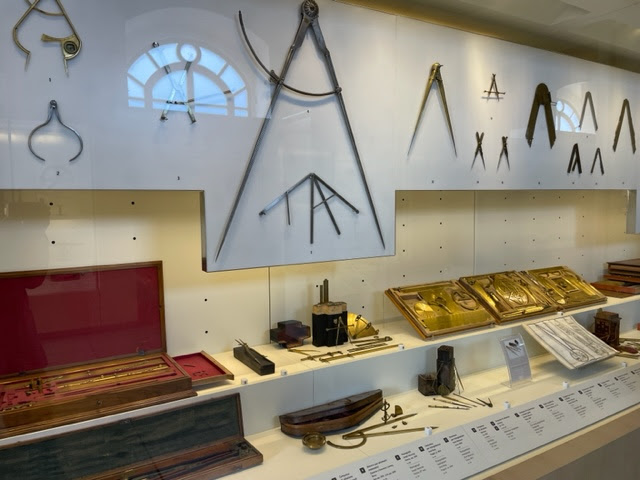
Operations of the Compass: Geometric and Military
Dedication to D Cosimo Medici
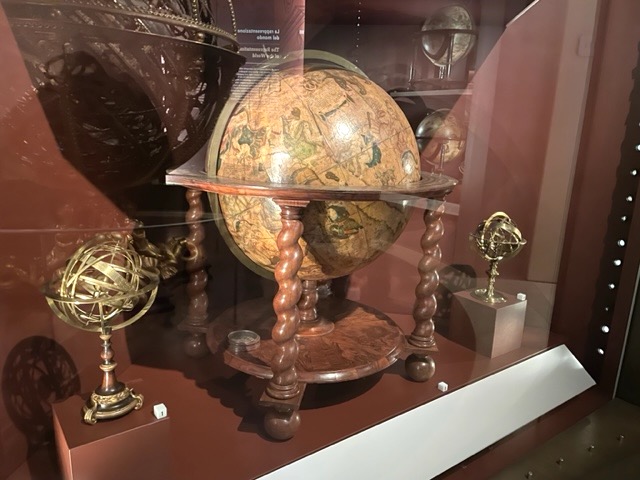
The Galileo Museum in Florence offers keen insights into the incredible advances in science, astronomy and geometry more than 400 years ago. The museum showcases microscopes, telescopes, lenses, barometers, globes, models of planetary movements and even medical devices. 

Galileo Galilei (15 February 1564 – 8 January 1642) was an Italian physicist, astronomer and engineer. Born in Pisa, an hour to the west, his family moved to Florence when he was eight. He joined them when he was ten.

If you go to Florence, you might consider a day-trip by train to Pisa. The leaning tower is a letdown to some people, but there is plenty more to see than that. Here in Florence, though, you can get a focused picture of the period in which Gallileo made his way. 

I was surprised to discover that Galileo did not start out in astronomy or geometry, but had gone to school for a medical degree. Doctors, even then, made more money than the average tradesman. Nevertheless, his other interests propelled him into a wide range of explorations into the natural world.

Galileo wasn't the first person to use a telescope to look at the moon, but he was the first to map what he saw. He was also the first to observe moons orbiting Jupiter.


His ceaseless curiosity about the stars and earth's place in the universe got him embroiled in religious wrangling at a time when such conflicts were unhealthy for one's career. The Roman Inquisition was active at this time. His writings countered the then-current narrative that the sun
travelled around the earth, an Aristotle proposition that had not yet been discarded due to the works of Copernicus. (EdNote: And idea can be erroneous even when it is believed by the majority.)

After a trial Galileo was placed under house arrest for the rest of his life. His book was banned and he was forbidden to publish anything else for the rest of his life. He disregarded this, continuing research in new directions. His book The Two Sciences was published in Holland, a book about kinematics and the strength of materials. Three centuries later Albert Einstein would praise this early work in the field of physics.

The Galileo Museum is just around the corner from the Uffizi Gallery, and a stone's throw from the Arno. 


And much, much more.

Monday, May 1, 2023

A Brief Overview of My Italy Adventure

The Duomo at the heart of Florence.
It began last fall as a gift from my daughter on my 70th birthday. The gift came in the form of three envelopes. The first envelope contained a pre-paid flight on Delta Airlines to be used for a trip to Italy. (Plus instructions warning me that I cannot give this away, lest I be tempted to decline.) The second envelope contained Airbnb instructions to cover all my room and board expenses. The third envelope contained 700 euros. 

After several months of thinking about what, where and when, I settled upon an April trip to Florence and Parma. I'd originally considered Milan, Torino, Genoa and even a brief trip into France. Ultimately, I decided to reduce my Italy footprint and chose two smaller cities, one of them being amongst the most significant in history, Florence, where the birth of the Renaissance occurred during the reign of the Medicis. The cultural, economic, artistic and political events that took place in that era. New forms of literature and breakthroughs in science shaped, and continue to shape, much of what we experience today. 

Ultimately, my travel schedule looked like this:

Duluth to Florence via Amsterdam     Apr 16    

Florence to Parma                                      April 20

Parma to Florence                                      April 23

Florence to Duluth via Paris                     April 27       


 My Day-by-Day schedule unfolded like this:


Monday, April 17 
Arrive at 
Florence Aeroporte. 

Take a taxi ride with Giuseppi to my Airbnb on Via Borgo Ognissanti with Superhost Mariantonietta. Walk around the neighborhood... meet people, check out the Arno (River). First thought: "I'm home."


Tuesday, April 18   
For my first full day my aim was to locate the Bargello and Uffizi museums. The Uffizi is Italy's answer to the Louvre in Paris. It has been argued that the Uffizi is the oldest and most mesmerizing museum in the world. The Bargello is a sculpture museum of the highest order. I planned to visit both the following week  On that first full day in Italy I just walked the streets, inhaling the sights, sounds, and smells as I got oriented to the layout of the city. The Gallileo Museum is located just around the corner from Uffizi. Spending some time there was an imperative.


Wednesday April 19

My second full day in Florence began with a walkabout. After lunch I visited the Uffizi Gallery/Museum, which was indeed a total "Wow!" 


Thursday, April 20     

Traveled from Florence to Parma by bullet train. Parma is a couple hours to the North, famous for its prosciutto and cheese. I arrived at my Airbnb on Strada Garibaldi, located directly across from the National Gallery.            

When I first arrived in Parma I had momentary doubts...  "Why am I here?" Fewer  people spoke English, it seemed, and I feared becoming isolated. The next morning, however, under sunny skies my spirits were lifted and there was no turning back. Parma would be wonderful.


Friday, April 21            

Parma, too, is home to a lot of history. The Monastery de San Giovani Evangelista, the Baptistery and the Duomo attest to the enduring power of centuries-old architecture. The Baptistery was dedicated in 1059, and may have been an expanded version of a baptistery built in the 400s. It's an amazing feeling to see the scale of this building that is more than a thousand years old, and it's deocrated interior.


Saturday, 
April 22 

When I stepped outside Saturday morning, the city had come alive. A market had sprung up to the left of the National Gallery and there were people everywhere. After a half day of walking aimlessly, enjoying the sights and sounds, I visited the National Gallery.


One of the bridges near the Uffizi, crossing the Arno.
Sunday, April 23 

I took the train back to Florence via Bologna. On the second leg I was seated next to a bassoon player from the Berlin Symphony Orchestra, one of many interesting people I got to know on this trip. Usually, a short while into many of these conversations, I am asked where I am from and I reply, "From Duluth, Minnesota where Bob Dylan was born." Numerous conversations about Dylan would ensue, and in this case the professional musician said, "Bob Dylan is my hero." 


Thanks to my daughter's guidance, all three of the Airbnbs I stayed at were a ten minute walk from the train stations, in the heart of each city. I checked into my Airbnb on Via dell'Ariento, about a block from the Medici Chapel, and returned to exploring Florence.         


Monday, April 24  

This was my day designated to seeing Michelangelo's David at the Accademia. This statue is deservedly a wonder of the world. More another time about this and the other treasures here.


I'm not sure whether it was Sunday or Monday that I encountered a parade of Peruvians protesting what they were calling a genocide of indigenous peoples in Peru. This is something I will also write about later. 


Tuesday, April 25          

There were gaps in my schedule to allow for options at various points. On the 25th I'd not established a plan but was considering a day trip to Pisa. I'd learned that the Leaning Tower was not entirely breathtaking, but there were other things there that many are unaware of. 


An impressive crowd gathered to hear speeches 
praising America for helping rid Italy of fascism.
The David statue is a replica, not Michelangelo's.
The day trip was cancelled because of a more important event. April 25 is Liberation Day in Italy, a day in which they celebrate the American soldiers who liberated the country from Mussolini and fascism. It was a major holiday and all the museums were free that day, though I was most impressed by the two gatherings I attended and the size of the crowd that went to hear the mayor and other important speakers. I had several opportunities to share that my father-in-law had served in the U.S. Army during its two year climb up the boot from Sicily to Torino. (Copies of his war memoir  And There Shall Be Wars are still available for purchase. You can learn more about the book here.)

Wednesday, April 26

My last day in Florence included a visit to the Medici Chapel, which I'd walked by many times during my last three days in Florence. Many people are unaware of the numerous statues by Michelangelo there. 


Thursday, April 27
I arrived at the airport a little before 4:00 a.m. to catch my flight back to the USA. After 26 hours with no sleep I arrived home, unpacked and found some rest, though a few hours later I woke again. My body was apparently on Italy-time. An hour of reflection passed and I began to yawn again, slumberland just beyond the horizon.


* * *


Stay tuned for more.


Saturday, April 29, 2023

Initial Thoughts After My First Trip to Italy

Three of 9 Michelangelo statues in the Medici Chapel
Thursday evening I arrived at my home back in Duluth after an eleven day journey to Italy, specifically Florence and Parma. Becoming immersed in these two cities was so uplifting and sensational that trying to write about, share it, it has been challenging. 

I wrote over 40 pages of notes during my stay, and took what seems like a thousand photos. Over the next few weeks I will attempt to present "snapshots" of the various experiences I had there. 

Late last night I scribbled these two statements in my journal:

If Italy doesn't move you, then your eyes were closed.
If Italy doesn't change you, then your heart was closed.

Time will tell as regards the truth of the latter. From the moment I arrived, though, I fully experienced the former.

* * * 

Over the years I've thought much and written numerous times about influences. Usually I connected influence with people. A century ago, however, a Nobel prizewinner gave a few lectures on influence and connected it with places. Places can pull us just as much as they invigorate us and make us come alive. One of my first thoughts after I'd checked into my AirBnB and began walking the streets of Florence was this one: "I'm home." Something was resonating within me at a very deep level. 

What follows are a few miscellaneous photos from Florence with more to be shared as time unfolds over the weeks to come. 

Bust of Gallileo
Michelangelo's Bacchus
In an open square by the Academy
Bridge across the Arno
Courtyard of the Pitti Palace
One of literally countless painted ceilings.
Typical windows seen from the streets. 


There were three especially cool and unexpected surprises while I was there. Last weekend there was a protest by Peruvians in Italy, aimed at drawing attention to alleged genocide taking place in Peru under the current government regime. On April 25 there was a national celebration of the Liberation of Italy from fascist dictator Mussolini. Florence celebrated with speeches, the laying of a wreath at a monument commemorating this event in which the U.S. drove out Italy's enemies during World War II. (I plan to devote a blog post to this historical moment in which my father-in-law participated.) And third, there was a fantastic MC Escher retrospective of the first order in which I learned of Italy's influence on this great 20th century designer/artist. (This will be re-visited later as well.)

Then there were the numerous interesting people I became acquainted with. And the bookstores. And the food. And the wonder of it all.

If you are not a regular follower of Ennyman's Territory you can subscribe by placing your email address in the appropriate slot just below the bar code.

Popular Posts