Showing posts with label Jon Thralow. Show all posts

Monday, November 15, 2021

Jon Thralow On Cryptocurrencies and Crypto Investing

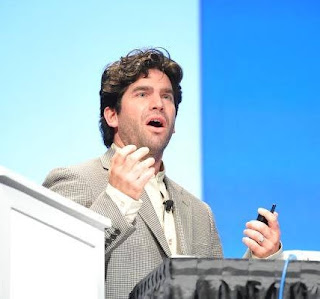
Conference speaker Jon Thralow
Jon Thralow is a programmer who early on exploited the power of the internet as a vehicle for eCommerce. Early successes helped him recognize opportunities and his career as a marketing and analytics consultant expanded from there. 

When I learned a couple years ago he'd taken an interest in Crypto currencies I requested an interview so I could pick his brain and share it here with others. He said he wasn't ready yet. This past week, however, he got back to me and offered to follow through on my initial inquiry.

Here are some nuggets that may help those of you who have taken an interest in this emerging investment arena. 

EN: What is Crypto currency and what causes it to increase in value?  

Jon Thralow: There are a lot of different kinds of Crypto. The most popular is Bitcoin which is a store of value. Etherium is the second largest and is a programmable platform that most other crypto companies have built their businesses on. Ether has a few competitors like Polkadot, Cardono, and Solona. There are also stable coins like Tether that help transfer wealth. They keep their price tied to the dollar.

Then we have over 1000 smaller Crypto application companies that are built on top of the platform companies. They serve many different sectors like NFTs for art and quite a few games where people can earn coins by playing. There are also stable coins that help convert coins into other forms of currency.

The price is mostly driven by supply and demand. The more people who get involved the more the value goes up. Less than 10% of the population currently holds Crypto so we are still in the early adopters stage.

EN: What are the primary ways people can invest in Crypto? 

JT: The most common way for people to invest in Crypto is through trading platforms like Robinhood, Coinbase, Kraken or Binance.  For purchasing NFTs or virtual land I use opensea.io and crypto.com


EN: Unlike stocks, Crypto currencies don't seem to have metrics that investors can study to determine whether they are overvalued or undervalued. How does one know how evaluate whether these esoteric investments are worth what people are paying?  

JT: There are actually a lot of metrics that can be watched and understood. For example, you can see that there are only 21,000,000 Bitcoin that will ever be minted so the inflationary pressures do not exist, unlike the dollar. When the dollar was tied to gold the inflation rate was able to remain stable with the only the amount of gold that was mined every year causing inflation (that rate averages about 2% a year so gold does have an inflationary measure).   

Photo by Bermix Studio on Unsplash
Bitcoin is also mined today. That rate is also about 2%, but it is cut in half every 4 years until the 21 Million is fully mined. Some pioneering businesses like Microstrategy have converted all of their cash assets into Crypto as a hedge against inflation. Using things like stock to flow metrics can give you a good idea of where the price of Bitcoin will be in the next few months and years.  Since everything is open and transparent, you can also see the number of coins being hodled. (
EdNote
Hodl is a term derived from a misspelling of "hold" that refers to buy-and-hold strategies in the context of Bitcoin and other cryptocurrencies.) When looking at that metric you can see that a very high percentage of coins are purchased and never sold. There is only a small percentage of coins that are being purchased and sold on the average day.

EN: There is no such thing as risk-less investing. Cash, for example, diminishes in value with inflation. What are the risks involved with Crypto currencies?  

JT: The risks with Crypto right now are great! For example, my first investment in Crypto over 4 years ago dropped 90% in the first 6 months. I used that as an opportunity to purchase more. I have found the best way to reduce risk is to dollar cost average over time as long as you believe in the long term and don't get too scared and sell when it drops significantly.
 
EN: What about government interference and regulation as a risk?

JT: Sometimes yes, but overall regulations are a good thing. With more regulations, institutional buyers will be able to enter the market. Everyone is hoping for a spot traded ETF as that will allow average investors to get involved.

EN: Thanks, Jon. Good finally reconnecting. Thanks for your willingness to share the fruit of your research.

* * * *

Related Links

5 Minutes with Jon Thralow, Internet Entrepreneur

Jon Thralow, Revisited

Tuesday, February 20, 2018

Tech Tuesday: Data-Driven Marketer Jon Thralow Talks About eCommerce, SEO and What's New @ Google

I've been reading Walter Isaacson's The Innovators: How a Group of Hackers, Geniuses and Geeks Created the Digital Revolution, a thoroughly researched history of the men and women whose ideas and energy created the Internet and all the other manifold technologies that have become so embedded in our lives, from video games to A.I. and self-driving cars. Imagine a world without Google, Apple, Microsoft and Facebook.

One of the beneficiaries of all this innovation has been Jon Thralow, a geek programmer who evolved into a data-driven marketer with his fingers on the pulse of emerging trends and the application of new technologies. When I interviewed him in 2009 I asked what were the two or three most important things internet entrepreneurs needed to know. He replied, "First, set up tracking mechanisms to measure every marketing penny that you spend. Second, find your niche and don't deviate; stay focused. Third, use the scientific method so that you can test for the outcome. This ensures that you do not make the same mistake twice."

His article at the end of this interview will show you how he's not deviated from this path and, in fact, has only become more sophisticated at it.

EN: You've been doing eCommerce now for almost two decades. What are some of areas that have been of special interest to you during this time?

Jon Thralow: My first love was programming viral SaaS software. It was fun to see a creative take on a life of its own and grow, but I did not have the time to develop the infrastructure on the program and, eventually, it grew to a point that was unsustainable. I then found SEO and hacking Google's algorithm became a passion of mine. I was getting anything to the top positions and it was easy. Then Google got a lot smarter and the workload to get a site listed on the first page became too time-consuming so I shifted to paid search. Paid search is about the only thing that I do today.

EN: Google has certainly emerged to be a very big gorilla in cyberspace. How did this happen from your point of view. They began simply as a fast, reliable search engine, right?

JT: There was a race to be the most accurate search engine. In 1998 I was trying to get our site listed on about 50 different search engines. All of them had a chance to be the most used after the shakeup, but in 2000 Google came along. It was a research project from Stanford so it did not have the money-hungry feel. It felt like a service and it gave great results. It quickly grew and took the number 1 spot where people found things on the internet.

EN: Online success is more than good Search Engine Optimization, but don't the rules for good SEO keep changing? How does a business stay current?

JT: Today it is more work than ever to be a top ranked site. Google has started ranking profitable sites below content sites making SEO almost impossible to win if you are a business. Google knows that sites that make money can pay for the paid placements so that is what they are trying to do. If you want to make money with search today you will most likely have to pay for it or create amazing content that is published in major news outlets.

EN: Even before the Internet I always said, "You can't manage what you don't measure." Since the Internet, analytics has been taken to a new level. How do you stay current on what's going on in the realm of online analytics?

Thralow is ever on the lookout for
new horizons to explore.
JT: Most of my day is spent measuring. My favorite class in college was statistics and I found a place where I can use that logic for my real-world job. I am at the point now where I am incredibly frustrated by holes in Google Analytics. Most marketers take Google Analytics as cut and dry data, but there is so much bad data that can be misunderstood that sometimes I forget that marketers of 20 years ago had to often rely on gut feeling.

EN: You mentioned that the next step in analytics will be the ability to actually tie in-store sales to Google adwords on mobile devices. Is this really possible and when is it coming?

JT: This is being worked on today and it's being beta tested with some large retail businesses. I have worked on their beta program with Red Wing Shoes and we are seeing some great results. We have recently started uploading our point of sale data to Google and are starting to tie our online and offline sales to online ads.

* * * *

Related Links
Learn to Measure AdWords for In-Store Conversions
The Innovators: How a Group of Hackers, Geniuses and Geeks Created the Digital Revolution


Saturday, February 21, 2009

Jon Thralow, Revisited

"Any sufficiently advanced technology is indistinguishable from magic." ~Arthur C. Clarke

At the end of January we interviewed Jon Thralow on Internet entrepreneurialism and especially eCommerce. It seemed we'd only scratched the surface so I met with him yesterday at the Red Mug to do a little more probing regarding his work.

Though now primarily doing consulting work, Jon used to manage a team of programmers. As we compared notes from time to time these past few years, I found it interesting to learn that programmers and Internet developers can have temperaments like artists. Those who do the best work may not fit neatly into your standard corporate cubespace. Jon, though a technical wizard and programmer himself, understood this art-heart-spirit of his team. They consequently achieved remarkable things together.

Here, for a few moments, we explored the meaning of Web 2.0, the explosion of web content and at least one solution for dealing with the tsunami of information that is washing across cyberspace.

Ennyman: I have been hearing a lot of numbers thrown around regarding how fast the Internet is growing. What kind of numbers are you seeing and where do these numbers come from?

JT: As for sales growth the Internet is one of the few bright spots for the economy, but the larger growth is happening in content My best guess is that in pure data being uploaded is growing so fast with YouTube, and social media sites that the number of gigabytes online is at least doubling every other year.

Ennyman: The Internet has brought a lot of new terminology into existence. Here are a couple that the average person might be hearing that need clearer definitions. What is “Web 2.0”? What is the “deep web”?

JT: "Web 2.0" refers to a perceived second generation of web development and design that aims to facilitate communication and interoperability on the World Wide Web. Some concepts that have led to this evolution are web-based communities, hosted services, and applications; such as social-networking sites, video-sharing sites, wikis, and blogs. As all of this new content is quickly being added search engines like Google are having a hard time keeping up and indexing this information. The amount of information that Google is able to index is a small fraction of the entire Internet. Everything that is not indexed by search engines is called "deep web".

Ennyman: You have helped develop a number of successful eCommerce companies and are currently consulting in this area. What is it that so turns you on about eCommerce?

JT: I am not really sure. I like science and I like doing things that people tell me not to. When I first went into eCommerce, it was more of a feeling like, “What is this? It is going to go away in a week or two and will it even work if more people get online?” I was just too curious to leave it alone. One of the parts that I liked best was the ability to marry marketing and science. Knowing exactly what each dollar did and how much that dollar turned into…

Ennyman: You are also involved in a company called Mozenda which helps eCommerce companies efficiently gather data from the Internet. Why can’t people just do this with search engines like Google?

JT: Mozenda does much more than help eCommerce companies. We have very large companies using this tool.

For eCommerce, a search engine only returns results on the browser while Mozenda gathers the data you want and puts it into a usable format.

Ennyman: What other kinds of companies are currently using Mozenda’s software platform? How are these companies using the program?

JT: There are many different companies including even a couple of DOW-tracked publicly traded companies, one from retail and one from financial. Financial companies will track buy/sell data to predict future stock prices. The retail company is using it to compare its prices to its competitors. Another financial company is using it to gather data from one section of its organization to mesh it with another. Many PR companies are using the program to watch the reaction to the brand by harvesting data from blogs and forums. Other large companies are using the product to learn about potential recalls in their product line before production has put too many out into the marketplace saving the company millions and increasing the product quality.

Ennyman: Doesn’t it seem a little like opening the door to a Big Brother situation here? Can this kind of data acquisition lead to abuses and does that concern you?

JT: Yes, this sure can lead to abuse. I think the analogy might be that Mozenda makes the guns and they can be used for either good or evil fits here. There have been companies that have been taken to court by stealing data from their competitors, but Mozenda does not advocate this practice. The goal of Mozenda is to make the data on the net much more usable.

Popular Posts