Showing posts with label Ukraine. Show all posts

Thursday, November 21, 2024

More Land Mines? When Will We Ever Learn?

"The war is not meant to be won but to be continuous."
--George Orwell, 1984

In a year of appalling behavior by armed governments, this week's news from Ukraine was deeply disturbing.

Over the weekend, President Biden gave Ukraine permission to fire long-range missiles into Russia. On Monday, the missiles were fired, thereby escalating tensions. Next, President Biden gave Ukraine permission to use land mines extensively on its Eastern front. Despite our full awareness of the harm they do to innocent civilians, we're already leaping gung ho into sending these widely condemned weapons.

The minute I heard this news I thought of all the work the late Lady Diana did to raise awareness about the horrors wrought by land mines. What is wrong with us? Have we learned nothing? 

Evidently Russia has been mining areas of Ukraine. (Landmines, not mining for minerals.) So our response is to make still more areas unsafe for civilians.

Landmines can remain active for an indefinite period of time, meaning they can potentially stay lethal for decades or even longer until they are detonated or defused, as they don't have an expiration date and can lie dormant until triggered by pressure or movement; this is why they pose a danger long after conflicts end. This is why Lady Di was such a strong advocate against. their use.

According to one source there have been 15,000 to 20,000 people killed or maimed annually by land mines, mostly civilians and children. According to the Landline Monitor more than 7,000 were killed or maimed in 2021. More than 60 countries are still contaminated with mines.

According to James Madison University landmine-contaminated areas hinder economic recovery and development, as they restrict access to farmland, infrastructure, and resources​. Landmines don't distinguish between combatants and civilians, violating international humanitarian laws​.

Oh, but when has international law stopped the U.S. from doing whatever we want? Look at the endless and merciless slaughter in Gaza... Indeed, we are masters of war.

* * * 

Princess Diana brought global attention to the landmine crisis with her 1997 visits to Angola and Bosnia, where she met with landmine survivors and demining teams. Her advocacy, widely covered by the media, was pivotal in rallying public support for the Mine Ban Treaty (Ottawa Convention) signed at the end of that. year. She famously described landmines as a “plague on Earth,” emphasizing their disproportionate impact on civilians and the need for a global ban​.

Diana’s efforts contributed significantly to the adoption of the Mine Ban Treaty, under which 164 countries committed to banning the use, production, stockpiling, and transfer of antipersonnel landmines. Over 55 million landmines have been destroyed as a result of this treaty​.

The U.S. is one of just a small number of major nations that have not signed on to the 1997 Ottawa Convention, which prohibited the use, production and transfer of antipersonnel mines. 

Sadly, it seems obvious that the countries that wield power don't really care about what happens to common people. In 2022 Human Rights Watch rightfully condemned Russia's use of landmines. So why are we behaving in the same atrocious manner?
 
EdNote: These complaints against our actions as a nation must not be construed
as an endorsement of Russia's behavior. What's your take? 

Sunday, May 1, 2022

A Ukraine Humanitarian Relief Effort That You Can Be Part Of

May 22 Op-ed in The Bugle
When the Great Chicago Fire occurred in 1871, the smoke from that disaster was carried eastward with the wind. As it blew over West Virginia five days later, people wondered what had burned, assuming it was probably in Ohio, not two states further. Today, with social media and 24/7 news we can see events "as they happen" in every corner of the world, our our TVs, computers and phones.

As with many events resulting in human suffering--from tornadoes to earthquakes, floods and fire--something tugs at our hearts. Some pray, other give. Tom Betz from a Como Lake neighborhood in St. Paul, has created a "semi-postal" stamp to raise funds for humanitarian aid in Ukraine. What follows is the story Tom sent me to explain what it is and how to contribute.

The item you see pictured here is called a local stamp. As a member of a club that collects and issues local postage stamps I will be issuing the above stamp. As the stamp has two values on it one for postage and the “+” value it is called a semi-postal. This particular semi-postal is for a Ukraine Relief Fund. 

Countries around the world have a long history of both local stamps and semi-postal stamps. More information can be found by Google-ing “semi-postal stamps" or “US local post stamps." This is my attempt to support a Ukraine relief fund. Please contribute to help my effort.


Please send a self addressed stamped envelope (SASE) along with a minimum contribution of $1.00 to:
Thomas D Betz
1337 Avon St
N. St Paul, MN 55117

If sending a check please make it payable to: 

Tom Betz Ukraine Relief Fund. 

You will receive the stamp featured here on your envelope, canceled by “Como Park Post."


This stamp and the fund is featured in the May issue of “The Park Bugle" (Como Lake community in St. Paul). The stamp and the fund will also be featured in the May issue of the local post collectors newsletter, “The Poster.” It can be viewed by contacting  editor@localpostcollectors.org. More information about the club can also be obtained at their website, https://www.localpostcollectors.org/.

Monday, February 28, 2022

Webcams In Kiev and Moscow -- You Can Watch Live If You Like

This is fascinating. In today's world we can play Peeping Tom 
on the world's capitals via live webcams.

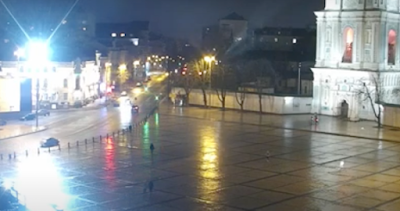
Here's a webcam view of Sophia Square in Kiev.
They even give you the weather. It's 2 degrees right now.  

Webcam Link:
https://balticlivecam.com/cameras/ukraine/kiev/sophia-square/

Here's what's happening in Moscow. 
A lot of traffic at City Center. Too many ads, though.
I guess they have to make a living and pay for the technology.
The temp is minus 2.


Webcam Link:
https://balticlivecam.com/cameras/russia/moscow/moscow-city-center/


Sunday, February 27, 2022

Media Coverage of Russia-Ukraine Conflict Criticized

How the world has changed. It used to be, during the Vietnam War, that there were essentially three networks and we'd be fed updates once a day in the evening news. You could also pick up newspapers for a little more and magazines for in-depth stories. But these media bytes were relatively brief. 

Most of the news was produced by professionals who, even if slanted, sought to give the appearance of neutrality, of being fair and balanced. With the advent of cable television people could become news junkies, engaged in covering happenings 24/7 as they happened. With so many hours to fill and stories to tell, it should not be a surprise to find the caliber of reporting to be uneven as regards accuracy.

On Friday evening I was listening to NPR's coverage of the Russian incursion into Ukraine. A journalist on the air made a statement that went something like this. "This is the first time since World War II that a major superpower invaded a lesser state." Those may not be the exact words, but it was incredibly absurd of an assertion. 

While driving, the countries rolled through my mind. Vietnam, Iraq, Afghanistan twice (Russians in 1980, the U.S. circa 2003), Iraq, Yugoslavia.

Newspapers regularly contain a page or two for editorial opinion pieces. These are generally vetted by the editorial staff which sometimes, as in the Duluth News Tribune, includes a citizen or two. With social media, the Twitterverse and blogs have produced a deluge of opinions that are sometimes quite shrill and silly, but often they are exceedingly perceptive. 

When the talking heads speak, their biases and ignorance can emerge despite their best efforts to be intelligent. The example above is one case in point. And in the Twitterverse, the audience response can be immediate and brutal.

This article from Al Jazeera has a lot of good examples of this point.

‘Double standards’: Western coverage of Ukraine war criticised

Social media users accuse the media of hypocrisy in its coverage of Russia’s war on Ukraine compared with other conflicts.

The first example is a CBS news correspondent who said that this invasion (Ukraine) is all the more shocking because it is taking place in a civilized nation not a backward one like Afghanistan and Iraq.  Here's one response:

Utterly stupid and ill informed statement. Afghanistan was also a peaceful and “civilised” place in 1979 before the Soviets invaded (and became the battle zone between the West and Soviet block). Ditto for Iraq (before the American attack in 2003)

You can follow a full thread of comments on Twitter in response to that transgression.

The next illustration in the Al Jazeera piece is of a high official from Ukraine being interviewed by BBC in which he says how emotional this is because he sees "European people with blonde hair and blue eyes being killed every day with Putin’s missiles and his helicopters and his rockets."

The immediate response from Twitter again:

But people with 'blue eyes and blonde hair' dropping bombs over the Middle East and Africa is OK.

Social media is a minefield indeed.

When Sky News broadcast a video of brave Ukrainians getting lessons on how to make Molotov cocktails, the response was illuminating:

If this was done by Palestinians, Afghanistan or other nations resisting occupation, it would be terrorism. And during Mandela's anti-apartheid era, it was also dubbed terrorism. For Europeans facing similar situations, it is resistance!. Western duplicity knows no bounds.

The article contains more thought-provoking examples. You can read the full Al Jazeera piece here: https://www.aljazeera.com/news/2022/2/27/western-media-coverage-ukraine-russia-invasion-criticism

And I'll close with this interesting Tweet that I saw this a.m. 

Going to be awkward when the war in Ukraine is over and the left have to go back to being against nationalism, borders, and an armed citizenry

Whatever happens, this is a a good time to exercise caution and to embrace a measure of humility.

Monday, July 13, 2020

Global Job Site Has a Great Startup Story -- It's Jooble

Jooble is a job aggregator currently operating in 71 countries.
It seems to be an oft repeated story in the Tech Age. Young people see a problem, people their heads together, and create a solution. They forgot to think about all the barriers to making it work. They just do it. And what's the result? Amazing stories and what are now household names: Apple, Microsoft, Google, Facebook, Amazon.

A couple weeks back Anastasiia Skryzhadlovska contacted me to ask if I could put a link to Jooble on my blog here. It seemed necessary to first learn a bit more about this young company in the job hunt space and the story is actually quite thrilling.

The home office at Jooble.
EN: Before asking about the company, can you tell us a little about yourself?

Anastasiia Skryzhadlovska: In brief, I am from Ukraine, 19 years old. I finished a Ukrainian school with honors, participated in several international youth exchanges, which covered various topics, like sustainability, for example. In 2018 I was awarded a full scholarship to study International Baccalaureate in the Eastern Partnership European School in Georgia. This is where I got lots of international experience (by studying and living with people from more than 30 countries) and the essential skills such as communication, teamwork, leadership, and language skills needed for my work.

EN: How long has Jooble been around? Where did it begin and how?

Jooble founders Roman Prokofyev and Eugene Sobakarev.
Anastasiia Skryzhadlovska: Jooble was created in 2006 by two Ukrainian students, Roman Prokofyev and Eugene Sobakarev. Moreover, without any external investment, and just thanks to founders’ desire to make the job search process fast, easy and effective.

Roman and Eugene met in Kherson (Ukraine), at the physical and technical lyceum, where they studied together for 3 years of high school. During that time, friends accomplished a lot: won several math, computer science and physics Olympiads. They continued their education at the same faculty of the Kyiv Polytechnic Institute--Computer Science and Computer Engineering. Working at different software development companies was also a part of their student years.

Once, when Roman was trying to find new employees for one of the companies where he was working, he came to understand that there was no good and effective service that could help him to do so. A programmer discussed this problem with Eugene, with the result that he and friends decided to create a resource which can make a job search fast and simple. This became the first version of such resource. Jooble was written in a dormitory. The students didn’t do any market analysis. They simply came up with the idea and started implementing it.

One of the main features of Jooble became its algorithm, which makes it possible to aggregate vacancies from other employment sites, recruiting agencies and other websites. That’s why it saves time and effort as much as possible: a job seeker should just enter one request and Jooble will quickly provide complete information about existing offers and choose the most suitable option.

Today, Jooble is ranked #2 among Top Employment Websites in the world! It works in 71 countries and continues to expand and improve.

Jooble proves the fact that an IT-company from Ukraine, developed by students, can achieve a great success on a global level!

EN: What is your roll with company? And how big is Jooble today?

Anastasiia Skryzhadlovska: I am a country manager for the United States. I have been working at Jooble for 1 year. In our team there are around 225 people working in the office and more than 200 working remotely. These are approximate numbers. We serve 71 countries and currently have 3 million visitors worldwide daily.

EN: Impressive. Thanks for your time and your story.

Are you currently looking for a career reboot? Or did the pandemic earthquake shake you loose from your job so that you're wondering where to go next? Two recommendations: Richard Nelson Bolles excellent job hunt manual What Color Is Your Parachute? and Jooble.


Saturday, July 30, 2016

Back In The U.S.S.R. -- Beatles Just Having Fun Causes a Stir

One of the things I've always enjoyed is looking at the titles of books on peoples' bookshelves. Many years ago I came across a book on someone's shelf that proposed the notion that the Beatles were agents of the KGB, or something to that effect. I forget the title, but it made me pull the book from the shelf and page through it. In retrospect it may have been something from the John Birch Society, but wherever it came from the author was in a very paranoid place.

I only skimmed the contents, but still recall three of the authors arguments. The first, of course, was this song relishing a return to the U.S.S.R. The second was the ridiculous assertion that the song Revolution was actually calling for revolution. Lennon-McCartney lay it out fairly plain when they say, "But when you talk about destruction, well you know that you can count me out." And "If you want money for people with minds that hate, well all I can tell you brother you have to wait."

But the part of the book that intrigued me most was this third argument. The author asserted that by studying the music of the Beatles it was self-evident that the KGB was behind it because look how sophisticated their sounds became in such a very short time.

Yes, this maturing of the Beatles and sophistication of their sound in such a short time was astonishing. But so was the entire Sixties. Look at the technological advances that occurred in that decade. It blows your mind. The early Beatles had guitars, amplifiers and microphones. It wasn't until after their first album that they had access to four-track recording, which enabled them to add virtually limitless numbers of tracks, though this too had limitations. Multi-track recording, synthesizers, backward masking and all manner of audio pyrotechnics soon came along. Songs were no longer created by having the group sing into a microphone. Add to this the genius of George Martin behind the scenes, who was himself brilliant at enabling their creativity to flourish, and it's no wonder their music was magical.

The book's premise was laughably absurd.

So why did the Beatles write a song like Back in the U.S.S.R.? Here's the backstory. The song was written while the Beatles were doing their India thing with the Maharishi. Mike Love of the Beach Boys was visiting at the same time, so the story can be told from Paul's viewpoint and Mike Love's recollections.

"It's tongue in cheek. This is a travelling Russkie who has just flown in from Miami Beach; he's come the other way. He can't wait to get back to the Georgian mountains: 'Georgia's always on my mind'; there's all sorts of little jokes in it... I remember trying to sing it in my Jerry Lee Lewis voice, to get my mind set on a particular feeling. We added Beach Boys style harmonies." ~Paul McCartney

"I was sitting at the breakfast table and McCartney came down with his acoustic guitar and he was playing Back In The USSR, and I told him that what you ought to do is talk about the girls all around Russia, the Ukraine and Georgia. He was plenty creative not to need any lyrical help from me but I gave him the idea for that little section... I think it was light-hearted and humorous of them to do a take on the Beach Boys." ~Mike Love

Well, the paranoid Birchers evidently didn't think it very funny. You can read a more detailed account here.

The song is purportedly a cross between Chuck Berry's Back in the USA and the Beach Boys' California Girls. You can compare them here.


BACK IN THE U.S.S.R.


Flew in from Miami Beach BOAC
Didn't get to bed last night
On the way the paper bag was on my knee
Man, I had a dreadful flight
I'm back in the USSR
You don't know how lucky you are, boy
Back in the USSR, yeah

Been away so long I early knew the place
Gee, it's good to be back home
Leave it till tomorrow to unpack my case
Honey disconnect the phone
I'm back in the USSR
You don't know how lucky you are, boy
Back in the US
Back in the US
Back in the USSR

Well the Ukraine girls really knock me out
They leave the west behind
And Moscow girls make me sing and shout
That Georgia's always on my my my my my my my my my mind
Oh, come on
Hu hey hu, hey, ah, yeah
Yeah, yeah, yeah
I'm back in the USSR
You don't know how lucky you are, boys
Back in the USSR

Well the Ukraine girls really knock me out
They leave the west behind
And Moscow girls make me sing and shout
That Georgia's always on my my my my my my my my my mind

Oh, show me round your snow peaked
Mountain way down south
Take me to your daddy's farm
Let me hear your balalaika's ringing out
Come and keep your comrade warm
I'm back in the USSR
Hey, you don't know how lucky you are, boy
Back in the USSR
Oh, let me tell you honey


* * * *
Never been to the U.S.S.R., Russia, Ukraine, Georgia or the Urals, but we did entertain some guests from Duluth's Sister City in the Soviet Union way back in time, and I still have an unopened bottle of the vodka they brought to us as a gift. I wrote this blog post in part because a growing number of readers of this blog are from that part of the world. If you're one of them, do you remember this song? Is it still popular? Thanks for checking in. You may also follow on Twitter @ennyman3.

* * * *
Meantime, life goes on... Enjoy the weekend.

Popular Posts