Showing posts with label World War I. Show all posts

Saturday, August 31, 2024

Gallipoli Remembered: The Anguish Behind "And the Band Played Waltzing Matilda"

"And the Band Played Waltzing Matilda" is one of the most powerful antiwar songs of the past century. I can't recall the first time I heard it, but the Joan Baez track is like a pearl. This version by Liam Clancy is equal in capturing the horror of that scene. It begins... 

When I was a young man I carried my packAnd I lived the free life of a roverFrom the murrays green basin to the dusty outbackI waltzed my matilda all overThen in nineteen fifteen my country said sonIt's time to stop rambling 'cause there's work to be doneSo they gave me a tin hat and they gave me a gunAnd they sent me away to the warAnd the band played Waltzing MatildaAs we sailed away from the quayAnd amidst all the tears and the shouts and the cheersWe sailed off to Gallipoli

The heartbreaking scene unfolded like this...

The August 1915 landing at Suvla Bay during the Gallipoli campaign was a descent into a hellscape of blood and chaos. Allied soldiers, under heavy fire from Turkish positions on the high ground, were cut down in droves as they struggled to disembark. Boatloads of men were decimated before even reaching the shore, their bodies littering the crimson-stained water. Those who made it faced a brutal landscape of barbed wire, shrapnel, and machine-gun fire. The stench of death and cordite hung heavy in the air, a constant reminder of the carnage.
Snipers perched on the cliffs picked off the vulnerable troops with chilling precision. The wounded lay unattended, crying out in pain as the sun beat down mercilessly. Dysentery and disease spread rampant through the unsanitary conditions, claiming as many lives as the bullets. Exhaustion and despair gnawed at the survivors, who were forced to endure the relentless pounding of artillery and the nightly terror of Turkish raids.
The failure of the Suvla Bay landings sealed the fate of the Gallipoli campaign. The once-optimistic Allied forces were bogged down in a bloody stalemate, forced to face the horrifying reality of trench warfare. The beaches of Suvla Bay became a graveyard, a testament to the tragic cost of strategic blunders and the unrelenting brutality of World War I.
* * *
What made the debacle more horrific was that in the first wave of the assault Turkish snipers struck down the officers, leaving their soldiers 
lost and confused, dealing with deteriorating conditions and decimated morale in a foreign land. It's hard to imagine a more terrifying nightmare.
When will we learn?
Illustration generated by AI

Friday, January 7, 2022

Another Important Dimension of Army Life: Food

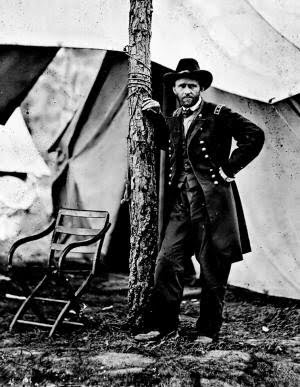
General U.S. Grant
In the Autobiography of Ulysses S. Grant, published by Mark Twain, the 18th president showed that although he was a man of few words in real life, he knew how to tell stories. And he had plenty to tell. 

Grant, like many of the Generals who fought in America's Civil War, learned about leadership and strategy while serving in the Mexican War. Like Lee, he had been a captain under General Zachary Taylor. Grant's skill with horses played an important role in the Battle of Monterrey, which was a major victory in the Northern Campaign. 

During his time in the service of General Taylor, Grant observed first-hand the importance of managing and protecting your supply lines. The key supplies necessary for waging war at that time were guns and artillery, and food. Soldiers need nourishment and an army of any size won't last all that long without it.

* * * 

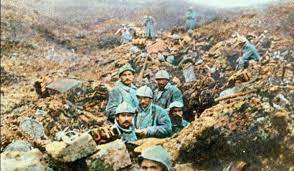
French soldiers in the trenches of WWI
The above came to mind as I was reading Poilu: The World War I Notebooks of Corporal Louis Barthas, Barrelmaker. The horrors of that first "great war" were many. In part, they were amplified by the lack of experience with the new technologies that were put into effect during that war, chief of these being the machine gun. For some insane reason the French and British generals imagined that if you sent enough soldiers with bayonets across open fields into enemy gunfire, some would succeed in getting through. The futility of this tactic took its toll, and took a long time to register.

What's worse is how many times the fundamental realities of warfare were neglected by those in command. The need for nourishment and the need for rest. Sometimes, Barthas writes, the men would go five days without eating. Sometimes they would be kept awake all night digging more trenches and then be expected to fight all day.

* * *

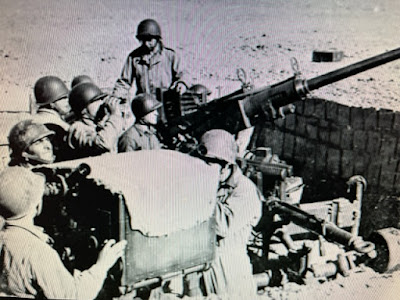
U.S. troops in North Africa, WW2
When my father-in-law served in World War II his initial role was as a cook. He had been a market gardener here in Duluth, and when the call came to serve overseas, he appreciated the opportunity to "see the world." He crossed the Atlantic on the first transport convoy of untested G.I.s heading to the European Theater. Their first stop was Northern Ireland where everything was green and the memories rich. During their months there the soldiers continued training. 

"Bud" (as he was called) became a cook. His role in the army was to make the meals that would keep the army strong. 

After their time in Northern Ireland was complete the troops were deployed to Northern Africa. Bud continued as a cook until the army switched from making meals to opening cans. Bud complained about this, evidently, and he was re-assigned to be an anti-aircraft machine gunner. 

Here is a poem Bud wrote about that period in which he was a cook.

The Cook's Life

We're just crummy cooks that slave every day,

From two in the morning, till nine P.M. with little more pay.

No one appreciates whatever we cook,

"Stew and beans again!" they holler with just one look.


I wish some would starve or start eating hay,

It would lessen our work, and shorten our day.

They think we’ll bake cake, what will be next?

For the appreciation we get, what do they expect?


They come around crying for a bite to eat,

It's between meals now, don't try to cheat.

The Quartermaster is stingy about a man's ration,

So we dish it out after that fashion.


Stew and beans is what they gave us,

So please don't make such a big fuss.

Eat it and like it, or starve on the way,

Because that’s what’s on the menu today.


Wilmer A. "Bud" Wagner
And There Shall Be Wars


* * * 

I am imagining that one day wars will be fought with drones. 

Thursday, July 16, 2020

Solzhenitsyn's August 1914: How Fiction Enables Us to Get Closer to the Truth

Soltzhenitsyn
I've been reading Aleksandr Solzhenitsyn's August 1914, a historical novel about events on the Eastern Front during World War I. For American readers it's a perspective on the war less familiar than the horrorshow of trench warfare's perpetual stalemate on the Western Front.

As a young writer Solzhenitsyn made no secret of his desire to become his generation's Tolstoy, hence his novels of monumental scope like this one which is actually the first of four massive volumes in a series about the birth of the Soviet Union. August 1914 was the first of this series which he called The Red Wheel.

He conceived the book while himself a soldier entering Prussia from the East during World War II, echoing the movements of the First World War. This first volume is over 800 pages. The second, November 1916, is two volumes in length. The third, March 1917, is four volumes and April 1917, the last, is not yet translated.

While reading chapter 42--I'm halfway through the book now--I was reminded again what it is that so thrills me about great literature. It's the manner in which the author orchestrates situations which reveal deeper insights into human motivation and the human situation. In this case, three men are in a bar drinking beer. One is an old man who has seen much and lived long, whose perspective on the emerging war is very different from the two youth who have recently finished school and volunteered to join the army in a wave of national enthusiasm.  Over a series of beers the characters relax and become increasingly engaged. The reader is that proverbial fly on the wall observing and listening in.

The old man here is Varsonofiev. The youths are Kotya and Sanya, friends from school. Early on, as the three get to know one another, the more extroverted Kotya explains who they are by expressing their worldviews:

“Yes indeed, a pure Hegelian,” Kotya proudly and uncompromisingly confirmed. “And he—" poking Sanya’s chest—"is a Tolstoyian.”

“A Tolstoyian?” The old man looked sideways in amazement, sizing up Kotya's shy and diffident companion. "Great heavens! Why then are you going to war?"

He saw, however, that Sanya was excruciatingly aware of the muddle in his mind. Sanya looked pitifully at Varsonofiev, smoothing the soft corn-colored hair back from his forehead.

"I'm not a pure Tolstoyan anymore."

Sanya apologetically attempts to explain.

This brief sequence signals to the reader that some serious fun is about to emerge along with a deeper penetration into the heart of the matter. Why are we here? And what is our role in the midst of it all?

As every Russian knew, Tolstoy had been born into aristocracy -- privilege that enabled him to become an influential writer  (War and Peace, Anna Kareninina and many other volumes). Later in life he experienced a profound moral/spiritual crisis and became a Christian anarchist and pacifist. His ideas on non-violent resistance later influenced Mahatma Gandhi and Dr. Martin Luther King, Jr.

This is why Varsonofiev raised his eyebrows regarding Sanya being a Tolstoyan. How is it that you are in uniform heading to the front then?

Varsonofiev proceeds to toy with and challenge both of his drinking companions in the pages that follow. At one point Varsonofiev asks how Sanya and Tolstoy came to part company. Kotya answers for his friend after Sanya demurs.

"It was the cart!"

Sanya thought a bit and nodded. “Yes… some literate person wrote to Tolstoy. The Russian state, he said, was like an overturned cart, and it was very hard going, very awkward dragging along – how long, he wondered, would working people have to go on doing it? Wasn’t it time to get it back on its wheels? And Tolstoy answered: “Get it back on its wheels and those who turned it over will jump in and make you pull them, and you’ll be no better off.” Well what Tolstoy told them was: “Let the wretched cart look after itself! Just ignore it altogether! Unharness yourselves, go each his own way, in freedom. Then your lives will be easier.“

That conversation continues until a little further on the old man begins to challenge Kotya's own claim to be a follower of Hegel.

Vasonofiev settled down to enjoy himself, fingers interlaced on the table. “But if you are a Hegelian you must take a positive view of the state.” 

“Well, I… I suppose I do,” Kotya agreed with some hesitation. 

“The state does not like sharp breaks with the past. Gradualness is what it likes. Sudden breaks, leaps, are fatal to it,” the old man said. 

As they talk and drink, Varsonofiev continues to zero in on the implications of what these young people are really saying.

Russian army, WWI. Public domain.
“Words get worn out and often obscure meaning. What does it mean nowadays—being a populist?” 

Sanya concentrated… “A populist is someone who loves the people. Believes in their spiritual strength. Puts their eternal interests higher than his own petty short-term advantage. Lives not for himself, but for the people and their happiness.” 

“Happiness?” Varsonofiev asks. 

“Why yes, their happiness.” 

Varsonofiev’s eyes bored into him like searchlights from under the protective covering of his sweeping eyebrows. “For the majority of people happiness means being well fed, well clad, generally well off, the full satisfaction of their needs, doesn’t it? But if you think of it, it will take a whole century to feed and clothe everybody. A century before you think of their eternal interests—because poverty, slavery, ignorance and inefficient government stand in the way. To abolish or reform all these things, all this, will take how many—three generations of populists?” 

“Well… it might, I suppose.” 

 Varsonofiev continued: “And all these populists—for whom nothing will do but to save the whole people all at once—will do nothing to save themselves in the meantime. And they feel compelled, don’t they, to dismiss as worthless anyone who does not sacrifice himself for the people—anyone, that is, who practices one of the arts, or inquires into the ultimate meaning of life, or, worse still, turns to religion and the salvation of his own soul?” 

* * * *

Yes, novels like War and Peace or August 1914 and others appear to be massive mountains of words, but as the saying goes, "There's gold in them there hills."

What makes reading great literature so satisfying and rewarding is seeing how the ancient themes have such relevance again in our current historical moments. Of this, much more can be said.

AFTERWORD
A longer, more fully developed version of this post can be found on Medium.
Why great literature is so satisfying to read.
Solzhenitsyn's August 1914: How Fiction Enables Us to Get Closer to the Truth

Sunday, June 21, 2020

The Great War: So Much Sorrow and for What? Lessons from the Horror.

As the 20th century dawned, intellectual optimism ran rampant. True, the Industrial Age had its critics, but there was a general feeling that life was good, that the trajectory of human progress was upward bound.

When I was in college I used to talk with my grandmother about philosophy, science and technological change, and she would always say that she'd grown up in an amazing era. Born two years after Kitty Hawk and the Wright Brothers' first "manned flight", she saw the advent of the automobile age, radio, television, the evolution of transportation to include jet flights around the world and rockets to the moon--all of it astonishing and inconceivable as a child in rural West Virginia.

What she had escaped, growing up in the U.S., was the horror of that first experience of "total war" that rocked Europe, eventually inducing America to sacrifice its youth for a conflict that no one fully understood.

Two weeks ago I watched a series of lectures about "The Great War" and am reading a book titled "World War I: A Turning Point In Modern History." It's challenging to wrap one's mind around the degree of suffering this conflict generated. At the Battle of Verdun alone there were 800,000 casualties (dead and wounded). At the Somme, the Brits sent 60,000 young men to their death in the first day. Final tally of lost lives for Britain, France and Germany in these two battles was 1.2 million. And there was virtually no progress made in either front in these battles.


British soldiers returning from the Western front.
(It's awful to consider it but what was the strategy at Somme? "We'll keep sending our boys forward until the Germans' trigger fingers get tired.")

If you find these numbers are hard to grasp, think about this: one out of every two French men between the ages of 20 and 32 in 1914 were dead by the end of the war.

Of the 70 million soldiers who fought in this war, 9 million died. Equalling appalling: nearly 6 million civilians died as well.

* * * *


French soldier in the trenches on the Western Front.
What prompted me to revisit this war was the current eruption of violence these past weeks in response to the George Floyd fiasco, combined with the previous months of COVID-19 lockdown.

This brief blog post will note just a few of insights I gleaned from the this book by Jack Roth and the lectures by Professor Vejas Gabriel Liulevicius of the U of Tennessee.


* * * *

Here is a brief list of things that occurred beginning in 1914 that seem noteworthy.

1. When the year 1914 began, few people had the slightest inkling that by late summer all hell would break loose.  Few saw it coming. How many of you were expecting a pandemic and race riots this year?

2. The trigger event that unleashed the violence of that war was a terrorist act. The response by leaders of the various European nations caused tensions to escalate until all Europe was consumed. The earliest days of the conflict resulted in a power stalement. Instead of attempting to negotiate and make concessions, each side believed the only way out was to continue full bore until the other was annihilated.

Russian soldiers on the Eastern Front.
3. This was the first conflict involving entire societies mobilized to wage unrestrained war, devoting all their wealth, industries, institutions, and the lives of their citizens to win victory at any price. The Civil War here in the U.S. foreshadowed this on a smaller, but still devastating, scale.

4. The victors, being idealists, believed that when all was finished everything was tidily tied up. Aristocratic empires had been dethroned--Germany, Austria, Russia, Turkey--and "democratic-sounding constitutions" put in place, most farcical being the Soviet Union.

5. By all accounts the war was a manmade disaster.  Who got the worst of it? Everyone got their share, but for the British--who for the previous century ruled 20% of the world's geography and 25% of the world's population and had adopted the role of global police--the sun finally began to set on the Empire. They would never be a world leader again, and their Colonial history would tarnish the glory that once animated them in the same way slavery has stained a measure of our own history.

6. Ironically, the American doughboys who helped bring an end to the war also brought a new strain of virus to Europe which spread everywhere with disastrous effect. Thinking it originated in Spain it was nicknamed the Spanish Flu. It was later determined to have originated in Kansas where our soldiers trained before transporting it to Europe.


Aerial photo of German (bottom and right) and British (upper left)
trenches in 1917 at battle of Loos. No man's land in between.
Trivia 
There were 35,000 miles of trenches dug during the war, all dug by hand. The French and Germans built fairly deep trenches with boardwalks so as to keep soldiers's feet dry as much as possible. The British, confident that these trenches would not be long occupied, built shallow trenches that filled with muck, that would became dreadfully inadequate. At some points enemy trenches were only 15 yards apart. (If you watch NFL football, that's a first down plus a five yard run.)

There are a number of expressions we use today that originated during this war. Here are a few:

"No Man's Land"
Trench Coats
"going over the top"
Life in the trenches

"Here today, gone tomorrow" came into use because so many soldiers were alive one day and gone the next.

The word "Cooties" first came into usage in the trenches. It was the British term for lice.

"Sniper" was another new word. In previous wars they were called sharpshooters.

"Shellshock" was another new word. At the Battle of Verdun the Germans opened with a bombardment of 2 million shells—more than in any engagement in history to that point—and the two sides eventually fired between 40 and 60 million shells over the next ten months. In this drawn out demolition that went nowhere there were 800,000 casualties.

* * * *
The senselessness of all that happened is astounding. The fear and suffering it generated feels incomprehensible.

In our world today we need leaders with integrity who see the need to de-escalate, who will use dialogue to build bridges, generate understanding, bring a new era of peace and prosperity for all. The last several weeks have revealed a powder-keg below the surface of our contemporary culture that is a threat to everything we've sacrificed to achieve.

Who speaks for peace?


Saturday, April 4, 2020

Duluth Armory History, Including the Role Played During Our Last Pandemic in 1918

The life of Dylan is one of legends. The man himself has become something of a mythological figure during the course of his lifetime. One of the signature stories in that legendary life is his trip to Duluth to hear Buddy Holly at the Duluth National Guard Armory the last evening of January 1959. Three days later Buddy Holly, Richie Valens and J.P. Richardson (The Big Bopper) were dead, killed in a plane crash in Clear Lake, Iowa.

The Armory encounter made an impression on the young Bobby Zimmerman, who referred to it later in interviews as well as in his autobiography. No doubt that tragedy that occurred in an Iowa cornfield made an equally powerful impression. (Read the story here.)

I mention all this because a friend who serves on the Armory board posted on my Facebook wall a link to Zenith City Online noting that this day in 1915 was the official opening of the historic Duluth Armory. [This blog post was originally published on November 22, 2015.]

From very early on the Duluth Armory had a storied existence. World War I was in effect, though the U.S. had not fully engaged. Nevertheless the Armory served as home for a full-scale regiment, comprised of the 34th (Red Bull) Division and the 125th Field Artillery.

It didn't take long for the Armory to get put to use and in 1918 our boys joined the Doughboys to engage in a war many people still don't understand. 317 Duluth soldiers lost their lives in Europe as a result.

But the worst was yet to come.

That autumn the Spanish Flu epidemic reached Duluth. The flu was so deadly that on October 8 the city commissioners put the entire city on lockdown. People were forbidden from shopping, going to church or congregating of any kind. It was a city-wide quarantine.

Four days after this edict, the Cloquet Fire hit. When I first visited Hermantown, just over the hill from Duluth's Western rim, in the late 1970's I couldn't help but notice that there were no really tall trees. I learned then about the Cloquet Fire. The reality is that the fire burned everything South to North around the entire outskirts of Duluth. Innumerable homes were lost, and more than 600 died. People who had gone to work that morning were unable to return home that night, many wondering whether their loved ones escaped or were consumed.

Where did all these people? Most were housed at the Armory and a few other structures where people could be attended to. Unfortunately, the Spanish influenza was in full force, and all these people in one place only contributed to its spread. Over 300 lives were taken by the flu. It was a dark year for the Zenith City.

As George Harrison once penned, all things must pass, and certainly these dark clouds of 1918 ultimately lifted after a season. No doubt our current quarantine and 2020 is challenging for our nation and the world, but it's not our first historic crisis. Let's pray that we avoid the worst, find our "best selves" as we come through to the other side.

Related Links
dulutharmory.org/about/
My 2013 Armory Update
The 1918 influenza pandemic killed thousands of Minnesotans

Historic Armory Post Card is from the informative Historic Duluth website Zenith City Online. Thank you, Tony, for your invaluable caretaking of Duluth's history.
PRE-ORDER an autographed copy of Tony Dierckins' Duluth: An Urban Biography

Information about our tragedies of 1918 came from a presentation by Dan Hartman at a Libations at the Library event here in Duluth.

Saturday, June 28, 2014

100 Years Ago Today: Why Did This Assassination Result in Total War?

World War I is one of the most challenging wars to wrap one's mind around because we as Americans did not understand the nature of aristocracy, geography or history in pre-war Europe. We maybe knew of a few names like Napoleon or Bismarck or King James or King Louis or whatever. But it was a mishmash. When we studied the war in high school we pretty much only knew that trench warfare was a horrible experience, brought home most forcefully by Hollywood films like Paths of Glory and Legends of the Fall.

It wasn't till I read the book Maximilian and Carlotta that I inadvertently saw how World War One came about. How did this man from the royal family in Austria end up as Emperor of Mexico? Once you grasp this you understand how the assassination of Archduke Ferdinand on this day 100 years ago resulted in a world war.

Maximilian was younger brother of the heir to the throne, so trying to find his life purpose was not easy if his father and brother lived long lives. He travelled to historical places and drank wine to honor those who died here and there throughout history but most of what he did was killing time till there was some occasion to serve someone in a more official capacity.

As it turns out, the occasion did indeed arise when seven French soldiers were killed during an incident in Vera Cruz, Mexico. This backstory is neglected in the Wikipedia account of Max and Carlotta, but the book details it like this.

France, like all prideful nations, insisted that the shedding of French blood should not go unpunished. The solution was to take over Mexico. The Monroe Doctrine forbids European powers to meddle in the affairs of North and South America, but we were in the midst of a vitriolic civil war at the time, and the French knew Abe Lincoln was not going to put up a fight, so they (the French) came into Mexico and set up a government, installing Max as Emperor, something he was altogether happy to do. In October 1863 he took the throne. It was a short-lived failure. In 1867 he was executed by firing squad after being captured trying to escape the country during a government overthrow.

By reading Maximilian and Carlotta I came to understand that royalty in all the countries in Europe were connected one way or another by blood relations in order to stabilize the powers. If you invade me, all the kingdoms I'm related to will rise up against you, so you better think twice before you interfere with that border town.

Ultimately, when Archduke Ferdinand of Austria was assassinated in Sarajevo, someone had to pay. Austria declared war on Serbia. This led to more wars being declared until the Central Powers (which included Germany and Austria-Hungary) and the Allies were all at war with one another, because of these family ties and commitments.

The propaganda machinery was set in motion in the U.S. to stir up animosity for "Kaiser Bill" and the Germans in order to overcome our national disposition to let Europe solve its own problems. When the Germans sank the Titanic with a giant iceberg, that was the last straw and we jumped into the war with both feet. No, wait, wrong sinking. Umm, oh, this is where the Lusitania story comes in.

For what it's worth, there is value in studying history. The events of 1914 provided many lessons for future leaders. Barbara Tuchman's Guns of August, which analyzed the first world war in detail, provided insights that later kept JFK and his brother Bobby from mistakes that may have resulted in World War III during the Cuban Missile Crisis.

Just a little food for thought on this significant day in history.

Saturday, March 26, 2011

The Zimmermann Telegram

"Had all the world been a school and Wilson its principal, he would have been the greatest statesman in history." ~Barbara Tuchman, The Zimmermann Telegram

In 2009 I wrote about the impact Barbara Tuchman’s Guns of August made on Robert Kennedy and how it emboldened the Kennedys to take a stand against escalation during the Cuban missile crisis. This week I came across a reference to another book by Ms. Tuchman about a little known detail of history which had significant consequences, as many small things often do.

The Zimmermann Telegram actually preceded The Guns of August, published in 1958. As a writer it would be my hunch that the first book helped make the latter better. Both books deal with World War I. The Zimmerman Telegram is about a critical incident involving Germany and Mexico that helped the British to persuade Woodrow Wilson to enter the war.

A Rhode Island reviewer on Amazon.com wrote this about the incident: "While the Zimmermann Telegram is one of the most important documents in history, and is perhaps the greatest result of code breaking in history, it is nonetheless frequently overlooked. Most people have at least heard 'Remember the Lusitania' which had essentially nothing to do with the U.S. entering WWI. Few, however, are familiar with this short telegram that is truly a hinge on which history turned."

The irony here is that everyone who has a faint recollection of World War I does remember the Lusitania. How many of you were aware of the Zimmermann telegram before reading this blog entry?

Essentially, the drama in this book centers upon how to persuade President Wilson that the telegram was authentic without also giving away the manner in which they broke the code to retrieve its contents. The British desperately needed the U.S. to enter the war, but they also wanted to maintain their covert connections to German intelligence.

If you already have too many other books in your queue, read the review by A Customer at Amazon and get some new insights into all that was involved behind the scenes in this significant chapter of modern history. To dig deeper, order the book itself or Thomas Boghart's Spies of the Kaiser: German Covert Operations In Great Britain During the First World War Era.

"Books are the carriers of civilization. Without books, history is silent, literature dumb, science crippled, thought and speculation at a standstill. They are engines of change, windows on the world, lighthouses erected in the sea of time." —Barbara W. Tuchman

Sunday, December 5, 2010

And the Band Played Waltzing Matilda

This past week I have been listening to a BBC audio book about the decade from 1910-20. The book is primarily recordings of eyewitnesses to the history that was being made at that time. For example, first person accounts from people who were on the Titanic and the responses of political and social observers of that tragedy. The same for the Lusitania, the sinking of another "immortal" ship, which served as a real catalyst to bring Britain into the war while simultaneously stirring anti-German sentiment on the Isles. The Suffragettes and the Labor movement have their stories told by people who were there.

But the First World War takes largest chunk of this period with eyewitness accounts from men who fought in every battle field, from Verdun, Marne, Ypres, Somme and more. The world had never witnessed slaughter and horror on such as scale. Britain buried a million of her young men and left millions scarred. Germany, France and Russia lost millions more.

The experiences of those who fought in the trenches have been repeatedly captured in films so that we get a sense of how bad it was. The stories on this BBC audiobook really amp up the impact. The lice that lived in the seams of their clothes, the foot deep muck that soaked their boots, the first encounters with toxic gases used as a weapon and the terrors it inflicted... The stories told by men who were there are harrowing.

Several share their first reactions to the announcement that Britain was at war. "I was fourteen and a half and we were worried the war would not last very long and we wouldn't be able to get into it because you had to be fifteen to go serve." Yes, war fever was a thrill and it was the young whose eyes glistened as their hearts sprang up.

Against this backdrop comes tale after tale of the nightmare hell of the real war, one of the most terrible battles being Gallipoli and Suvla Bay which was the first major offensive involving the Australian and New Zealand Army Corps. The green flies covered everything and when you were wounded your wounds were immediately swarmed over. The lice were even worse, but worst of all was the chaos and seeming pointlessness of it all. According to one of the survivors, his division was in total confusion as clumps of soldiers marched about aimlessly not sure what they were to do, their officers dead.

Joan Baez performed and recorded a song about this fragment of history. Based on how often I've played it, it must be a favorite of mine, written by Eric Bogle (ericbogle.net)...

AND THE BAND PLAYED
WALTZING MATILDA


When I was a young man I carried my pack
And I lived the free life of a rover
From the Murrays green basin to the dusty outback
I waltzed my Matilda all over
Then in nineteen fifteen my country said Son
It's time to stop rambling 'cause there's work to be done
So they gave me a tin hat and they gave me a gun
And they sent me away to the war.
And the band played Waltzing Matilda
As we sailed away from the quay
And amidst all the tears and the shouts and the cheers
We sailed off to Gallipoli.

How well I remember that terrible day
How the blood stained the sand and the water
And how in that hell that they called Suvla Bay
We were butchered like lambs at the slaughter
Johnny Turk he was ready, he primed himself well
He chased us with bullets, he rained us with shells
And in five minutes flat he'd blown us all to hell
Nearly blew us right back to Australia.
But the band played Waltzing Matilda
As we stopped to bury our slain
We buried ours and the Turks buried theirs
Then we started all over again.

Now those that were left, well we tried to survive
In a mad world of blood, death and fire
And for ten weary weeks I kept myself alive
But around me the corpses piled higher
Then a big Turkish shell knocked me arse over tit
And when I woke up in my hospital bed
And saw what it had done, I wished I was dead
Never knew there were worse things than dying.
For no more I'll go waltzing Matilda
All around the green bush far and near
For to hump tent and pegs, a man needs two legs
No more waltzing Matilda for me.

So they collected the cripples, the wounded, the maimed
And they shipped us back home to Australia
The armless, the legless, the blind, the insane
Those proud wounded heroes of Suvla
And as our ship pulled into Circular Quay
I looked at the place where my legs used to be
And thank Christ there was nobody waiting for me
To grieve and to mourn and to pity.
And the band played Waltzing Matilda
As they carried us down the gangway
But nobody cheered, they just stood and stared
Then turned all their faces away.

And now every April I sit on my porch
And I watch the parade pass before me
And I watch my old comrades, how proudly they march
Reliving old dreams of past glory
And the old men march slowly, all bent, stiff and sore
The forgotten heroes from a forgotten war
And the young people ask, "What are they marching for?"
And I ask myself the same question.
And the band plays Waltzing Matilda
And the old men answer to the call
But year after year their numbers get fewer
Some day no one will march there at all.

Waltzing Matilda, Waltzing Matilda
Who'll come a waltzing Matilda with me
And their ghosts may be heard as you pass the Billabong
Who'll come-a-waltzing Matilda with me?
--------------------------------------------------
copyright © Eric Bogle

Wednesday, July 1, 2009

1919: Events with Unintended Consequences

Could 1919 have been the worst year in history? Many people were thinking, "Peace at last!" no doubt. The Great War was over. But with the signing of the Treaty of Versailles events were set in motion that would give Adolph Hitler a receptive hearing and the fuel that propelled his mad, devastating career.

Certainly John Maynard Keynes foresaw this. In his Economic Consequences of the Peace Keynes severely criticized the Versailles Treaty for its vindictiveness, especially as relates to the impossibly high reparations levied against the Germans among other things. Keynes anticipated the ruin of Europe that would devolve from the economic hardships that were being set in motion.

The war reduced the German economy to shambles and a British enforced blockade made it impossible for Germany to feed its own people. With imports squelched, tens of thousands of Germans were starving, with more every year. When Berlin appealed for 2.5 million tons of food to feed her people, they were denied and the death tolls continued to rise straight through into the post-war peace. The cruelty of this hardship alone was such that British soldiers in Germany after the war pleaded for assistance from Britain. Even when the U.S. Congress approved 100 million dollars in food aid in 1919, it never reached the hungry and starving.

The great flu pandemic of 1918-19 undoubtedly distracted Americans from being overly concerned about Germany's woes. The global communications infrastructure was not in place as it is today. There were no network news broadcasts, though I am sure some of this reached the paper. No Yahoo Buzz or Twitter to follow trending topics such as Germany starvation or Armenian genocide.

Wait, it would appear I have my dates wrong. The Armenian genocide which resulted in 1.5 million deaths at the hands of Ottoman Turks took place from 1915-1918. (Slaughter of Armenians did continue into the 1920's.) The rest of the world had been distracted at this time by its own Great War. Could this slaughter have occurred had it been during another period of time? Or were the Ottoman's just being opportunists?

On the home front, in 1919 Prohibition kicked in with the 18th Amendment, thus giving birth to the gangsterism of Al Capone and all the rest. More unintended consequences.

Even Einstein's proof of the Theory of Relativity had unintended consequences as the notion of relativity was eventually mis-applied, with corrosive effect, into the realm of morals and ethics.

Maybe it wasn't the worst year in history, but it has a lot of reason to get nominated to this ignominious honor.

What year would you call history's worst? And, of course, why?

Saturday, November 15, 2008

Shooting An Elephant

“As for the job I was doing, I hated it more bitterly than I can perhaps make clear. In a job like that you see the dirty work of Empire at close quarters. The wretched prisoners huddling in the stinking cages of the lock-ups, the grey, cowed faces of the long-term convicts, the scarred buttocks of the men who had been flogged with bamboos – all these oppressed me with an intolerable sense of guilt.” ~ George Orwell

The past few weeks I’ve been reading Simon Schama’s A History of Britain, Volume 3: The Fate of Empire 1776 – 2000. It has been quite fascinating. To some extent our nation’s history is inextricably bound to that of Britain, from conception to destiny, much like a child reflects its parent. While unique, we are still offspring.

It was once said “the sun never sets on the British Empire.” Indeed, at one time the power of Britain ruled the high seas and its territories spanned the globe. How long ago this was.

Schama’s book is a three part epic. I’ve only tackled Volume 3. The breaking away of the New World to form first the Colonies, then these United States, is but the beginning. The moral challenges, the dark justifications of maintaining power over unwilling subjects, the internal erosion of confidence in its own national mandate… so many fragments of this story resonate with aspects of our own national experience.

Descartes did not trust history as a basis for truth because no historical situation is identical. This does not mean, however, that nothing can be gained from studying history.

George Orwell’s essay “Shooting an Elephant” is not only first rate writing, it is a deeply moving account of the problems Britain had to wrestle with while controlling foreign territories with strangely different peoples and cultures. It is Orwell’s first job away from home, a police officer in Burma. The story describes an incident that occurs during that period abroad as a young man. More than just what happens, the young Eric Blair (Orwell was his chosen pen name) reveals the personal angst he experiences.

The essay begins thus: “In Moulmein, in lower Burma, I was hated by large numbers of people – the only time in my life that I have been important enough for this to happen to me.”

Essentially, there is an elephant that has broken loose and is causing trouble. The elephant’s owner, due to misinformation, is hours away and the damage has been escalating. Orwell, as a representative of the law, must deal with it.

“The Burmese sub-inspector and some Indian constables were waiting for me in the quarter where the elephant had been seen. It was a very poor quarter, a labyrinth of squalid bamboo huts, thatched with palmleaf, winding all over a steep hillside,” Orwell writes. Anyone who has seen Third World squalor can picture the scene. Orwell is a stranger in a strange land.

It turns out the elephant now has killed a man. It’s a hideous sight for the young officer. Worse, it starts to become inevitable that he will have to do something about it. The following crowd has been growing, and there is an escalating anticipation.

“But I did not want to shoot the elephant. I watched him beating his bunch of grass against his knees, with that preoccupied grandmotherly air that elephants have. It seemed to me that it would be murder to shoot him. At that age I was not squeamish about killing animals, but I had never shot an elephant and never wanted to. (Somehow it always seems worse to kill a large animal.)”

As Orwell reveals his deepest motivations, we understand that on the pedestal of world opinion, it is not always "right" and "wisdom" that is the driving force behind nations' behaviors. Too often, they simply don't want to play the fool.

“For at that moment, with the crowd watching me, I was not afraid in the ordinary sense, as I would have been if I had been alone. A white man mustn't be frightened in front of "natives"; and so, in general, he isn't frightened. The sole thought in my mind was that if anything went wrong those two thousand Burmans would see me pursued, caught, trampled on and reduced to a grinning corpse like that Indian up the hill. And if that happened it was quite probable that some of them would laugh. That would never do.”

These were the kinds of motivations that led to France invading Mexico during our American Civil War. And perhaps the real motivations behind the nations who engaged in that bitter, futile blood bath called World War I. Perhaps, to some extent, it was a driver for the Pentagon's escalation in Viet Nam? And what was that Somalia maneuver all about? And then, even if you win, what do we get? Orwell seems to be saying that you get forced into shooting elephants that you really don't want, or need, to shoot.

Popular Posts