Showing posts with label boxing. Show all posts

Monday, April 20, 2026

Punch-Drunk and Forgotten: Boxing's Dark Side

Many years ago I picked up a hitchhiker in need of a lift over the bridge from Superior into Duluth. (Fwiw, it was not the Lift. Bridge that cross over to Park Point but rather the High Bridge, officially named as the Blatnik.) We struck up a conversation and I quickly learned he was a pro boxer and he looked the part. He had a compact build and a distinctive, somewhat cloudy way of talking that indicated he had taken quite a few blows to the head in his career. I asked for a few more details and learned that his record at that point was 8 wins, 11 losses, or something along those lines. 

It seemed to me that he had some hard decisions to make. It's always hard to know when to quit something you have been passionate about. Still, there's no point in ignoring the obvious. He was never going to be a Cinderella Man, and to continue this route would only leave his brain more addled than it already was.

* * * 

On 6 June 2021 the Wall Street Journal published a review about Tris Dixon's powerful assessment of the sport of boxing titled Damage. The title of the piece succinctly sums it up: Damage Review: Boxing's Moral Quandary. Its subhead reads, "To remain a fan of the sport--to cheer on the punishment and ignore its consequences--constitutes a cruel form of enabling."

The book's subtitle is "The Untold Story of Brain Trauma in Boxing." 

I grew up watching the career of Muhammed Ali from his first knockout of Sonny Liston as Cassius Clay. Audacious, fast and slippery he could indeed fly like a bird and sting like a bee. But time took its toll. They said it was Parkinsons Disease that made him so feeble later, but we were never told that Parkinsons is just one of the side effects of chronic traumatic encephalopathy (CTE).

For decades the NFL prided itself on its hard hits and "action" on the field, turning a blind eye on the data that revealed how detrimental the sport was to the health of its players. Broken bones and torn ligaments are one thing, but CTE is a wholly different animal. 

Dixon's book goes back to early medical studies (e.g., Dr. Harrison Martland's 1928 paper on "punch drunk" fighters). It compiles neurological research linking repeated head trauma in boxing to CTE, cognitive decline, Parkinson's-like symptoms, and other irreversible damage. Every boxer sustains some level of brain injury, with effects that can appear years or decades later.

Dixon includes firsthand accounts from affected fighters and their families, such as the well-documented deterioration of Muhammad Ali and interviews with others like Micky Ward. It portrays former champions and journeymen alike as "scrapyard" figures—once-vibrant athletes reduced by cumulative trauma.

One notable element is how the introduction of padded gloves (intended to reduce cuts and acute injuries) paradoxically enabled longer fights, more head punches, and greater rotational force on the brain, potentially worsening long-term damage compared to bare-knuckle eras, which must have been brutal in their own way.

What's tragic is the sport's unwillingness or inability to seriously confront these issues—through better medical oversight, rule changes, or honest education for fighters. This is the book's most damning critique. It notes a culture of denial among some insiders who fear it harms the sport's image. 

* * * 

Here are some additional links pertaining to boxing and ethics.

Dylan's "Who Killed Davey Moore?" Triggers Thoughts About Football Violence

Thursday, November 10, 2022

Who Killed Davey Browne? Widow Amy Lavelle's Story Brings to Mind Early Dylan Song

In recent years there has been quite a bit of controversy regarding NFL player safety and head trauma. Boxing's checkered history has produced similar discussions, which Bob Dylan addressed in an iconic song titled "Who Killed Davey Moore?"

Davey Moore was a champion featherweight boxer who died after a fight with an upcoming Cuban boxer named Sugar Ramos in March, 1963. The incident triggered debates about the morality of boxing. Like Dylan, Phil Ochs had also written a song about the incident.

This fall I was introduced to Amy Lavelle whose husband lost his life inside the ring while fighting for a championship title. Surprisingly his name was Davey also, with a one syllable last name. Who killed Davey Browne? 

Davey Browne, wife Amy and sons.

* * * 
Amy Lavelle was born in Bathurst, Australia in New South Wales. She met Davey while she was on a girls weekend in Melbourne. Davey, who happened to be on a boys weekend in Melbourne, met Amy in a bar and they hit it off. 
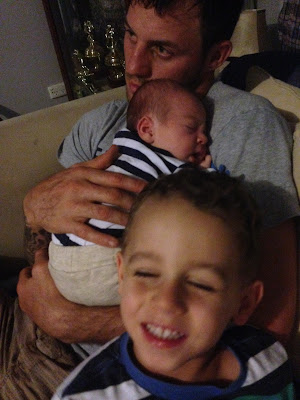
Davey Browne as doting father.
Davey had won the Youth world title belt when he was 22, but quit boxing for a period of time. After Davey and Amy were married he began training again in 2013 and got back into the ring. On September 11, 2015, while fighting for the IBC Pan Pacific super featherweight title, Browne took a devastating 11th round blow that caused a serious concussion. Video footage shows clearly that the fight should have been stopped. Unfortunately he was ahead in points, so no one wanted to interfere because if he simply stayed on his feet in the 12th he would win. Unable to defend himself, he was  mercilessly pummeled by his opponent who needed a knockout to win. 

Stephanie Convery, in a Guardian article titled "The avoidable death of Davey Browne: how an inquest exposed boxing's failures," wrote, "Boxing is inherently dangerous and requires a lot of trust from participants: trust in their trainers and managers to be able to properly assess whether they are adequately prepared for a fight and still performing at optimum during it; trust in the referee, inspectors and the ringside doctor to intervene if their safety is at risk. The outcome of the inquest into Browne’s death highlights a number of betrayals of that trust."

Browne died within days, on 15 September, 2015, leaving two children without a father, his wife a widow.

EN: Did you ever go see boxing matches before meeting Davey?

Amy Lavelle: I did not see them live, no. I followed some of the bigger matches that were well known and promoted in mainstream media but more in the background.


EN: What was your first impression of the sport?


AL: I certainly was intrigued by the sport. There was something appealing about the discipline required to be a professional boxer and the physical effects of the training, the elite fitness that could be attained. I appreciate the skills and mindset required beyond the physical action of it. It is glorified and, like many sports, only a small percentage actually get to the elite level and "make it." It's tough and only few have what it takes because it is inherently dangerous. 


EN: Ron Jackson wrote in Boxing Magazine, “After the death of a fighter there will always be calls to ban boxing.”  But you responded differently. Why?

AL: Because there are conditions and rules stipulated under which officials are supposed to stop a fight. Even if none of them want to, it's their role and it is supposed to happen. There is a requirement for a ringside doctor. He is not there just in case, he has an active role in monitoring the fight. Otherwise when fighters are getting injured and the fight goes on, it's like a street brawl and that's not the sport of boxing as I see it. It is a sport with rules and can be great if it is conducted properly. 


In the fights leading up to David's last one, 2 or 3 of them (which he won) were stopped by the referee and the losing opponent walked out of the ring and woke up ok the next day. It was clear David dominated and a TKO was called before David punched them so much that they were unnecessarily injured. This discernment was not exercised at David's fight.


Now, I understand that a freak punch can happen. A single punch to the head can cause unforeseen injury, even kill, and it's part of the risk of the sport. That I accept. But when a fighter is showing clear signs of concussion, does not know where he is, bounces off the ropes, is knocked to the ground, gets up unbalanced and needs help getting to and from his corner when the bell goes, that is when a fight needs to be stopped. To me that is no longer boxing.


EN: Stephanie Convery, in her book After the Count (which is about Davey’s death), stated that in 23 years and 2000 fights the ringside doctor never stopped a fight. Until I watched the 60 Minutes segment, I didn’t realize how many people had the power to stop a fight. What went wrong? And will it ever change?

AL: Davey was supposed to win the fight. It wasn't his night, he needed it to be stopped. He lost his own sense of what was going on because he suffered a head injury prior to being knocked out. Everyone was just going through the motions instead of attentively calculating what was actually happening. Maybe no one believed how hurt he was getting, or they just never thought it was going to be the worst case scenario. But I know he was not ok. 


I sat back and thought there is no way he will go out for that last round, he is too hurt. The officials were simply incompetent and it was a "professional" fight organized and run in an unsophisticated and disorganized way. They expected Davey to come out like he had done for his previous fights and dominate. But he didn't, and there was no safety net for him. There should have been. But I think that is part of the boxing culture in Australia in that sub-elite category. Until you make the big time with the big money it's, evidently, not safe if you aren't on top of your game, every fight.


EN: 
Just out of curiosity, do wives of boxers ever get together and talk about boxing? If yes, what are some of the things they might talk about (with regard to their husband’s choice of careers)

AL: I didn't really discuss boxing much with other wives ("WAGS"?). I was close to my sister-in-law at the time (David's brothers' wife) and the most we talked about was the training and lifestyle of boxing I guess. Maybe some politics of it and frustrations. The usual stuff, not exclusive to boxing I'm sure.


EN: Thank you, Amy, for sharing your story. Wishing you the best as you continue to re-build a home for your growing sons.  


Related Links

"Who Killed Davey Moore?" Bob Dylan, Live at Carnegie Hall, 1963

https://www.youtube.com/watch?v=LY31HqK135Q

Bob Dylan, Live at Newport 
https://www.youtube.com/watch?v=us_yCFnP95I

60 Minutes Australia: Death of a Champ (warning: includes disturbing fight footage)


Photos courtesy Amy Lavelle

Tuesday, May 31, 2011

The Fighter (Film Review)

This weekend I finally had a chance to see The Fighter, a film that gained a lot of attention during Oscar season earlier this year. Within minutes I knew why: Christian Bale.

THIS REVIEW MAY CONTAIN SPOILERS

O.K., Hollywood must like making boxer films because they've produced their share. Six Rocky flicks, Cinderella Man, Raging Bull, Million Dollar Baby, Ali... each with its own twist, and The Fighter is no different in this respect. Like the others, it's the story of an underdog going against all odds to reach the top, in this case Light Welterweight Champion of the World.

The film is based on a true story, which makes me want to pull my punches here a little because the family it's about is still around. I commend them for allowing this story to be told because The Fighter does not put this family in a very good light.

The story is about "Irish" Micky Ward who does succeed in achieving the crown. But it's also a story about Dicky Ecklund, his half brother who once stood toe-to-toe with Sugar Ray Leonard and believes he knocked Leonard down. Ecklund is a a completely tragic character. A crackhead living in a dream world, believing he really was a somebody and was going to make Micky a somebody.

Christian Bale is superb in the role, and so unlike the Batman he has played, or the magician. His hyper and gaunt appearance at the opening immediately laces you to your seat for this story. The next surprise is Amy Adams (as Charlene), who caught out attention in Junebug and whom we all fell in love with in her Enchanted innocence. We liked her in Julie and Julia, too. So what a surprise to find such a foul-mouthed Brooklyn barmaid here.

Throw Melissa Leo into the mix as the hysterical overprotective mom who in this story is so lacking in self-awareness.... and you have the main four characters, all at odds with one another as they spar to control Micky's destiny.

The movie has the feel of documentary and then within the film there is a real documentary being made throughout, of Dicky Ecklund's story. The whole time he believes it is a documentary about his own comeback as a fighter. But the real documentary is something much darker, a story about the effects of crack.

Bale deserved the Oscar nomination he received, but all the characters were pitch perfect. I suspect, however, that some of the language in this film will make it unsuitable for many, but it has "real life" written all over it. I was impressed.

Thursday, April 9, 2009

Cinderella Man

Last week I came across an audio version of Cinderella Man: James J. Braddock, Max Baer, and the Greatest Upset in Boxing History. I'd seen the film starring Russell Crowe last year, and though well done (and I like Russell Crowe in nearly everything he does) it was not a film that made me feel wowed. An interesting story about a down-and-out boxer who makes a comeback and ends up world champeen.

The book is far and away a superior telling of the story, because it is not about a boxer. It is about two boxers who have two totally different life trajectories.

James Braddock was a New Jersey working class guy. A wife, kids, a man who was motivated to fight by only one thing: to put food on the table for his family during the dark days of the Depression. Max Baer, on the other hand, was a jovial, charming fellow whose successes as a boxer (his punch carried a powerful wallop that resulted in two deaths) led to a career in Hollywood, liaisons with famous actresses, and the perks of privilege.

Max Baer, incidentally, was the father of Max Baer, Jr of the Beverly Hillbillies, who you may recall as Jethro. Now you know where that Jethro's natural good-naturedness comes from.

Baer's life story is as compelling as Braddock's but in the film you only get hints of it. In the book you get all the details. He was young, strong, cocky, but also carried a measure of anxiety after one of his blows knocked a man cold, permanently.
One of the things I learned was how in the 20's and 30's the sportswriters and promoters played up the ethnic rivalries. The Italian vs. The Irishman. The German vs. The Jew. Baer, though one quarter Jewish, wore the Star of David on his trunks during his later fights.

A feature of the audio book, which I found in the local library here, is a lengthy interview with Braddock himself who lived to be 69 and died in 1974. Braddock is asked about every facet of his life, and every fight. In his thick Jersey accent he makes comments that reveal much about the man, his opponents, and the life of a boxer. It's a tough life.

The book is also about the entire culture of boxing during what some have called its Golden Era. Gene Tunney, Jack Dempsey, Max Schmelling, Joe Louis... they're all there, as well as the promoters, trainers, refs and sportswriters who sought to keep readers' passions stirred even when there was nothing to write about.

As for the film, Ron Howard did a professional job, but it comes across as a cliche of what a Hollywood film should be. Pretty standard fare. Maybe his heart wasn't into it? The soundtrack was manipulative and pointless. Yet, you can still catch a glimpse of what made the Cinderella Man a compelling story when the real James J. Braddock was on the scene. A Comeback Kid. A Seabiscuit. An ordinary many who did an extraordinary thing.

When I finished the book I went and picked up the film again. While watching it on one monitor, I watched the actual Baer-Braddock fight on YouTube. What a contrast. If able, you might want to try it.

Popular Posts