Showing posts with label misinformation. Show all posts

Thursday, April 9, 2026

Another Example of Misinformation from Experts and How Mainstream Media Journalists Fail to Do Their Job

Blue Light Special
On Wednesday I wrote about a pattern that makes my skin crawl: "agenda driven narratives based on misinformation, a pattern that keeps repeating itself more and more the longer I live." The day before I wrote about how the Eugenics movement was spawned by "experts" who bought into Social Darwinism, pushing it to the degree that more han 30 states legalized sterilization of those these experts deemed to be misfits. 

Countless examples can be found, but when this one here came to my attention I felt obligated to bring it to yours.  

A research paper published in February in the journal Nature Communications claimed that people living in U.S. counties near nuclear power plants have higher cancer death rates. The authors — a Harvard doctoral student and his professor — estimated that about 115,000 extra cancer deaths occurred over a 19-year period because of proximity to these plants. When the study came out, many news outlets ran big headlines about it. But there’s a major problem with the study: the researchers never actually measured any radiation from the nuclear plants. 


Eric Meyer, Founder and Executive Director of Generation Atomic, didn't just roll his eyes at this absurd assertion. Meyer assembled three real experts to dissect the study in order to see whether there was even a shred of merit in it. The investigators were Philip Hult, a nuclear engineer at Generation Atomic; DJ LeClear, a health physicist with nearly two decades of field experience; and Jim Smith, a professor of environmental science who has studied Chernobyl since 1990.


The article Meyer wrote includes the link to a YouTube video in which he interviews Hult, LeClear and Smith.


Writes Meyer, "The study uses geographic distance as a stand-in for radiation exposure. Closer to a plant means more radiation, the authors assume. Talk to anyone who actually measures this stuff for a living and the premise falls apart. DJ LeClear has spent years taking readings outside nuclear facilities, and he put it plainly: the doses are so low they’re barely detectable. The NRC (Nuclear Regulatory Commission) puts the dose of living within 50 miles of a plant at about 0.01 millirem a year. You get the same dose from eating a banana." [EdNote: Link to U.S. NRC FAQ page.]


Here's a summary of the rest of Meyer's article in The Kernel:

Every time a scary headline about nuclear power plants and cancer pops up, the same panic happens: people hear the word “radiation” and immediately assume danger. In this faulty Harvard study the researchers never actually measured any radiation at all. They just looked at how far counties were from plants and compared cancer statistics.


That’s not a radiation study — it’s a geography study pretending to be science.

Nuclear plants are usually built near rivers, coasts, and cities for practical reasons. Those same areas also tend to have more factories, traffic, and urban stress — all things that can affect health. The study tried to account for other factors, but the experts Meyer spoke with said it’s nearly impossible to do cleanly.


Real-world evidence tells a very different story. Large, rigorous studies that actually tracked radiation doses on hundreds of thousands of nuclear workers show that the tiny amounts of radiation the public gets from normal plant operations cause virtually zero extra cancer risk.


The real danger here isn’t radiation — it’s fear itself. Scary, poorly done studies like this fuel “radiophobia,” which can hurt communities, shut down clean energy, and push us toward dirtier power sources that actually do kill people through air pollution.


Bottom line: Bad science isn’t harmless. When it attacks one of our cleanest sources of electricity without solid evidence, it becomes a public health problem in itself.


* * * * *

Today I am adding radiophobia (fear of radiation) to the list of phobias I've recently written about including yesterday's story on Trypophobia.


For what it's worth, I'm wondering if we can coin a word for another phobia that seems prevalent in our time: Fear of Common Sense. If you have a suggestion, leave it in the comments. Thanks for reading.


Related Links

The Banana Stand: How a Piece of Fruit Became a Symbol for Nuclear Advocacy

Saturday, June 1, 2024

The Misinformation Industry

"It's certainly true that bad information and made-up nonsense circulate on social media."--Robby Soave, Reason

"An open-minded spirit no longer exists within NPR, and now, predictably, we don’t have an audience that reflects America."--Uri Berliner

Angel & Trumpet
I’ve Been at NPR for 25 Years. Here’s How We Lost America’s Trust.
Uri Berliner, a senior business editor at NPR

https://www.thefp.com/p/npr-editor-how-npr-lost-americas-trust

"It’s true NPR has always had a liberal bent, but during most of my tenure here, an open-minded, curious culture prevailed. We were nerdy, but not knee-jerk, activist, or scolding. 

"In recent years, however, that has changed. Today, those who listen to NPR or read its coverage online find something different: the distilled worldview of a very small segment of the U.S. population." 

* * * * 


This New York Times story has a comical title: "Accused" of Liberal Bias. My guess is that the majority of NPR journalists are not bothered by this accusation because it is accurate. Anyone who listens to NPR news is well aware of NPR's slant on things, so the story comes as no surprise. 

Accused of Liberal Bias
An essay from an editor at the broadcaster has generated a firestorm of criticism about the network on social media, especially among conservatives.


Uri Berliner, a senior business editor who has worked at NPR for 25 years, wrote in an essay published Tuesday by The Free Press, a popular Substack publication, that “people at every level of NPR have comfortably coalesced around the progressive worldview.”


https://www.nytimes.com/2024/04/11/business/media/npr-criticism-liberal-bias.html

"Persistent rumors that the Trump campaign colluded with Russia over the election became the catnip that drove reporting. At NPR, we hitched our wagon to Trump’s most visible antagonist, Representative Adam Schiff." 


"Schiff, who was the top Democrat on the House Intelligence Committee, became NPR’s guiding hand, its ever-present muse. By my count, NPR hosts interviewed Schiff 25 times about Trump and Russia. During many of those conversations, Schiff alluded to purported evidence of collusion. The Schiff talking points became the drumbeat of NPR news reports."


"But when the Mueller report found no credible evidence of collusion, NPR’s coverage was notably sparse. Russiagate quietly faded from our programming."


Russiagate was not NPR’s only miscue.

In October 2020, the New York Post published the explosive report about the laptop Hunter Biden abandoned at a Delaware computer shop containing emails about his sordid business dealings. With the election only weeks away, NPR turned a blind eye. 


“I decided to go out and publish it [this essay] in hopes that something would change, and that we get a broader conversation going about how the news is covered,” Mr. Berliner said.   >>NYTimes

* * *
Question asked on Quora regarding media integrity:

Do you think the mainstream media is a joke? Why or why not?

TJ Hill: Most mainstream news is very frustrating because they usually lie by omission. They leave out important facts to suit they’re agenda. You can find ex-journalists online telling stories about the round table at these organizations. They have to inflate anything that is fear driven to bring in more ratings…..and most of the major news networks are bought and sold by left leaning corporate interests. They absolutely can’t say anything that doesn’t suit their narrative…..It’s fairly obvious at this point that the only people they’re fooling is the elderly. Most people with access to alternative news sources can see the transparency. 

Monday, November 28, 2022

What's Worse, Misinformation or Loss of Freedom?

Photo by Louis Reed on Unsplash
It is easy to identify something in medicine that sounds fishy, but very hard to know what is indisputably wrong. This is especially true in the heat of the moment, when emotions are heightened, and when politics intersect with science.

That is why wise scientists are concerned that policing misinformation (particularly using blunt modern tools: censorship, shadow-banning and de-throttling) is dangerous. Policing is different than debating. It's different than rebutting. It's using the brute force of the modern algorithmic platforms to slow the spread of your opponent's ideas. I worry it has been misused.

--Vinay Prasad

* * *

In a world where truth is pliable as plastic, it is immensely helpful to have people who can lead us through the haze. Vinay Prasad is one of these whose insights I have come to value during these past few harrowing years. 

Here are some thoughts from a century ago about free thought and official propaganda in which Bertrand Russell asserts that we can't have freedom of thought as long as there are legal penalties for the expression of opinions. You can read an amplification of these ideas here:  Bertrand Russell's Free Thought and Official Propaganda Has Much to Say about the Current State of Cancel Culture

The following is a short bio from the website of Dr. Prasad:

Vinay Prasad MD MPH is a hematologist-oncologist and Professor in the Department of Epidemiology and Biostatistics at the University of California San Francisco. He runs the VKPrasad lab at UCSF, which studies cancer drugs, health policy, clinical trials and better decision making. He is author of over 350 academic articles, and the books Ending Medical Reversal (2015), and Malignant (2020). He hosts the oncology podcast Plenary Session, the general medicine podcast the VPZD show is active on Substack and runs a YouTube Channel VinayPrasadMDMPH. He tweets @VPrasadMDMPH.

* * * 

Related Links

Malignant: How Bad Policy and Bad Evidence Harm People with Cancer

By Vinayak K. Prasad

http://www.vinayakkprasad.com/

He Who Controls the Narrative Controls the People

Friday, January 14, 2022

A Few Comments on the Food Shortages

In June 1992 a Burlington Northern railroad derailed while crossing the Nemadji River. 14 cars jumped the track. One of these, a chemical car, fell into the water and began spilling benzene. A toxic cloud of benzene began to form, slowly growing only to be carried by winds in what appeared to be the direction of Duluth and the North Shore. Local authorities quickly went into action and began urging people to evacuate the city.

Our family was living on the Central Hillside at the time. Susie called me at work to make a plan. It so happened that we had booked a cabin up near Gooseberry Falls for the weekend but cancelled. Because we could not get our deposit back I had planned to turn it into a one day writing retreat. 

Everyone had their radios on, following the breaking story. I was working at Chromaline in West Duluth at the time and it was decided that we would all leave by noon. The slow moving toxic cloud would not reach the city for a couple hours. The radio station I was listening to had callers calling in to ask which roads were best to take in order to get out of town. Purportedly all traffic heading toward Duluth from the north was stopped in Two Harbors, as were other roads coming from the west and south.

When I left the office and headed to my house at the top of First Avenue East, there was an eerie sensation that I was living in a horror film. There were no cars moving, and with the exception of one man who was standing in the middle of his front yard with his arms folded I saw no people at all anywhere. I went into my house, changed clothes, grabbed a few items for the evening and left. 

While I was in my car, people were calling the radio station asking what roads were open to get out of town, and one of them said that traffic heading toward Two Harbors was backed up all the way to London Road. Well, that was the direction I needed to go. Looking out over the lake I could see the benzene cloud but it was moving slow and going more north than west, so I decided to take my chances.


SO HERE'S THE SHOCKER. When I drove down London Road, which was supposedly bumper to bumper traffic going north, there was nary a car. I mean, I did not see a single vehicle. I figured that if I keep going I'll reach the tail end of the traffic at some point further on, but as I drove along -- I took the scenic route so I could watch the white cloud on the lake -- I went totally unimpeded. Even while driving on this empty road one of the radio announcers repeated that this was not a good way to leave town because of the traffic which was stopped dead for 20 miles. 

My car was the only vehicle on the road, the entire way to Two Harbors.

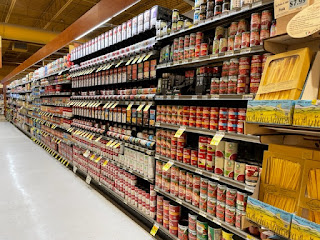
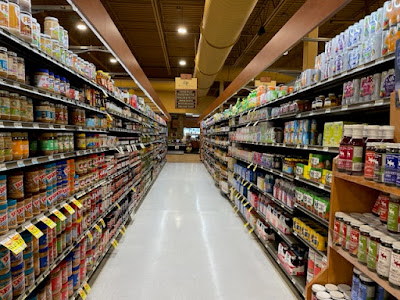
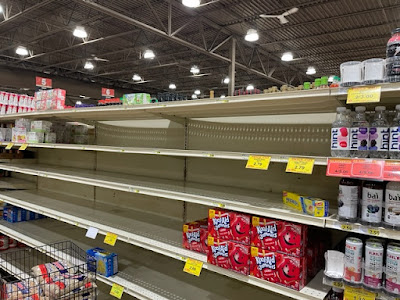
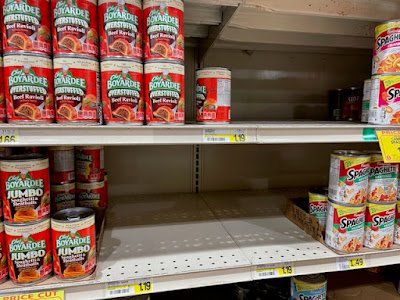
OK, here's the point of my story. Wednesday on one of the radio stations I heard someone say how the grocery store shelves are all empty, that  it was like living in 1981 Soviet Union. 

The photos above were taken at the Mount Royal grocery store here in Duluth. The photos below were taken at a Super One in Hermantown or Pike Lake. 


OK, so we had a couple places where they were missing items. Last year we went three to four weeks without "Tostitos with a Hint of Lime."

But it's hardly the Soviet Union 1981. At least not here.

If your experience is different, feel free to leave a comment and say where you're from. I'd like a clearer picture of what is really happening.

Monday, June 22, 2020

Where is the Balance Between Free Expression and Harmfull Online Misinformation?

"Pinched". Pencil on paper, 1969.
How do Americans weigh a core value like free expression against the downsides that come with harmful content and misinformation online? A new report by Gallup and Knight Foundation, released June 16, explores attitudes toward key issues in tech policy, including content moderation, Section 230 of the Communications Decency Act, and approaches to industry self-governance like Facebook’s Oversight Board. This new study provides a springboard for tech companies, government and citizens like to advance a conversation about free expression online.

* * * *
The above was the intro blurb/advertisement for a seminar I attended last week by the Gallup organization and the Knight Foundation. They've been doing a series of programs with interesting and relevant data from Gallup combined with insightful commentary by experts.

At the heart of this issue is a very real problem. Who decides? Who decides what is and is not acceptable "free speech"?

Because all of these social media platforms are accessible to all, there is a sense of responsibility that accompanies their use. And then there are the darker aspects of this issue. For example, when Facebook or Twitter or Reddit post content that hurts other people, should these people be allowed to sue Facebook, Twitter and Google?

Currently there is a section of the law called Section 230 that prohibits suing the platforms. 66% of the public favors keeping Section 230 as is. But a full one-third want to eliminate that.

Heather Moore from Facebook was one of the speakers addressing questions about governance of content. In 2019 Facebook established an independent board designed to hold Facebook accountable for their rules in this area. She said they chose an independent board because people don't trust government. Politics has become polarized and rules inconsistent.

Gallup/Knight assembled a lengthy report which I will link to at the end, but here are a few highlights of note.

Nearly all Americans (98%) say child pornography should never be allowed on social media, and particularly relevant today, 85% say misleading health information also should be prohibited.

The Executive Summary states:
Many Americans have personally been targeted by harmful online behavior. – Of the types of harms people experience online, Americans most frequently cite being called offensive names (44%). More than 1 in 3 (35%) say someone has tried to purposefully embarrass them online, 18% have been physically threatened, and 15% have been sexually harassed.

and


Challenging issues in challenging times.
Fully 3 in 10 Americans (31%) have requested a social media or internet company remove a post made by someone else they considered harmful, and 21% have had a post they made removed by a social media or internet company.

Those numbers perhaps help put a little perspective on things. But then there is the issue of trust. Can the social media companies be trusted to make good decisions? 44% of Americans do not have a lot of faith in the social media folks to make trustworthy decisions and 40% don't trust them at all.

It must be challenging for the companies because nearly half say they are not tough enough and others say they are too tough.

When it comes to free expression, 52% of Democrats say that people should have freedom to express their views and 76% of Republicans feel this way. Neither party believes in unlimited free expression.

The report is available for downland and a worthwhile snapshot of an important issue today. You can find it here: Free Expression, Harmful Speech and Censorship in a Digital World

Popular Posts