Showing posts with label Hall of Fame. Show all posts

Saturday, May 2, 2026

The "300 Wins" Club and Other Miscellaneous Baseball Notes

For some reason baseball has been on my mind this weekend. I suspect that something caused me to think about Nolan Ryan, the Astros hurler whose fastball was clocked at 108 miles per hour. That's little more than the blink of an eye when you're in the batter's box. 

One of the amazing things about Nolan Ryan was his longevity. He was still throwing overpowering fastballs in his forties, retiring at age 46. In addition to being a Hall of Famer with 5714 strikeouts, he was also a member of the "300-win club," a distinction reached by only 24 pitchers in Major League Baseball history. (Ryan retired with 324 wins.)

Reading that stat brought to mind memories of a couple other members of that elite club whom I actually saw pitch, Early Wynn and Tom Seaver. I saw Wynn in Cleveland in 1963 as he was chasing his 300th win. I was 10 going on 11. We had box seats a stone's throw from the Cleveland dugout. It was a sunny afternoon, the stadium packed in hopes of witnessing hisory and the grass was very green. I remember thinking he looked old and a bit stocky, not like the lean younger players I'd seen. The Indians lost that day but Wynn captured he's 300th in Kansas City within weeks and hung up his cleats. He'd achieved his milestone.

Tom Seaver of the New York Mets was another member of the 300-win club whom I saw. The Mets were one of the new expansion teams created in the Sixties, notoriously inept in their first years, but loved by their fans. I remember painting a banner for one of their many Banner Days. Their transformation from a comic opera to World Series Champions by the end of the decade was quite stunning. Tom Seaver was a major factor in the Mets' success with 25 wins and a 2.21 ERA, which is pretty much golden.

The game I saw him pitch was a double-header against the Pittsburgh Pirates. The Pirates were a favorite team of mine due to the fact that their rightfielder, Roberto Clemente, was my favorite player. The Puerto Rican Clemente was an exceptional man as well as an exceptional ballplayer, and the tickets we purchased for the game were intentionally down the right field line so Clemente could be in my direct line of sight. But since we're talking about pitchers, I seem to have digressed.

Tom Seaver pitched the first game, going head-to-head with Bob Veale of the Pirates, who was himself a formidable pitcher. Standing 6'6" Veale was one of the National League's strikeout leaders in the 60s, and top dog in strikeouts in 1964. Needless to say it was a boring game as far as action goes, and the home team won one to nothing. No problem with that. It was a double-header and the second game was full of action. Final score: 11-9.

Other pitching greats coming to mind now include Cy Young, Sam McDowell and Catfish Hunter. Cy Young's stats defy comprehension. Each year the Baseball Writers' Association of America select one pitcher from each league (American and National) to receive the Cy Young Award in honor of Young, who pitched from 1890 to 1911 and racked up an insurmountable pile of winning games during his 21 year career, 511 in all.

Today, starting pitchers seldom go beyond the 7th inning. Decisions are made by pitch counts. In baseball's early years hurlers would keep pitching till the game was over, which might take 15 or 20 innings. In 1920, Joe Oeschger of the Braves and Leon Cadre of Brooklyn pitched 26 innings before leaving a 1-1 tie on the scoreboard. They didn't have lights light today, so when it was too dark to see they had to call it. It was the longest game ever. 

The Cleveland Indians were a team with many pitching greats, among them Hall of Famers Bob Lemon and Bob Feller. When "Sudden Sam" McDowell joined the Indians in 1961 expectations ran high. He was a 6'5" fireballer who in high school pitched 9 no-hitters and once struck out all 27 batters he faced in a single game. He was precisely what the bumbling Indians needed to recover a measure of dignity and hope for fans. Unfortunately it was too weighty of a load for the young "potential" star. As we all know, when expectations run high, not everyone can handle the pressure, and in McDowell's case he succumbed to alcoholism. An unfortunate injury also contributed to his failure to live up to expectations. On one occasion he was pitching a fastball so hard that he cracked three ribs. (You have to know a little about the mechanics of pitching to understand how that could happen.) At the time of his retirement, his strikeout rate of 8.86 per nine innings was bested by only two pitchers: Nolan Ryan and Sandy Koufax.   

Jim "Catfish" Hunter will be the last pitcher in my spotlight today. A Hall of Famer, and Cy Young Award winner with a stellar career, he was the only pitcher since 1915 to win 200 games by age 31. He has the distinction of being baseball's first "big money" free agent. At 33 his career was shortened by arm troubles. In 1987, after being diagnosed with Lou Gehrig's Disease (ALS) he died within a year. Bob Dylan wrote a tribute song to Catfish that still lives on.

Related Link
It Happens Every Spring: Baseball and Duluth Dylan Fest 2026

Friday, January 3, 2025

Contrarian Observations, January 3, 2025

"The Rock & Roll Hall of Fame induction ceremony, which took place last October and was rebroadcast on ABC on New Year’s Day, is a reminder of why rock and roll doesn’t need a hall of fame."
--Tom Nichols, Staff Writer, The Atlantic

From the "Knocking Over Sacred Cows Dept." A humorous takedown of a Boomer institution: The Rock and Roll Hall of Fame Should Not Exist.

I have been recently introduced to a new source of climate-related common sense, a substack called Energy Talking Points by Alex Epstein. Here is an insight.

"It’s an irrefutable but little-known fact that as the world has warmed 1° C, humans have become safer than ever from climate danger. The rate of climate-related disaster deaths—from storms, floods, temperature extremes, wildfires, and drought—has fallen 98% in the last century." 


Machines powered by abundant energy have allowed us to:

  • master drought danger via irrigation and crop transport,
  • master temperature danger via heating and A/C,
  • master storm danger via building resilient infrastructure plus storm warning and evacuation systems

Read & Share: Three Undeniable Facts About Climate
https://alexepstein.substack.com/p/3-undeniable-facts-about-climate

*

That's all for today. Think about it.

Wednesday, October 5, 2022

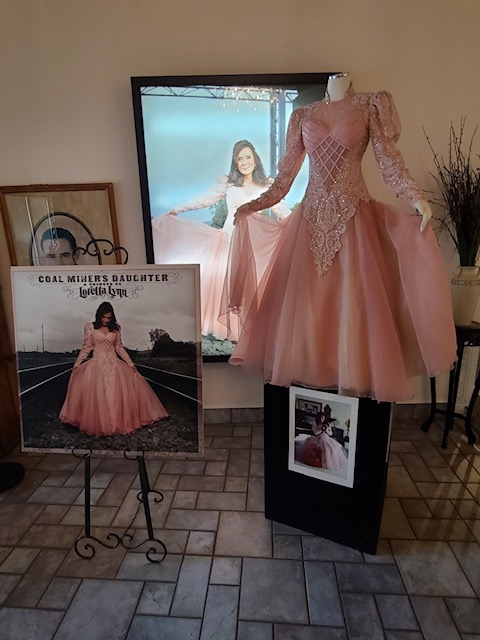
Loretta Lynn Left A Legacy

R.I.P. Loretta Lynn
April 14, 1932 – October 4, 2022
The First Lady of Country Music


* * * * *

As of 2022, Loretta was the most awarded female country recording artist in history. She is also the only female to have won ACM Artist of the Decade honors (1970s). In addition to 24 No. 1 songs and 11 No. 1 albums to her credit, Lynn has won three Grammys, seven American Music Awards, thirteen ACM Awards, eight BMI awards, eight CMA Awards and 26 fan-voted Music City News awards. In 1988 she was inducted into the Country Music Hall of Fame, the Country Music Gospel Hall of Fame in 1999, and received a Kennedy Center Honor in 2003. In 2008 she became a member of the Songwriters Hall of Fame, and received a Lifetime Achievement Award Grammy in 2010,  a Presidential Medal of Freedom in 2013, and honored as Artist of a Lifetime by CMT in 2018.

* * * * *
My own roots are Eastern Kentucky. Both my grandfathers did time mining coal in West Virginia. I personally think it's cool that Levon Helm of The Band played her father in the Hollywood film version of her life

Photos on this page courtesy Gary Firstenberg. One of his specialities is
documenting the musical figures who produced the soundtrack of our lives.
EdNote: The first photo at the top of the page is a photo of a photo
that was hanging in one of her barns. Gary did not take the original.

Thursday, August 18, 2022

Memory Lane: The Greatest Ballplayers of All Time Faced Off in the Dream World Series

OK, I'M BUMMED.

When I was in high school in the late 1960s, there was an incredible radio production called the Dream World Series. It was a virtual world series in which the greatest American League and National League all stars faced off in a best of seven competition, re-enacted as if it were really happening.

I listened to every game, which was broadcast complete with crowd noise, the crack of the bats and great announcers calling the game. I kept scorecards, cheered for the American League throughout--I was a Ty Cobb fan, plus there were so many other greats--and never missed an inning.

WHAT I'M BUMMED ABOUT is that I can't find this epic event online. I have done periodic searches, and always come up empty.

I can't recall who won the series, but I do remember it went to seven games. I also remember that Ty Cobb may have been ejected from one of the games for his aggressive manner of playing.

Does anyone out there remember this historic event? If it is online anywhere, can you send me the link? ennyman3 AT gmail.com.   I would love to re-live that memory.


The baseball cards here are from my Hall of Fame collection. For some reason they don't have the value old Topps cards have. If you are a collector I have a number of very interesting items, like the programs from two All Star Games in Cleveland (1954 and 1963). 

Now that we live in the amazing digital age, someone will assemble a Dream World Series that is video. It would be an epic undertaking, but... wow. You can imagine it... "Here's Mariano Rivera coming in to relieve Cy Young as 8-time batting champion Honus Wagner steps up to the plate, runners on first and third. Wagner flexes, digs in and gets set. The windup... and the pitch.... strike one."


Thursday, April 9, 2020

What Was Fireballer Bob Feller's Greatest Achievement?

Bob Feller. (Public domain)
When I came home from the hospital after I was born, there were four teddy bears in my crib, named after the starting rotation of the Cleveland Indians. Three of these became Hall of Famers--Bob Lemon, Early Wynn and Bog Feller. The fourth, Mike Garcia, twice led the league in ERA and was a 20 game winner the year I was born.

Like the 1980s and 90s Atlanta Braves, the Indians were loaded with pitching talent. Premiere among them was an Iowa farm boy who in his prime threw a nearly unhittable fireball, Bob Feller.

I'll interject here that of my four teddy bears, Feller and Lemon were my favorites, in that order. Both were black and stuffed bears. Feller had a white torso with skinny black arms and legs, and black head with button eyes and pinched face. If you see pictures of toddler holding a teddy bear at their side with the hand gripping an arm, that would have been me and Feller.

While thinking about our Major League Baseball season that's gone AWOL this year, I began reflecting on some of the baseball memories of my youth. This led me to looking up stats whereupon I came across a webpage dedicated to Bob Feller. Or more correctly, it was a 2010 poll that asked readers to choose what they considered his greatest achievement. Mike Peticca is listed as the author.

This is what Lemon looked like. My
Feller had skinnier arms and legs.
Frankly, I am always impressed when young people achieve big things early on and somehow keep it from getting into their heads. Bob Feller was a smoking hot pitcher from the start, going to work on the mound for Cleveland while he was still in high school, age 17. In his first start he struck out 15 batters. Before the season ended he went back to high school, but not before typing the major league single-game record for strikeouts in a single game: 17.

I can picture the first day of school. "So, what did you do this summer, Bobby?" 

At the end of his school year his high school graduation in the spring of 1937 was broadcast nationally by NBC Radio. As a parent one might worry all that celebrity would go to the kid's head. Somehow he hung in there and went back to work with zeal. The following year, before he had even turned 20, Feller became the first pitcher in the 20th century to strike out 18 batters in a game.

Now, let's get into the meat of it. What was Bob Feller's greatest pitching achievement? What would you choose?

__ A 5-3 record, 3.34 ERA, 76 strikeouts in 62 innings, a record-tying 17-strikeout game, in 1936, before his senior year in high school.

__ Winning 107 games, with 54 losses, at age 22, before enlisting in the U.S. Navy and serving in World War II.

__ Leading the majors in wins (27-11 record) and strikeouts (261) and leading American League in ERA (2.61) at age 21 in 1940.

__ A 26-15 record, 2.18 ERA, a then-record 348 strikeouts, 36 complete games, 10 shutouts, four saves in 1946, his first full season after World War II.

__ Leading American League in wins five straight years (1939-41, 46-47), not counting the nearly four seasons he fought in World War II.

__ Leading majors in strikeouts in each of his first seven seasons (1938-41, 46-48) as a full-time starting pitcher.

__ Retiring as first pitcher to throw three no-hitters in the 20th century, and tied with Nolan Ryan for most one-hitters (12).

THE ANSWER
According to Mike Peticca: "Feller's greatest achievement, though, was that he gave up nearly four prime years of his baseball career to serve the United States in World War II. He enlisted in the U.S. Navy on Dec. 9, 1941, the first major leaguer to join the military after the Japanese invasion of Pearl Harbor that Dec. 7."

The Sporting News called him the greatest pitcher of his time. Ted Williams said he was the fastest and best pitcher he ever faced. But his enlistment and service on the USS Alabama in the South Pacific theater speaks much about his character that goes beyond his record as a fireballer.

* * * *
Here is a link to the original article:
https://www.cleveland.com/tribe/2010/12/bob_feller_what_was_the_greate.html

Related Links
Reflections on The Natural
Moneyball Worth More Than the Price of Admission

Popular Posts