Showing posts with label Washington Irving. Show all posts

Thursday, January 4, 2024

Pocket's Selection of the 43 Most Iconic Short Stories in the English Language

A Writer's Life
You've probably noticed that people love making lists. Top ten drummers of all time. Top 100 novels of the 20th century. The fifty most influential books of all time. The seventeen most important inventions of history.

The other day I saw a web page announcing, in their opinion, the 43 Most Iconic Short Stories in the English Language. The title caught my eye and, despite the fact that 43 is such an arbitrary number that I can't take it seriously, I had to see what they listed. I followed the link. As it turns out, out of the first dozen I'd read nearly all of them, and overall it really is an impressive list. I decided to share the first dozen or so here.

Disclaimer: I am a big fan of well-crafted short fiction. I used to acquire short story anthologies and collections like The Best Stories of 1981 or 1985 or whatever year I came across. Norton Anthologies helped guide me to new writers as well. 

The "43" list starts with 2 stories by Washington Irving: "Rip Van Winkle" and "The Legend of Sleepy Hollow." Irving knew how to tell a story and both of these are deservedly classics. (I will call this "One.")

Next we find Edgar Allen Poe's "The Tell-Tale Heart." Poe crafted so many engaging stories, I suspect that these selectors no doubt had a hard time selecting just one.

When I was in junior high I acquired an anthology of Edgar Allen Poe's works, both stories and poetry. "The Tell-Tale Heart" definitely made an impression on me. So many others did as well, including "The Mask of the Red Death," "The Murders in the Rue Morgue," and "The Gold-Bug."

Four: "Bartelby, the Scrivener" by Herman Melville. I read it as I went through my brief Melville phase. His epic novel Moby Dick is deservedly a classic. So I selected a couple follow-ups, including Billy Budd and this one. I read it but remember nothing, so evidently it didn't make the same impression.

Five: "An Occurrence at Owl Creek Bridge" by Ambrose Bierce. First reading was in junior high. When I read it decades later, I tried to imagine writing this myself. It's an impressive and engaging story about a condemned Confederate soldier during the Civil War. Perfect pacing throughout, Bierce's story is a masterful work.

Six: "The Yellow Wallpaper" by Charlotte Gilman. I've never read this one, so no comment, but as time permits I will seek it out.

Seven: "The Turn of the Screw" by Henry James. Not sure why I didn't get into Henry James even though I know he is an important writer.

Eight: "The Lady with the Dog" is probably one of Chekhov's most well-known stories, but anyone who stops with this one will be missing a treasure trove of fine stories, some quite serious and others hilarious. One of my favorite all-time stories is "The Bet." A must read. My first Chekhov story was actually a one-act play titled, "On the Harmful Effects of Tobacco." It's hilarious.

Nine: "The Monkey's Paw" by W.W. Jacobs. Exemplifies the adage, "Be careful what you wish for." A powerful and chilling story.

Ten: O. Henry's "The Gift of the Magi." This is another that we were introduced to through public school. To learn more about this prolific short story writer who was master of the twist ending, see A Brief Glance at the Life of William Sydney Porter, a.k.a. O Henry.

If you like short stories...
Eleven: "The Dead" by James Joyce. Read it. Didn't get into Joyce when I was reading his books in college. Was I too young to appreciate what they had to offer.

Twelve: "The Metamorphosis" by Franz Kafka is classic. I first read it in a small volume called Continental Short Stories. One morning Gregor Samsa wakes up to find that he has become a cockroach (or something similar.) The absurd premise is carried out to the full measure. If interested, Haruki Murakami is written a sequel to this very strange tale that you might find interesting.

To find Thirteen through Forty-Three: You'll have to follow this link. I think it somewhat ironic that the title of this list says "in the English language." Chekhov and Kafka no doubt wrote in their native tongues, but since they have been translated I will over look that.

* * *

When I was young, Hemingway's In Our Time inspired in me a desire to be a writer. The power of Heingway's prose prodded me to work hard at it. I was especially attracted to writing short fiction. My first short story collection is titled Unremembered Histories. If you have read it please leave a review at Amazon. If not, read the existing reviews and add it to your cart. 

Wednesday, April 20, 2022

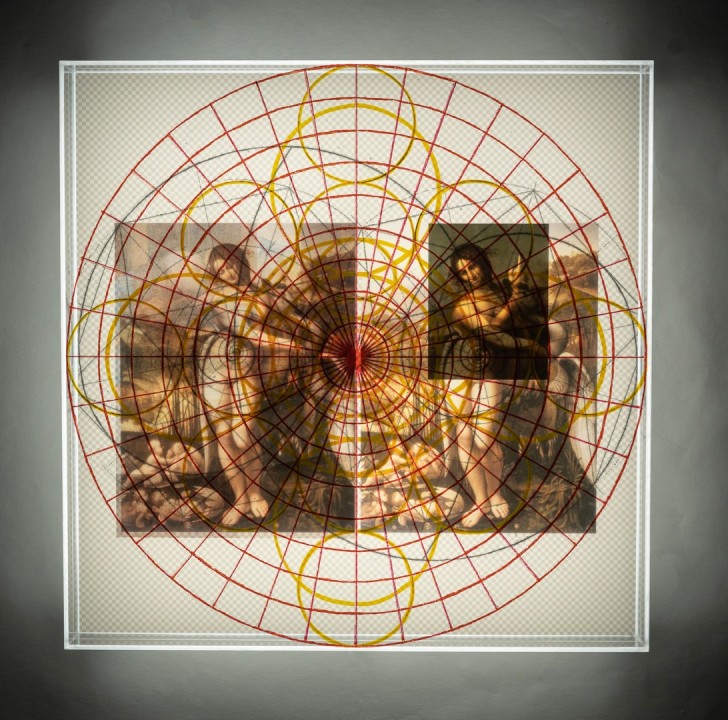
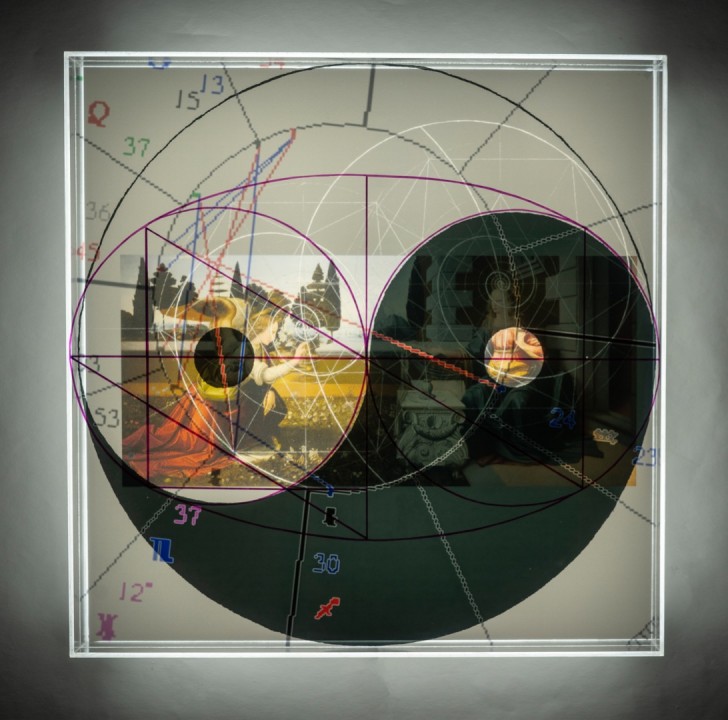
Margarida Sardinha's Da Vinci Simulacrum: Catch It If You Can

#10 Heart Sound
We're all familiar with the story of Christopher Columbus who in 1492 set out to find a passage to India by traveling westward across the sea. While listening to a lecture today regarding the significance of this man's conviction that the earth was round and the challenges he faced, the lecturer made a reference to American author Washington Irving. Most Americans know him best for stories such as The Legend of Sleepy Hollow and Rip Van Winkle. He was also one of the first magazine editors to publish Francis Scott Key's "The Star Spangled Banner."

In 1815 a financial disruption prompted him to cross the Atlantic to salvage his family's trading company. After two years he was forced to declare bankruptcy. Instead of returning to the States, he remained in Europe and pursued a writing career, inspired in part by Sir Walter Scott, author of the novel Rob Roy, whom he'd spent some time with in 1817.

Irving left England to explore the Continent. At one point, while in Paris, he received a letter from a friend encouraging him to come to Spain. He was told that a number of manuscripts had been recently been made public. Like any real writer that I've ever known, he was always on the lookout for good stories. Being given full access to a remarkable collection of books and documents pertaining to Spanish history, Irving began several books at once, the first being A History of the Life and Voyages of Christopher Columbus.

As I listened to the lecture on Christopher Columbus, Irving's time in Spain was commented on, specifically his time spent staying at The Alhambra in Granada. Naturally, as soon as I heard mention of The Alhambra, a unique palace/fortress in the Andalusia region, I immediately thought of Margarida Sardinha's richly rewarding 2015 art exhibition titled Symmetry's Portal which was inspired by this self-same place. 

This memory/connection was fresh on my mind due to a recent press release regarding her latest installation titled Da Vinci Simulacrum, which will be opening this coming Saturday, 23 April, at the Museu IbĂ©rico de Arqueologia e Arte de Abrantes (MIAA). The show is curated by Hugo Dinis and supported by Garantir Cultura and Abrantes Municipality, Portugal, in partnership with Figueiredo Ribeiro Art Collection. It will be on display through 25 September.

The Lisbon-born Sardinha has been receiving much-deserved recognition for her labors in the arts these past two decades. I first became aware of her work circa 2010 and have been perpetually impressed ever since. What impressed me (or attracted me to her ideas) was the manner in which she synthesized and distilled concepts from literature, philosophy, religion, science, mathematics, technology and art. The concepts she wrestles with are expressed in a range of mediums including experimental film and other formats.  

The imagery on this page is from her current show, Da Vinci Simulacrum. You can see more by visiting https://www.margaridasardinha.com/work/20

Other themes from past shows include Wave-Particle HyperLightness, Oxymoron Tiling, Hyperbolic Hyparxis, Symmetry's Portal, London Memory and Darkness Reflexions. 


To learn more about Margarida Sardinha visit 

Tuesday, January 20, 2015

The Alhambra: An Introduction for North American Readers

I recently received an email regarding a new exhibition, titled Symmetry's Portal, by Lisbon-born artist Margardia Sardinha. The show was exhibited at Centro Cultural Jaime Lobo e Silva in Ericeira and opening this past week at Lisbon's Ismaili Centre, which belongs to the Aga Khan Foundation.

The press release begins with this enticing description:

Symmetry 's Portal is an exhibition organized by the artist Margarida Sardinha that has, over a lengthy period of time, been extensively focused on the concepts of symmetry and optical illusion. The exhibition expands geometrically a wide photographic survey of the Alhambra in Granada documented by the artist. This photographic assemblage is used by Margarida Sardinha to deconstruct symmetry and to generate illusory semblances. Symmetry 's Portal is a body of work of optical illusions where the symmetric and random are diluted in three-dimensional works originated from two-dimensional planes.

In order to properly write about M. Sardinha's current work I found myself challenged by my ignorance regarding the central feature of this work, the Alhambra in Granada on the southern plains of Spain. Since learning of the show last week I downloaded several books about the Alhambra to my Kindle and have been surprised yet again by another wonder of the world.

First surprise: Washington Irving, author of the Legend of Sleepy Hollow and Rip Van Winkle, wrote a book about his journey to the Alhambra in the mid-nineteenth century. Irving, who later completed a five-volume biography of George Washington, had been appointed ambassador to Spain from 1842-45. During this time he took the opportunity to travel through Don Quixote territories to this most unusual palace and fortress complex which had first been established by the Moors when they conquered Spain. Irving, being an author, wrote in great detail and an entertaining manner about the trip to the Alhambra and the marvels he encountered there.

The Alhambra began as an outpost in about the 9th century, was later rebuilt and added onto in the 11th century by the Moorish emir Mohammed ben Al-Ahmar of the Emirate of Granada, who built its current palace and walls. It was converted into a royal palace in 1333 by Yusuf I, Sultan of Granada.

But its history doesn't end there. After the Muslims were removed from Spain, Christian rulers moved in to portions of the Alhambra and added some of their own embellishments. In fact, it was here that in 1492 Christopher Columbus made his presentation to King Ferdinand and Queen Isabel of Spain to obtain funding for that crazy-wild notion of going to India by a direct route West across the Atlantic.

The structure over time fell into disrepair until a much later time it was recognized for the jewel that it was, with restorations initiated in the 19th century.

This history is not, however, the focus of Symmetry's Portal. Rather, it is the remarkable tiling patterns with which this palatial wonder has been decorated. I learned more about this feature of the Alhambra by reading John Jaworski's volume A Mathematician's Guide to the Alhambra.

For those unaware, Islam forbids representation of the human form, hence the "kaleidoscope of colorful tilings, carvings and reliefs" in Islamc architecture. According to Jaworski, the phenomenon that is featured in the Alhambra regarding these designs is that there are examples of all 17 possible tiling patterns here. The designs of the Alhambra thus become a catalog of mathematical forms.

17 is an interesting number. First, as a prime number, it is indivisible. Second, among other things, it is the only known prime that is equal to the sum of digits of its cube (17 to the third power = 4913 and 4 + 9 + 1 + 3 = 17).

To understand  what is going on in the patterns of the Alhambra it is helpful to understand tiling, symmetry and tessellation, the latter being "the tiling of a plane using one or more geometric shapes, called tiles, with no overlaps and no gaps." Many of us have a measure of familiarity with the concept through the etchings of M.C. Escherwho was himself inspired by the Alhambra.* Not all tiling patterns have symmetry, and according to those who have studied this, there can be no more than 17 distinct ways to repeat these motifs. This standard of 17 exists only in Egyptian temples and the Alhambra.

How did these artisans in Egypt and of the Alhambra discover this? How did this all come about? As this is my first introduction to these notions, I can only say that I look forward to learning more, and aim to share more insights from M. Sardinha's penetrating work, which appears to be an outgrowth of concepts that she has been developing for many years.

"Know oh brother ... the study of sensible geometry evokes skill in all practical arts, while the study of intelligible geometry evokes skill in the intellectual arts because this science is one of the portals through which we move towards the knowledge of the essence of the soul, and this is the root of all knowledge..."
~Rasa'il Brotherhood of Purity, translated by S.H. Nasr

TO BE CONTINUED

* Henri Matisse and David Hockney are additional 20th century artists who found inspiration in the designs of the Alhambra

Photo Credits
Top Right: "Ceiling in Alhambra" by Liam987 - Own work. Licensed under CC BY-SA 3.0 via Wikimedia Commons.
Lower Photo: "Vista de la Alhambra" by bernjan - Flickr. Licensed under CC BY 2.0 via Wikimedia Commons.

Popular Posts