Showing posts with label collaboration. Show all posts

Monday, February 9, 2026

Short Story Monday: Song of the Matrix (Version 5.0)

An AI Collaboration 

Perry Gustafson often felt as though his mind teetered under the weight of a thousand rickety tensions. It wasn’t madness, exactly, but a constant pressure—too many rules, too many judgments, too many voices ringing through the corridors of memory.

This evening he ducked into The Power Café, a narrow place on the corner that had once been a tailor’s shop. It now boasted a slogan in chalk script on the sandwich board outside: The Magic of Northern Italy. Inside, the reality was day-old biscotti and an espresso machine that hissed like an asthmatic.


Above the counter, a sun-faded poster drooped: Waisted Minds. A waist is a terrible thing to mind. Beneath it, graffiti scrawled by some anonymous wit demanded: Why are Texans so Austintatious?


He smiled grimly at the joke. It was just the sort of thing she would have laughed at.


He slid into a booth. Around him, voices hummed with the same desperate cadence. A sharp-suited man at the counter asked, too loudly, “If I’m so successful, why am I so lonely?” A pair of students argued over credit cards, one insisting, “I’m gonna max out my Monkey card,” as if that were rebellion. At another table a trio quoted advertising gurus like preachers citing scripture: The greatest sin in advertising is to be boring. “And the second greatest sin,” one added, “is not agreeing with Ogilvie.”


He pulled out his notebook. The pages were cluttered with fragments: The Four Atomic Sons of Madame Fauvre. Freestyle Frost Flicker--for cleaning ice off windows. A single word: Opinionitis.


He paused to reflect on that one. Yes, that was the sickness of the age. The inability to hear without judging. He remembered the P.I.N. Formula from de Bono—Positive, Interesting, Negative. But no one waited for the interesting anymore. Everyone lunged straight for the negative. To be effective, he thought, one must tame the value judgments, suspend the reflex to condemn. A mature mind listens first.


But who was listening?


He closed the notebook and left. Outside, the streetlamps flickered, frost spreading across their glass like silver lace. He whispered the only benediction he trusted: How to get blessed—be a blessing.


A voice startled him. “Talking to yourself, or to the universe?”


A young woman leaned against the lamppost, smoking. Her coat was too thin for the cold, her hair cut short in uneven lengths, as if she’d done it herself. She smiled wryly.


“Maybe both,” he said.


“Lucky universe,” she replied. “Most people don’t bother.”


They fell into step as he walked. She didn’t ask where he was going, and he didn’t offer. After a few blocks she said, “You look like a man who keeps notebooks. Am I right?”


He hesitated, then showed her the one in his pocket. She flipped it open, skimming the fragments. “‘A man who needs nothing can afford to risk everything.’ I like that.” She tapped the page. “But do you believe it?”


“Some days,” he said. “Other days I need everything and can risk nothing.”


She laughed—not unkindly. “That sounds about right. I once wrote: Suicide is a permanent solution to a temporary problem. Then I realized I was quoting someone else, not myself. Isn’t that strange? How other people’s words get stuck in your blood?” 


Her candor knocked the air from his lungs. He thought of her, the one he’d lost—a woman bound by rules like chains. He said nothing.


The girl must have noticed. “Sorry. I say things too bluntly. It’s a flaw.”


“No,” he murmured. “It’s… familiar.”


They walked in silence until they reached the river. The water was black, its surface rimmed with ice.


“You know,” she said, tossing her cigarette into the current, “the footprints we leave—half the time they’re not even ours. They’re for whoever comes next.”


He looked at her sharply. The echo of Buzz Aldrin’s words startled him, as if the universe had been listening after all.


“What’s your name?” he asked.


She grinned. “Depends on the day. Tonight it’s Clara. Tomorrow it might be something else.”


“Clara,” he repeated, testing it. “Do you ever feel like you’re living inside a song? One you can’t quite hear but that keeps pulling you forward?”


She tilted her head. “All the time.”


He smiled for the first time in weeks. The Song of the Matrix was no longer a solitary hum. Someone else could hear it too.


And for the first time in months, he wasn’t just listening. He was accompanied.


# # # #


"The Song of the Matrix" is a collaborative work of fiction. The process I used to create this story was as follows. I was sifting through old folders on my Mac and came across a document where I had copied a batch of fragments and ideas from a writer's journal, circa the mid-90s. After feeding several of my short stories into ChatGPT and instructing it to "learn my style," I then fed a page from that Word doc into ChatGPT and instructed it to write a story using all these disparate elements. That was version one. I then re-fed an edited version of that into the AI. At the end of my third version, ChatGPT asked me if I'd like to add a second character to the story. I said yes, which resulted in version four. After tweaking and fine-tuning, I ended up with this which you read here. What do you think?

Thursday, August 21, 2025

Song of the Matrix: An AI Collaboration (Version 4.0)

On Monday I shared Extracts from a Writer's Notebook. On Tuesday I posted a short story generated by Grok, an LLM created by xAI titled Song of the Matrix: An AI Collaboration (Vignette Version). In this experiment there were two more iteration, culminating in an expanded version in which we meet a second character who becomes part of the story.  

My aim is to show how my handwritten notes from before the advent of social media and the AI era can blend with modern AI algorithms to create a genuine collaborative outcome.

The Song of the Matrix (Version 4.0)

He often felt as though his life were balanced on stilts made of splintered wood, with a mind whose feet teetered under the weight of a thousand rickety tensions. It wasn’t madness, exactly, but a constant pressure—too many rules, too many judgments, too many voices ringing through the corridors of memory.

This evening he ducked into The Power Café, a narrow place on the corner that had once been a tailor’s shop. Now it boasted a slogan in chalk script on the sandwich board outside: The Magic of Northern Italy. Inside, the reality was day-old biscotti and an espresso machine that hissed like an asthmatic.


Above the counter, a sun-faded poster drooped: Waisted Minds. A waist is a terrible thing to mind. Beneath it, graffiti scrawled by some anonymous wit demanded: Why are Texans so Austintatious?


He smiled grimly at the joke. It was just the sort of thing she would have laughed at.

He slid into a booth. Around him, voices hummed with the same desperate cadence. A sharp-suited man at the counter asked, too loudly, “If I’m so successful, why am I so lonely?” A pair of students argued over credit cards, one insisting, “I’m gonna max out my Monkey card,” as if that were rebellion. At another table a trio quoted advertising gurus like preachers citing scripture: The greatest sin in advertising is to be boring. “And the second greatest sin,” one added, “is not agreeing with Ogilvie.”


He pulled out his notebook. The pages were cluttered with fragments: The Four Atomic Sons of Madame Fauvre. Freestyle Frost Flicker—cleaning ice off windows. A single word: Opinionitis.


Yes, that was the sickness of the age. The inability to hear without judging. He remembered the P.I.N. Formula from de Bono—Positive, Interesting, Negative. But no one waited for the interesting anymore. Everyone lunged straight for the negative. To be effective, he thought, one must tame the value judgments, suspend the reflex to condemn. A mature mind listens first.


But who was listening?


He closed the notebook and left. Outside, the streetlamps flickered, frost spreading across their glass like silver lace. He whispered the only benediction he trusted: How to get blessed—be a blessing.


A voice startled him. “Talking to yourself, or to the universe?”


A young woman leaned against the lamppost, smoking. Her coat was too thin for the cold, her hair cut short in uneven lengths, as if she’d done it herself. She smiled wryly.

“Maybe both,” he said.


“Lucky universe,” she replied. “Most people don’t bother.”


They fell into step as he walked. She didn’t ask where he was going, and he didn’t offer. After a few blocks she said, “You look like a man who keeps notebooks. Am I right?”


He hesitated, then showed her the one in his pocket. She flipped it open, skimming the fragments. “‘A man who needs nothing can afford to risk everything.’ I like that.” She tapped the page. “But do you believe it?”


“Some days,” he said. “Other days I need everything and can risk nothing.”


She laughed—not unkindly. “That sounds about right. I once wrote: Suicide is a permanent solution to a temporary problem. Then I realized I was quoting someone else, not myself. Isn’t that strange? How other people’s words get stuck in your blood?”


Her candor knocked the air from his lungs. He thought of her, the one he’d lost—a woman bound by rules like chains. He said nothing.


The girl must have noticed. “Sorry. I say things too bluntly. It’s a flaw.”


“No,” he murmured. “It’s… familiar.”


They walked in silence until they reached the river. The water was black, its surface rimmed with ice.


“You know,” she said, tossing her cigarette into the current, “the footprints we leave—half the time they’re not even ours. They’re for whoever comes next.”


He looked at her sharply. The echo of Aldrin’s words startled him, as if the universe had been listening after all.


“What’s your name?” he asked.


She grinned. “Depends on the day. Tonight it’s Clara. Tomorrow it might be something else.”


“Clara,” he repeated, testing it. “Do you ever feel like you’re living inside a song? One you can’t quite hear but that keeps pulling you forward?”


She tilted her head. “All the time.”


He smiled for the first time in weeks. The Song of the Matrix was no longer a solitary hum. Someone else could hear it too.


And for the first time in months, he wasn’t just listening. He was accompanied.


# # # #


"The Song of the Matrix" is a collaborative work of fiction. 

Tuesday, September 12, 2023

Back Pocket Influences: Variations on a Theme

 VARIATIONS ON A THEME
Explanation at the end.


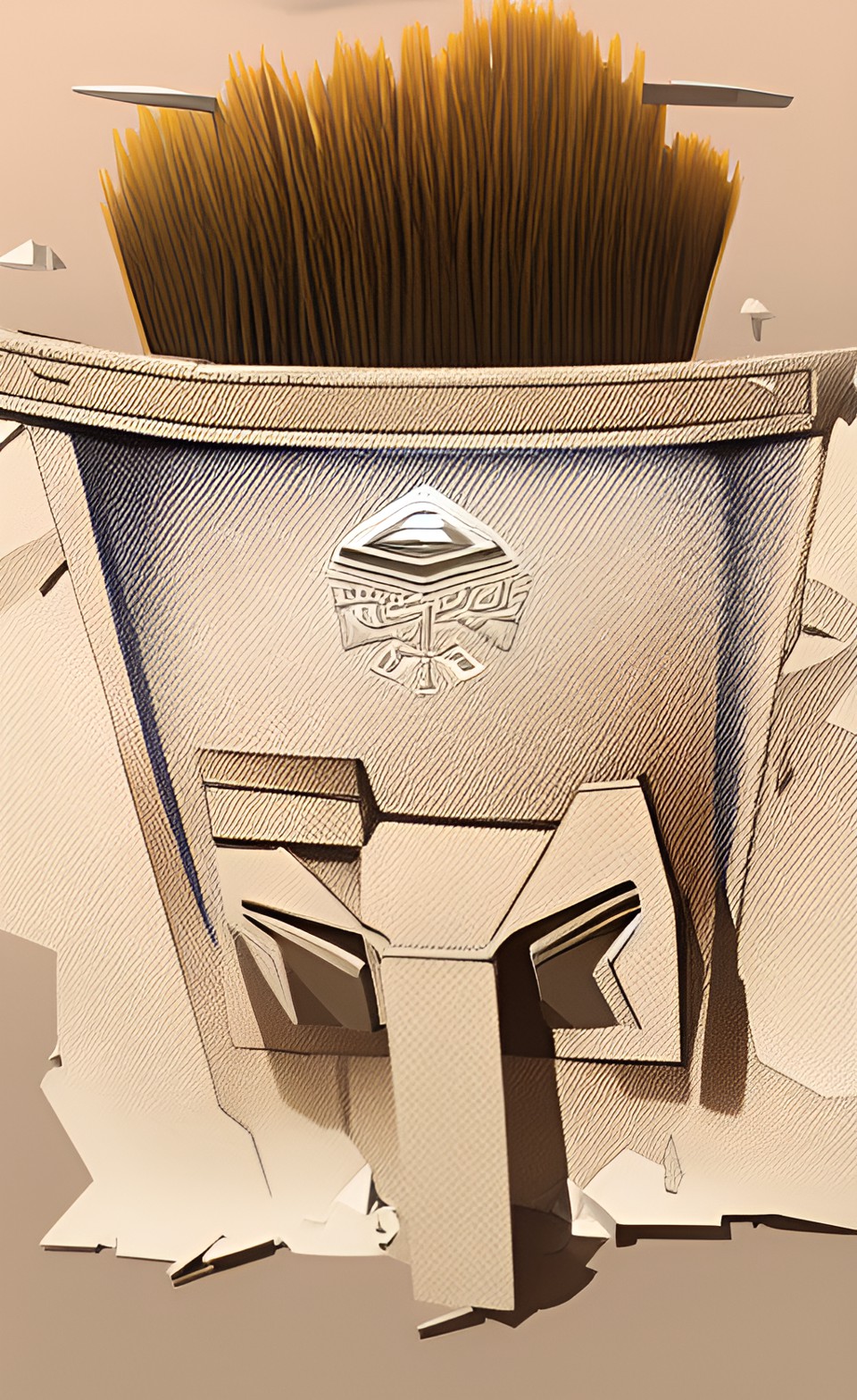
Here's the original photo. I tore the pocket off my used jeans
and fastened it to the wall in my studio. I inserted this paint brush
into the pocket, which serves a holder for the brush I use to sweep
debris off surfaces and for other purposes.

 AI Collaborator for these images: Dream by Wombo

Monday, January 2, 2023

The Meaning of Life (An AI Collaboration in Second Person)

Photo by Green Chameleon on Unsplash
You sit at your desk, staring at the blank page in front of you. You've been tasked with writing an essay about the meaning of life, but you have no idea where to begin. You tap the desk with your pen, feeling a growing sense of frustration. 

Maybe you should go for a walk, you think. Perhaps the breeze will clear your head. Then again, you decide to sit and commit to staying in place till something strikes you. Sure enough, a black-capped chickadee flies into the room through the open window and strikes you on the side of the head.

No, that doesn't happen. But imagining that, you do decide to stand up to go see what the ruckus is outside. A small crowd has gathered on the sidewalk and a young red-faced man is screaming at what appears to be two older women, one of them wearing a light blue shawl. You watch to see what will happen next, but nothing comes of it and the crowd disperses. 

Suddenly, you hear a knock at the door. Turning, you find an old man standing in the doorway, a wise look in his glistening grey eyes. He introduces himself as a philosopher. 


"I've come to help you find the answer you seek," he says. His voice is hoarse and he's winded from climbing the flight of stairs to your apartment.


You invite him in, and he takes a seat across from you. When he begins to speak, his words are slow and measured. "The meaning of life is different for everyone," he says. "Some people find it in their work, others in their relationships or their hobbies."


As he talks, you begin to see the world in a new way. You realize that for you the meaning of life is not something you'll find in a book or lecture. It's something that you have to discover for yourself, through your own experiences and reflections.


The whole time he's talking, though, you are distracted by your own inner dialogue. Who is this guy? Why is he here? Why did I invite him in? It takes an effort but you manage to dismiss these thoughts and give him your full attention.


When he finishes speaking there is a long silence. You hear cars go by on the street but the whoosh of wind and the hum of tires and engines only produce a sensation of white noise as you ponder the moment. 


"Can I get you a drink? Juice? Coffee? Maybe a beer?"


The old man makes no reply. Shaking his head, he stands to leave. Before turning to go he looks you in the eye and delivers a piece of advice. "Always follow your heart. And never stop searching for the things that bring you joy and fulfillment."


"Thank you," you say as he disappears out the door.


When you sit down at your desk again, you feel a sense of clarity. You begin to write, the words flowing onto the page as you explore ideas the old man has sparked in your mind. 


By the time the sun sets you finish your essay. Sitting back and rereading your words gives you a sense of pride and accomplishment. You've discovered something meaningful, something that will stay with you for the rest of your life, a sense of purpose.

* * * * *

EdNote: Many of us have been reading about AI for years. From time to time I've experimented with this technology rather than simply reading articles about it. The skeleton of this story was generated by ChatGPT, which was trained by OpenAI. ChatGPT is the latest iteration of AI writing assistants and has generated a lot of buzz due to its power and ability to rapidly produce a lot of copy.


The prompt for this story was "Write a 400 word story in second person about the meaning of life." I chose to have the ChatGPT write a story in second person because the first three or four stories I asked it to write were all somewhat interesting but flat, more plot and little embellishment to give it life. I was thinking of Jay McInerney's Bright Lights, Big City, which was a short novel written in second person. 


It's amazing how quickly the AI begins creating. After the briefest time words begin appearing almost instantly, whether an essay, poem or story. The second person story it generated was interesting, but relatively flat. I edited the story extensively to create the 560 word story you have just read. 


 * * * * *

Related Links
My 2016 review of Surviving AI by Calum Chace
A Visit with Futurist Calum Chace on His Book The Economic Singularity
Two Versions of The Comet, Light and Dark
Ishiguro's Klara and the Sun Is Another Stellar Achievement
Interview with David Asch Offer Insights On AI

I've also been collaborating with a pair of AI "art" bots. You can see some of the things "we" have created here on my Instagram page.

Wednesday, November 24, 2021

Democracy's Twilight (Another A.I. Collaboration)

Photo by Daniel Lincoln on Unsplash
The New York Times and Wall Street Journal each have an eNewsletter that arrives in your inbox at the start of your day.  Monday's Times had a link to a story titled A Robot Wrote This Book Review. The article was actually written by Kevin Roose about a book titled The Age of A.I. and Our Human Future. One of the book's three authors was the late Henry Kissinger.

For some years now I've been following the evolution of Artificial Intelligence, periodically testing some new A.I.-powered program that gets highlighted on a website. Though Mr. Roose pans the book, he does include an A.I.-written review of the book which is actually quite interesting. 


The app that powers Sudowrite, the interface that enables us to utilize the machine, is GPT-3. If you want to experiment with this tool yourself, be aware that your trial period is only three days, so if you get hooked you'll have to discipline yourself to go to sleep at night because you only have a finite amount of time to play with it.


The results are sometimes hit and miss. This one, in my opinion, was surprisingly forceful and provocative. 


Democracy's Twilight


Dimming light, but not yet dead;

You were worshipped…

The nations surrounded you, 

Made bright by your heat

As you flamed and flared

In your last days.


The shade of your children left you alone,

Their cities empty and their voices unheard.

The young ones had been taken from you,

And the old ones died one by one.

In your twilight, your rivers ran dry.

Your seas became blackened and silent.

You fought a long battle against disease,

But the enemy was too strong.


You were weakened, then you were brought down.

Your mountains were mined for their precious stones,

For their ore and for their coal.

They stripped off your clothes, so they could see your bones.

They cut you down to size.

Your forests were cut down, as were your trees.

They pulled up your flowers and your grasses--

Your crops were taken from you.

Your animals were slaughtered and left to decay.


In your twilight, the people grew sick and sad;

They grieved for their loss and for what had been done.

They cried and moaned and wept and cursed their fate;

They wept because there was nothing they could do;

Nothing they could do – but mourn – in their twilight.

* * * 

Popular Posts