Showing posts with label #Art. Show all posts

Saturday, April 11, 2026

Hans Rookmaaker’s Modern Art and the Death of a Culture:

After philosophy, much of my college study (1970-74) was dedicated to the fine arts. I immersed myself in painting and drawing, as well as continuous rummaging of the art books housed in the school library, which was almost the nearest building to  my dorm. Though captivated by much of what I saw, and at times sought to emulate, there was plenty that I wasn't really attracted to. I did, however, have a great love for the process of laying paint on canvas. I found the process of creation magical.

During that time I had a friend who periodically told me, "The artist is the vanguard of the revolution." His meaning was clear. Art was to be subservient to political ends. My friend Walter Urban created powerful works of this nature, a life-sized soldier on a cross (protesting Viet Nam), a family in the future taking a walk in the park wearing gas masks.

I myself saw many ends that art could serve. After the death of a best friend in high school art served a therapeutic function for me. There were dark things in my heart that words seemed inadequate to express. Beyond the grief there were other emotions and art was a means of working it out.

As one stepped back and surveyed the previous 100 years, one could see that art also served as a mirror of the culture. This is the theme tackled by Dutch author, professor and Christian scholar Hans Rookmaaker.
 
Hans Rookmaaker’s
Modern Art and the Death of a Culture (1970) explores how the development of modern art reflects the spiritual and philosophical collapse of Western civilization. Writing as both an art historian and a Christian thinker, Rookmaaker argued that art is never created in a vacuum—it mirrors the worldview of its time. As Western society drifted from its biblical foundations, art, he says, became a visual record of man’s alienation, fragmentation, and loss of  meaning, themes taken up by mid-century existentialists like Camus and Sartre.

Rookmaaker traces the story from the harmony of classical and Renaissance art, where beauty and order reflected divine creation, through the Enlightenment’s turn toward human reason, and finally into the modern era, where faith in transcendence eroded. Artists like Van Gogh, Picasso, and Pollock emerge as prophets of a disintegrating world: their work cries out with spiritual yearning but lacks the hope once rooted in a Christian understanding of reality.


For Rookmaaker, the “death” of culture meant more than a shift in artistic style; it pointed to a deeper moral and spiritual drift. When God is no longer at the center, both art and life begin to lose their unity and meaning. Yet he did not fault the artists themselves. In their confusion and despair, he saw an honest reflection of the human condition. His response was not condemnation, but invitation—a call to recover beauty and, through it, a renewed sense of order and purpose.


[This seems to be a good place to insert a couple of comments by my eight-year-old grandson who visited New York's Museum of Modern Art this week. My daughter said, "He was so funny at the art museum with his sort of pithy, harsh reviews of the art: 'So, um ... How did this get so famous anyway?' and (no doubt responding to Pollock)  'Huh. It kinda looks like they just splattered paint on the paper.'"]


Ultimately, Modern Art and the Death of a Culture is not an argument against modernism but a plea for spiritual reawakening. The book invites readers to see that the renewal of art depends on the renewal of belief—that culture can be reborn only when it again recognizes its source in the Creator.

                                         "Red Star"  
Now that we are more than fifty years removed from Rookmaaker’s diagnosis, the story of art has not reversed itself so much as it has unfolded along the very trajectory he observed.

The boundaries are gone. The gatekeepers have loosened their grip. What once required training, patronage, or institutional approval is now open to anyone with a vision—and sometimes even to those without one. From installations and performance pieces to digital art and street murals, expression has multiplied in every direction. In this sense, there has indeed been a kind of liberation.


And yet, with that freedom has come a curious diffusion. Without a shared center—without a commonly held sense of the true, the good, and the beautiful—art often speaks in a thousand private languages. Some works are deeply personal, even therapeutic. Others are expressions of love. And then there is art that is simply functional, enriching us more than endless halls of empty walls.. And we still have the overtly political, echoing my friend’s conviction that the artist stands at the vanguard of revolution. Still others seem to revel in irony, fragmentation, or shock, as though meaning itself were suspect, though what shocks some seems to miss the mark because many of of oldsters have seen it all before and, yawn...


But beneath the variety, one thread persists: art continues to tell the truth about us. It reveals our longings, our confusions, our search for identity and transcendence. If the last century showed us the fracture, the past fifty years have shown us what it is to live within it.


Which leaves us, perhaps, where Rookmaaker left us—not with a neat conclusion, but an invitation.


If art is a mirror, then what we choose to create—and what we choose to behold—matters. The question is not only what art has become, but what it is for. And whether, in the midst of all this freedom, we might yet rediscover not only expression, but meaning… and perhaps even beauty in its myriad forms once again.


Related Links

The Painted Absurd

https://pioneerproductions.blogspot.com/2009/05/painted-absurd.html


A Century of Rebellion: Exploring 20th-Century Art Movements

https://pioneerproductions.blogspot.com/2025/03/a-century-of-rebellion-exploring-20th.html


Tuesday, September 12, 2023

Back Pocket Influences: Variations on a Theme

 VARIATIONS ON A THEME
Explanation at the end.


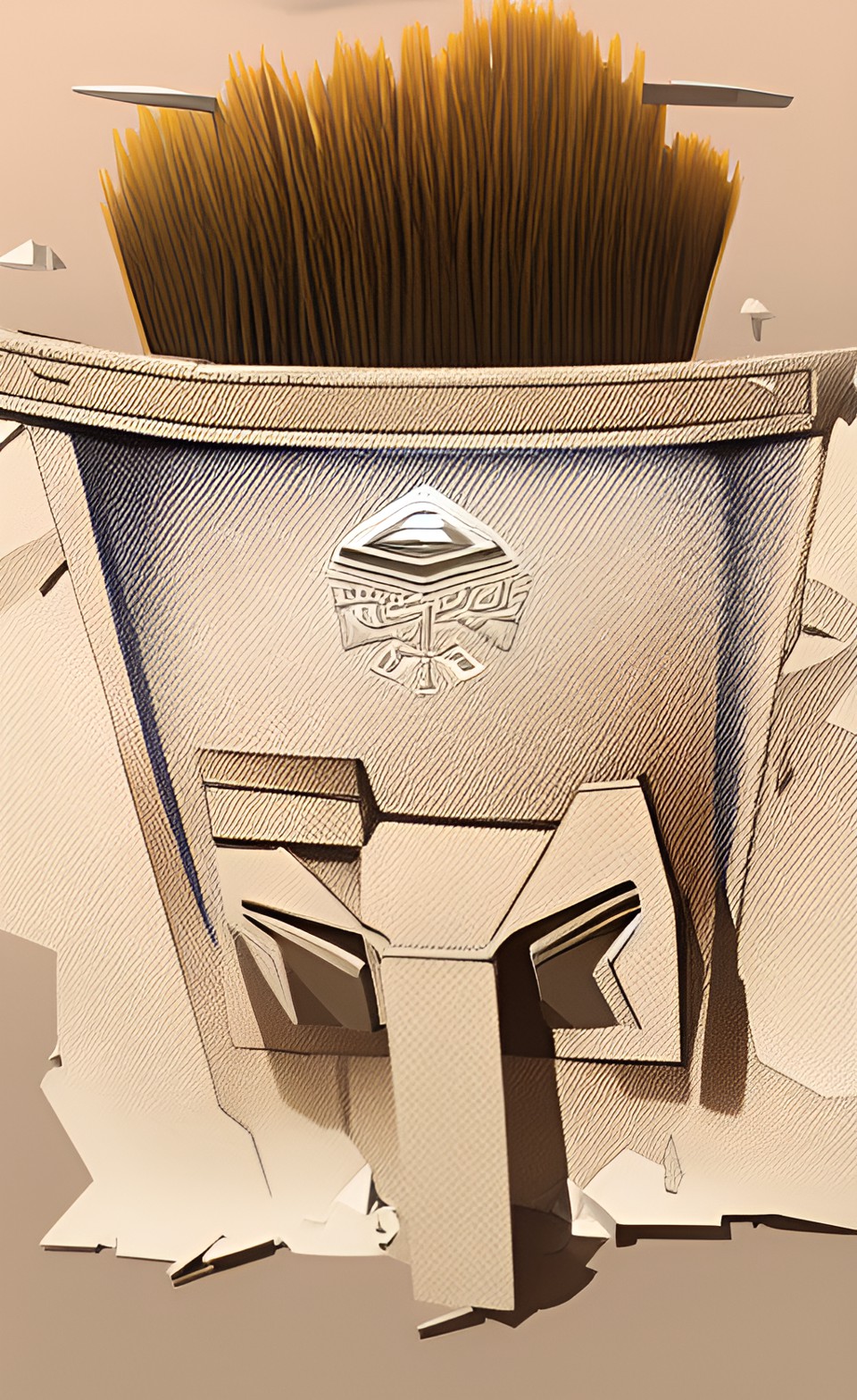
Here's the original photo. I tore the pocket off my used jeans
and fastened it to the wall in my studio. I inserted this paint brush
into the pocket, which serves a holder for the brush I use to sweep
debris off surfaces and for other purposes.

 AI Collaborator for these images: Dream by Wombo

Thursday, November 12, 2020

Integument: Susanna Gaunt at the Duluth Art Institute

As noted previously I had been watching the development of 
Sussana Gaunt's Integument for the two months leading up to 
it's unveiling in the George Morrison Gallery at the DAI.


See more photos and details from this interesting and unusual show here:

http://www.susannagaunt.com/blog

More details about the show here:

https://www.duluthartinstitute.org/Morrison

Monday, July 6, 2020

Local Art Seen: Yes, Duluth Art Institute Is Open Aagain

From "The Long Journey" (detail)
Last week I saw an announcement that the Duluth Art Institute was opening up on July 1. Naturally I stopped in the next day and did a walk-through. This is a brief intro to some of what you'll find if you go.

Sue Rauschenfels: Sisterhood
Several of Rauschenfels paintings reminded me stylistically of
Carla Hamilton's colorful portrayals of people.
If you take the elevator to the DAI offices on the fourth floor of the Depot, the hallway where you emerge is called The Corridor Gallery. Sue Rauschenfels acrylic and water colors line the walls here. The theme is Sisterhood.

Either I never knew or had forgotten, but Rauschenfels is one of six sisters, hence the paintings have a more natural origin than I'd imagined.

The artist's statement speaks of the international interconnectedness of women across boundaries, and the challenges of connecting as well as the everyday world in which they live.

The Pike Lake artist is a member of the Lake Superior Abstract Group. You can find more of Rauschefels' work at 47 Degrees Gallery in Knife River, MN and Art on the Planet Gallery in Superior, WI.

Kari Halker-Saathoff: Odysseus & Penelope: The Long Journey
Halker-Saathoff's work appears to be a composite of several passions. As an artist, she works in ceramics and is also an illustrator, hence the unique form her works take.

The title is indicative of the origins for this collection of work. Most will recognize the influence of Greek mythology in general and specifically Homer's Odyssey. The artist's wife happens to be named Penelope, so that brings these stories closer to home. The art therefore reflects a merging of ancient stories with contemporary ones.

From the DAI show description: Halker-Saathoff describes Penelope’s situation, “Suitors invaded her home, ate her food, threatened her son, assaulted her servants, and pressured her to remarry. In resisting the suitors Penelope had to use all her resources, showing herself to be as courageous, wily, and brilliant a figure as Odysseus. The courage of her resistance is the inspiration for my interpretation and the struggle of women’s persecution and for equality are ever present.”

Emily Stokes: Reveal
I've always been fascinated by printmaking of all stripes and the unique manner in which Emily Stokes combines painting, drawing and digital imaging to produce her work is quite intriguing.

There are actually two kinds of things to see here in the Steffl Gallery. Her small mixed media panels on the walls, and also something akin to "books" that unfold in a systematic but unconventional manner. The work purportedly explores “how economic and demographic shifts impact traditions and how these shifts are revealed in the symbols around us.”

I myself found much of it to be elegant and distinctive iconography that begs to be examined more deeply. For this reason I recommend a leisurely unhurried visit to the gallery in order to have more time to engage those pieces that especially resonate with you visually or psychologically.

Stokes, who received her MFA at Arizona State (printmaking), teaches at Northwestern University in Orange City, Iowa.

Tia Salmela Keobounpheng: Bloodline
The artist works in a multimedia three-dimensional form so it technically falls into the category of sculpture. Two of the four pieces in this series are in the Mayor's Reception Room as part of the ongoing relationship between the DAI and City Hall.

Here is the beginning of her statement about the work: “Combining scientific and mythical concepts, I imagine the ways that my grandmothers are part of me despite the fact that I have no lived experience with them. What began as a quest to define the void that I perceive (they would have filled) has led me on a journey of uncovering history that is both fact and inferred.

A graduate of Central High School here in Duluth, her Finnish roots provide a foundation for a portion of her inspiration. Tia Keo lives and works in North Minneapolis.

* * * *
Emily Stokes
Sue Rauschenfels
*
Kari Halker-Saathoff
*
(detail)
*
Odysseus and Penelope
*

For more in-depth commentary on these current exhibits visit the DAI's Current Exhibitions page.

Sunday, January 26, 2020

Local Art Seen: Fascination With Faces


From my earliest days I remember being fascinated with faces. Infants, even before they can form words, respond to faces, especially their mothers and fathers. Science has shown that this face recognition is innate.

Even when we're silent, our faces say much.

Various faces by Eric Horn
The other night I was at Goin' Postal and noticed a new piece that I hadn't seen before. (The wooden carving above.) Then I looked around and saw the variety of ways in which faces are displayed and portrayed. As many already know, the blog where I've been sharing my own art is called The Many Faces of Ennyman. Faces have been a lifelong theme for me. Even as a pre-school toddler I liked to draw faces.

According to research, our ability to recognize faces comes from neuron activity in the temporal lobe of our brains. Some people who get a head injury and damage their temporal lobe can lose their ability to recognize and identify familiar faces. This is called prosopagnosia.

Here's a small sampling of the variety of ways faces can be interpreted in various mediums, interspersed with a few Bob Dylan lyrics about faces, a word that appears more than 100 times in his songs.

* * * *

"Where the executioner's face is always well hidden..."
--Hard Rain's A-Gonna Fall 
* * * *
"Face Value" by Linda Glisson

"Why does he look so righteous while your face is so changed"
--Won't You Please Crawl Out Your Window
 * * * *

"While she couldn't even recognize his face!"
--John Brown 
* * * *


"Then he moved into the corner, face down like the Jack of Hearts."
--Lily, Rosemary and the Jack of Hearts
* * * *

"Punched myself in the face with my fist."
--Million Dollar Bash 
* * * *

"One look at his face showed the hard road he'd come."
--Only A Hobo 
* * * *

"She studied the lines on my face."
--Tangled Up In Blue 
* * * *

"Darkness on the face of the deep"
--Spirit on the Water
 * * * *
Dylan Discovers a New Way of Seeing
* * * * 
Related Links
My art blog, The Many Faces of Ennyman
My Flickr Gallery of Dylan Portraits
Nearly all is for sale, except what is sold already. 

Tuesday, May 21, 2019

Mark Bennett Shares Backstory on the Bob Dylan Review Reunion Concert... Plus update on other DDF Happenings

I liked Batman even before I learned he was a Dylan fan.
The opening reception for our art show was again a very special time, with Dylan music provided by Tom O'Keefe and Friends.  After the 5-7 reception at Zeitgeist we all moved to the next block over and spent the rest of the evening at Carmody's Pub singing and performing Dylan songs, open jam style. The back was packed, with guitar pickers and jugband players. Special thanks to Leslie Black for assembling the songbooks and chord arrangements so we could be (mostly) on the same page. 

Tonight there will be more music at Sir Ben's with Greg Tiburzi and friends. Wednesday is our poetry night, followed by still more music. Thursday Joan Osborne will be performing an evening of Dylan covers to kick off three evenings of Dylan-themed music at Sacred Heart, with Friday being our ever popular Singer/Songwriter contest and Saturday the Bob Dylan Revue.

In between there will be other events including the "cutting of the cake" on Friday afternoon at 3:00 p.m., in the front yard of the Central Hillside home where the infant Robert Zimmerman once lived.

* * * *
Mark Bennett helped assemble the reunion concert of May 25th at Sacred Heart Music Center at 7 PM.

EN: What's the backstory on this concert for those who weren't there in the beginning.

Bob Dylan Review Poster Shot from back in the day.
Mark Bennett: Back in 1993, inspired by the Columbia 30th anniversary Concert for Bob Bob Dylan, myself and co-worker Paul Larson decided to put together a band and perform a night of Dylan music. So on May 14th, 1993 the Bob Dylan Review played its first show at RT Quinlan's in Duluth. Over the next 10 years each May we would do the same.

Venues, formats and band members would change. All were local musicians who for the love of Dylan music made our shows very special. I thank them all. 

Fast forward to 2019. I was approached by the Duluth Dylan Fest to reunite The Bob Dylan Review for this years Dylan Fest. The timing seemed right. I was so pleased that 8 original members from the first years are on board for 2019. Paul Larson on Guitar and vocals, Todd Larson on drums, Tom Bard on keyboards, Steve Johnson on violin, mandolin, vocals, David Slattery on pedal steel, Gail Bennett vocals, Sue Spencer vocals, Brian Wells on bass and myself on guitar. It has been 17 years since our last show. So excited for May 25th at Sacred Heart.

EN: How did you come to be a fan of Dylan's music. 

MB: I first connected with Dylan at age 12. (1973)It was from an album my brother had got that Christmas.(greatest hits vol.1). It was very new to me, this folk thing. Then the following year I bought Blood on the Tracks. The very broad strokes to some of the lyrics (some lines that could point you somewhere you would not of dreamed of) pulled me in for good. His music has continued to do this all my life. Always searching, no direction home.

EN: Do you have any favorite albums or songs?

MB: Oh Mercy, Free wheeling, Hard Rain, Tempest

* * * *

Related Links
Details about Tomorrow Night's Poetry Event
Full Duluth Dylan Fest Schedule
Tickets for Joan Osborne
Tickets for Rolling Thunder Revue 
Enter to Win a One-of-a-Kind Dylan-Themed T-Shirt Quilt


Saturday, November 3, 2018

History and Myth in the Sunshine State: Boca Raton Museum of Art Celebrates History of Florida

In the land of pink flamingos and pink sunsets.
November 13, 2018 through March 24, 2019

Because my parents wintered in Florida, and after my father's passing my mother continued, I've had an opportunity to see a lot of art there over the years. The City of Tampa has a wonderful museum where we saw a Norman Rockwell exhibition in 2015. The adjacent St. Petersburg is home to the incomparable Dali Museum. In fact, the nearby Warehouse District is awash with public art and galleries. Another favorite art space on the Western coast of Florida is the John & Mable Ringling Museum of Art in Sarasota. It's part of the campus that includes the Ringling Bros. Circus Museum and Ca' d'Zan, the majestic home Mable built for her husband John, youngest of the five Ringling brothers.

In less than two weeks the Boca Raton Museum of Art will be hosting a massive exhibition called:

IMAGINING FLORIDA:
HISTORY AND MYTH
IN THE SUNSHINE STATE

With art spanning three centuries, Boca Raton Museum of Art aims to present the untold story of Florida through the eyes of Florida artists. It's billed as the most comprehensive and all-embracing Florida themed show of its kind, with more than 200 works of art that celebrate how the Sunshine State has inspired artists across three centuries.

In Spanish boca means mouth, and raton means mouse, so you might think it funny to name a city in that way. The name comes from the words' navigational origins in which "boca" was used to describe an inlet. Raton pertained to the sharp rocks which ship captains had to steer clear of. Today, Boca Raton is associated with wealth and beauty, and their beautiful art museum reflect this.
The exhibition features paintings, drawings and photography.
This anthology of art made in and inspired by Florida and its people, places, flora, and fauna was three years in the making, guest-curated by Dr. Jennifer Hardin and Mr. Gary Monroe. The show features not only Forida artists but renowned painters who visited Florida and were enticed by its beauty. From natural landscapes to frontier outposts to burgeoning towns, the scenes featured in Imagining Florida portray many different aspects of the state, including its deep-rooted Seminole and Miccosukee heritage, its historic African American communities, and its identity as a tourist destination.

According to the Boca Raton Museum website:
Many of their selections have rarely been seen and are from some of the leading museums and collections throughout the United States. Artists and photographers include: Milton Avery, Martin Johnson Heade, John Singer Sargent, Winslow Homer, Laura Woodward, Purvis Young, Henri Cartier- Bresson, Bunny Yeager, Louis Comfort Tiffany, Doris Lee, Robert Frank, Garry Winogrand, John James Audubon, Frederic Remington, William Bartram, Sally Michel, Thomas Moran, George Catlin, Frederick Frieseke, and George de Forest Brush. Imagining Florida is accompanied by a fully-illustrated catalogue.

Here are some additional images from Imagining Florida, the first being a famous bridge to St. Petersburg that I have crossed many times:

The Hunt
Betty Page, with the Prey.
John Singer Sargent was here.
Getting a little yard work done before we play, Florida style.

One more shout out: https://www.bocamuseum.org

Meantime, art goes on all around you. Get into it.

Popular Posts