Showing posts with label Frankenstein. Show all posts

Wednesday, July 12, 2023

Almost Wordless Wednesday: Frankenstein's Monster Receives the AI Treatment

I came across one of my Frankenstein drawings and decided to play with it using an AI graphics app called Dream by Wombo. The first is my original. Those that follow are utilizing various prompts and features of the app. At the bottom is another of my Frankenstein monsters along with a link to a 2008 blog post titled Frankenstein: A Cultural History.

Frankenstein's Monster (Brush & Ink on newsprint)
Curious Monster
Comic Monster

Dangerous Monster
Steampunk Monster
Two-Faced Monster

Another ennyman original.

Related Link

Sunday, January 23, 2022

Doctor Jekyll and Mr. Hyde: More Than A Horror Story

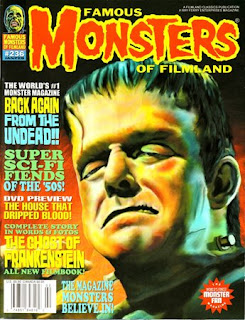
I don't care much for monster movies as a genre any more. When I was young we used to be enthralled by the genre. In the early Sixties I would use my allowance money to buy Famous Monsters of Filmland, a monthly mag that covered the burgeoning horror film industry.

Some of the most memorable films of that era for me were Frankenstein, Son of Frankenstein, The Hunchback of Notre Dame, Phantom of the Opera, Dracula, The Wolf Man, the Creeper and, yes, Doctor Jekyll and Mister Hyde.

As children we enjoyed these horror flicks. They were engaging and generated a sufficient amount of fear and drama to stimulate our emotions. But the philosophical underpinnings of many of these films were lost on us. It wasn't until I read Mary Shelley's Frankenstein that I saw that story in a different light. 

When I was a kid we called the monster Frankenstein. It wasn't clear that this was Dr. Victor Frankenstein's creation. Mary Shelley wrote the novella while in her late teens. It wasn't written to merely be a monster story or an entertainment, but rather it was addressing ethical issues which are still relevant today

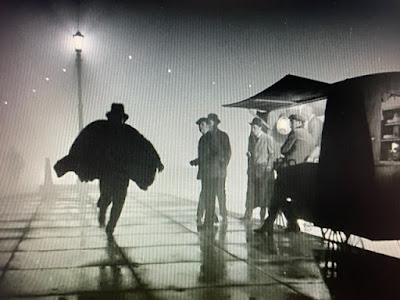
Spencer Tracy as Mr. Hyde, on the run.
The original story by Robert Louis Stevenson is called Strange Case of Dr. Jekyll and Mr. Hyde. The respected Dr. Jekyll, like the author who created him, is interested in understanding the nature of good and evil. Specifically, he believes the capacity for both good and evil resides in each of us. 

This notion seems rather unsurprising to most of us, if we're honest. Nevertheless, we have a tendency to label people as good or bad. Why do we do this? Do we label people in order to write them off?

The story has been translated to film more than a hundred times. The 1941 version I watched starred Spencer Tracy as Dr. Jekyll. Lana Turner is the woman from a high class family whom he is preparing to marry, and Ingrid Bergman is a barmaid. The script for this version was nearly identical to the 1931 version with Frederic March. The earlier version was made before Hollywood got stricter with the Hays Code. In that version the Ingrid Bergman character was a prostitute, not a barmaid. In either version the point is driven home that good and evil are adversaries within each of us.  

In the film, Dr. Jekyll is a professional doctor whose interests lie in the realm of research more than in serving the community. This thought makes me think of a psychology professor I had in college who washed his hands 40 times a day. He said he became interested in psychology because of his phobias. Perhaps a similar motivation was a driving force in Dr. Jekyll's studies.

Jekyll's personality is gentle and not bombastic.  His alter ego Mr. Hyde, however, is an expansive sadistic character. His bad behavior isn't shoplifting. 

Lana Turner and Ingrid Bergman each turn in good performances as the soon-to-be bride of Dr. Jekyll (Turner) and the barmaid Hyde gets obsessed with (Bergman). Bergman does a superb job in a complex role that speaks to the heart of every woman in a relationship with a disturbed and dangerous man. When Mr. Hyde cross-examines her, she fights to hide her fear. This kind of reality is scarier than any horror film. Horror films are over in two hours, but an abusive relationship can cause anguish for years.

As for Dr. Jekyll, is there a warning here about experimenting with mind-altering elixirs? The side effects may be more disturbing than one realizes. He comforts himself with the illusion that he's in control, but in the end it's evident he's set in motion events that are out of his control. This false self-confidence one of our common flaws, is it not?

Thursday, October 8, 2015

Throwback Thursday: Seven Years Ago Today and Famous Monsters of Filmland

THIS DAY IN HISTORY

The Great Chicago Fire started in 1871. 

In 1934 Bruno Hauptman was indicted for the murder of Charles Lindberg's baby.

In 1956 Don Larsen of the New York Yankees pitched the first and only prefect game in World Series history.

In 2004 Martha Stewart began her prison sentence at Alderson Federal Prison Camp.

And in 2008 the following blog posted was shared here at Ennyman's Territory:

"If you gaze for long into an abyss, the abyss gazes also into you.” ~ Friedrich Nietzsche

When I was a boy growing up in Maple Heights, Ohio, a suburb of Cleveland, I used to get an allowance each week of twenty-five cents. I knew precisely the value of a quarter back then. One quarter could buy a Mad magazine. Four quarters would get me a Revell plastic boat model. To get that boat model I'd have to save for four weeks and then go to the Southgate mall. By the time we left Ohio for New Jersey in 1964, I had a whole shelf of boat models including a very cool German U-boat, battleships and destroyers.

But fifty cents... that was pretty much the coolest purchase of them all. That's what it cost to buy a copy of the magazine Famous Monsters of Filmland. Holding on to that first quarter till you got the second was a lesson in deferred gratification, an invaluable principle with a lifetime of applications.

My brother Ron and I loved those old monster movies, and we especially looked forward to Friday nights because that was when the Ghoulardi show would come on. According to Wikipedia it was called Shock Theater, but we called it the Ghoulardi show. Ghoulardi was Cleveland's late night horror film host, airing B-grade monster movies every week with his unique and totally engaging style.

The guy was incredibly inventive and hilariously over the top. His beatnik look and jabber were just the beginning of it. "You're a k-nif" he would say, meaning "Fink" spelled backward.

During the movies he would insert humorous clips of an old Irish man gurning, and other silly cut ins. In a film about a giant Brontosaurus smashing a city, with people screaming in terror in the streets, he cut in a few seconds of himself holding a giant brontosaurus foot up, trying not to be crushed while holding his own nose because the monster's feet smell.

Ultimately it was the movies themselves that we lived for. The Creeper, The Creature from the Black Lagoon, The Hunchback of Notre Dame, The Mummy, Phantom of the Opera, The Invisible Man, Caltiki the Immortal Monster, The Blob.... every week we had something to look forward to.

But that mag, Famous Monsters of Filmland... what a treasure! My convictions about the power of print advertising in enthusiast magazines can be partially attributed to this early passion. The television show was here today, gone tomorrow. But the magazine could be carried with you everywhere you went. Every page captured your eye. The images and stories could be revisited as often as you liked.

The mag was also a great source for background dope on all your heroes, the roots of all their stories. For example, one of the great actors of the monster film genre was Lon Chaney, nicknamed "The Man with a Thousand Faces" due to his remarkable range of portrayals. Famous Monsters told the inside stories of how he contorted his body to appear one-legged, deformed, etc.

Dracula was another favorite. My brother Ron and I liked the Bela Lugosi version of Dracula at that time. I think it was the alluring quality of his accent. Once I read a Dracula story from the magazine to Ronnie (he was about eight at the time) and he woke with nightmares for a week straight. My mom forbid any further readings.

But the greatest of them all was Boris Karloff, especially in his role as Frankenstein.

I still remember an incident on a family vacation in Florida when we first saw the film Bride of Frankenstein. Our family was at a motel on Miami Beach, but my parents had gone out for the evening. We were fairly young and with a TV in the room we decided to see what was on, a memorable event for sure.

Last year, near five decades later, I asked my mom about that night. It seemed they were gone a long time. She said it was the one major fight my parents had in their fifty-plus years of marriage. They'd gone off somewhere to work things out away from us kids. Alas, every picture tells a story. The Bride of Frankenstein memory revealed this one from my mom.

My personal favorite was Son of Frankenstein, probably only because I'd scene it the most often. For many of us, Karloff was synonymous with the monster.

I don't really keep up on the monster movie scene these days, but if you are interested, here's a link to the Famous Monsters of Filmland website. (Turn your sound down if you're in the office.)

As for Ghoulardi, he was a dude ahead of his time... or travelling outside of time, I'm not sure which. You can find more about Ernie"Ghoulardi" Anderson and his influence in this 2013 article titled 50 Years Later TV's Ghoulardi Lives -- In Punk Rock.

Make the most of your day. Tomorrow it will likely be gone.

Sunday, October 28, 2012

Frankenstorn

At first I didn't get it. I understand the concept of "a perfect storm" but what's with the Frankenstorm bit. When I called my brother who lives near the South Jersey shore yesterday, he explained it to me. There are two storms colliding, with the storm coming in from the west accelerating the power of the incoming Hurricane Sandy. Add to this that it is a full moon with extra high tides and finally (ta da!) it's Halloween. I guess this last bit is where the name comes from.

From what I'm reading this storm has nothing funny about it except the name. According to Jon Coen's A Tale of Two Storms on ESPN Action Sports Online, Hurricane Sandy "is already the second largest tropical cyclone ever recorded in the Atlantic. The destruction will be widespread."


In 2008 I wrote a blog entry about monster movies which culminated in a few reminiscences about Frankenstein. The next day I bore down on the influence of Frankenstein on culture by interviewing
Susan Tyler Hitchcock, author of Frankenstein: A Cultural History. I'm certain that if the book gets reprinted, it will include a chapter on the Frankenstorm of 2012. Hopefully there won't be a Son of Frankenstorm in its wake.

To friends and family out east: "Batten down the hatches." Stay safe... and warm. Our thoughts and prayers are with you. 

Thursday, October 9, 2008

Frankenstein: A Cultural History

As nearly everyone knows, I am a frequenter of libraries. Weekly visits include taking out movies, scanning the audio book shelves and occasionally taking out magazines. One other favorite pastime is walking past the New Books shelves, both the fiction and non-fiction varieties. Can’t help it. Gotta see what’s happening, what is current in the literary scene, what’s new.

Two weeks ago I found a book that immediately captured my interest, Susan Tyler Hitchcock’s Frankenstein: A Cultural History.

As noted yesterday, monster flicks really grabbed me when I was a kid. Perhaps it was the thrill, the suspense, the sense of dread they invoked. Later, like children’s fairy tales and books by the likes of Dr. Seuss, one discovers that there are philosophical depths to many of these stories.

In the late Seventies, when I read Mary Shelley’s Frankenstein, the original novel which inspired the films, I understood that there was much more here than just a few goosebumps around a campfire. And that is what Susan Hitchcock’s book is really about.

Hitchcock’s skill as a researcher stands out in this well constructed overview of Frankenstein’s influence. The book is immediately infectious and, if you have ever had any relationship to the monster that many of us have had, you’ll find plenty of dormant memories stirred.

For example, on page 233, one can find the instructions for building a plastic model of the Frankenstein monster, manufactured and sold by the Aurora company in the 1960’s. I had that model, but have long since forgotten it… until I picked up this book.

One amazon.com reviewer put it this was: "Hitchcock's book is infectiously readable. I'm a big fan of Frankenstein (novel, movie, mythology) and have to say this book does not disappoint. Hitchcock's book is well-researched and even entertaining. What fascinated me most was all the parallels she was able to find, some obvious, some innovative, to what culture and society has created since Shelley's 1818 publication."

Here's something I find really cool, though. Unlike writers in the past, modern writers can have websites and blogs. Thus it is that I took a chance to see if I could make contact with the author. Sure enough, ‘twas done.

What follows is my interview with the Susan Tyler Hitchcock. Ten questions… great answers. Lots of fun.

1. I see that this is but one of many books... your thirteenth, actually. Which was your first?

STH: My first book was Gather Ye Wild Things: A Forager’s Year, published originally by Harper & Row in 1980 and in paperback by the University of Virignia Press in 1995, still in print today. It’s a collection of 52 essays, as if one for each week of the year, about edible and useful wild plants, combining botany, folklore, and practical information on gathering and cooking. It’s illustrated with delicate line drawings by my dear friend, Gail McIntosh. My other books range far and wide: a family memoir about a year spent sailing in the Caribbean, called Coming About: A Family Passage at Sea; a pictorial history of the University of Virginia; a broad, illustrated history of religion called Geography of Religion -- those are a few of the 13.

2. Has this been your most fun book to write because of the long term interest you have had in The Monster?

STH: Every book has its measure of fun, and every book has its measure of hard work, even anguish some times. This book, Frankenstein: A Cultural History, had its satisfactions because I had been collecting Frankenstein gewgaws and editions for more than 20 years, and to pull them all out and make something of them other than a carton full of candy wrappers and greeting cards was great fun intellectually.

3. Essentially, your book appears to be about the impact of the Frankenstein story on our culture. Can you summarize in a few sentences your conclusions on this matter?

STH: Mary Shelley’s Frankenstein framed our discussions of the human ability to create and manipulate life. She created a mythic figure that embodies our fears, which makes them all the more palpable and real. I do not believe that her novel itself carried a clear moral message -- I find Frankenstein highly ambivalent, both congratulating and damning Victor Frankenstein for daring to overstep the limits of human knowledge. But culture picked the story up and immediately turned it into a moral tale. In some sense, I was trying to rescue the myth from simplification and highlight its complexities.

4. Do you have a favorite Frankenstein movie? If so, which one and why?

STH: Mmmmmm -- I am having a hard time choosing between the first two Karloffs -- Frankenstein and Bride of Frankenstein -- and a couple of tangential films, Edward Scissorhands (which I don’t even mention in my book) and Frankenstein Unbound (which I do, only briefly). The two early Karloff films are primeval in their understanding of the complicated character of the monster, horrifying to see yet pathetic in his inner being. Bride is a particularly sophisticated and stylish, subtle film. Tim Burton’s Edward is a great story. Frankenstein Unbound makes you think, and does ingenious things with the fascinating characters of the summer of 1816 when the novel was first born.

5. What is your opinion of the direction the Horror genre has gone in Hollywood?

STH: Too much blood, not enough shivers.

6. What motivated you to become a writer in the first place?

STH: My love of words. It is always a challenge to find just the right word, and then to find the right rhythm in a sequence of words. I hear what I write and listen for the music as well as the meaning. It certainly wasn’t because I thought I could make money at it.

7. I see you have a blog and a website. How do you think the internet will impact the world of literature?

STH: Authors and publishers everywhere are struggling to find the right answers to that question. Books are becoming objects, while text is becoming a screen event. I do not think books will perish, but I think we need to find things that books can do that screen content cannot. I think that books are becoming personal museums, and the more we can pack into a book as if it is a collection to be visited and savored, the better.

8. What did your parents do for a living and was there a "life lesson" that you picked up from either of them?

STH: When my parents met and married, they were both students of music. My mother was a pianist and my father a musicologist -- a historian of music. My father was also a writer and editor, and he founded a center for the study of American music which has been just been renamed for him: the H. Wiley Hitchcock Institute for Studies in American Music at Brooklyn College in New York. I have already mentioned how I listen as I write, and the ever-presence of music in my childhood was formative. A deep respect for scholarship combined with the desire to write for more than just the scholarly community is something my father, an intellect and a populist, inspired.

9. Do you have a personal motto or life mission that keeps you motivated?

STH: It has changed over time. Right now it’s one my daughter (now 22) taught me from Finding Nemo: “Just keep swimming.”

10. And finally... What are you working on now?

STH: Right now I am taking a hiatus from writing my own books and I am midwiving others’ books, working as a book editor at the National Geographic Society. I develop books from idea to words and pictures on the page, and I am learning more about the business of book publishing than I ever knew from the author’s point of view. Meanwhile many ideas are rumbling about in my head about new book projects of my own -- perhaps something on John Milton and the writing of Paradise Lost, perhaps something on the famous summer of 1816 when Frankenstein was inspired, or perhaps something entirely new and different.

If you can’t find the book at your local bookstore, it’s available online at amazon.com. To check out Susan Tyler Hitchcock’s other works, visit her blogspot and website.


Photo of Susan Tyler Hitchcock and friends courtesy Susan Tyler Hitchcock.

Wednesday, October 8, 2008

Famous Monsters of Filmland

"If you gaze for long into an abyss, the abyss gazes also into you.” ~ Friedrich Nietzsche

When I was a boy growing up in Maple Heights, Ohio, a suburb of Cleveland, I used to get an allowance each week of twenty-five cents. I knew precisely the value of a quarter back then. One quarter could buy a Mad magazine. Four quarters would get me a Revell plastic boat model. To get that boat model I'd have to save for four weeks and then go to the Southgate mall. By the time we left Ohio for New Jersey in 1964, I had a whole shelf of boat models including a very cool German U-boat, battleships and destroyers.

But fifty cents... that was pretty much the coolest purchase of them all. That's what it cost to buy a copy of the magazine Famous Monsters of Filmland. Holding on to that first quarter till you got the second was a lesson in deferred gratification, an invaluable principle with a lifetime of applications.

My brother Ron and I loved those old monster movies, and we especially looked forward to Friday nights because that was when the Ghoulardi show would come on. According to Wikipedia it was called Shock Theater, but we called it the Ghoulardi show. Ghoulardi was Cleveland's late night horror film host, airing B-grade monster movies every week with his unique and totally engaging style.

The guy was incredibly inventive and hilariously over the top. His beatnik look and jabber were just the beginning of it. "You're a k-nif" he would say, meaning "Fink" spelled backward.

During the movies he would insert humorous clips of an old Irish man gurning, and other silly cut ins. In a film about a giant Brontosaurus smashing a city, with people screaming in terror in the streets, he cut in a few seconds of himself holding a giant brontosaurus foot up, trying not to be crushed while holding his own nose because the monster's feet smell.

Ultimately it was the movies themselves that we lived for. The Creeper, The Creature from the Black Lagoon, The Hunchback of Notre Dame, The Mummy, Phantom of the Opera, The Invisible Man, Caltiki the Immortal Monster, The Blob.... every week we had something to look forward to.

But that mag, Famous Monsters of Filmland... what a treasure! My convictions about the power of print advertising in enthusiast magazines can be partially attributed to this early passion. The television show was here today, gone tomorrow. But the magazine could be carried with you everywhere you went. Every page captured your eye. The images and stories could be revisited as often as you liked.

The mag was also a great source for background dope on all your heroes, the roots of all their stories. For example, one of the great actors of the monster film genre was Lon Chaney, nicknamed "The Man with a Thousand Faces" due to his remarkable range of portrayals. Famous Monsters told the inside stories of how he contorted his body to appear one-legged, deformed, etc.

Dracula was another favorite. My brother Ron and I liked the Bela Lugosi version of Dracula at that time. I think it was the alluring quality of his accent. Once I read a Dracula story from the magazine to Ronnie (he was about eight at the time) and he woke with nightmares for a week straight. My mom forbid any further readings.

But the greatest of them all was Boris Karloff, especially in his role as Frankenstein.

I still remember an incident on a family vacation in Florida when we first saw the film Bride of Frankenstein. Our family was at a motel on Miami Beach, but my parents had gone out for the evening. We were fairly young and with a TV in the room we decided to see what was on, a memorable event for sure.

Last year, near five decades later, I asked my mom about that night. It seemed they were gone a long time. She said it was the one major fight my parents had in their fifty-plus years of marriage. They'd gone off somewhere to work things out away from us kids. Alas, every picture tells a story. The Bride of Frankenstein memory revealed this one from my mom.

My personal favorite was Son of Frankenstein, probably only because I'd scene it the most often. For many of us, Karloff was synonymous with the monster.

I don't really keep up on the monster movie scene these days, but if you are interested, here's a link to the Famous Monsters of Filmland website. (Turn your sound down if you're in the office.)

As for Ghoulardi, he was a dude ahead of his time... or travelling outside of time, I'm not sure which. The following YouTube footage offers an example of his late night rampage across the Cleveland television landscape. When the monster is closing in for the kill, just before the shrieking starts, fifteen seconds of this would break into the scene.


Tomorrow, stay tuned for more details about the cultural influence of Frankenstein.

Popular Posts