If you are like most people, you rely on electricity but have little understanding of all that's involved in generating and managing these energy networks. In light of the direction our nation is going with regard to EVs and energy creation, this is a subject of exceeding importance.
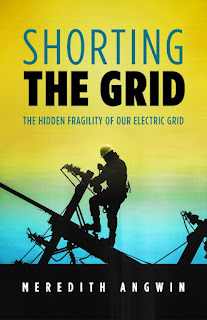
Last fall, Meredith Angwin published a book about how the grid is managed, Shorting the Grid: The Hidden Fragility of Our Electric Grid. The first portion of the book included a gripping narrative, watching the New England grid operator (ISO-NE) implement plan after plan to try to keep the grid operating during cold snaps. The New England grid operator succeeded (at least temporarily) at this task. About four months after Angwin’s book was published, the Texas grid operator failed during a cold snap, for reasons that were quite parallel with the situation in New England.
She agreed to answer a few of my questions. I asked her about her background, how she came to write a book that pretty much predicted the problems of Texas, and what she sees as the future of electric power in this country.
EN: Let's start with your background.
Meredith Angwin: I always wanted to be a chemist. Well, I wanted to be a scientist, and I thought chemistry was the best science for me. First, there was Madame Curie to be my heroine. Next, chemistry had an infinite number of problems to solve, and small advances in chemistry could lead to improvements in human health and well-being. I thought I could make some small advances. In contrast, the physics majors all seemed to be about The Theory of Everything. I had no hope of helping in that quest.
I am a chemist and a materials person. I first became interested in renewable energy, and since I had worked toward a Ph.D. in mineral and ceramic chemistry, I began to educate myself about geothermal energy. To make a long story short, I ended up working in geothermal energy, pollution abatement for fossil fuels, underground transmission issues, and nuclear energy. It’s great to be a materials person! I learned so much about the challenges that different technologies face as they generate and deliver electricity. I became one of the first women project managers at the Electric Power Research Institute
Much later, when semi-retired, I became an advocate for nuclear energy. I started a pro-nuclear blog, which sometimes covered grid issues as they applied to nuclear power plants. A man who read my blog emailed me and suggested that I join the Consumer Liaison Group of our grid operator, ISO-NE. (ISO New England). I had never heard of that group. Frankly, the fact that I had never heard of that group is part of the problem with how the grid is managed! The grid managers are a closed group, and they aren’t all that eager to have consumer input, even when the federal rules require them to have some type of consumer liaison group.
Being in that group is where my grid education really began. Bad management can override good engineering.
EN: What is the net result when this happens?
MA: I began to see how a strong grid becomes fragile as I watched ISO-NE, with limited powers, try to keep the lights on in cold weather. It was clear to me that the problems they were facing would not be limited to New England. Grid operators have three problems, especially in winter. I call this the Fatal Trifecta.
The first problem is relying too much on renewables such as wind and solar, which go on and off when they want to do so. They are intermittent and cannot be counted on to supply steady power.
The second problem is that the renewables are backed up by natural gas and gas is delivered just-in-time. Power plants do not store natural gas on site. But gas delivery can be interrupted, which is the second problem. Many things can (and do) interfere with natural gas delivery, especially in winter. For example, homes have priority on the gas in the pipelines, and the power plants may be unable to get the gas they need.
The third problem is that a grid operator may say: if things get tough, we are always connected to our neighbors, and so we will get electricity from them. Sorry to say, this doesn’t work well. Usually, when things are tough, it’s because of very cold or very hot weather. Your neighbors will be having the same problems. The neighboring grid operators are going to take care of their own people before rescuing your grid. I call this triplet (dependence on renewables, natural gas and imports) the fatal trifecta for a grid. The fatal trifecta leads to rolling blackouts, or worse.
I need to say something else about renewables. They simply can’t handle the demands of a modern society. They always have to be backed up by more reliable plants, mostly natural gas. And if we try to “electrify everything” (EVs for transportation, heat pumps for home heating, and so forth) then the demand for electricity will grow even faster. Renewables will fail to meet the demand. I started my career in renewables, and I wanted them to be able to do everything: an entire grid of renewables! But I painfully learned that this is not possible. There’s always that fossil-fired backup plant.
Unfortunately, many people are the way I was before I went through that painful process. They want to believe that renewables can do everything, and there’s always some “expert” willing to tell these people that renewables CAN do everything, we just have to have the political will to install the renewables! Saying that is a good way to be popular, but it doesn’t change the facts.
EN: In other words, it seems like the idealists committed to renewables do not want to listen to the science. Can you share an example of this problem?
MA: As an example of the failures of renewables, I recommend that people look at the website electricitymap.org. This website shows the carbon footprint, per kWh, for various parts of the world. France, which decarbonized with nuclear, has a very low carbon footprint. Germany, which invested heavily in renewables and closed most of its nuclear plants, has a much bigger carbon footprint. That is because the German grid must necessarily be backed up with fossil fuels.
 |
Click to enlarge
|
For a dramatic illustration of required backup, we can look at the California “Duck Curve.” This shows the amount of electricity (in thousands of MW) required during one March day. The back of the duck, the dip in demand, is due to solar online. If a home has solar, it requires less power from the grid. But look at what happens at sunset! Solar goes away, people turn on their lights, and traditional power plants must ramp up very quickly. All those power plants are still needed: the solar didn’t replace a power plant, though solar electricity substituted for the fossil plant’s electricity for several hours. That fossil plant, probably burning natural gas, is going to stay on the grid. It will be active, backing up any solar and wind. It will be ready to spring into action when the sun goes down or the wind stops blowing. And it will be in action for many hours each day.
I just took a look at electricityMap as I was writing this. When I looked, Germany was emitting 430 grams carbon dioxide per kWh of electricity produced, and France was emitting 67 grams. These are typical numbers, though they vary. With the exception of big hydro power, renewables simply cannot decarbonize a grid. Germany sure tried to decarbonize with wind and solar. Didn’t work.
I need to point out that there are different types of grid operators. Parts of North American are in Regional Transmission Organization (RTO) areas. These areas are managed with a series of auctions, and the auctions have very odd, arcane rules. Other parts of the country have more traditional governance structures, with private or public utilities which are overseen mostly by state Public Utilities Commissions. The RTO areas are moving toward rolling blackouts faster than areas with more traditional management.
The RTOs worried me, partially because nobody writes about them. Their auctions are complex, and no entity is responsible for having a reliable grid. For example, the RTO runs the auctions for electricity, but it is not responsible for actually having enough power plants available to meet the demand. In an RTO system, in terms of reliability, the buck stops nowhere.
Meanwhile, RTOs keep a low profile. I have very smart, very educated friends, all over the country. Many of them don’t know whether or not they live in an RTO area. At this point, everybody has heard of the ERCOT RTO, but many people have never heard of their own RTOs (if they have one). RTOs like to keep a low profile. And the RTOs have the more fragile grids.
EN: What about nuclear?
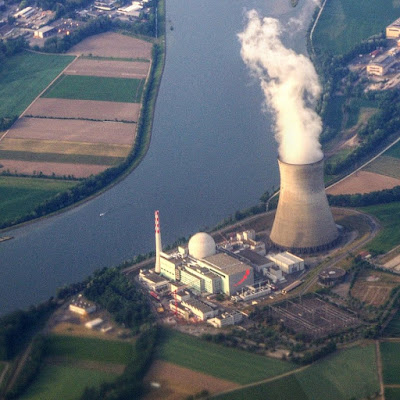
MA: Nuclear energy is very low carbon and it can supply abundant energy to the grid. When nuclear was first introduced, most environmental organizations (such as the Sierra Club) were in favor of it. It provided electricity without hydro plants disrupting rivers, or coal plants with their pollution.
However, I think the fear of nuclear war leaked over to become fear of nuclear power. The two are not closely related at all. Fuel for a nuclear power plant simply can’t be used to make a nuclear bomb, for example. But a rapid buildout of nuclear power would have certainly disrupted the coal and oil industries. Those industries didn’t mind that people confused nuclear weapons with nuclear power! The negative perception of nuclear power is a huge issue, and I can’t do justice to it in so short a time.
I wrote two books about energy. The first one is Campaigning for Clean Air: Strategies for Pro-Nuclear Advocacy. It describes how and why to support nuclear power. The second, my most recent book, is Shorting the Grid: The Hidden Fragility of Our Electric Grid. It describes how our grids are becoming more vulnerable to blackouts and loss of power, due to insufficient generation. People don’t know about the grid we actually have. I wish more people knew more about the real grid, not the “could grid” of “if we invested trillions of dollars in five years we could…” I wrote both my books, but particularly Shorting, to fill this knowledge gap.
EN: Experts that I have personally been in touch with say that wind is about 8% and solar 2% of our energy. As the push is on for EVs, so future energy needs will continue to grow. Can renewables really fill the need?
MA: You mean, what do I think of the “could” grid? What could or should happen in America? In terms of the future of electricity in this country, the current overemphasis on high percentages of renewables does not look good. It heads us right into the Fatal Trifecta. I do not consider Germany to be a good model for us. Germany has high renewables, high carbon emissions, and high electricity prices. I would prefer that our emphasis would switch to having a reliable grid, such as France has built, rather than a “could” grid that can never actually happen.
* * *
Meredith Angwin was one of the first women to be a project manager at the Electric Power Research Institute, leading projects in renewable and nuclear energy. For more information, you can reach Meredith at meredithangwin@gmail.com or follow her on twitter @meredithangwin
Her website is https://www.meredithangwin.com
Her blog is at https://www.meredithangwin.com/blog/
See also: https://app.electricitymap.org/map
Books by Meredith Angwin
Shorting the Grid: The Hidden Fragility of our Electric Grid
Campaigning for Clean Air: Strategies for Pro-Nuclear Advocacy