Showing posts with label nuclear power. Show all posts

Wednesday, September 25, 2024

Goin' Nuclear: Current and Recent Stories

Many experts believe that energy will become the biggest issue of the coming century. I believe the case can easliy be made that this is so. Hence, since last year I have begun collecting books and articles to study and share. Here are some interesting stories on this urgent and timeless topic.

* * * 

The Owner of Three Mile Island Is Turning the Nuclear Power Plant Back on to Fuel Microsoft's AI Operations
In this latest skirmish between the future and its enemies, the future won.
CHRISTIAN BRITSCHGI | 9.20.2024
https://reason.com/2024/09/20/the-owner-of-three-mile-island-is-turning-the-nuclear-power-plant-back-on-to-fuel-microsofts-ai-operations/?utm_medium=reason_email&utm_source=new_at_reason&utm_campaign=reason_brand&utm_content=Kamala%20Harris%20Is%20Not%20an%20Ideas%20Candidate&utm_term=&time=September%2020th,%202024&mpid=46710&mpweb=2534-4502-46710

Is nuclear power safe?
Yes. The safety record of generating electricity from nuclear power is the same as that of wind turbines and solar panels globally. We understand that anything involving nuclear technologies can evoke public concern. However, most modern technologies have inherent risks, be it flying in airplanes, undergoing surgery, or simply having electricity in our homes - all of these have the potential to cause both great harm and provide tremendous benefit. As a society we make these benefits available safely to the public by considering the risks, developing safety regulations, and learning from our mistakes. Nuclear power is no different.                                 

Modern nuclear plants are safe b
ecause we build robust containment structures and automated fail-safe systems ensure safe operation. Strict safety regulations and oversight have enabled the industry to operate for over 70 years with negligible impact on public health and safety. As with other industries like aviation, lessons learned from prior incidents continue to the already remarkable safety record.

*

Energy Bad Boys

Enjoy the blackouts, Jack

The Biden administration’s reckless EPA regulations endanger us all
https://energybadboys.substack.com/p/enjoy-the-blackouts-jack?utm_source=substack&utm_medium=email


Nuclear Energy Progress and Regress: A Comparative Status Report

https://pioneerproductions.blogspot.com/2024/02/nuclear-energy-progress-and-regress.html


Grid Fragility and a Book by Meredith Angwin

https://pioneerproductions.blogspot.com/2021/09/grid-fragility-and-book-by-meredith.html


Is Our Energy Grid at Risk?  

http://www.businessnorth.com/businessnorth_exclusives/is-our-energy-grid-at-risk/article_8c762ece-c44b-11ee-a7e0-4f412ac3356d.html
Business North


Joe Miller Discusses the Power Grid: Where Are We Now and Where Are We Going?

https://pioneerproductions.blogspot.com/2024/01/joe-miller-discusses-power-grid-where.html


The Biggest Drawbacks of Solar Panels

https://pioneerproductions.blogspot.com/2023/11/the-biggest-drawbacks-of-solar-panels.html

 
Power to Keep the Lights On, That's All I Ask 

https://pioneerproductions.blogspot.com/2024/02/power-to-keep-lights-on-thats-all-i-ask.html


US falling far behind China in nuclear power, report says

The United States is between 10 and 15 years behind China in rolling out next-generation reactors, research institute says.

https://www.aljazeera.com/economy/2024/6/17/us-falling-far-behind-china-in-nuclear-power-report-says


Tuesday, December 5, 2023

Small Reactors, Big Potential Impact: NANO Nuclear Microreactors Shaping the Future of Energy Infrastructure

One of the urgent and most important issues of our time is energy. Safe, reliable energy is essential for economic prosperity, infrastructure and quality of life. It powers our transportation systems, communications networks and water treatment facilities. Imagine our hospitals without electricity or our homes without power. In short, energy is the driver behind life as we know it today.

Here in the Northland, a reliable power grid is a must. I know people who would die were we to experience an extended mid-winter power outage. 

For this reason I've spent quite a bit of time thinking about the power grid that most of us take for granted. Here in the United States it seems the lights are always on. Having lived in Puerto Rico 40 years ago, I learned that much of the world lives under a very different set of circumstances. Brownouts and blackouts were a regular occurrence there.

As we attempt to move our world to a cleaner energy solution, many experts and scientists believe the only way for this to succeed is by the adoption of nuclear power solutions. 

One company striving to play a role in this nuclear revolution is NANO Nuclear Energy Inc. NANO Nuclear is an emerging, early-stage microreactor technology company seeking to become a commercially focused, diversified, vertically integrated technology-driven nuclear energy company. The work they are doing is cutting edge and timely. With 16+ years of capital markets experience, founder Jay Jiang Yu serves as executive chairman and president. In 2021, Mr. Yu was recognized as one of The Outstanding 50 Asian Americans in Business. NANO's CEO James Walker, a Nuclear Physicist with multiple degrees was, among other things, project lead and manager for constructing the new Rolls-Royce Chemical Plant. Together they are addressing several questions related to nuclear technology and the future of energy. 

Jay Jiang Yu, Serial Entrepreneur
EN: What first prompted you to take an interest in nuclear technology?

Jay Jiang Yu: My interest came together when I wanted to focus on investing in the next clean energy sector. Wind and Solar had very little innovation, but Nuclear Tech piqued my interest because of the baseload energy output and the advancement in material science to make Nuclear Small Cheaper and Safer. What reinforced my business thesis on creating NANO Nuclear Energy was what the Chairman & CEO of Blackrock, Larry Fink stated, “It is my belief that the next 1,000 unicorns — companies that have a market valuation over $1 billion dollars — won’t be a search engine, won’t be a media company, they’ll be businesses developing green hydrogen, green agriculture, green steel and green cement,” Fink wrote, using the tech-industry term “unicorns” to refer to start-ups valued at $1 billion.”


James Walker: Our initial energy assessment included the consideration of other energy sources, such as wind and solar. SMRs were initially examined, but it became apparent that the market with far larger potential was in more deployable energy systems that could service remote locations more readily; the only candidate that could satisfy this market was microreactors because of their high-capacity factors. The market has exceedingly large potential, with tens of thousands of mining operations running on diesel fuel, which could financially benefit from a steady source of clean and portable energy over a 20-year period.  We identified a large potential customer base for deployable mobile reactors, for remote industrial and manufacturing projects, current and previously uneconomic mining sites, oil, and gas projects, military bases, remote towns and communities, islands or emergency sites (post-earthquake, tsunami, hurricane etc.) to re-establish electrical power during the absence of electric grid availability. Additionally, tens of thousands of mine sites that are not currently economically viable could suddenly be made viable with inexpensive, clean energy, creating the potential to free up huge deposits of mineral wealth. This possibility can be applied most notably to Africa, where mineral wealth exists but is often inaccessible due to the power demands of modern mining operations. Similarly, all remote industrial projects could potentially benefit from our microreactors. Wherever diesel generators are deployed, our microreactors could provide a power source with fewer inherent logistical challenges, as they do not require daily refueling like diesel generators.


If countries are also serious about electrifying their transportation infrastructure, only microreactors would be able to service charging stations for electric vehicles throughout the country. Wind and solar can only be sited where they can generate sufficient output energy, and batteries cannot be shipped to charging stations on a daily basis, especially outside of cities, or between urban developments. Microreactors could make it possible to actually eliminate the need for fossil-fueled vehicles, which no other energy form can currently claim.  

We also believe the shipping industry is a major area of potential growth for our company. The U.S. Navy has already demonstrated decades of successfully powering large ocean-going ships with nuclear fuel without incident or any carbon emissions. Oil tankers, shipping container vessels and other large ships all use bunker fuel, which is incredibly polluting and bad for the environment.  Global focus will eventually shift to substituting this fuel as soon as a candidate is identified. We believe we will have that replacement technology in our nuclear microreactors. 


EN: Though the concept is not entirely new, there has been a lot of focus recently in small scale nuclear technology. What is the difference between solid core battery reactors like ZEUS, low-pressure coolant reactors like ODIN and the Thorium reactors we have been reading about?


JW: We are developing two advanced portable nuclear microreactors in technical design and development. The first, “ZEUS”, is a Solid Core Battery Reactor, designed by world-class engineers trained at the University of California--Berkeley, has a fully solid core, where heat is removed solely by thermal conduction. This requires the deployment of high conductivity, high melting materials, and careful materials design. The reactor will use uranium dioxide fuel, so no new fuel developments are necessary. Reactivity will be controlled with absorber drums outside of the central core. The generated heat will be conducted from the fuel to the outside of the core via thermal conduction through a thermally conductive material, allowing for the elimination of coolant, creating a far safer reactor than historically developed. Heat will be removed from the outside of the core by recirculated air or helium gas, which delivers the heat to the gas turbine to produce electricity. The gas turbine will be affixed to the top of the reactor to reduce piping and minimize the size of the plant. The benefit of not incorporating a primary liquid loop reduces the manufacturing costs, and enhances simplicity for modeling, testing, optimizing, and constructing. 


The secondary loop outside the monolith will be inert gas allowing to reach high temperatures and direct heating of a gas turbine which will be compact and small. Without coolant, typical reactor pumps and piping can be removed from the design, allowing for further compactness, with the aim being to construct a full core and electricity-generating gas turbine within a container meeting International Organization for Standardization (ISO) specifications. The smaller power core will also mean fewer neutrons are absorbed by the non-fissionable materials, allowing for longer operational life despite the small core.   


Our second reactor in development, “ODIN”, will be a Low-Pressure Coolant Reactor, which uses relatively simple uranium and zirconium HALEU hydride. The zirconium hydride densely packs hydrogen and so provides substantial moderation. Low pressure “solar” salt (sodium-potassium nitrate eutectic) coolant will be used to minimize the stress on structural components and improve the reliability and service life. The design will take advantage of the natural convection of the coolant for heat transfer to the power conversion cycle at full power, as well as for decay heat removal during reactor shutdown, operating transients, and off-normal conditions. A nitrogen or open-air Brayton cycle will be used for power conversion due to its simplicity, flexibility, and its wide use within the conventional power industry. Reactivity control system design will have high reliability and robustness by minimizing the number of moving parts.  


The U.S. has tried for 50 years to create thorium reactors, without success. Four commercial thorium reactors were constructed, all of which failed for a variety of reasons, and because of the complexity of the technical challenges, thorium reactors are far more expensive than uranium-fueled reactors.


Non-fissionable thorium must also be mixed with either fissionable plutonium or uranium-235. It captures a neutron and converts to uranium-233, which itself is fissionable.


Uranium-233 is a very efficient fuel for nuclear weapons. It takes about the same amount of uranium-233 as plutonium-239 – six kilos – to fuel a nuclear weapon. The U.S. Department of Energy created 96 kilograms of uranium-233 through their thorium experiments.


EN: There are many approaches to reducing dependence on carbon-based or clean tech energy. For decades the government has devoted its efforts to solar and wind projects through tax credits, loan guarantees, etc. Why has it taken so long for government to work harder to support nuclear solutions, since they are far more efficient?


JW: There was genuine hope that wind and solar would be able to provide an alternative solution to fossil fuels, especially when deployed at large scales. Unfortunately, low capacity factors, high storage costs, large land requirements, sparse suitable locations for siting, and degradation of equipment, all summated to an eventual conclusion that they would not be able to replace fossil fuels on any wide scale, and certainly not on any location without optimal climate conditions. This can be seen most evidently in Germany, which chose renewables such as wind and solar over nuclear, and ended up with more expensive power, and a higher carbon footprint, and now finally is returning to nuclear energy. All governments now realize that the data is in and there is only one form of energy that offers any way to replace fossil fuels at large scales and in any location. 


EN: What kinds of costs are associated with smaller-scale reactors? What is their service life and how safe are they?


JW: We cannot disclose our financial modeling analyses and findings as they are likely to change as we make further progress and introduce further refinements. However, we can share that our models show that the price of our reactors will come down by 70% with the introduction of mass manufacturing optimization. This would make our reactors less expensive than any alternative for remote operations.


Although “small" features in the SMR acronym (Small Modular Reactor), the most developed SMRs are still relatively large, requiring areas equivalent to many city blocks. Likewise, these SMRs will also require large-scale site preparation and long commissioning periods. Nano’s reactor will occupy under an acre of space and will not require the large-scale infrastructure that is necessary for the large reactors. 


A major benefit of Nano’s small reactor is the simple design, using very few working parts. Nano’s design prerogative was to use basic fuels, so no exotic engineering was required. The reactor was also designed to passively cool, which meant that even if all systems were to break or the reactor was damaged, the heat would naturally dissipate and be unable to melt the core, which is the most significant risk to any reactor. All the simplicity, when combined with the small size and few working parts, is expected to equate


EN: Some critics say that these small reactors will be vulnerable to terrorists who steal material for bombs or other deadly devices. I have read that this is a myth and that the small reactors do not use material that can be re-purposed like that. Can you elaborate on this?


JW: We’re not sure what a terrorist would do with a microreactor other than warm their house. In order to make any type of weapons, they would need a multi-billion dollar fuel chemical plant, then a deconversion facility, then an enrichment facility, and finally a fabrication facility. Very few countries in the world could complete this process. The fuel in a microreactor cannot blow up, the enrichment is far too low, hence why the above process would be required. Good luck to a terrorist trying to lug off a microreactor with any kind of stealth as well. 


EN: What is the current status of NANO Nuclear Energy?


JW: Nano is just closing its third round of funding, which was undertaken to fund the further development of Nano and its subsidiary businesses. We are making applications for sites to begin test work for our reactor designs, as well as scheduling reactor audits from external organizations to verify the conclusions and designs we have solidified in 2023. We have also started work on our new fuel fabrication facility, and are bringing in several big partnerships to work with us to ensure the success of this endeavor. We have also won awards which when announced, will disclose Nano’s international ambitions. 


EN: Has the U.S. then given up on a Thorium solution to the energy problem?  

JW: There are U.S. companies pursuing thorium as a solution, but none of the leaders in SMRs or microreactors, or any of the groups with the most developed new technologies, are using thorium. Thorium does theoretically work for nuclear power, and the idea receives additional support because of the abundance of thorium, but the thorium projects are not close to being as advanced as the next generation reactors currently being developed, which all use uranium.

EN: Is Thorium an untenable solution then?


JW: Nobody actually knows for sure, as no thorium reactor has been successfully developed to demonstrate positive economics that could rival uranium. There have been many attempts though, without success.

* * * 
Breaking: Jay Yu and James Walker will be speaking at POWERGEN International in New Orleans at the Ernest N. Morial Convention Center, January 23-25.


Related Links

Nano Nuclear Energy

NANO Nuclear Energy Chief Executive Officer James Walker to Present at the Upcoming 1st Annual Nuclear Energy Security Summit Held at the Ronald Reagan Building & International Trade Center on Nov. 9th 2023

Grid Fragility and a Book by Meredith Angwin

The Big Short and Shorting the Grid

An Honest and Sensible Conversation About Global Energy

Tuesday, October 26, 2021

Tech Tuesday: Thought Provoking Energy Stories

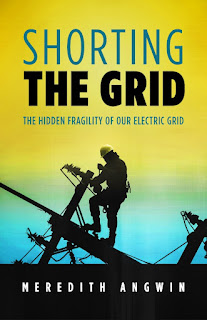
I have currently been reading Meredith Angwin's Shorting the Grid: The Hidden Fragility of Our Electric Grid. The book challenges us to think about matters we have probably given very little thought to. Specifically, how do our power systems work? Why do the lights go on when I flip a switch? What would our lives be like if we shut down all the power plants? That is, what would happen if the power went out forever?

Here are some article to chew on for today's energy lesson. (I'm not an expert. Just relaying ideas that strike me as significant from this week's readings.)

Our electricity demand is shifting into high gear. That's why we need diverse energy sources. | Opinion

The question isn't whether our country will need more power, but what energy mix is needed to meet our economic and environmental goals.

READ MORE

* * * 
In another article
I had a new insight about solar energy that I'd not considered. 
KEY NEW THOUGHT: The more Sun we get to produce energy, the higher the demand to run air conditioners and cooling systems. 

* * * 

Regarding the best way to achieve carbon neutrality by 2050 in Europe, it's apparent that the EU nations are hardly in unison. Here are two excerpts from a thought-provoking article at FairPlanet.com.

France, an ardent supporter of nuclear power, drew 70 percent of its energy from nuclear sources last year, while the Czech Republic relied on its six nuclear reactors for 37 percent of its energy. 

President Emmanuel Macron doubled down on France’s nuclear strategy, announcing a new €1 billion investment in new-generation nuclear reactors. On the other hand, 2022 will witness the shutdown of the last of Germany’s nuclear reactors, completing Chancellor Angela Merkel’s 2011 plan to phase out the country’s 17 nuclear power plants in the wake of the Fukushima disaster.

* * * 

THIS SKYNEWS STORY proposes that  Climate Change "could be solved overnight" with nuclear. It seems an ambitious claim. Tomorrow evening more details will be spelled out regarding the role nuclear will play in the global effort to achieve netzero carbon.

* * * 

In Europe Germany is on the way to phasing out nuclear completely. France leads the EU with 70% of it power generated by nuclear. Which country produces more carbon? Germany by more than 6-fold. Which country best exemplifies the future of energy reliability? France. 

Details HERE.  

* * * 

Who among you (older readers) ever imagined that people would one day be "mining" bitcoins using powerful computers? The concept is still elusive for many, if not most, laypeople. 

Well there have been remarkable new developments in the field of nuclear power. Are you familiar with Thorium? Read this introduction to Thorium from the World Nuclear Association. 

* * * 

For the record, small scale nuclear power has been around for decades. Nuclear-powered submarines are submarines powered by nuclear power. When Australia recently cut a deal to build a fleet of nuclear powered subs, it did not mean submarines loaded with nukes. 

According to this article in Business Insider, the advantage of nuclear-powered subs is that they can operate at sea for longer, spend more time submerged, and sail at higher speeds than conventionally powered subs.

* * * 

There are now Portable Nuclear Reactors That Can Power Over 1,000 Homes

* * * 

According to Meredith Angwin, author of Shorting the Grid, a world without coal, oil or nuclear power is wishful thinking. It's a notion suggested by people who do not understand how power generation works. 

To learn more, read my interview with Ms. Angwin. It is amazing what science is achieving in the realm of clean energy today. 

* * * 

May all your skies be blue. (Except when we need a little rain.)

Friday, October 8, 2021

The Big Short and Shorting the Grid

Photo: Hansueli Krapf. Creative Commons
This week I updated my list of favorite movies. One that I added to the list is The Big Short, based on the book by Michael Lewis. The story offers an insider view of the financial meltdown of 2008, and the people who saw it coming. Lewis, as in his many other books, strives to transform nebulous concepts and esoteric information into stories that laypeople can understand. Since so much of what happens on Wall Street or Big Business or Inside the Beltway is also shrouded from view by fog and noise, we really do need journalists like Lewis to shine a light into those caverns to show us what's going on that we fail to notice because it's too complicated for front page news. 

This week I also started reading Meredith Angwin's Shorting The Grid, a book about the hidden fragility of our electric grid. Like Lewis, she's clearly done her homework. As I go along on this journey into nuclear power and the energy grid I will share some of what I learn.

And guess what? The first chapter of Angwin's book is titled The Big Short. 

At the center of The Big Short we see how the banks and Wall Street played games with complex credit instruments. Most people played along with these games taking place in the overheated housing market. 

It's understandable how overconfidence created this unrealistic disparity between perceived and real valuations. People with lots of money want to invest in things that offer the most potential gain with the least potential risk. Because real estate values always seemed to go up, everyone assumed this would always be the case. 

For decades housing prices were perpetually going up. For example, the house my parents bought for $24K in 1964 was sold for over $100K fifteen years later. Not many years after that the Browne's house next door, which was also purchased for $24K, went for $200K. 

Somewhere around 2006 or so I looked on Zillow and saw that our four-bedroom split-level house with partial basement was now valued at $450K. To me, it was just another "used house" but there seemed to be nothing stopping prices from climbing. That is, until all the easy credit started to dry up and people began defaulting on those overblown mortgages.

Because the housing market propped up the wider economy, everything took a hit when the bubble burst. The credit system crashed, and everything else went with it down the toilet. 

This story lays the foundation for Ms. Angwin's book because, as she sees it, there are many parallels between 2007 and our current situation with regards to energy. 

Most Americans, having grown up enjoying the benefits of electricity, probably take it for granted. We turn on the light with the flick of a switch. We recharge our devices by plugging them into an outlet. But few of us have really bothered to understand how it works or how the utility companies keep our lights on 24/7.

(For what it's worth, I lived in Puerto Rico for a year and experienced what it is like to have weekly brownouts and occasional blackouts. That was long before the more recent hurricane that so devastated our island neighbor.)

In this first chapter Ms. Angwin gives readers a brief overview of how things have been changing with regards to power. We don't notice because for 80 years or more it has almost always been fine. The exception being Texas this past winter.) Nevertheless, things have changed, even if we haven't noticed anything different at the user end. She writes:

In the old days regulatory bodies wanted to see a grid with reliable power plants and, hopefully, plants that use different types of fuels. A varied grid meant that, if one fuel had shortages or rose in price, the grid would still be stable, and costs would remain relatively stable.

In current grid governance, none of these things matter. In many areas power plants that make steady reliable power can’t make a profit. Several large utilities are trying to sell or shut down their nuclear, gas, and coal plants in these areas. These utilities plan to operate plants only in other parts of the country.

She then discusses the Regional Transmission Organization (RTO) which is a thread that will run through the length of this book.

In many areas of the country, especially in RTO areas, power installations that can operate only intermittently, such as solar and wind installations, are the sure bet for becoming wealthy. In the mortgage situation the intrinsic value in the mortgage didn’t matter. In the RTO area, the value of the power produced doesn’t matter. As a matter of fact, less-valuable power is more profitable. 

Trouble is sure to come and it’s on its way. In these areas we are on our way to an expensive and fragile grid.

* * * 

Unlike Christian Bale or Steve Carrell in the movie version of The Big ShortMeredith Angwin is not a lone voice in the wilderness. In the very short time I've been learning about nuclear power, I encountered quite a tribe of people who "get it." These are people fully committed to clean air, clean water and a safe future for our grandchildren. 

The interview I posted yesterday, provides a number of useful insights worth taking into consideration as we discuss the benefits of nuclear energy.  Check it out here: Putting Nuclear Power In Perspective: An Interview with David Watson.

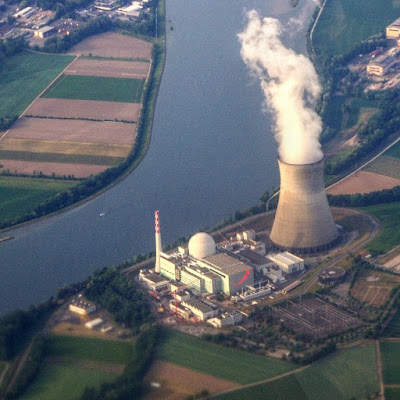
Photo at top of page: Leibstadt Nuclear Power Plant, Switzerland

Thursday, October 7, 2021

Putting Nuclear Power In Perspective: An Interview with David Watson

Photo by NeONBRAND on Unsplash
"Beating climate change is hard enough without taking away one of the best low-carbon tools we have. It’s time to talk about nuclear."
--David Watson

For 25 years I have been involved in the automotive aftermarket with a keen eye on the evolution of diesel engine technology and electric vehicles (EVs). Meeting ever tightening emissions standards and improving fuel economy have been the big drivers of change over the past five decades. 

As we move toward an increasingly energy dependent future and away from carbon-based energy, there seems to be no way that solar, wind and hydro-power will be sufficient to meet demands. That is why I've taken such a keen interest in what is happening with nuclear energy. 

David Watson is editor-in-chief of The Kernel, a Medium publication that self-describes as "The Generation Atomic magazine. Our latest thoughts on the role of nuclear in a clean energy future."

* * * 

EN: What is your background and how long have you been involved in the nuclear movement?


David Watson: I'm what you might call a second generation nuclear engineer in that my father also works in the industry. I don't have one of those "Road to Damascus" conversion stories so common among nuclear advocates; nuclear was always normal to me. One of my fondest childhood memories was visiting the Wylfa A nuclear plant on the isle of Anglesey in Wales. I remember being fascinated by the walk-in radiation detectors. I also remember us driving past a coal plant one day and asking why there was smoke coming out of it. I remember saying something like "if I was Prime Minister I'd replace all the fossil fuels with nuclear." After a Physics degree, I joined the industry as a safety engineer in 2011. As an advocate though, I've only really become active in the last few years. I decided to speak out more when I realized how slowly we were moving as a society on climate change.


EN: Though nuclear energy has been around for more than half a century, it seems to be experiencing a resurgence in recent years. What are some of the triggers for this new interest in nuclear?


DW: In short, because of climate change. Around the year 2000, nuclear was almost written off as a future energy source by many politicians and economists. That would have been a mistake, as even without climate change there are many benefits to using nuclear over other forms of energy. As the world realized the scale of the climate problem, nuclear has come back onto the agenda. It's gone through various phases since 2000, but I think now in 2021 there is a growing realization that we can't just rely on intermittent solar and wind, and that too much gas and imports leaves us vulnerable to price spikes and even blackouts. I know you interviewed Meredith Angwin recently, and she can talk to this topic much better than I.


EN: Three Mile Island and Chernobyl dampened a lot of enthusiasm for nuclear power. Why is it different this time?


DW: Nuclear has always been treated as "different" to other forms of energy. People remember Three Mile Island, but they don't remember that no one died or even got ill from radiation from that accident. Chernobyl was a terrible event, both the accident and the Soviet Union's behavior in the weeks that followed, but only around 50 deaths have been attributed to it. In comparison, there have been hundreds, perhaps thousands, of gas explosions and coal mining accidents that have killed more than 50 people. Ironically, this means that most people couldn't name a single fossil fuel accident (maybe Deepwater Horizon?). Similarly, there have been many hydro dam collapses that have killed hundreds, and some even tens of thousands (the Banqiao dam collapse in 1975 may have caused up to a quarter of a million deaths). 


Saying that, the nuclear industry does everything it can to limit the likelihood and consequences of accidents from happening. Safety is the number one priority for anyone operating in the space. A Chernobyl-like accident is physically impossible in any of the reactors proposed or under construction in the world today. Many of the "advanced" (Generation IV) reactors claim improvements in safety over today's reactors.


EN: What is The Kernel and how did you get involved?


DW: The Kernel is Generation Atomic's magazine. Generation Atomic is a global grass-roots nuclear advocacy movement. We try to grow support for nuclear, particularly among the young. I joined Gen A (as well call it) a few years ago with the express idea of relaunching their blog on Medium. We recently re-launched the magazine under the banner of "The Kernel" as we wanted to give the publication its own identity.


EN: Are there any countries that are 100% nuclear powered now? How is that working and why haven’t we heard about it? 

Where is nuclear on the adoption curve? (Click to enlarge)
DW: No country is 100% nuclear, just like no country is 100% coal or wind; there is always an energy mix. There are, however, some countries where a large proportion of electricity comes from nuclear: France at 75% is the leader. Although the US has a larger total number of reactors, the larger size of the US means this equates to 20% of US electricity. Sweden, Finland, South Korea, the UK, Belgium and Japan also have 20-50% of their electricity coming from nuclear. Although some countries in the West (Germany, Belgium) are looking to phase out nuclear, many others (e.g. UK, France, Finland, Czechia, Poland, Estonia, China, Pakistan, India, Egypt, Russia, UAE, Ghana, Nigeria) are building (or planning to build) new reactors.

EN: Thank you for taking some time to increase our understanding of nuclear power. 

Related Links

Grid Fragility and a Book by Meredith Angwin

Five Minutes with Joe Heffernan on Nuclear Energy

Wednesday, October 6, 2021

Five Minutes with Joe Heffernan on Nuclear Energy

"The perception of radiation risks is out of whack with the reality."
Wall Street Journal, October 4, 2021

Photo by Patrick Federi on Unsplash
I was first awakened to the possibilities of nuclear energy through a series of Tweets by Michael Shellenberger last year. Throughout his career Shellenberger has been quite vocal with regard to climate issues and environmental awareness. What concerned him was that the warnings being disseminated were being heard as proclamations that "the end is near." This prompted him to write Apocalypse Never: Why Environmental Alarmism Hurts Us All

Reading Shellenberger gave me an understanding of the possibilities that lay ahead if we change our way of thinking with regards to energy. The push to eliminate carbon may be noble, but if it leaves our power grids broken, then what? Shellenberger wrote that we can turn to nuclear energy.

These past few weeks I've discovered that developments in the nuclear field have been quietly ongoing for decades, with many smart people striving to ensure that our grandchildren will inherit a safe, healthy planet earth.

Since interviewing Margaret Angwin at the end of September, I've met (through social media) several people with insights related to this topic. Joe Heffernan of Scotland is one of these.

* * *   

EN: You have six years experience in the energy field and have primarily served as a geotechnical engineer. What caused you to become an advocate for nuclear energy?

Joe Heffernan: Around the age of 50 I had a bit of crisis and thought about a change of career.  When I looked around to see what would have the biggest impact on making the world a better place I began to look at nuclear power. The more I looked at it the more I saw what a great world, in my opinion, it would be with more extensive use of nuclear power. I never did change career but my enthusiasm for nuclear power has continued to grow.

EN: We hear people say "trust the science" when discussing global warming, but when it comes to nuclear energy these same people say "ignore the science. Nuclear is not safe." In your opinion, why are the advocates for eliminating carbon so opposed to nuclear?

JH: I think that the reasons that some advocates of eliminating carbon are opposed to nuclear are:

  • Many of the NGOs who are most vocal about low carbon have a constituency that is vehemently anti-nuclear.  They know where their pay check comes from and have to keep the faith with their constituency.
  • Nuclear power would be very disruptive to the current companies and countries that depend on the extraction and sale of fossil fuels. It is not in their short term economic interest to see nuclear succeed.
  • People are poor at understanding the concept of 'relative risk'. Based on data nuclear power is the safest form of energy but that is not the perception.
  • Some people have an attachment to what they imagine is a pastoral existence and nuclear power doesn't fit into that narrative.

EN: It seems like the effort to ramp up EVs has some pretty high hurdles if we don't strengthen our electrical grid. What's your take on that?

JH: I am troubled when discussions about decarbonization seem to only concern themselves with the electrical grid. In rough terms our energy consumption is divided into thirds. One third is electricity, one third is transport and one third is heat. All the conversation about clean electricity ignores around two-thirds of power we consume.  Society's interest in electrifying transport never seems to consider that if we do electrify transport that means the grid will have to practically double in output. I personally feel that electric transport within cities is the way to go as it has good impacts on air quality. But I very much advocate for high density towns and cities where walking, cycling and public transport will work well.

I am a big advocate of Small Modular Reactors. I would very much like to see SMRs used in our towns and cities to provide combined heat and power. Some of that power would be used for public and electric transport rendering the need for private cars less important. This also has the advantage in that it allows power production close to the end use. This reduces transmission requirements. I also believe that this would increase robustness and resilience.

I recognize that changing the layout of towns and cities is a huge challenge.

EN: Will renewable energy -- specifically, solar and wind -- ever replace oil and coal?

JH: In a word no, not if we expect to have a high energy consumption modern life.  Nuclear power can go a long way, in my opinion, to reduce the consumption of coal, oil and methane. I recently finished reading Energy Transitions: Global and National Perspectives, 2nd Edition by Vaclav Smil.  In this book you see that once we start using a source of energy we continue using it forever. As an example, we still use lots of wood and agricultural waste. We will always need oil, coal and methane in my opinion but I would hope we can eventually move away from burning the majority of these materials and use them for chemical feedstocks.

One thing this book brings out is the difficulty of extracting energy from low density sources such as wind and solar. 

EN: If someone were interested in learning more about nuclear energy, are there any books you might recommend?

JH: For me, my entrance drug to nuclear power was Thorium. Therefore I would recommend THORIUM: energy cheaper than coal by Robert Hargraves. He has another book that I expect to read soon. It is titled Electrifying Our World: for climate, for people, with fission

EN: Thank you, Joe, for the book recommendations and your insights on this important issue. 

* * * 

Related Links

One Reason Nuclear Power Has Been Overlooked

Grid Fragility and a Book by Meredith Angwin

Popular Posts