Showing posts with label the Big Short. Show all posts

Saturday, April 30, 2022

Here We Go Again? Margot Robbie in a Bubble Bath to Explain What Happened When the Housing Bubble Burst

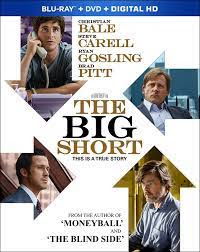
Have you seen The Big Short? I'm talking about the movie based on the book by Michael Lewis. All too often movies fail to live up to the vivacity sparked by the book. The Big Short is an exception.

Adam McKay wrote the screenplay and directed this remarkable film. Brad Pitt played a role in the film, delivered an important line and also produced the film.

For most Americans economics is a mystery, especially when it comes to Wall Street. Stocks, junk bonds, mutual funds, ETFs, options, derivatives, tranches, yield, moving averages, short squeeze... the lingo is so esoteric that the average clam on the street is clueless.  

Even when we don't know what things mean, we're all impacted by them when the shakedown comes. The tech bubble bruised a lot of peoples' investments and the housing bubble created pain all the way down into the trenches where many Americans exist day to day.

The Big Short was an exceptionally creative means of explaining what happened during the collapse of the housing market. It doesn't really tell the entire story, such as how mechanisms were created to help people who couldn't afford homes were shoehorned into properties that were beyond their means. That is, there was pressure placed on banks to make mortgage loans that exceeded their typical tolerance for risk

Needless to say, the film does a good job of showing how Wall Street insiders were clueless to what was really going on, and paid a price for it.

Early on in the film the director inserts Margot Robbie in a bubble bath, sipping wine, to explain subprime mortgages. 
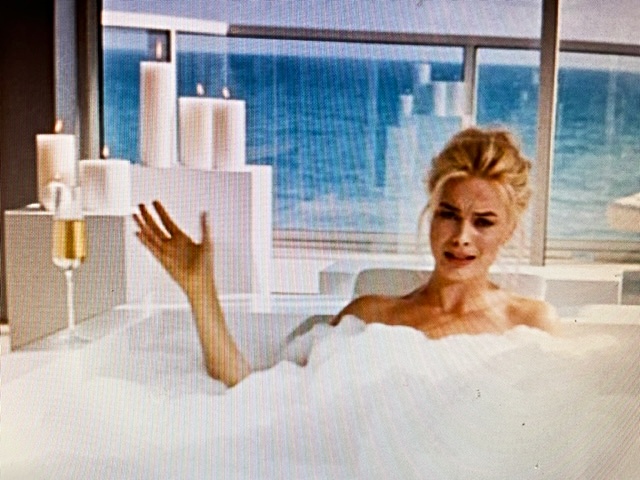
Basically, Lewis Ramieri's mortgage bonds were amazingly profitable for the big banks. They made billions and billions on their 2% fee they got for selling these bonds. But they started running out of mortgages to put them in. After all, there are only so many homes and so many good jobs to put them in. So the banks began filling these bonds with riskier and riskier mortgages. That way they can keep that profit machine churning, right? By the way, these risky mortgages are called subprime. So whenever you hear "subprime" think "sh*&".

Our friend Michael Burry found out that these mortgage bonds which were supposedly 65% AAA were actually just mostly full of sh*&. Now he's going to short the bonds. Which means 'bet against.'

Got it? Good.

"Let me tell you how it is."
FWIW, Margot Robbie is an actress from Australia who played Tonya Harding in I, Tonya. She's also played Mary Queen of Scots and Sharon Tate in other films I've seen, though I never knew her name.

My interest in seeing this film (I've seen it several times already and read the book) was chiefly driven by the mess we're seeing right now in global markets and on Wall Street. I know that some people believe it's all a big conspiracy, that wrecking the economy is intentional. Somehow my personal feeling is that the decision makers are in over their heads. Things are simply too complicated today and the law of unintended consequences lurks behind every move.

There are a lot of stars in this film. The casting is superb. Christian Bale, Brad Pitt, Ryan Gosling and Steve Carell are the primary heavies, but even the most incidental character is perfect.

As a final note (knowing much more can be said), I also enjoyed the music score, especially Led Zeppelins When the Levee Breaks which summed up the film as the final credits rolled.    

Again, if you've not see this film, I recommended it highly. It's both entertaining and insightful. 

Ever ready to upset applecarts.

Friday, October 8, 2021

The Big Short and Shorting the Grid

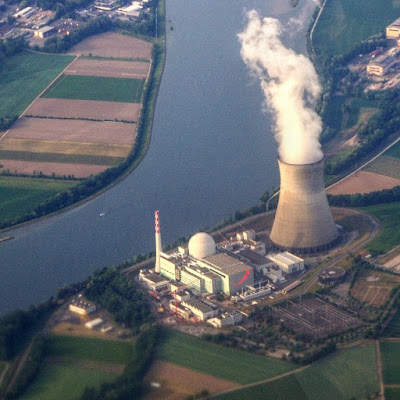
Photo: Hansueli Krapf. Creative Commons
This week I updated my list of favorite movies. One that I added to the list is The Big Short, based on the book by Michael Lewis. The story offers an insider view of the financial meltdown of 2008, and the people who saw it coming. Lewis, as in his many other books, strives to transform nebulous concepts and esoteric information into stories that laypeople can understand. Since so much of what happens on Wall Street or Big Business or Inside the Beltway is also shrouded from view by fog and noise, we really do need journalists like Lewis to shine a light into those caverns to show us what's going on that we fail to notice because it's too complicated for front page news. 

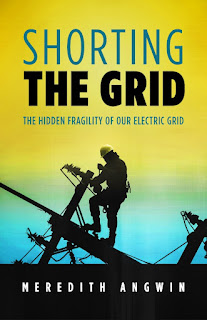
This week I also started reading Meredith Angwin's Shorting The Grid, a book about the hidden fragility of our electric grid. Like Lewis, she's clearly done her homework. As I go along on this journey into nuclear power and the energy grid I will share some of what I learn.

And guess what? The first chapter of Angwin's book is titled The Big Short. 

At the center of The Big Short we see how the banks and Wall Street played games with complex credit instruments. Most people played along with these games taking place in the overheated housing market. 

It's understandable how overconfidence created this unrealistic disparity between perceived and real valuations. People with lots of money want to invest in things that offer the most potential gain with the least potential risk. Because real estate values always seemed to go up, everyone assumed this would always be the case. 

For decades housing prices were perpetually going up. For example, the house my parents bought for $24K in 1964 was sold for over $100K fifteen years later. Not many years after that the Browne's house next door, which was also purchased for $24K, went for $200K. 

Somewhere around 2006 or so I looked on Zillow and saw that our four-bedroom split-level house with partial basement was now valued at $450K. To me, it was just another "used house" but there seemed to be nothing stopping prices from climbing. That is, until all the easy credit started to dry up and people began defaulting on those overblown mortgages.

Because the housing market propped up the wider economy, everything took a hit when the bubble burst. The credit system crashed, and everything else went with it down the toilet. 

This story lays the foundation for Ms. Angwin's book because, as she sees it, there are many parallels between 2007 and our current situation with regards to energy. 

Most Americans, having grown up enjoying the benefits of electricity, probably take it for granted. We turn on the light with the flick of a switch. We recharge our devices by plugging them into an outlet. But few of us have really bothered to understand how it works or how the utility companies keep our lights on 24/7.

(For what it's worth, I lived in Puerto Rico for a year and experienced what it is like to have weekly brownouts and occasional blackouts. That was long before the more recent hurricane that so devastated our island neighbor.)

In this first chapter Ms. Angwin gives readers a brief overview of how things have been changing with regards to power. We don't notice because for 80 years or more it has almost always been fine. The exception being Texas this past winter.) Nevertheless, things have changed, even if we haven't noticed anything different at the user end. She writes:

In the old days regulatory bodies wanted to see a grid with reliable power plants and, hopefully, plants that use different types of fuels. A varied grid meant that, if one fuel had shortages or rose in price, the grid would still be stable, and costs would remain relatively stable.

In current grid governance, none of these things matter. In many areas power plants that make steady reliable power can’t make a profit. Several large utilities are trying to sell or shut down their nuclear, gas, and coal plants in these areas. These utilities plan to operate plants only in other parts of the country.

She then discusses the Regional Transmission Organization (RTO) which is a thread that will run through the length of this book.

In many areas of the country, especially in RTO areas, power installations that can operate only intermittently, such as solar and wind installations, are the sure bet for becoming wealthy. In the mortgage situation the intrinsic value in the mortgage didn’t matter. In the RTO area, the value of the power produced doesn’t matter. As a matter of fact, less-valuable power is more profitable. 

Trouble is sure to come and it’s on its way. In these areas we are on our way to an expensive and fragile grid.

* * * 

Unlike Christian Bale or Steve Carrell in the movie version of The Big ShortMeredith Angwin is not a lone voice in the wilderness. In the very short time I've been learning about nuclear power, I encountered quite a tribe of people who "get it." These are people fully committed to clean air, clean water and a safe future for our grandchildren. 

The interview I posted yesterday, provides a number of useful insights worth taking into consideration as we discuss the benefits of nuclear energy.  Check it out here: Putting Nuclear Power In Perspective: An Interview with David Watson.

Photo at top of page: Leibstadt Nuclear Power Plant, Switzerland

Popular Posts