Showing posts with label crisis. Show all posts

Saturday, March 11, 2023

The Fentanyl and the Synthetic Opioid Crisis

I believe my first blog post about fentanyl was this past September, titled What Should We Do About Fentanyl? It included a 10-point plan from the controversial Dilbert creator Scott Adams. Whatever you might say about the list, it's a discussion starter. The issue is a huge one now, and it appears to be unrelenting.

I know of several new deaths in the past six weeks from fentanyl, including one too close to home, and as a result I've spent a lot of time thinking about it. 

In mid-February I looked into the manner in which the Vietnam War was covered as opposed to the coverage of our fentanyl scourge. I remember watching the news back then and almost every night they gave a body count of American kids who had died "over there." When I learned that almost twice as many Americans died in a single year from fentanyl, a synthetic opioid 50 to 100 times as strong as morphine, as died in all of the ten years of the Vietname War, I was surprised and appalled. 

Yesterday NPR did another story on the Ukraine conflict, citing Russian missiles killing 8 Ukrainian civilians. On this very same day there were hundreds of fentanyl deaths, and the day before and no doubt today. Where is the media coverage on this?

OK, yes, there are stories in the news, but it's absolutely nothing like the coverage on the Russia-Ukraine war this past year, not even close. Nor anything like the coverage of our activities in Southeast Asia in the 60's.

* * * *

This week I heard rumors of an excessive number of fentanyl deaths here in Duluth. And from another source I heard that it's a "bad batch of fentanyl" killing a lot of people from Ohio to the Northland. Where are the police in all this? Where is the media?

One of the things I've been pondering is why there has been such a demand for these synthetic opioids? I'm not ignorant of the drug scene. I grew up at a time when it seemed drug experimentation was part of growing up. It feels like something more sinister is happening. There's been a significant cultural shift. Is it a loss of hope?

Duluth distributes more than 500,000 needles to users to help them inject drugs "safely" without having to share needles (and pass around diseases like hepatitits). Does this activity imply that injecting drugs is OK and has governmental approval?

What follows are links to stories about fentanyl from this week's Google alerts. Yes, there is some media coverage, but nothing like many other stories that are being broadcast daily. 

* * * *

California driver busted in Michigan with enough fentanyl to kill 3 million people
https://nypost.com/2023/03/09/californian-busted-in-michigan-with-enough-fentanyl-to-kill-3m-people/

Mexican president to US: Fentanyl is your problem

https://apnews.com/article/mexico-fentanyl-epidemic-overdoses-26f735a54ee0ba075c394ce85aef03d0

Reason to worry about fentanyl in American schools

https://www.cnn.com/2023/03/07/politics/fentanyl-crisis-american-schools-what-matters/index.html


Mexican president to US: Fentanyl is your problem

https://apnews.com/article/mexico-fentanyl-epidemic-overdoses-26f735a54ee0ba075c394ce85aef03d0

Watch “America Addicted: The Fentanyl Crisis” tonight at 9 p.m. ET. CNN —. The addiction epidemic driven by fentanyl that has cost more than 100,000 ...

CNN goes inside Mexico's fight to stem flow of fentanyl

CNN's David Culver traces the path of fentanyl from Chinese chemical factories to Mexico, where cartels back the production of the deadly drug.
https://www.cnn.com/videos/world/2023/03/08/fentanyl-pipeline-mexico-china-pkg-culver-vpx.cnn

Fentanyl abuse, trafficking, and overdoses are not at historic lows. There is a strong case that ..


18K fentanyl pills disguised as oxycodone seized in Oakland County drug bust arrest 
'These pills had the strength to kill a single person with just one dose.'
https://www.wxyz.com/news/18k-fentanyl-pills-disguised-as-oxycodone-seized-in-oakland-county-drug-bust-arrest

Fentanyl crisis: Bay Area schools step up training for Narcan - The Mercury News

The Mercury News

Fentanyl crisis: Fury grows over Bay Area school districts that still aren't ready to save an overdosing student. The good news: Many schools are ...


Exclusive: What's driving record high fentanyl deaths in the Tri-Cities area?

Tri-City Herald

Fentanyl overdoses killed a record number in 2022 in Tri-Cities WA, partly because prescription opioids are harder to get.

 
Authorities concerned about new form of fentanyl turning up in Montana | KECI
Officials report a shocking increase in fentanyl seizures in Montana -- up nearly 11000% since 2019.Montana Attorney General Austin Knudsen says ...
California Lawmakers Told Treatment, Not Punishment, Will End Fentanyl Crisis
SAN FRANCISCO, CA – California lawmakers heard testimony urging treatment, not punishment, should be used to resolve the fentanyl crisis after ...

Officer names fentanyl as 'leading cause of overdose deaths' following Southern Utah arrest
According to the Drug Enforcement Administration, fentanyl is the deadliest drug threat the nation has ever encountered. File photo for illustrative ...
* * * * 
Like many people, my patient was completely unaware of the way that his opioid medication was working.


Renewed hope for combating the opioid crisis in Arizona
The Banner Health Foundation is using a recent influx of funding to help put a stop to opioid deaths across the state. Author: Trisha Hendricks.

'It's health discrimination'; Staten Island addiction expert criticizes lack of funding in NY ...
... it doesn't adequately allocate money needed to fight the opioid crisis. ... on its website detailing the sales of opioids sold in New York; ...

* * * * 

Cause of death: Washington faltered as fentanyl gripped America
https://www.washingtonpost.com/investigations/interactive/2022/dea-fentanyl-failure/


FENTANYL IS NOW THE #1 CAUSE OF DEATH
AMONG AMERICANS UNDER 49.
What are your thoughts on this? 
Has it touched your family or circle of friends yet? 
Please leave a comment.
Illustration by the author, A.I. modified version of one of my paintings

Saturday, April 30, 2022

Here We Go Again? Margot Robbie in a Bubble Bath to Explain What Happened When the Housing Bubble Burst

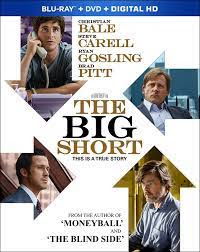
Have you seen The Big Short? I'm talking about the movie based on the book by Michael Lewis. All too often movies fail to live up to the vivacity sparked by the book. The Big Short is an exception.

Adam McKay wrote the screenplay and directed this remarkable film. Brad Pitt played a role in the film, delivered an important line and also produced the film.

For most Americans economics is a mystery, especially when it comes to Wall Street. Stocks, junk bonds, mutual funds, ETFs, options, derivatives, tranches, yield, moving averages, short squeeze... the lingo is so esoteric that the average clam on the street is clueless.  

Even when we don't know what things mean, we're all impacted by them when the shakedown comes. The tech bubble bruised a lot of peoples' investments and the housing bubble created pain all the way down into the trenches where many Americans exist day to day.

The Big Short was an exceptionally creative means of explaining what happened during the collapse of the housing market. It doesn't really tell the entire story, such as how mechanisms were created to help people who couldn't afford homes were shoehorned into properties that were beyond their means. That is, there was pressure placed on banks to make mortgage loans that exceeded their typical tolerance for risk

Needless to say, the film does a good job of showing how Wall Street insiders were clueless to what was really going on, and paid a price for it.

Early on in the film the director inserts Margot Robbie in a bubble bath, sipping wine, to explain subprime mortgages. 

Basically, Lewis Ramieri's mortgage bonds were amazingly profitable for the big banks. They made billions and billions on their 2% fee they got for selling these bonds. But they started running out of mortgages to put them in. After all, there are only so many homes and so many good jobs to put them in. So the banks began filling these bonds with riskier and riskier mortgages. That way they can keep that profit machine churning, right? By the way, these risky mortgages are called subprime. So whenever you hear "subprime" think "sh*&".

Our friend Michael Burry found out that these mortgage bonds which were supposedly 65% AAA were actually just mostly full of sh*&. Now he's going to short the bonds. Which means 'bet against.'

Got it? Good.

"Let me tell you how it is."
FWIW, Margot Robbie is an actress from Australia who played Tonya Harding in I, Tonya. She's also played Mary Queen of Scots and Sharon Tate in other films I've seen, though I never knew her name.

My interest in seeing this film (I've seen it several times already and read the book) was chiefly driven by the mess we're seeing right now in global markets and on Wall Street. I know that some people believe it's all a big conspiracy, that wrecking the economy is intentional. Somehow my personal feeling is that the decision makers are in over their heads. Things are simply too complicated today and the law of unintended consequences lurks behind every move.

There are a lot of stars in this film. The casting is superb. Christian Bale, Brad Pitt, Ryan Gosling and Steve Carell are the primary heavies, but even the most incidental character is perfect.

As a final note (knowing much more can be said), I also enjoyed the music score, especially Led Zeppelins When the Levee Breaks which summed up the film as the final credits rolled.    

Again, if you've not see this film, I recommended it highly. It's both entertaining and insightful. 

Ever ready to upset applecarts.

Monday, October 5, 2020

John Steinbeck and the New Orleans School Desegregation Crisis

I recently finished reading Travels with Charley, the 1960 bestseller by Nobel Prize winning author John Steinbeck. Steinbeck took to the highways in order to see how much the U.S. had changed in the 25 years since he last travelled about the country. He felt he was a little out of touch with who and what America was. I myself read the book because it had been more than 25 years since I first read his account of this journey. 

To be frank, the only thing I remembered about the book was his eagerness to home after seeing the unconcealed racism in the Deep South. When I read this portion of the book I was as appalled as he was when he encountered it, and upon reading it again, the same emotions were stirred.

In the book he did not call it the New Orleans School Desegregation Crisis. Instead, the designation he gave this chapter was more ironic: The Cheerleaders. 

* * * * 

Steinbeck's journey took six weeks. He started at his home on Long Island, traveled north through New England, headed West through Buffalo, across all our Northern tier states, to the Northwest corner whereupon he turned South then back East through various places till he reached Texas, New Orleans and the Deep South.

His companion on the journey is Charley, a large poodle who adds a measure of interest to the story in various ways. 

The observations Steinbeck makes along the way are interesting, but mostly forgettable. Even so, it is interesting how surprised he is by how much of a role cheese plays in Wisconsin, and that he gets lost in Minneapolis. 

The year is 1960, six years after Brown v. Board of Education of Topeka. The extent to which this desegregation ruling continued to rankle the powers that be startled Steinbeck. Maybe sickened is a better word. (Last night I started watching The Best of Enemies, a film about this very same issue in Durham, North Carolina in 1971.)

When Steinbeck arrived in New Orleans, he'd read and heard enough about the goings-on that he needed to see first hand what the fuss was about. More than one person he met along the way, recognizing him to be from New York (by his license plate) commented, "Are you going to see the Cheerleaders?"

The first time I saw the word--the title of the chapter, actually--I thought it was going to be about football cheerleaders. This, naturally, came to mind because he'd just been in Texas where football is almost a religion.

Essentially, the cheerleaders were a small mob of white middle class racists who went to the two elementary schools each day to scream racial slurs and intimidate the four little girls who were being escorted into the desegregated schools by federal marshals. Three girls were enrolled in one school and six year old Ruby Bridges was enrolled in the other. There was later a riot at the school board meeting, but Steinbeck's chapter focuses on the ugliness of the scene where the Cheerleaders gathered each day. 

Steinbeck was so disturbed by what he saw that he couldn't wait to leave the South and get back home. 

As these ugly protests continued reporters began to write about what they saw. Eventually, the people of New Orleans began to realize how undesirable the image of their city was becoming to outsiders. This was the primary motivation for ending the Cheerleaders' reign.

You can read the full account here on Wikipedia. https://en.wikipedia.org/wiki/New_Orleans_school_desegregation_crisis

It's eye-opening and it's sad. Or would "tragic" be a better word?

Photo: Public domain. Federal U.S. Marshalls escorted Ruby Bridges into the school each morning and home each evening. 

Thursday, August 13, 2020

Hitchcock's Rope a Prescient Foreshadowing of Our Current Crisis

"We agreed that there was was only one crime either of us could commit, the crime of making a mistake. Being weak is a mistake."--Brandon

It's a relatively short film by Hollywood standards, but Hitchcock's Rope has all the elements you want in a good suspense story.

In the very first minute of the film two friends--Brandon and Philip--strangle a third friend David Kentley with a rope and hide his body in a chest. This takes place just minutes before the first guests are slated to arrive for a party that will take place in this very room, with David's body right there in their New York City apartment. The guests include David's father, his fiancee Janet and, most significantly, their former college housemaster Rupert Cadell, played by Jimmy Stewart.

I'd seen the film several times over the course of my life, but current events stirred me to want to see it again.

The set itself had moving walls that could be adjusted as the camera rolled.
The body of David was placed inside the chest where the feast was spread
there in the foreground.
One of the interesting features of several Hitchcock films in this period of his career was the attempt to create a confined space where all the action takes place. Lifeboat was such an endeavor as was Rear Window, with Jimmy Stewart and Grace Kelly, his most successful. The former takes place in a lifeboat, the latter in an apartment overlooking the open courtyard of an apartment complex. The characters in the lifeboat are stuck in the ocean, the main character in Rear Window is bedridden after badly breaking his femur.

What I find interesting in the Wikipedia account regarding Rope is how much of the discussion has to do with the manner in which it was produced and the critical reception (lukewarm) with little real investigation into what I consider the most significant aspect of this film: the philosophical issue that generated this situation.

When the young men were in college there had been philosophical discussions about Nietzsche's Übermensch and De Quincey's Art of Murder, which they interpreted like this. In Nietzsche's argument, the rules that apply to the "common herd" do not apply to the superior men. Combine that with De Quincey's notion that murder can be a work of art and you've got the setup for the murder of David Kentley.

For Brandon, the killing was exhilarating, and indeed an artistically executed masterpiece of design. Philip, on the hand, immediately begins inwardly crumbling, cognizant that this idea in theory was absurd to carry out.

Brandon has the time of his life bringing candles, plates, food and silverware to the living room and placing them directly on the chest with the body in it. The irony here is that the conversation keeps returning to the corpse, or rather, to why David is late to his own party. (Inside joke: he is not absent.)

Though the other guests seem to be oblivious to the clues, Rupert can see that Brandon and Philip are behaving oddly, each in their own way. Philip is drinking heavily and stressing out, Brandon is exhibiting a certain bravado as if he just conquered San Juan Hill.

Brandon even dares to start a discussion on this topic. "I've always wished for more artistic talent. Well, murder can be an art, too. The power to kill can be just as satisfying as the power to create."

David's mother laughs it off, and a little verbal tussle passes between a few of the guests but it's just another passing moment.

As the guests depart, Rupert Cadell takes a fedora out of the closet thinking it his, but then sees the initials D.K. inside the hat. His suspicions are confirmed that something fishy had been going on, but he leaves without saying anything so that he can return to confront the young men with no one else around.

When he returns, Brandon doesn't want to take any chances and pockets a pistol, just in case. As Chekhov famously instructed, you don't put a pistol into the story unless you're going to use it.

The dialogue here is instructive, I believe.

Brandon: Ideas of right and wrong are for the intellectually inferior and don't apply to the intellectually superior.

Rupert: You've given my words a meaning I never dreamed of. Tonight you've made me ashamed of every concept I've ever had of superior or inferior beings. By what right did you feel you deserve to be superior. You've murdered, you've strangled the life out of someone who loved.

Rupert is stunned, horrified and deeply ashamed, realizing that Brandon and Phillip used his own rhetoric to rationalize this senseless act.

* * * *

The gig is up. (L to R) John Dall, Jimmy Stewart, Farley Granger
Rupert disavows all his previous talk of superiority and inferiority, and after a struggle he acquires the gun and shoots the two young men. No, just kidding. He does manage to secure the gun though and uses it to fire three shots out the window to attract attention. As the police arrive--we hear sirens approaching outside--Rupert sits on a chair next to the chest, Phillip begins to play the piano and Brandon continues to drink.

APPLICATION
I have been thinking a lot about the riots and violence taking place these past two months. I've tried to understand what's going on, why so many people are calling for revolution. I'm fully cognizant that so many of our systems are broken, and understand the criticisms. It is the notion of total revolution that concerns me. I don't believe it is rhetoric. When I read what many of the protesters are writing on Twitter and Reddit, they seem quite serious that their intent is nothing less than overthrowing the whole kit and caboodle. And I believe I understand why (to some extent).

When I was in high school, the team teachers in our U.S. History class did something quite intriguing. They taught U.S. history from the point of view of those who were disenfranchised (the indigenous peoples), and how we acquired lands from Mexico, France, Spain through various wars and ventures. We learned about manipulations and machinations, how Southern wealth was created by the utilization of slave labor, all justified with platitudes.

Turning everything around may have been useful and important, but the 50 years reiteration of this pattern of talk, when overindulged, leaves citizens more ashamed of their country than proud and fails to produce any vestige of patriotic feeling if taken too much to heart.

The net result is a generation that can feel like this: "There's nothing worth defending here. Let the Revolution begin. Let them overthrow this heap of dung."

But is that really what our teachers and academics wanted? Many may well have had quite patriotic feelings, but were seeking to put a perspective on things so we are more humble about our history. Like Rupert, they were discussing ideas, but not really anticipating the consequences. "You're giving my words meanings I never dreamed of," Rupert says to Brandon at one point.

America has helped more people and nations than any nation in history. The whole notion of re-building the economies of countries who fought against you in wars is historically unheard of. How many countries have started a Peace Corps to help impoverished nations in other corners of the world?

Of all the critics, I won't say I have been foremost, but I admit I've been one who's been vocal. I do not believe in "My country right or wrong." The Old Testament prophets were compelled to speak when their leaders were out of alignment with justice and doing what was right. I've never believed in the notion that a revolution would be nothing less than a disaster. I'm old fashioned but "if you go carrying pictures of Chairman Mao, you ain't gonna make it with anyone anyhow."

I share all this because I believe America, specifically the ideals upon which it was imperfectly founded, is worth defending. Destruction is always easier than building something new. There will never be a perfect world, but we can all try to contribute to make this one better.

EPILOGUE
Whereas this film is just a story, it reflects events that have happened in real life. Progressive intellectuals in the 20s and 30s felt that something needed to be done to purify the human race, to clean up the gene pool. Through aggressive lobbying they managed to get eugenics laws passed in 33 states. This bit of our history was all documented. 66,000 people were sterilized, some for as senseless a thing as being a runaway.

How much of what is going on in the global lockdown is the result of a larger chess game being played by power players? What are the belief systems currently at war in all this multi-layered hotbed of conflicting interpretations of events on all sides? What's really going on?

Related Links
Bad Ideas: The Eugenics Movement In America
Eugenics, Revisited
He Who Controls the Narrative Controls the People

Monday, April 13, 2020

These Are The Times That Try Men's Souls. Is Paine Still Relevant Today? You Decide

Washington Crossing the Delaware by Emanuel Gottlieb Luetze

This weekend the quote "These are the times that try men's souls" crossed my mind. Certainly these have been quite trying times for our lives and our nation, so I decided to investigate further into its origin. 

I knew that Thomas Paine, pamphleteer and author of Common Sense, was the man who penned it, but I recalled little else.

When I found the quote I read the rest of this essay and found it quite illuminating with many passages quite relevant for our own trying times. It is the opening essay of a compilation of essays under the title The American Crisis.

I also discovered that in order to fortify the resolve of his troops, George Washington ordered that this essay be read aloud to his men the night before they crossed the Delaware in their December 26 surprise attack on Trenton. 

Portrait of Thomas Paine by Matthew Pratt

“THESE are the times that try men's souls. The summer soldier and the sunshine patriot will, in this crisis, shrink from the service of their country; but he that stands by it now, deserves the love and thanks of man and woman. Tyranny, like hell, is not easily conquered; yet we have this consolation with us, that the harder the conflict, the more glorious the triumph. What we obtain too cheap, we esteem too lightly: it is dearness only that gives every thing its value. Heaven knows how to put a proper price upon its goods; and it would be strange indeed if so celestial an article as FREEDOM should not be highly rated” 

The American Revolution had one pre-eminent ideal: Freedom.

In the first section Paine writes:

'Tis surprising to see how rapidly a panic will sometimes run through a country. 

Does this sound like today? The next sentence amplifies that with the reminder that "All nations and ages have been subject to them."

Next, he points out that panics have value and can be useful. Why?

Their peculiar advantage is, that they are the touchstones of sincerity and hypocrisy, and bring things and men to light, which might otherwise have lain forever undiscovered.

* * * *
So it is that we are in a time of crisis, times that try men's souls. There are forces at war which have lain dormant and below the surface. What is emerging has been coalescing for a long time. The American Revolution did not "just happen." It had been evolving for quite some time.

I've been reading C.S. Lewis again lately. His book The Abolition of Man sheds light on this cultural rift, a collision of worldviews. In That Hideous Strength, the third book in his sci-fi space trilogy, he uses fiction to illustrate how these ideas emerged and what the intentions are.

Huxley's Brave New World and Orwell's 1984 point to seeming different dystopian scenes, yet they all have a common denominator, which I hope to elaborate upon in a future post.

* * * *
Paine's essay then outlines events that had occurred up in the vicinity of Hackensack and the Colonialists escape from the Brits there, which sets up this section a little further:

I love the man that can smile in trouble, that can gather strength from distress, and grow brave by reflection. 'Tis the business of little minds to shrink; but he whose heart is firm, and whose conscience approves his conduct, will pursue his principles unto death. My own line of reasoning is to myself as straight and clear as a ray of light. Not all the treasures of the world, so far as I believe, could have induced me to support an offensive war, for I think it murder; but if a thief breaks into my house, burns and destroys my property, and kills or threatens to kill me, or those that are in it, and to "bind me in all cases whatsoever" to his absolute will, am I to suffer it? What signifies it to me, whether he who does it is a king or a common man; my countryman or not my countryman; whether it be done by an individual villain, or an army of them? If we reason to the root of things we shall find no difference; neither can any just cause be assigned why we should punish in the one case and pardon in the other.

How relevant are these notions to our situation today? I believe parallels can be drawn. This is why so many voices are being raised. Something big appears to be at stake.

There are persons, too, who see not the full extent of the evil which threatens them; they solace themselves with hopes that the enemy, if he succeed, will be merciful. It is the madness of folly, to expect mercy from those who have refused to do justice; and even mercy, where conquest is the object, is only a trick of war; the cunning of the fox is as murderous as the violence of the wolf, and we ought to guard equally against both.

* * * *
This document, one of a series, was written December 23, 1776, approximately six months after the Declaration of Independence.

Full essay:
https://www.ushistory.org/Paine/crisis/c-01.htm

Friday, September 18, 2009

Honduras: Are We On The Wrong Side?

A month ago I went to a retirement party for a friend and got into a conversation with someone who is intimately connected with Honduras, whose family is still there. Naturally, with Honduras being in the news I had to ask if he could explain what was happening there.

It was a clean and concise summary. Essentially, the properly elected president did not wish to follow the country's own Constitution. The military deposed him not because it was striving for power, but because of the president's unconstitutional behavior. Unfortunately, multinational organizations like the U.N. and O.A.S. want him reinstated.

I just finished watching the film Black Hawk Down, which shows the consequences of a military incursion in Somalia in 1993 in which 19 soldiers and 1000 Somali citizens lost their lives. The film shows the action which took place, but the book details the backdrop. The Somalia situation was this. The country was a wrecked mess run by gangs. The most powerful had been top dog for quite some time, but he was hated and ruthless. The one good thing he did was to unify all the rival gangs in their common hatred of him. They banded together and ousted him.

But this ousted gang leader, who had diplomatic ties to the U.N., persuaded the U.S. to intervene and help him regain his "rightful place." It was a disastrous, ill-conceived response. I highly recommend this book.
Based on my understanding of the situation, we are very possibly doing an instant replay. On Sept 4 it was announced that the U.S. cut off aid to Honduras, which is already one of the poorest countries in the hemisphere. Two letters that I have received from Honduras indicate that the people are in dire straits.

Here's a brief summary of the background on this story.

One of the most amazing features of the United States has been its example of the peaceful transition of power. Right from the start our history has been a role model that is worth noting and quite a contrast to most of history. George Washington, who was nearly godlike in stature, stepped down voluntarily from the equivalent of a throne, the U.S. presidency. Keep in mind there were no term limits in those days.

When our second president John Adams handed power over to Thomas Jefferson, this was the first time in history that power was given voluntarily to an opposing party. These two were adversaries. Adams and Jefferson both lived by the principle of Rex Lex, that is, Law is King. There is something higher than the men and women who run the country.

That tradition has followed us to the present time where ideologically contrary presidents have handed over the baton, or sword, or whatever symbol you'd like to call it, without resorting to guns, hand grenades, etc. If the disrespect shown on the floor of congress last week (Mr. Bush was booed in 2005 on one occasion in a similar vein) is the worst of what we do, well, we're probably not doing too badly.

As for Honduras... Based on a lifetime of reading and certain anecdotal observations from friends and acquaintances over the years, my guess is that there is a divergence of opinion on the matter within the State Department itself, or the Pentagon and the executive branch. Let's pray our leaders make wise decisions and exercise care as they evaluate courses of action.

Monday, June 16, 2008

Danger Plus Opportunity Equals Crisis?

I'm not sure where I first heard if, but it seems like the insight came from my brother Ron while studying for his Masters in psychology. He later got his Ph.D. and I doubt ever changed his tune about this very interesting Chinese word for "crisis." The word was composed of two different Chinese characeters, Wei and Chi, which mean Danger and Opportunity. Every crisis in life has these two components. Our response is to recognize the danger and embrace the opportunies presented in the crisis moment.

Well, guess what? I stumbled upon a blog today that essentially blasted this notion to smithereens. According to the Pinyin website, this notion that the Cinese word for crisis is composed of danger and opportunity is a myth. The writer is not really pleased at having to be the one to point out the facts, but he does feel obligated to set the record straight.

Goodness! I think I have even written about Wei Chi and I know that the idea has been ricocheting across many a printed page and continues on the internet with no signs of abating. There may be as many as a million web pages with this incorrect interpretation of the Chinese word for crisis.

My take is that it sure was a handy insight, even if misguided and mistaken. I get the distinct impression that this guy is for real and his knowledge of Chinese firmly established. And until I hear otherwise, I will have to search for a better way to face my own crises, even if only linguistic.

To read the whole account as to how a misunderstanding about Chinese characters has led many astray, check it out here. It's a good read.

Excerpt: "I first encountered this curious specimen of oriental wisdom about ten years ago at an altitude of 35,000 feet sitting next to an American executive. He was intently studying a bound volume that had adopted this notorious formulation as the basic premise of its method for making increased profits even when the market is falling. At that moment, I didn't have the heart to disappoint my gullible neighbor who was blissfully imbibing what he assumed were the gems of Far Eastern sagacity enshrined within the pages of his workbook. Now, however, the damage from this kind of pseudo-profundity has reached such gross proportions that I feel obliged, as a responsible Sinologist, to take counteraction." ~ Victor H. Mair, Professor of Chinese Language and Literature, University of Pennsylvania

Popular Posts