Showing posts with label Wall Street. Show all posts

Saturday, April 30, 2022

Here We Go Again? Margot Robbie in a Bubble Bath to Explain What Happened When the Housing Bubble Burst

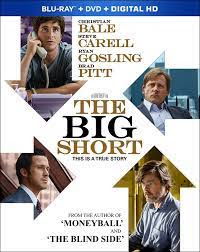
Have you seen The Big Short? I'm talking about the movie based on the book by Michael Lewis. All too often movies fail to live up to the vivacity sparked by the book. The Big Short is an exception.

Adam McKay wrote the screenplay and directed this remarkable film. Brad Pitt played a role in the film, delivered an important line and also produced the film.

For most Americans economics is a mystery, especially when it comes to Wall Street. Stocks, junk bonds, mutual funds, ETFs, options, derivatives, tranches, yield, moving averages, short squeeze... the lingo is so esoteric that the average clam on the street is clueless.  

Even when we don't know what things mean, we're all impacted by them when the shakedown comes. The tech bubble bruised a lot of peoples' investments and the housing bubble created pain all the way down into the trenches where many Americans exist day to day.

The Big Short was an exceptionally creative means of explaining what happened during the collapse of the housing market. It doesn't really tell the entire story, such as how mechanisms were created to help people who couldn't afford homes were shoehorned into properties that were beyond their means. That is, there was pressure placed on banks to make mortgage loans that exceeded their typical tolerance for risk

Needless to say, the film does a good job of showing how Wall Street insiders were clueless to what was really going on, and paid a price for it.

Early on in the film the director inserts Margot Robbie in a bubble bath, sipping wine, to explain subprime mortgages. 

Basically, Lewis Ramieri's mortgage bonds were amazingly profitable for the big banks. They made billions and billions on their 2% fee they got for selling these bonds. But they started running out of mortgages to put them in. After all, there are only so many homes and so many good jobs to put them in. So the banks began filling these bonds with riskier and riskier mortgages. That way they can keep that profit machine churning, right? By the way, these risky mortgages are called subprime. So whenever you hear "subprime" think "sh*&".

Our friend Michael Burry found out that these mortgage bonds which were supposedly 65% AAA were actually just mostly full of sh*&. Now he's going to short the bonds. Which means 'bet against.'

Got it? Good.

"Let me tell you how it is."
FWIW, Margot Robbie is an actress from Australia who played Tonya Harding in I, Tonya. She's also played Mary Queen of Scots and Sharon Tate in other films I've seen, though I never knew her name.

My interest in seeing this film (I've seen it several times already and read the book) was chiefly driven by the mess we're seeing right now in global markets and on Wall Street. I know that some people believe it's all a big conspiracy, that wrecking the economy is intentional. Somehow my personal feeling is that the decision makers are in over their heads. Things are simply too complicated today and the law of unintended consequences lurks behind every move.

There are a lot of stars in this film. The casting is superb. Christian Bale, Brad Pitt, Ryan Gosling and Steve Carell are the primary heavies, but even the most incidental character is perfect.

As a final note (knowing much more can be said), I also enjoyed the music score, especially Led Zeppelins When the Levee Breaks which summed up the film as the final credits rolled.    

Again, if you've not see this film, I recommended it highly. It's both entertaining and insightful. 

Ever ready to upset applecarts.

Thursday, January 21, 2021

Does Moneyball Give a Gliimpse of How to One Up Wall Street?

I realize that not everyone is a reader. When I interviewed the famed British illustrator Ralph Steadman (think of Hunter Thompson's Fear and Loathing in Las Vegas for example), I mentioned that I had started as an artist and became a writer. He replied that he started as a writer and became an artist, "because no one reads anymore."

Near two decades have passed, and the readers of this world still love their books. Many of us have not only read 50 or a hundred books a year most of our lives, but we've read many of those books more than once and as many as four or five times possibly.

I bring this up because I am currently reading, for the second time, Michael Lewis' Moneyball. After my first reading it was made into a movie starring Brad Pitt and Philip Seymour Hoffman. Now, near 20 years later, I am seeing it with new eyes, not as a baseball fan but from the point of view of an investor. 

The book is about how baseball historically came to place value on certain factors that statistics actually proved were backwards. Billy Bean, who had been drafted as a most-likely-to-succeed superstar, is at the center of this story about the Oakland Athletics. Bean is GM, the decision maker regarding the makeup of the team. His experience as a failed potential superstar gave him an insight into the game that most front office folks could never recognize. 

How this applies to investing is obvious. The conventional wisdom is that the prices of stocks (which represent partial ownership of companies) are fairly valued by the market. That is, if the price of one share of a company is seventeen dollars, the company's true value will generally correspond with that in the aggregate of all its shares. Or more correctly, the price of a share will correspond to the future earnings based on risks and potential rewards.

If this is so, how then does a bridge player  from Omaha do so phenomenally better than a majority of others when purchasing portions of company's shares? How does he succeed where others fail? 

It may be like the story in Moneyball. Conventional wisdom is safe but backwards. Warren Buffet made a name for himself by (a) doing more homework than the herd, and (b) by using a different set of measurement tools.

I like the illustration of the herd because it corresponds to life as a zebra on the Serengeti. There is safety in the herd. The reason is that to leave the herd is to become vulnerable to the lions. 

The problem for the zebra in the herd, though, is that the grass gets shorter and shorter. Outside the cluster of zebras in the herd there is ample food, but how retrieve it and enjoy it without risk of become food oneself? 

Somehow Warren Buffet is getting outside the herd and avoiding the lions as well. How he does this is not my point. The point is that there are opportunities available by shucking off conventional wisdom. This is what Billy Bean did because he saw with great clarity how wrong the "experts" were about him.

I once published an article titled "Who Are Your Experts?" in which I challenge people to think for themselves, or at least recognize that when choosing experts you are ultimately responsible for the choices you make. 

Desert Storm was another example of how the conventional wisdom was wrong. Experts were saying that we were about to enter a protracted war with Saddam Hussein that would end up as another Vietnam. Instead, Iraq capitulated in 100 hours. (This was Desert Storm under George Herbert Walker Bush.) There were many lessons for both businesses and investors from that brief war.

* * * *

The subtitle of Moneyball is, The Art of Winning an Unfair Game. Wall Street, which Michael Lewis has also written about in the past, is also considered by many to be an unfair game. Can the lessons Billy Bean learned about player valuations be transferred to the Street? 

To some extent it may be possible. When everyone loves a stock because of the personality of its leader or for any other reason trotted out by the media, it valuation goes up, and likely exceeds its real value. The diamonds in the rough, like some of the players with apparent flaws -- a pitcher with a quirky delivery, for example -- may be neglected and undervalued, until someone notices that they have been consistently making a boatload of money for years, and with no end in sight.

All decisions involve weighing risks and rewards, and learning how to identify what has real value and what only has the illusion of value. Be wise.

Saturday, February 11, 2017

Saturday Snaps: Book Reviews of Five Recent Readings

A handful of recent reads that I found stimulating.

Doc by Dwight Gooden

Doc is the story of Dwight Gooden, a phenom pitcher whose career was sidetracked by cocaine. I remember how Gooden and Darryl Strawberry made headlines both as prospects with promise and hugely self-destructive as a result of their personal struggles. This is Gooden's story and it's offers real insight into the challenges of success and the importance of character. More than once he would have been able to sing Dylan's "I threw it all away."

The story begins with Gooden's account of the Mets winning the World Series, but he himself missing the ticker tape parade that followed because he'd chosen instead to get coked up at a connection on Long Island. Instead of something beautiful, it proved to be indicative of more than two decades of living the pendulum life of promises and lies. Ultimately a good read.

Available here on Amazon.com.

Flash Boys by Michael Lewis

More than 25 years ago a client of mine introduced me to Michael Lewis' exposé of Wall Street shenanigans, Liars Poker. I don't know how far this book gained recognition in the popular culture, but I do know that his Moneyball achieved this and more, ultimately becoming a Hollywood big screen feature starring Brad Pitt and Phillip Seymour Hoffman.

Flash Boys is another meticulously researched book that zeroes in on the current state of Wall Street, especially as it pertains to the dark underbelly and the new phenomenon of high frequency traders.

The book is exceedingly well written, but it made me curious what prompted Mr. Lewis tell this story.  The subject is high frequency trading (HFT) and my guess is that very few people really understand that way things work on Wall Street enough to even be aware of this new twist in the game. It's a good read, especially if you have investments. I imagine that it's possible there are folks who will lose sleep after reading this. At the end of the day it feels like background for a story yet to be told.

Available here on Amazon.com.

Fiasco by James Robert Parish

There's something compelling about watching a train wreck, especially when it's massive in scale. Fiasco: A History of Hollywood's Iconic Flops is a compilation of detailed snapshots of massive Tinsel Town disasters, from Cleopatra to Waterworld and more.

I remember when Ishtar, starring Warren Beatty and Dustin Hoffman, came and went. For most of us, our bad decisions seldom make the tabloids. Unfortunately, this debacle could not be hidden from the light of day. It's one thing when the stars coalesce to make art art film that has little pop appeal; it's totally other when these folks roll the dice on a 200 million dollar mess that has "blunder" emblazoned on its forehead.

Other familiar films skewered by James Robert Parish in this book include Cleopatra, Cutthroat Island, The Cotton Club, Showgirls and, among others, Popeye. This latter was indeed a dud, and no doubt an embarrassment in Robin Williams' sensational resume. What Parish brings out for readers is the backstory. How did anyone believe this could be pawned off as entertainment? When you consider the piles of cash at stake, and the egos involved, the real surprise might be that there aren't more such fiascos.

This book is here on Amazon.com.

The Letters of John Lennon

Whatever your take on John Lennon of the Beatles, The Letters of John Lennon is an insightful and intimate look at one of the profoundly influential people of our (Baby Boomer) generation. How ironic that I'd just finished reading this book when I was introduced to the notion that the Illuminati wrote the Beatles songs through a philosopher named Adorno. Get real, people.

The book is essential an overview of a life that we were familiar with publicly, but pretty much failed to understand in its complexity. Naturally we are all complicated, and the light only shines on the outer shell. The personal letters reveal much more. I listened to the audio version of this book, so I missed the illustrations and doodles that were part of the original volume. The author provides context for all, and it's a very special book, especially for those who appreciated the direction he went after the breakup of the team.

You will find it here on Amazon.com.

Hombre by Elmore Leonard

One of my favorite writers of the past 35 years, Elmore Leonard got his start writing Westerns. As a story teller the man is golden. I was introduced to his novels by Joe Soucheray over lunch at a writers conference in Mankato. He was attempting his own first novel and at the time was stuck in chapter six. In describing his malaise, he asked if i'd ever read Leonard and I acknowledged that I had not. At this point in time I've probably read 30 of his 60+ novels. When he passed away last year he was declared by some to be the "best writer of crime fiction of all time."

Hombre later became a film starring Paul Newman. His heroes are uncommon men, and memorable. I've seen the film twice and read the book twice as well. Here's what one Amazon.com review wrote regarding this book:

Elmore Leonard is not nearly as well known for his Westerns as his hardboiled crime dramas, but in fact he is one of the finest writers in the genre of the past fifty years. This is partly because he is simply one of the finest American writers period. He is famous for writing some of the hardest hitting, purest prose during his lifetime.

Hombre is a book about integrity in a world where people are afraid to a stand. In this sense, it is more inspirational than Western drama. Leonard is a master at crafting characters and placing them into settings that reveal what they are really made of.

Here is where you can find it. And see if you can find the movie as well. It's worthy of the story.

* * * *
Meantime... happy reading.

Friday, August 5, 2011

Small Towns With Big Events

This week is the Sturgis motorcycle rally in South Dakota. When we visited the Black Hills on a family vacation circa 1994, we stopped and ate at a restaurant there. It's a sleepy, picturesque little place with around 7,000 residents, if memory serves me. During the biker event more than 500,000 converge and show their colors there.

It reminds me of the time a swarm of bees flew down Cambridge Lane and decided to make the McAvoy's mailbox their new home. One minute the place has a single bee every two hours. Next thing you know it's a chaotic clump larger than a watermelon, and vibrantly alive. Eventually the pro bee-remover came in, found the queen and led the swarm away. Sturgis is something like that mailbox.

Last weekend another small town celebrated a big event... the Parke Street Wine and Art Faire in Alameda, California. When a town of 25,000 suddenly takes on an additional 75,000 residents for two days... well, it has to be interesting. I am guessing some people bail out, but others may just look forward to a weekend of doing a local walkabout with friends while holding long-stemmed wine glasses.

Wine and art... hmmm. Nice combination. My experience with art openings suggests that wine and art is akin to soup and sandwich, love and marriage, horse and carriage. You know the drill.

As for big events in small towns, I'm sure the disruption drives some folk away for a couple weeks. Then, as things subside the former equilibrium returns as things get back to normal.

This week's stock market plunge is akin to that kind of disruption. Like the Sturgis Rally, people have been talking about it for months as a convergence of events has been taking place and debts came due. Unlike the motorcycle rally, it's not so easy to get out of town for a couple weeks till things get back to normal. I don't think anyone really knows where the global economy is headed because I don't think there's anyone steering the ship.

My advice: get yourself a glass of wine, go enjoy some art, and keep your eyes off Wall Street. And have a nice weekend.

Sunday, July 5, 2009

Trillion Dollar Meltdown

Yesterday I finished listening to the audio verson of a powerful book by Charles R. Morris explaining the recent collapse of the financial markets called Trillion Dollar Meltdown. Published in late 2007, the book predicted all of the disastrous events of the past eighteen months and how they came to be. The scope and clarity of its many insights and anecdotes are worth pondering more deeply. I will get to those shortly.

Morris begins by giving an overview of the past six decades from the perspective of wealth creation, business expanse and retraction, the market drivers during this period and the political context of it all. You really cannot understand particulars without an overall context and often Americans forget this simple fact. What is happening today is an outcome of decisions made over a period of decades, not days, weeks or months.

According to one review on Amazon the book is written toward university level students, and it may be heady for some but even if you have a marginal understanding of economics and markets, you will glean plenty in my opinion.

I remember in high school my father invited a representative from the Dreyfus Fund come to our Bridgewater home to help teach me how to invest my savings. The fellow had stock market charts with all kinds of data, along with prospectuses and documents designed to show me the power of investing my money in the market. Well, I took $500 out of the bank and opened an account. I never saw that money again.

This is not an argument against investing. It is simply a statement that there's no such thing as a sure thing. This period in which I salted a few hundred dollars away was, according to Morris, the tail end of the Liberal/Keynsian era in economics. The resulting collapse of the markets in the 70's, with a simultaneous inflation so that your real holdings in dollars was about 75% less than they had previously been worth, culminated in Carter's disastrous presidency. (This is not to say Carter was not or is not a good man.)

It could be argued that half the debacle of the Carter era (double digit inflation, double digit interest) was due to the circumstances he inherited. In the end, it is during desperate times that a sea change can be set in motion. Thus was Reaganomics born, a new period of deregulation as Chicago-school economics gave the boot to Keynes.

Milton Friedman's ideas carried the day and the market climbed higher (with a few hiccups along the way) than anyone could have even dreamed. But, and it is an important part of the equation, part of the reason markets climbed so far is that the enormous size of the Baby Boom generation was becoming older now and, staring at retirement with a little more earnestness, they began to save more. This resulted in increased stock valuations. It also gave unscrupulous money managers increasing quantities of cash to play with, which was leveraged in extremis.

Morris shared how computers helped companies create financial instruments (bonds, etc.) that were so complicated even the people who sold them did not understand them. It was an amazing run. And when variables shifted, some companies had no idea how to determine their own true valuations. Some of these disappeared completely.

Add to this the increased debt loads and the absurdly high real estate valuations and you have a witch's brew of disaster in the making.

Though Morris published the book before Obama was elected, he accurately predicted that the pendulum is about the swing the other way. It certainly wasn't good to see 401K retirement plans shrink in value by 40% while the men who managed them made quarter million dollar a year salaries on average.

There are ideologies at war in the economic realm of which the average person usually has the most simplistic understanding. And this particular author lays some heavy blame on the Alan Greenspan camp. Morris gives the impression that he is in love with Paul Volcker.

Funny thing how every time things are good, the reigning president takes credit, and when things are bad the reigning president says he inherited it. And how politicians are ever trying to re-assure us that things are not as bad as they seem.

Not everyone who reviewed this book on Amazon liked it. Some found it biased against free market economics. One called it "A Coherent Rant." But I still found it raising good questions. He compared the complexity of the markets to Yertle the Turtle, in which everything is so interdependent that when you modify one variable it can have a serious impact on the stability of the whole.

My great-grandfather was scammed late in life by a fellow who was going to invest great-grandpa's life savings. The man lost everything and had his heart torn out. It's a scary thing to work hard and save and do all the right things only to have it plucked away with no legal recourse. This tragic family event led to my mother being more careful with her retirement assets. I myself took a measure of comfort in knowing (or believing) that the U.S. investment markets were the most regulated and reliable in the world, unlike many nations where there are no disclosure requirements or where banks can close and without warning take all your money saved (Russia) or where the government can devalue their currency by 50% overnight (Mexico 1981).

So how is it that a man like Bernie Madoff, former head of the NASDAQ stock exchange can make off with 50 billion dollars of other peoples' money right there under the big spotlights of our regulators? How about all the funds that invested in Enron because of the high returns and the approving nods of auditor Arthur Anderson?

Morris predicted a financial mess and he predicted right. What many of us wish to know is what happens next? Yesterday's paper carries a feature story with newly elected Senator Al Franken claiming the economy will "come back strong." I want to know how that will happen and why? Unemployment keeps rising. Our investment in bailouts and overseas military enterprises continues unabated.

I am especially curious what book being published today will be the one that most accurately portrayed the next two years? Maybe we'll find out in five. If sooner, you can be sure I'll write about it here.

Friday, October 3, 2008

The Week

Can't believe how fast this one flew. Maybe a re-cap is in order.

Sunday, the regular season ended for Major League Baseball with the Twins ahead of the Chicago White Sox by a half game. Twins fans had little to cheer about after that. Chicago beat Detroit on Monday in a makeup game and rose to the occasion in a one game playoff Tuesday to put the final nail in the coffin for the Twins who have gone home to replay a season's worth of muffed opportunities in their heads.

Meanwhile, on Wall Street, a hurricane of turmoil hit the financial markets with the Dow Jones Industrial Average falling near 700 points as Congress rejected the bailout plan that was being hammered together. Here in Ennyman's Territory it was Short Story Monday, and the second act of Terrorists Preying appeared.

Tuesday the markets experienced exuberance for a day as fireworks and "buying opportunities" lit up the sky. Emotion reigns, evidently. These market moves can't be in any way related to rational evaluations. So, life goes on.

As I woke that morning y own mind was filled with thoughts about flow. Here are my notes which became the initial basis of my Flow entry Tuesday.

Flow
Siddhartha
a river runs thru it
Watching the River Flow
meditations on how rivers flow…
time changes flows
rivers cut through rocks, or meander lazily through flatlands,
create isolated oxbow lakes

That evening I watched the movie Under the Volcano, which I had ordered through Blockbuster online more than ten months ago. Long waiting list? Or just one copy in circulation? It was worth the wait. Brought back memories of our year in Mexico, the good parts. Favorite off-the-beaten-path places: Guanajuato and Catorce. Guanajuato used to be one of the main silver mines in Mexico and rich Spaniards sought to recreate their much loved Barcelona. Unique city.

Catorce was a mine near Matehuala, a small city where Pancho Villa had a hideaway. Catorce means "14" which was the number of the mine. You had to drive through a half-mile long (or more) one lane tunnel to reach the abandoned village. The tunnel had been dug through a mountain. There stationed a man at each end who would call the other end to ask if the tunnel were clear before letting someone drive in. There were a couple very large modern homes to the left as you emerged from the tunnel, and an abandoned village on the right, all the homes connected by a network of roofless walls, rooms and corridors. Goats ambled about, and probably ghosts as well.

Since that time the tourists have apparently discovered this place and are writing about it on the Internet. Here's a New York Times travel review about this remote lost village.

Early Wednesday I wrote about bees, though daily a swarm of other potential themes seem to compete for my attention. Here are some notes jotted down as a potential blog entry catalyst, but it didn't get anywhere.

~~~~~~~~~~~~~~~~
To Save America
As everyone knows a wave of hysteria hit Wall Street Monday (9-29) as the Dow dropped an eyeball popping 700 points
or near 7 percent…

22+% in 1929

If we could turn all of our bicycles into power generating devices….
Then for one hour each day we could all get on our bicycles and power up the grid so that enough power is produced for a radio signal to reach all of the free world for three minutes during which time the President would give us all a pep talk to keep us going for another day.

~~~~~~~~~~~

Wednesday evening I prepared my review of Under the Volcano while watching Vatel, one of my favorite all time movies, starring Gerard Depardieu. When I am not distracted by other themes I will write about it sometime. In the meantime, here are a pair of great lines by Depardieu, who plays the central character Vatel.

“The poor are honored to be the king’s creditors. Both my parents were so honored they died of it.” ~ Vatel
“Harmony and contrast, all beauty comes from those two things.” ~ Vatel

Thursday night Susie and I took in the Palin / Biden debate. Afterwards, while prepping photos for faster downloading on the blog, I began watching Good Night & Good Luck, a truly compelling film, written and directed by George Clooney. David Straithern literally becomes Edward R Murrow, the David who with truth and courage as his only weapons stood up to Goliath, the Senator Joseph McCarthy.

Before the night was over, Chicago's Cubbies had self-destructed yet again. So dominant throughout the season, it has appeared to be "the year" they finally put it all together. Now, down two games to none in the playoffs, Cub fans chew their nails, toss and turn on their beds, and strive to keep it together, hoping against hope the team will get loose and play like the champions they ought to be. Go Cubs!

This week's reading material during my commute has been China Road by NPR's Rob Gifford. It is a great book and comes to you highly recommended. Gifford at one time hoped to be a missionary to China, following the footsteps of the man who inspired him in his youth, Hudson Taylor. But, as the two roads diverged before him, Gifford's pastor suggested he might achieve greater things by not taking that path. Indeed, this book is testament that he has found a much larger hillside from which he can shine his light... rather than having it hidden in a far corner of the Gobi Desert.

Of Gifford's book and China there is much more to share... and I promise you I will indeed write more about it soon. In the meantime, it is Friday evening, and a weekend awaits with its manifold projects.

Due to a hard frost this morning I had to scrape ice off the car windows in order to drive to work. This is a signal that it is time to clear away space in the garage again, to tuck the lawnmowers into their corners, cover a few windows and button up the house for winter.

There is much more happening in the world than we've even hinted at here.... but you don't need me to tell you about it. Just get your Google going.

Popular Posts