Showing posts with label Brad Pitt. Show all posts

Sunday, July 6, 2025

F1: A Great Racing Film and an Adrenaline Rush

As I left the theater I came away feeling, "Wow! That was fun." The iconic riff from Led Zeppelin's "Whole Lotta Love" set the tone and the thrills never let up. Brad Pitt, Javier Bardem, directed by Joseph Kosinski (Top Gun Maverick). Perfect casting for every role in the lineup, stellar cinematography and a masterfully crafted screenplay conspire to knock your socks off. 

THIS REVIEW CONTAINS SPOILERS

The four main characters are skillfully developed. Each has an distinct identity and a personal quest. Their destinies will rise or fall based on their success or failure in achieving their personal ambitions... as a team. 

Sonny Hayes (Brad Pitt) was himself once a promising F1 future star in the 90s, but a traumatic crash cut his career short. He hasn't quit racing, but it's on a lesser scale.  When Ruben Cervantes (Bardem) seeks him out to return to Formula One racing, Hayes now has an opportunity to become one of the sport's elite drivers. 

Cervantes has two aims. His primary aim, after nine years of failure, is to win a championship. If he fails at this, his board of directors will pull the plug on their racing program. He second aim is to have his promising young future star Joshua Pearce (Damson Idris) to awaken to his full potential as a driver by learning from Hayes's experience and example.

EdNote: I love the name Cervantes. Has Bardem's character been "tilting at windmills" these past nine years? Is he pursuing an impossible dream?

The fourth critical component in the fictional APXGP Formula 1 team's success is technical director Kate McKenna (Kerry Condon), the team's chief tactician and strategist. Her driving motivation is to prove herself as a trailblazing woman in a male-dominated sport, optimizing the team’s car and strategy to achieve a Grand Prix victory. She also plays the role of mediating conflicts between Sonny Hayes and Joshua Pearce, no small task in itself.

Put all these ingredients together is and you have an electrifying story.

* * *

This past few years we've. been treated to two other superb racing-infused films: Ford v. Ferarri and Ferarri. Each is carried along by its own unique storyline, and F1 is no different. In each story there is something at stake. Ferarri features Adam Driver and Penelope Cruz, at a critical juncture in the future of their company and their relationship. Ford v Ferarri features Christian Bale as driver Ken Miles and Matt Damon as the legendary Carroll Shelby. Can Ford break into the Ferrari-dominated Formula One orbit? Corporate interference, technical challenges and personal battles must all be overcome.

* * * 

Gold & Black: There was a lot to like for me personally in this film. For starters, Brad Pitt and Javier Bardem has been two of my favorite actors. With Jerry Bruckheimer at the helm, it seemed almost a certainty that this film was not going to crash and burn. The team's Gold and Black cars had a special meaning for me. When I first joined Cub Scouts, circa 1960, my dad painted my first Pinewood Derby car gold and black. The next three years I painted my cars yellow and black. That last year, my yellow and black car took third place in the Pinewood Derby, a car I built myself. But it's that first car, the gold and black one my father made for me, that I wish I still had today.

Another memory from my childhood was a game called Mille Bornes, which is French for "a thoughsand milestones." It was a card came based on Formula One racing. We also had a Formula One board game. While dirt track racing held a big appeal for us, it was the Indy 500 that brought us nearer to the European racing scene.

* * *

F1 has many classic subplots, most significantly the rookie versus the veteran storyline. I couldn't help think of Jack London's story "A Piece of Steak" which highlights this theme. London's story highlights the career of Tom King, an aging Australian boxer facing poverty and hunger as he prepares for a crucial match against a younger, fitter opponent named Sandel. King, unable to afford proper food, reflects on his past glory and the brutal toll of his career, knowing that a piece of steak could give him the strength he needs to win.

In F1, we similarly encounter the vitality and glory of youth being contrasted with the wisdom and discipline that comes at a price through experience.

Bottom Line: Five Stars out of Five. 

Saturday, April 30, 2022

Here We Go Again? Margot Robbie in a Bubble Bath to Explain What Happened When the Housing Bubble Burst

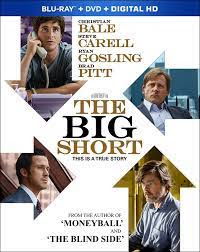
Have you seen The Big Short? I'm talking about the movie based on the book by Michael Lewis. All too often movies fail to live up to the vivacity sparked by the book. The Big Short is an exception.

Adam McKay wrote the screenplay and directed this remarkable film. Brad Pitt played a role in the film, delivered an important line and also produced the film.

For most Americans economics is a mystery, especially when it comes to Wall Street. Stocks, junk bonds, mutual funds, ETFs, options, derivatives, tranches, yield, moving averages, short squeeze... the lingo is so esoteric that the average clam on the street is clueless.  

Even when we don't know what things mean, we're all impacted by them when the shakedown comes. The tech bubble bruised a lot of peoples' investments and the housing bubble created pain all the way down into the trenches where many Americans exist day to day.

The Big Short was an exceptionally creative means of explaining what happened during the collapse of the housing market. It doesn't really tell the entire story, such as how mechanisms were created to help people who couldn't afford homes were shoehorned into properties that were beyond their means. That is, there was pressure placed on banks to make mortgage loans that exceeded their typical tolerance for risk

Needless to say, the film does a good job of showing how Wall Street insiders were clueless to what was really going on, and paid a price for it.

Early on in the film the director inserts Margot Robbie in a bubble bath, sipping wine, to explain subprime mortgages. 

Basically, Lewis Ramieri's mortgage bonds were amazingly profitable for the big banks. They made billions and billions on their 2% fee they got for selling these bonds. But they started running out of mortgages to put them in. After all, there are only so many homes and so many good jobs to put them in. So the banks began filling these bonds with riskier and riskier mortgages. That way they can keep that profit machine churning, right? By the way, these risky mortgages are called subprime. So whenever you hear "subprime" think "sh*&".

Our friend Michael Burry found out that these mortgage bonds which were supposedly 65% AAA were actually just mostly full of sh*&. Now he's going to short the bonds. Which means 'bet against.'

Got it? Good.

"Let me tell you how it is."
FWIW, Margot Robbie is an actress from Australia who played Tonya Harding in I, Tonya. She's also played Mary Queen of Scots and Sharon Tate in other films I've seen, though I never knew her name.

My interest in seeing this film (I've seen it several times already and read the book) was chiefly driven by the mess we're seeing right now in global markets and on Wall Street. I know that some people believe it's all a big conspiracy, that wrecking the economy is intentional. Somehow my personal feeling is that the decision makers are in over their heads. Things are simply too complicated today and the law of unintended consequences lurks behind every move.

There are a lot of stars in this film. The casting is superb. Christian Bale, Brad Pitt, Ryan Gosling and Steve Carell are the primary heavies, but even the most incidental character is perfect.

As a final note (knowing much more can be said), I also enjoyed the music score, especially Led Zeppelins When the Levee Breaks which summed up the film as the final credits rolled.    

Again, if you've not see this film, I recommended it highly. It's both entertaining and insightful. 

Ever ready to upset applecarts.

Monday, November 16, 2020

Kim Ng Becomes First Female General Manager of a Major League Sports Team

What does a GM do in Major League Baseball? To find out, watch Brad Pitt in Moneyball. Or, if you prefer, read the book. It's a good book and I've read it twice. (And if you listen to audiobooks, I'll loan you mine.) Essentially, the General Manager handles the business of negotiating player contracts, the dollars and sense.

This past week the Miami Marlins announced that they were hiring Kim Ng as their new general manager, thereby making her MLB's first female GM.  

When I saw the story trending on Twitter I had several immediate thoughts. First, when did the Florida Marlins become the Miami Marlins? I guess I'd not been paying attention as much as I should. Second, this is an interesting breakthrough. When will women be accepted as umpires?

I raise this latter question because my cousin Theresa was mentioned in a 2011 ESPN story titled Women Umpires Are Striking Out In MLB and again in this 2012 story in Women's Voices for Change.

In 2016 I addressed this umpire issue in a blog post titled Major League Baseball: Some Things Have Changed and Some Haven't in the Umpire Business. In that story I noted that women have served on the Supreme Court. Women have served as heads of state (e.g. Margaret Thatcher) and women are CEOs of major corporations. But there are no female Major League umpires. Why is this? Are baseball's rules more complicated than the U.S. legal system?

* * * *
The Kim Ng has many interesting features, one of them being that four years ago the Marlins became the first Major League team to have a black CEO, none other that the highly respected Derek Jeter. 

Ng comes into the role with a strong resume, 30+ years in the business. On Twitter the show of support has been massive, not only for breaking the gender barrier but also being a minority. Even Michelle Obama Tweeted her enthused response to the move.

"I entered Major League Baseball as an intern and, after decades of determination, it is the honor of my career to lead the Miami Marlins as their next General Manager," Ng said in a statement. "We are building for the long term in South Florida, developing a forward-thinking, collaborative, creative baseball operation made up of incredibly talented and dedicated staff who have, over the last few years, laid a great foundation for success.

You can read ESPN's account here: 
https://www.espn.com/mlb/story/_/id/30310018/miami-marlins-hire-kim-ng-mlb-first-female-general-manager

Congrats, Kim.

Wednesday, September 25, 2019

Almost Wordless Wednesday: Bob Boone's West Theater Renovation Is A Pretty Cool Deal

It's here. Finally experienced the resurrected West Theater. 

Brad Pitt as Roy McBride. His aims: to save the world and find his father.
Tommy Lee Jones as H. Clifford McBride


Ad Astra film review another day. 
The theater is comfy, and suitably retro.
Tuesdays are $5.00 and regular prices reasonable.
Do put it on your "to do" list to check it out.

Tuesday, February 21, 2017

The Walking Dead: What's the Big Appeal?

It seems that zombies have been taking over everything these days. Not sure what triggered this contemporary craze, but initially I had to laugh a couple years ago when I heard that my brother and his wife were reading a Jane Austen book with zombies in it. Abe Lincoln and zombies? Yep.

Stephen King threw his hat in the ring with Cell, a zombie tale where people become aggressive blood-thirsty zombies by taking phone calls on their cell phones. Brad Pitt tries to save the world from zombies in the horrorific World War Z. (Here's the trailer. If you haven't seen it it's totally wild.)

How big is our fascination for the undead? On television The Walking Dead is the hottest product out there right now, even as it infuriates its fans by killing off their fave characters.

As I thought about the reasons for this zombie obsession I came across this article on The Daily Dot titled "5 Reasons Why 'The Walking Dead' Is The Biggest Show On TV.'" The five reasons, according to Nico Lang, were as follows.

1. Zombies are so in right now. 
That's fairly self-evident, as indicated by this list of zombie novels currently in print.

2. We're living in a golden age of genre television.
OK, my blog post about the current Golden Age of Television was somewhat harsh, but for those who embrace the medium it really has produced a wave of unique characters and storylines.

3. It's like nothing else on the air right now.
No kidding.

4. The show has a massive female audience.
This is not something I would know from watching the show, nor something I would conclude from the snippets I've seen. Is this rue?

5. And finally, zombies can mean whatever you want them to mean.
This last point is the one that most resonates with me. At its most fundamental level I've begun to see The Walking Dead more symbolically that literally.

"Depending on your perspective," writes Lang, "it’s about the fear of widespread disease outbreak, World War II, consumerism, the anxieties of modern work culture, Communism, the slow degradation of the earth’s natural resources leading to total collapse, the rapture, or a metaphor for teen male sexuality. The message is in the eye of the beholder." Like a Rorschach Test.

So, what's it really all about, Alfie?

We live at a time when symbols seem significantly charged with power, though maybe this has always been so. The Cross. The Flag. The Wall. Symbols are everywhere... and in this story so are the Zombies. What do the zombies symbolize? I'm proposing that they are a symbol of Political Correctness.

First off, notice how they seem to travel in packs. Notice, too, that they refuse to leave the living alone. Why can't the zombies just do their thing and allow the living to do theirs? But no, there's this relentless pursuit taking place in which the PCs, I mean Zombies, won't be satisfied till everyone is a zombie.

This is not to suggest that the line between good and evil is drawn between the living and the undead. The show (and I speak as one who has never watched it but is only hearing about it from others) features all kinds of bad people who are among the living, people with bad motives who are self-centered or worse.

Well, we all know it's just a story. Zombies don't really exist. Then again, for all I know maybe none of us really exist. We're all just a dream, or maybe a Sim in an ultra-real Sim City.

I dunno. What's your take on all this zombie fascination? 

Tuesday, February 12, 2013

Intersections and Connections

Am currently watching Last Call, starring Jeremy Irons and Sissy Spacek, about the last days of F. Scott Fitzgerald. The Last Tycoon was Fitzgerald’s last novel, incomplete but still made into a film. The Great Gatsby is probably his most famous story that years later resulted in a film starring Robert Redford and Mia Farrow as Jay Gatsby and Daisy, told from the point of view of Nick Carraway played by Sam Waterston. Sam Waterston, as it turns out, played the journalist Sydney Schanberg in The Killing Fields which I just finished watching this past week. The Killing Fields is the tragic story about the Khmer Rouge regime that rose to power in Cambodia during the Viet Name War. My daughter bought the book for me as a gift after having spent three weeks in Cambodia, Thailand and Laos last year.

Another film about the Viet Nam War that I’ve found profoundly moving is The Quiet American, based a novel by Graham Greene. Michael Caine plays the role of a journalist in this compelling film. Caine is also a central character in the hilarious comedy Dirty Rotten Scoundrels along with Steve Martin, author of the autobiography Born Standing Up. Born Standing Up shows how Martin’s early life experiences, including doing magic tricks to sell them at Disneyland and playing banjo, later re-appeared later in his career as an entertainer. Now, Martin is performing his own music as a banjo picker and last summer we had the opportunity to see him live, playing tunes from his CD Rare Bird Alert with the Steep Canyon Ranger here in Duluth; it was fantastic.

Doc Watson is another banjo picker whom I once had a chance to see when I was a student at Ohio University. The occasion was a two-day folk festival that included the likes of Mary Travers and the Youngbloods. Peter, Paul and Mary were instrumental in bringing Bob Dylan’s music into the wider culture by performing and recording songs like "Blowing in the Wind." Dylan’s music permeates our culture today, endlessly covered by other groups and used in soundtracks for dozens of films like Henry Poole Was Here which was carried along by the somber "Not Dark Yet."

Shadows are falling and I’ve been here all day
It’s too hot to sleep, time is running away
Feel like my soul has turned into steel
I’ve still got the scars that the sun didn’t heal
There’s not even room enough to be anywhere
It’s not dark yet, but it’s getting there

Dylan’s "Shelter From The Storm" was picked up in the Tom Cruise film Jerry Maguire. Yesterday I brought home from the library the film Days of Thunder, which stars Cruise as a race car driver. Not sure which film first put Cruise on the map but Rain Man is one of the most memorable. Mrs. Robinson is probably the film that put Dustin Hoffman on the map. Hoffman once considered his Ratso Rizzo role in Midnight Cowboy as one of his two greatest.

Jon Voigt, the other central character in Midnight Cowboy, opened the film Runaway Train with the statement, “What doesn’t kill me only makes me stronger.” Trains are a central feature of countless Hollywood films including Hitchcock’s Strangers on a Train and Murder on the Orient Express based on a mystery by Agatha Christie. Graham Greene, who wrote numerous novels that later became films, also wrote a novel called Orient Express.

Greene’s The Third Man is another of my favorite novels that has been translated into film, Orson Welles being the central character in that phenomenal story. Welles found his way to Hollywood by means of radio theater, capturing the imagination of a nation through his dramatic and terrifying presentation of H.G. Wells’ War of the Worlds. Among other things Wells also wrote a story called The Time Machine. Time travel is another recurring theme in Hollywood, one of my personal favorites being Twelve Monkeys starring Bruce Willis and Brad Pitt. Pitt gives the appearance of enjoying himself as a film star, playing roles as varied as a Major League Baseball manager, a goofy health club worker and a suave high-class criminal. Yes, crime does pay in Filmland where mucho bucks have been taken in through box office receipts from stories about gangsters like Al Capone. Sean Connery, who was shot down by Capone’s henchmen in Brian De Palma’s The Untouchables, established his fame as the original Bond, James Bond.

The Bond franchise has featured more than a half dozen actors if you include Barry Nelson and David Niven. In recent year Daniel Craig has proven himself exceedingly worthy of the Bond name and is a favorite of many. Craig was also the hero of Cowboys & Aliens, a surprisingly entertaining sci-fi Western. Cowboys have always been a staple of Hollywood, even before the days of Hopalong Cassidy and the Lone Ranger.

On my first visit to Hollywood two wheels were stolen off my rental car and I spent three hours in the Hollywood police station waiting for a replacement car from the rental company. The car was parked about a half block from Kinko’s right where Shirley Temple’s star is cemented. Shirley Temple was a talented little girl who no doubt raked in boatloads of money for the studios by dancing, singing and being cute. Shirley Temple’s middle name was Jane. The love of Tarzan’s life was also named Jane. My favorite Tarzan actor was Johnny Weismueller. When I was a kid we used to play baseball after school, but we always came home early when Tarzan movies were on.

Those were the days.

Friday, August 31, 2012

Author Eddie Upnick and Time Will Tell

Once confined to fantasy and science fiction, time travel is now simply an engineering problem.
~Michio Kaku, Wired Magazine, Aug. 2003  

Because of this blog I am offered review copies of books on a fairly regular basis. I try not to take very many because my reading stacks are fairly backed up. Of those I do take I don't read as many as I'd like because, as the saying goes, "my eyes are bigger than my stomach."

Nevertheless, the concept in Eddie Upnick's Time Will Tell was interesting on two counts. First, because I have written a few stories related to time and alternate histories (see Unremembered Histories ) and because of my father-in-law's own superb volume about his World War II experiences, a second theme of Upnick's story.

We're all familiar with H.G. Wells' classic The Time Machine, and who has not enjoyed Hollywood's three part Back to the Future series? Here's Upnick talking about why he wrote this book.

EN: What prompted you to write this book? 
Eddie Upnick: I wrote Time Will Tell because of a chance meeting I had with a man named Sidney Dowse in 1995 in Antigua. Mr. Dowse was one of the men who escaped from Sagan, the prison camp portrayed in the 1963 movie The Great Escape. He was one of 76 men who escaped from the German prisoner of war camp. 50 of the men were murdered by the Gestapo, Sidney was recaptured. The stories that Mr. Dowse finally shared with me, after three days of trying to get him to talk, were amazing. Before the war started, Sidney Dowse worked with Stewert Menzies, who headed up MI-6, British intelligence. Menzies had daily meetings with Churchill. The shocking hidden details of World War Two history were the reason I wrote Time Will Tell.

EN: Having written a book titled Future Tense, you are obviously fascinated with time. When did this kind of interest emerge in your life? 
EU: I was influenced in early childhood by Rod Serling's Twilight Zone and the Outer Limits series. Rod Serling was my greatest writing influence. His Twilight Zone episodes fascinated me a child. Gene Roddenberry was also a strong influence with the original Star Trek series. I hope readers will be both entertained by the story and learn a little lost history as well.

EN: Your book was finished in 2009. Were you surprised when Stephen King published a time travel novel about a man trying to alter the Kennedy assassination? What was you reaction to that?
EU: Stephen King's novels are interesting to me, but they had no influence on me or my writing style at all. All of his novels that relate to time keep the genre alive and well. So I wish him well.

EN: I suppose you'd like to see this as a movie. How would you compare this story to 13 Monkees with Bruce Willis and Brad Pitt? 
EU: Yes, I think all three books in this trilogy would make for great movies. 13 Monkees was certainly an interesting, yet dark film with a time travel theme. I would envision my "movies" as more uplifting and humorous.

EN: What are the biggest challenges in writing this kind of fiction? 
EU: I call my writing style reality-based science fiction. Beginning each book with a real life premise and slowly morph into the Sci-Fi elements keeps the books believable and entertaining.

2052, the final book deals with the end of life on Earth and how our heroes attack the problem, battling enemies and getting help from allies in outer space. 2052 answers all the open questions left from the first two books.

40 years of stories told to me by top level people in many industries helped me piece this trilogy together. These novels are a fast read, that much I can promise your readers.

* * *

EdNote: Though the book will never be considered classic literature there are readers who will enjoy the game. It's always interesting to see where another person's unrestrained imagination will take a reader if they choose to follow. Like all fiction of this type the enjoyment requires the usual suspension of disbelief. There is a lot of improbable to impossible here, but isn't that a given in time travel stories? The book is available in paperback as well as the digital version on Kindle. Download the beginning free and if it grips you, go for it.
In the meantime, make the most of your weekend.

Sunday, August 30, 2009

Inglourious Basterds

"Completed a short story last night: How To Fix A Color TV --- needs a better title, but the essential story is down, and I am pleased with some of the effects. Needs to be shared to get feedback on a couple spots, but overall I like what I've done. Am beginning to learn what 'show, don't tell' means. Am learning more about creating effects without cliches. (I hope!) Am also learning, hopefully, how to tell a story, how to establish pace, etc. I imagine I will again be criticized for not developing my characters. Need to make people see them visually. Have enjoyed getting it out on paper... 'vamos a ver.'"
Journal note, July 2, 1990

This is a journal note from a period in my life when I was attempting to find my voice as a fiction writer, striving to produce "serious fiction." I learned a lot about writing during this phase of my development, especially as it relates to story telling. Writing fiction improves one's non-fiction as well. The relating of anecdotes, the attention to detail, taking abstract observations and capturing them with a vivid concreteness... all these and more help improve one's work.

Following many years of short story writing I got bit by the Hollywood screenwriter dream after having appeared in the film Iron Will as an extra, 1993. (Probably the one film Kevin Spacey prefers left off his resume.) By the time I'd finished the third screenplay my Hollywood ambitions were played out, but those years of studying the process of story telling in film were quite instructive.

It's one thing to watch a movie, to get lost in its dream, and another to analyze how the director created the effects, built the characters, managed the tension, paced the plot development.

A co-worker who is a student of film (not scholastically, but through longstanding observation and a passion for excellence in the theater) told me last week that Inglorious Basterds is a film of such quality that it will be studied in film schools in the future. Hearing such high praise made it a "must see" film for me. Such praise is also a challenge because your expectations have been raised.

Tarantino's Reservoir Dogs is a cult classic, the first film where I covered my eyes in a scene since Kaltiki the Immortal Monster when I was eight. It's vulgar and violent, but told in a truly original style that brings it into sharp contrast with typical linear story telling. (OK, Kubrick did it in his first film The Killing, but 99.8% of the audiences who saw Dogs never heard of that.) When Pulp Fiction became a mega hit Tarantino, who once just worked in a video store, could do whatever he wanted. He was living the dream.

Obviously the guy loves violence, a seemingly constant theme throughout his work as exemplified in films like Death Proof, Grindhouse, the Kill Bill flicks and Oliver Stone's Natural Born Killers, which was based on a story of his. (Woody Harrelson took a break from being Cheers' sweet Woody to take a walk on the wild side.) In short, Tarantino really enjoys finding new ways to splash blood onto the silver screen.

The thing is, this guy really knows how to tell a story. In point of fact there are scene so incredible in this film that I agree with my friend who says this film will be studied. The opening takes place at the home of a rural dairy farmer in Nazi occupied France, 1941. We see a small detachment of Germans driving up the winding road to his house. In real time the vehicles approach, the farmer telling his teenage daughters to get in the house. The Colonel, who it turns out is nicknamed "The Jew Hunter", acting magnanimously toward the farmer, sits at his table, shares a smoke and easy conversation. But there is no ease in the farmer. We feel the mounting tension, and initially suppose it relates to concern about his three daughters. As the scene slowly, ever so slowly plays out, we ourselves discover what the Colonel already suspected. There were Jews being harbored in the house.

Like Reservoir Dogs, Tarantino takes his time, allows this opening scene to play out, shows no urgency in moving the story forward. The cinematography in this case is as gorgeous as a panaramic Barry Lyndon/Kubrick landscape. The tension as pronounced as a shower scene in the Bates Motel. The acting spot on. And a bigger than life fairy tale has been set in motion.

Brad Pitt is superb as leader of the Basterds, a group of American soldiers who have been dropped behind enemy lines to unnerve the Nazis through especially brutal forms of viciousness. Taking scalps is the name of the game.

One variance from Dogs worth noting. I don't think there was any bad language used throughout. Violence is there in creative abundance, but I personally think the film was not hurt by this omission.

Much more could be said, but you can glean plenty from reading the many other reviews out there. I have to mention that the scene in the bar where Pitt's Basterds rendezvous with actress Bridget von Hammersmark is one of the most incredible scenes in film history, so simple, so smart, so unpredictable, so nerve-stretching and delivered with such patience. People will make a lot of whoop about the big finale no doubt, but it is the subtle development in scenes like this one that give a movie viewer real satisfaction.

For what it's worth, the story referenced in my journal note above ultimately won first prize in the five state Arrowhead Regional Arts Fiction Competition in 1991. The plot twists may not be as numerous as Tarantino's Basterds, but you might find it an entertaining read. One difference is that Tarantino's story is a fairy tale and mine, The Breaking Point, is true.... sort of, in a fictional kind of way.

Thursday, August 14, 2008

Himalaya

We all know the Himalayas. Or rather, we pretty much all know that they are the highest mountains in the world, somewhat forbidding and full of mystery.

I just finished reading (again, listening to) the unabridged account of Michael Palin’s book Himalaya, read by the author. Palin is the familiar face from the BBC’s Monty Python comedy troop, one of my favorite characters in whatever skit you find him in. His “Nobody expects the Spanish Inquisition” sketch is always a gut splitter, but in almost anything where he is teamed with John Cleese you can be sure it’s going to be funny.

Himalaya, however, is a serious book, essentially an ongoing chronicle of Palin’s travels while filming his travel show for the BBC. This adventure covered 3,000 miles and took six months to complete, a little much for a four day weekend. Beginning at the Kuyber Pass at the Afghanistan border, Palin takes in everything, sharing it with his viewers and readers. High altitude polo in Pakistan, penetrating dialogue with the exiled Dalai Lama, and a whole range of mountain top experiences are shared with enthusiasm. The wide variety of cultures, religions, peoples and political expressions are highly informative.

Palin’s wit is with him throughout, and a keen eye for details that make the journey memorable for those of us who weren’t able to join him. On some occasions there were parties and social encounters where the most remote peoples were familiar with Palin from his Monty Python days, and a few times he even sang for them The Lumberjack Song. The book is an entertaining and informative experience by a highly entertaining writer.

If you're interested in this part of the world, I also recommend the Brad Pitt film Seven Years in Tibet, the true story of Heinrich Harrer, an Australian mountain climber who became friends with the Dalai Lama. I've watched it several times, never without being moved. Pitt is superb, the cinematography spectacular, the story uplifting, and yes, the film is a masterpiece.

But the backdrop for all, whether Michael Palin's adventure or the Hollywood re-creation of a slice of history, is a mountainous region of the world known wondrously as the Himalayas. In whatever form you wish to take it in, please do.

Tuesday, April 15, 2008

The Assassination of Jesse James by the Coward Robert Ford

A Movie Review
Disclaimer: all comments are based on first half of film. I didn't get into it.

One of the worst films I’ve ever tried to watch. I can’t believe all the praise it has received at IMDB. It has many problems, beginning with its violation of the first rule of story telling: show, don’t tell.

I’m sure that there are narrated stories that work, but too often they are a cheap crutch that removes the audience from the story while trying to help the audience understand the story. The length of this film didn’t bother me because I could eject it at any time, and I finally did. If I want to finish it, the movie is due back in a week and maybe I will watch more. But frankly, my dear, I don’t give a d***.

Brad Pitt is one of my favorite actors on the current scene. But this role was a mistake, at least as written here.

Whoever wrote this should be shot. Scene after scene is atrociously long and the dialogue all too often irrelevant. Let’s advance the story. What is point of the guy watching Robert Ford bathe and commenting on the size of his privates? No point at all… Maybe an attempt at humor in this midst of this drab, pitifully dull pretense at being an epic.

Recommended Reading: If you want to be a screenwriter buy Syd Field's Screenplay.
In this film the actors seem as lifeless as the story. That’s why I am mystified that so many reviewers at IMDB.com love it so much. There are too many positive reviews for me to believe it’s a disingenuous crowd of paid shills, so I guess a lot of folks saw something I didn’t.

Here’s a reviewer from IMDB whose sentiments I do share, however: “Yuk...... I hated this film.”

By way of contrast, other reviews at IMDB have praised the film’s “melancholic grandeur” and called it the “best film of the year.”

I prefer the review who titled his comments, “Yawn.”

The film is being praised as "interesting despite not being a shoot ‘em up Western." Yet there are whole slews of great films that are not shoot ‘em ups which have real drama and interesting characters. Try Cool Hand Luke, Cat On A Hot Tin Roof, or anything by Tennessee Williams. Even the flawed Hombre, based on a great Elmore Leonard book of the same name, was more compelling than this. There was a story there that even weak execution could not obliterate. This film, The Assassination of Jesse James, is a disgrace to what it could have been.

Funny thing is, I liked Brad Pitt in Troy which so many others panned. Maybe some of our experience gets colored by expectations. In this case, I expected more.

Popular Posts