Showing posts with label EVs. Show all posts

Tuesday, February 6, 2024

Tech Tuesday: Seven Stories from This Week's EV News

Photo courtesy J Dean via Unsplash
My comments in italics

TESLA VEHICLES GET A RECALL
Tesla is recalling almost all of its electric vehicles in the U.S. for a software fix as it faces heightened scrutiny from the National Highway Traffic Safety Administration (NHTSA). 

When you read the details regarding this recall, it seems the recall involves something incredibly petty, though it will require Tesla to notify every car owner and schedule time to make the adjustment for each car. Is the government trying to disincentivize Elon Musk from selling cars to Americans? Did Ford or GM put a bug in the ear of the NHTSA? 

EVs Are Too Heavy to Be Stopped by Guardrails 
Results from crash testing in the US have raised concerns that electric vehicles may be too heavy to be stopped safely by guardrails on roads.

EVs must be heavier than we realized.... or guardrails flimsier. Is replacing guardrails part of the infrastructure plan?

Building EVs Impacts the Environment, Too
"As the world embraces electric vehicles as a solution to carbon dioxide emissions, there is too little discussion of the environmental harm associated with the metals needed to build them, says one of Japan's foremost researchers in the field."

This story from Tokyo draws attention to another side of the EV coin. In theory they are better for climate impact considerations, but there are other problems that the mining of rare metals exacerbates.

GM Went All In on EVs. Dealers Say Buyers Want Hybrids.
Some auto retailers worry GM is missing an opportunity to nab buyers who aren’t ready for EVs

This is what happens when there is a government-generated mismatch between supply and demand. Will GM need another bailout in a few years? 

More automakers are being forced to rethink their EV plans

EVs have been the shiny new toy in the auto industry, albeit an expensive toy, but the demand has not yet been generated for a variety of reasons. One of the biggest is the hassle of re-charging the batteries.


77% of Americans have homes, but only two-thirds of these have a garage. Finding re-charging stations can become massively annoying, and even moreso when travelling. One recent study found that 40% of all charging stations in California were broken. (or maybe it was in L.A.)


Why Americans Don’t Want Electric Vehicles

Not long ago, pundits were telling us that gasoline-powered cars would soon vanish from the streets, replaced by sleek, space-age vessels powered by electricity. But consumer demand for electric cars never matched the hype.


Why? Again, charging stations are a hassle. And in cold weather, it takes even longer.


Keep Politics out of the EV Debate and Listen to the People

People in Connecticut want to know the details of a plan: where will we get the extra electricity to power the thousands of new EVs, how will the transmission line infrastructure be built, who will pay for it all (your electric bill is already too high), where will people charge them throughout the state, will there be enough operational charging stations where people live and work, and will EVs be affordable? 


This last was a letter to the editor of the CT Examiner. Many questions. I drive by our university paking lots and see a thousand cars, but only a half dozen charging stations, if any. At UMD Saturday I only saw one Golf utilizing a charger. Will we one day have a totally electric transportation fleet? Maybe, but probably not in my lifetime.


Saturday, January 20, 2024

The EV Transition: Sorting Out the Myths from the Realities

The Biden Administration is dictating that 2/3s of new vehicles manufactured in the U.S. be electric-powered or something other than the current internal combustion engines that run on gasoline or diesel fuel. It reminds me of the Soviet Union's quota system, which was a failure on many levels. 

All these mandates remind me of the 60's hit by The Animals, "I'm just a boy whose intentions are good, Oh Lord, please don't let me be misunderstood." Leaders always want to be judged on their intentions. Unfortunately decisions also have consequences. Understanding how markets work, and the laws of supply and demand, is a rather important variable.

Here are a coupe stories from last year, followed by a several others from this past week in response to the new EV Mandate

* * * * *

June 27, 2023
WSJ Ten Point

Lordstown Motors files for bankruptcy.

The electric-truck startup—cheered by investors during the SPAC boom and lauded by former President Donald Trump as a savior for a closed GM factory in Ohio—filed for chapter 11 bankruptcy protection, after talks with its investment partner fell through. The truck maker sued Foxconn Technology for fraud and breach of contract, claiming it reneged on a deal to acquire Lordstown shares. Foxconn didn’t immediately respond to a request for comment.


The day began less bright for electric-truck startup Lordstown, which filed for bankruptcy. It is the latest company in a crop of aspiring EV manufacturers that have so far failed to deliver on their promises to revolutionize the auto market. 


Jan 11, 2024

The Street

Here's Why EV Experts Are Flaming Joe Biden's Car Policy (July 2023)
The Biden Administration has set lofty goals for the electric vehicle market, but some automakers and union officials have their doubts.

https://www.thestreet.com/electric-vehicles/heres-why-ev-experts-are-flaming-joe-bidens-car-policy


Jan 16

Stellantis shares fell 3% after temporarily laying off 2,250 workers at a plant in Italy, citing weak electric vehicle (EV) demand. This is not the first time the company has implemented such a measure, reiterating the ongoing challenges the EV industry faces.


Jan 19

WSJ

The EV Backlash Builds

Companies cut output amid flagging demand. Could it be the product?

https://www.wsj.com/articles/ford-f-150-lightning-production-electric-vehicles-biden-administration-1c3fc8d0?mod=WSJ_ENG_NAS_EML_DAILYDISCOVER_AUTO_NAH

A Consumer Reports survey in November found that new EVs have 79% more problems than internal-combustion cars. 


Jan 20

Fortune

New Biden administration pollution rules would require almost 10 times as many EV sales in 2032 as today

https://fortune.com/2023/04/12/new-biden-administration-epa-pollution-rules-require-10x-ev-sales-2032/


CNBC

Stellantis CEO says automaker won’t sell EVs at a loss like other carmakers

https://www.cnbc.com/2024/01/19/stellantis-ceo-says-automaker-wont-sell-evs-at-a-loss.html


WIFR

Electric vehicle experts say EVs are rising in popularity

https://www.wifr.com/2024/01/19/electric-vehicle-experts-say-evs-are-rising-popularity/


Jan 19
The Hill

As demand for EVs plummets, Biden’s green fantasy is pummeling US auto dealers

https://thehill.com/opinion/energy-environment/4337224-as-demand-for-evs-plummets-bidens-green-fantasy-is-pummeling-us-auto-dealers/


Fox Business

Biden's EV insanity just got even worse

Frigid January temperatures have given electric vehicle owners nightmares as they struggle to keep their cars charged and on the road

https://www.foxbusiness.com/politics/bidens-ev-insanity-got-worse

In addition, the cars’ batteries reportedly drain faster in frosty weather. One study from 2019 reported that low temperatures can reduce EV range by 40% or more when drivers are using the cars’ heaters. And yes, when it’s below freezing most people will be using their heaters. 


That’s not the only blow to EVs in recent days. Hertz announced it is ditching one-third of their EVs – 20,000 cars -- from their rental fleet and will be replacing them with good old-fashioned gas-powered vehicles, the kind customers actually want to drive.  


Here's "the official story" from the White House

FACT SHEET: Biden-⁠Harrishttps://www.whitehouse.gov/briefing-room/statements-releases/2024/01/19/fact-sheet-biden-harris-administration-announces-new-actions-to-cut-electric-vehicle-costs-for-americans-and-continue-building-out-a-convenient-reliable-made-in-america-ev-charging-network/ Administration Announces New Actions to Cut Electric Vehicle Costs for Americans and Continue Building Out a Convenient, Reliable, Made-in-America EV Charging Network


Related Link

Will Electric Cars Rule? If So, When?

Robert Bryce’s U.S. Senate Testimony On EPA's EV Mandates: "Unrealistic And Unattainable"

Wednesday, January 17, 2024

Will Electric Cars Rule? If So, When?

1899 -- "La Jamais Contente"
"Nothing ages so quickly as yesterday's vision of the future."
~ Richard Corliss


About two decades ago I was looking through the 36-page car section of a Popular Mechanics when the following article by Roger Huntington caught my eye: “How Far Can We Go With The Piston Engine?”  The article begins like this. “An early death for the age-old internal combustion piston engine is the prediction of some people.  They say the exhaust can’t be cleaned up enough to meet future air-pollution and antismog laws and that we’ll be running around with batteries, steam, fuel cells and atomic engines in another ten years.”  


This was written in 1969. Seems to me these words could have been written in ‘79 or ’89 or ’99.  Or even yesterday. Is this picture of the near future more relevant today than it was then? For sure the EV has come a very long way. 


IT’S ELECTRIC 

1895 -- The Thomas Parker Electric Car
One way to get a perspective is to look back to the first days of automobile transportation.  Did you know that electric cars were the rage then as well?  

When first developed, the internal combustion engine did not take the motoring public by storm.  Though many inventors produced various designs for this novel approach to mobility, Gottlieb Daimler is often credited with developing the first prototype of the modern gas engine, including a vertical cylinder with gasoline injected through a carburetor. A year later, in 1886, Karl Benz obtained the first patent for a gas fueled car and the horseless carriage was soon on its way out.  


During this same time period carriages were also being powered by fuel cells. As early as 1842 an electric road vehicle was powered by a non-rechargeable battery.  Improvements in the battery made battery powered vehicles increasingly practical, and by 1899  there were more electric cars on the road in Britain and France than there were gas powered vehicles. In the late 1890’s there was even a New York City taxi fleet composed of electric cars.  


Electric cars were quieter, cleaner, and offered a much more pleasant motoring experience. And they could run at a pretty decent clip as well. In 1899 a Belgian built electric car called “La Jamais Contente” was clocked at 68 miles per hour, setting a world land speed record. The gas-powered counterpart was a hand-cranked contraption that smelled, vibrated a lot and made a lot of noise.  The hardest part of all was changing gears, which you didn’t have to do in an electric car. 


EdNote: There were even some deaths caused when a car in a garage lurched forward, causing the man turning the crank to be crushed against the back of the garage.


Electric vehicles did have their limitations. First, they were expensive. Second, they had a range of less than 20 miles, which became problematic in a wide open country like the United States.    


END OF THE ROAD

It was only a matter of time before the internal combustion engine would overpower the electric motor. Times were changing and America’s sprawling highway network was beginning to unfold. Motorists needed a car that could go the distance. Gas power was also helped by the discovery of Texas crude oil, making gasoline abundant and affordable. Gasoline filling stations sprang up not because of government subsidies, but because people wanted to take advantage of this new opportunity to make a profit. 


Charles Kettering’s invention of the electric starter in 1912 had a big impact on the desirability of gas powered cars, and Henry Ford’s mass production processes brought the price down to where almost anyone could afford these vehicles. A gas-powered Ford, at $650, became far more desirable than an electric roadster that cost over a thousand dollars more.


SOME THINGS NEVER CHANGE

I cite the Pop Mechanics article because it has a direct bearing upon our expectations regarding the future of electric vehicles. This past week Robert Bryce made a presentation to the Senate Energy and Natural Resources Committee regarding EV hype in the media in general and some of the impediments to rapid EV adoption. By rapid I mean ten years from now. 


Bryce began by reciting the numerous examples over the past 100 years in which the media has announced the imminent death of gasoline-powered vehicles because EVs were on the rise. The last of these was Tony Seba's prophesy that "by 2025 gasoline engines will be unable to compete with electric vehicles."


Naturally our government wants to run roughshod over what the public wants, creating mandates to force this shift. It ought to be obvious that we're not ready.


Tesla sales have been dramatic, but who is buying Teslas? Wealthy people who can afford a second car to take vacations in because EVs still don't have the range that gas-powered cars have.


What prompted Bryce to speak up at this Senate hearing was an EPE mandate being proposed "that would require two-thrds of new vehicles sold in the U.S. to be all-electric by 2032."


So, auto manufacturers will be forced, coerced, to fill their lots with EVs. But will Americans buy them? 


It's a solid, fact-filled read with lots of charts and data. I would encourge you to check it out. You can find it here: My U.S. Senate Testimony On EPA's EV Mandates: "Unrealistic And Unattainable"


Robert Bryce is author of Power Hungry: The Myths Of “Green” Energy and the Real Fuels Of The Future,

Tuesday, January 11, 2022

CES 2022: Welcome to the Future

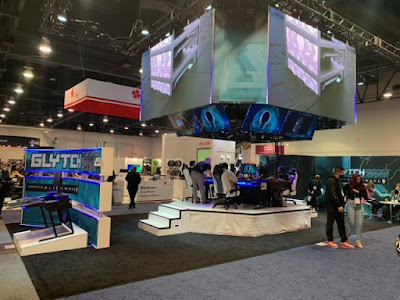
Photo courtesy Karl Strom
For 20 years I attended the Specialty Equipment Market Association (SEMA) trade show in Las Vegas which takes place the first week of November each year. Many of those years I would be on a shuttle or bus and would here someone say, "CES must be in town." SEMA was one of the few shows that rivaled the Consumer Electronics Show when it came to drawing mobs of that size to Vegas. 

CES is the perfect way to kick off a new year. The scale of this show is mind-boggling. Over 2200 exhibitors were on hand this year, with media representatives in the thousands flying in from 159 countries. 

It must have been around 20 or so years ago that the top six companies in the Fortune 500 were automakers and oil companies. How things have changed. Tech companies like Apple, Microsoft, Google and others have become fixtures as the world's leading brands. Ironically, cars are becoming tech companies. Before 1968, when VW introduced the first transistorized, electronically controlled fuel injection system, cars were essentially mechanical devices. 

Photo courtesy Karl Strom
This year's CES showed just how sophisticated technology has become with regards to motor vehicles, autos and trucks. The future was on display in all its forms. 

I asked Karl Strom, editor-in-chief of The Hearing Review, to send me his impressions of this year's CES. Here's a brief summing up that he provided this past weekend.

"The CES conference is like walking into the future. Lots of dazzling displays from the huge corporations like Sony, Panasonic, and Samsung, but also a couple thousand exhibits from established companies to start-ups. My beat is hearing healthcare but it’s difficult not to get sidetracked by the incredible ideas that range from self-driving cars to watering the lawn. There are essentially 3 giant convention halls with one of them being almost completely devoted to fledgling companies and start-ups from all over the world, often grouped by countries or geography. It’s a physically and mentally exhausting event, but fascinating!"

* * * 
TECHNOLOGY touches us in such a wide variety of ways today. Here are some of the categories of products you will find at CES:
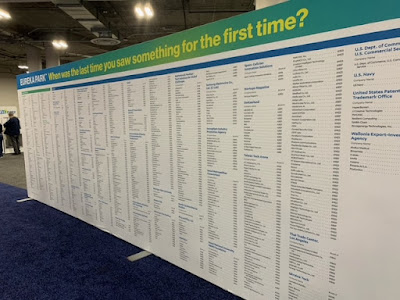
Photo: courtesy Karl Strom
Accessibility

Products and services with innovative features that enable ease of use by disabled persons to improve accessibility for seniors and persons with disabilities, regardless of cognitive, mobile, hearing or visual abilities.


Computer Hardware & Components

All desktop and notebook computer systems and internal components, including tablets, e-readers and mobile computing devices.


Computer Peripherals & Accessories

Products designed to connect to and extend the functionality of desktop or portable computer systems or to enable, enhance, connect, power and/or maintain desktop or portable computer systems.


Cybersecurity & Personal Privacy

Products that serve to protect, enhance, manage or analyze digital security. This is a category that has really grown in recent years. Our next war may be a cyber war rather than nuclear.


Digital Imaging/Photography

Products designed to enhance the visual experience and/or allow the user to capture, store and edit still images or video.


Drones & Unmanned Systems

Consumer drones, consumer UAVs and other unmanned systems that are able to fly, or otherwise move and be operated from a remote location. May include secondary features such as photo/video recording, movement of materials, mapping, wayfinding, search/rescue or other capabilities. It even includes agriculture an energy applications. 


Embedded Technologies

Silicon chips and integrated components designed to provide functionality to finished products or subassemblies.


Fitness & Sports

Products designed to test, monitor or analyze the fitness and/or sports performance of an individual. May also include sports apparel and equipment that incorporate sensors or other technology.


Gaming

Products (hardware, software, services) designed to allow one or more users to interact with electronic games.


Headphones & Personal Audio

Devices that allow users to listen to audio content, such as music, radio, video, TV, gaming and/or telephone conversations. The devices may incorporate microphones for user voice response or input and do not have to be designed for use with any specific type of device. 


Health & Wellness

Consumer devices, mobile apps and other technologies designed to monitor and analyze health, support well-being, manage disease or provide a therapeutic benefit.  


High-Performance Home Audio/Video

Separate audio components and speakers that provide for optimal performance and sound reproduction. Items are typically produced in limited quantities and are often handcrafted.


Home Appliances

Products that have a primary function of being used in the home, including major and portable appliances. Products technology may provide home heating and cooling, comfort, aesthetics, convenience, food storage and preparation, and/or cleaning. Products should have significant electronic functionality as a central part of the item’s operation. 


Home Audio/Video Components & Accessories

Systems and/or speakers designed to provide playback, storage and/or distribution of audio and video signals and content in the home, as well as products designed to enable, enhance, connect, and/or maintain home audio/video systems and components. 


In-Vehicle Entertainment & Safety

Products and components designed to be part of an in-vehicle entertainment and information systems.


Mobile Devices & Accessories

Smartphones (iOS and Android) and other mobile handsets. Also includes accessories designed to work with mobile devices, such as cases or chargers. 


Portable Media Players & Accessories

Well as the accessories for enabling, enhancing, connecting, carrying and/or maintaining them.


Robotics

Programmable or otherwise Intelligent machines capable of performing specific tasks or replicating human movement or interactions.


Smart Cities

Products, applications and technologies designed to be incorporated in a smart city, or smart venue, technology ecosystem. Smart cities are designed to improve and enhance the lives of the citizens and businesses who inhabit them.


Smart Home

Products and accessories that provide a home's inhabitants with sophisticated monitoring and control over the building's functions, and/or enable users to maintain a wired or wireless data network. May also include products and software that provide for remote or conditional access.


Photo credit: Greg Bulla. Creative Commons
Software & Mobile Apps

Programs or operating systems meant to be used on a computer system or mobile device, whether being distributed for free or at a cost.


Streaming

Devices, apps or services that allow a user to transmit audio and/or video over a network. Offerings can be free or at a cost.


Sustainability, Eco-Design & Smart Energy

Innovative features incorporated into products that are environmentally-friendly. For example, efficient and clean energy use, manufacturing processes that reduce use of harmful environment substances (e.g., lead, mercury), durability/end of-life (e.g., reuse, refurbish, remanufacture, recycle), resource conservation, facilitate the powering and/or charging of consumer electronic products.


Vehicle Intelligence & Transportation

Automotive and other transportation products and services that integrate technology into the driving or riding experience, whether by enhancing safety, navigation, improving the passenger experience or enabling self-driving functionality.


Video Displays

Devices whose primary purpose is the display of video content, excluding items marketed and sold primarily as computer monitors.


Virtual & Augmented Reality

Products (hardware) designed to provide a virtual or augmented reality experience for one or more users.


Wearable Technologies

Electronic devices worn by the user that may include sensors, processors, displays or other technology for the purpose of sensory enhancement, measurement, computing or data-collection/transmission.

* * * 

So many things go through my mind when I read through this list. Here are few off the cuff, not in order of importance:

In a world where there has been a fair amount of criticism of consumerism, how much of this technology is necessary and how much is luxury? As we become increasingly immersed in technology--from social media to virtual reality to streaming media and interactive games--is there a danger of becoming so removed from nature and the natural world that it will damage our humanity in some way? 

On the question of luxury and necessity, what are our expectations for the future of consumption and natural resources? How does this impact the have nots of our world? 

I personally find all this applied creativity to be a dazzling spectacle. Will the next generation be dazzled or simply take it for granted? 

When I read about the decline in math skills in our country, what impact will this have in the advances and maintenance of all these incredibly complex systems? When everything we own requires technical knowledge in order to fix it, what then? Auto mechanics who wrench engines will not be qualified to fix EVs. Will we have a shortage of qualified people to keep all our cars and toys running?

What does all this say about the jobs of the future? One thing is apparent, there is going to be no end of opportunity for those willing to hit the books and stay abreast of the changes that are coming. In 20 years from now there will be jobs that don't even have a name yet. 

For optimists, this is an amazing time to be coming of age. For pessimists, the future is shrouded in a fog of doom. 

When I was in school there were doomsayers as well. That didn't stop the possibility thinkers. Its probable that a visit to CES will offer ammunition for both camps. As the saying goes, we'll see what happens. 

How many of you who were coming of age in the Sixties could have imagined Bob Dylan or the Rolling Stones still performing concerts in 2021? 

May you stay forever young!

Popular Posts