Showing posts with label Las Vegas. Show all posts

Wednesday, August 28, 2024

By the Waters of Babylon...

By the waters of Babylon, there we sat down and wept, when we remembered Zion. On the willows there we hung up our lyres. 
--Psalm 137:1-2

Human history has been intertwined with water. Until the past 200 years waterways have been the chief highways for travel. For this reason, all the world's major cities were located on rivers or lakes. Paris, London, Cairo, Moscow, Rome, New York, Vienna, Berlin, Prague, Delhi. Even those adjacent to oceans were established at the mouths of freshwater rivers and bays.

Railroads changed this. 

As a young lawyer, Abraham Lincoln became involved in a legal dispute involving a railroad bridge being built over a river. If the bridge were built, it would block the riverboats traveling on that liquid waterway. After much study, Lincoln saw that railroads were the future. Years later, he became an advocate for the Transcontinental Railroad project that opened up the West, signing into law the Pacific Railway Act of 1862.

Railroads enabled the construction of major cities in all manner of locales. Rivers were no longer needed for the mass transport of good. 

Las Vegas, founded in 1905 along the railroad line that ran from L.A. to Salt Lake City, is perhaps the most famous such city of our time. There were natural springs in the vicinity, water was scarce in the desert there. The lack of power and water to support the scale to which it has grown now was unimaginable then. 

The first significant growth of Las Vegas came with the construction of the Hoover Dam in the 1930s, which brought an influx of workers. In 1931, Nevada legalized gambling, which laid the foundation for "Sin City" to become a major gambling hub. The opening of the El Rancho Vegas in 1941 marked the beginning of the Strip, the city’s famous boulevard lined with casinos and resorts.


I first visited the city in the early 90s when the population had just exceeded a million. Complaints about road congestion were in the news. This didn't stop people from coming. They came from all over the world. Today there is a larger concern as the city surpasses three million inhabitants and struggles with its water and energy needs.


The past few years Las Vegas had been dealing with water shortages due to low water levels in Lake Mead and Lake Powell, which are fed by the Colorado River. In 2021, the Secretary of the Interior declared a shortage on the Colorado River, which reduced the amount of water available to Nevada and other users in 2022. In 2022, the lakes reached record lows, and the federal government warned that some states, including Nevada, might need to make significant cutbacks.


This past year when the rains came the lakes began filling up again, but the drought did reveal the region's vulnerability. Currently, the city (and surroundings) uses 400,000 acre-feet of water, 90% of it from the Colorado River.


Las Vegas, like many cities, has continuously adapted to its environment, finding ways to grow and thrive against the odds. The fluctuating levels of Lake Mead serve as a metaphor for the city's—and humanity's—resilience and adaptability. As we face an uncertain future, Las Vegas reminds us of our ability to innovate and adapt, even in the face of seemingly insurmountable challenges. Our history with water may be complex, but it is also a story of survival, resourcefulness, and hope.


Songs, Stories and Trivia About Rivers

Rivers

The Longest Rivers in the United States

Watching the River Flow

Old Man River

Of Time and the River


Tuesday, January 11, 2022

CES 2022: Welcome to the Future

Photo courtesy Karl Strom
For 20 years I attended the Specialty Equipment Market Association (SEMA) trade show in Las Vegas which takes place the first week of November each year. Many of those years I would be on a shuttle or bus and would here someone say, "CES must be in town." SEMA was one of the few shows that rivaled the Consumer Electronics Show when it came to drawing mobs of that size to Vegas. 

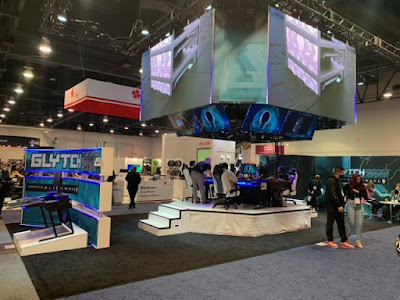
CES is the perfect way to kick off a new year. The scale of this show is mind-boggling. Over 2200 exhibitors were on hand this year, with media representatives in the thousands flying in from 159 countries. 

It must have been around 20 or so years ago that the top six companies in the Fortune 500 were automakers and oil companies. How things have changed. Tech companies like Apple, Microsoft, Google and others have become fixtures as the world's leading brands. Ironically, cars are becoming tech companies. Before 1968, when VW introduced the first transistorized, electronically controlled fuel injection system, cars were essentially mechanical devices. 

Photo courtesy Karl Strom
This year's CES showed just how sophisticated technology has become with regards to motor vehicles, autos and trucks. The future was on display in all its forms. 

I asked Karl Strom, editor-in-chief of The Hearing Review, to send me his impressions of this year's CES. Here's a brief summing up that he provided this past weekend.

"The CES conference is like walking into the future. Lots of dazzling displays from the huge corporations like Sony, Panasonic, and Samsung, but also a couple thousand exhibits from established companies to start-ups. My beat is hearing healthcare but it’s difficult not to get sidetracked by the incredible ideas that range from self-driving cars to watering the lawn. There are essentially 3 giant convention halls with one of them being almost completely devoted to fledgling companies and start-ups from all over the world, often grouped by countries or geography. It’s a physically and mentally exhausting event, but fascinating!"

* * * 
TECHNOLOGY touches us in such a wide variety of ways today. Here are some of the categories of products you will find at CES:
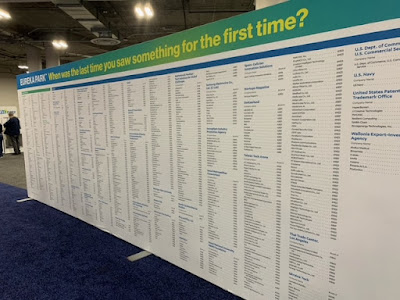
Photo: courtesy Karl Strom
Accessibility

Products and services with innovative features that enable ease of use by disabled persons to improve accessibility for seniors and persons with disabilities, regardless of cognitive, mobile, hearing or visual abilities.


Computer Hardware & Components

All desktop and notebook computer systems and internal components, including tablets, e-readers and mobile computing devices.


Computer Peripherals & Accessories

Products designed to connect to and extend the functionality of desktop or portable computer systems or to enable, enhance, connect, power and/or maintain desktop or portable computer systems.


Cybersecurity & Personal Privacy

Products that serve to protect, enhance, manage or analyze digital security. This is a category that has really grown in recent years. Our next war may be a cyber war rather than nuclear.


Digital Imaging/Photography

Products designed to enhance the visual experience and/or allow the user to capture, store and edit still images or video.


Drones & Unmanned Systems

Consumer drones, consumer UAVs and other unmanned systems that are able to fly, or otherwise move and be operated from a remote location. May include secondary features such as photo/video recording, movement of materials, mapping, wayfinding, search/rescue or other capabilities. It even includes agriculture an energy applications. 


Embedded Technologies

Silicon chips and integrated components designed to provide functionality to finished products or subassemblies.


Fitness & Sports

Products designed to test, monitor or analyze the fitness and/or sports performance of an individual. May also include sports apparel and equipment that incorporate sensors or other technology.


Gaming

Products (hardware, software, services) designed to allow one or more users to interact with electronic games.


Headphones & Personal Audio

Devices that allow users to listen to audio content, such as music, radio, video, TV, gaming and/or telephone conversations. The devices may incorporate microphones for user voice response or input and do not have to be designed for use with any specific type of device. 


Health & Wellness

Consumer devices, mobile apps and other technologies designed to monitor and analyze health, support well-being, manage disease or provide a therapeutic benefit.  


High-Performance Home Audio/Video

Separate audio components and speakers that provide for optimal performance and sound reproduction. Items are typically produced in limited quantities and are often handcrafted.


Home Appliances

Products that have a primary function of being used in the home, including major and portable appliances. Products technology may provide home heating and cooling, comfort, aesthetics, convenience, food storage and preparation, and/or cleaning. Products should have significant electronic functionality as a central part of the item’s operation. 


Home Audio/Video Components & Accessories

Systems and/or speakers designed to provide playback, storage and/or distribution of audio and video signals and content in the home, as well as products designed to enable, enhance, connect, and/or maintain home audio/video systems and components. 


In-Vehicle Entertainment & Safety

Products and components designed to be part of an in-vehicle entertainment and information systems.


Mobile Devices & Accessories

Smartphones (iOS and Android) and other mobile handsets. Also includes accessories designed to work with mobile devices, such as cases or chargers. 


Portable Media Players & Accessories

Well as the accessories for enabling, enhancing, connecting, carrying and/or maintaining them.


Robotics

Programmable or otherwise Intelligent machines capable of performing specific tasks or replicating human movement or interactions.


Smart Cities

Products, applications and technologies designed to be incorporated in a smart city, or smart venue, technology ecosystem. Smart cities are designed to improve and enhance the lives of the citizens and businesses who inhabit them.


Smart Home

Products and accessories that provide a home's inhabitants with sophisticated monitoring and control over the building's functions, and/or enable users to maintain a wired or wireless data network. May also include products and software that provide for remote or conditional access.


Photo credit: Greg Bulla. Creative Commons
Software & Mobile Apps

Programs or operating systems meant to be used on a computer system or mobile device, whether being distributed for free or at a cost.


Streaming

Devices, apps or services that allow a user to transmit audio and/or video over a network. Offerings can be free or at a cost.


Sustainability, Eco-Design & Smart Energy

Innovative features incorporated into products that are environmentally-friendly. For example, efficient and clean energy use, manufacturing processes that reduce use of harmful environment substances (e.g., lead, mercury), durability/end of-life (e.g., reuse, refurbish, remanufacture, recycle), resource conservation, facilitate the powering and/or charging of consumer electronic products.


Vehicle Intelligence & Transportation

Automotive and other transportation products and services that integrate technology into the driving or riding experience, whether by enhancing safety, navigation, improving the passenger experience or enabling self-driving functionality.


Video Displays

Devices whose primary purpose is the display of video content, excluding items marketed and sold primarily as computer monitors.


Virtual & Augmented Reality

Products (hardware) designed to provide a virtual or augmented reality experience for one or more users.


Wearable Technologies

Electronic devices worn by the user that may include sensors, processors, displays or other technology for the purpose of sensory enhancement, measurement, computing or data-collection/transmission.

* * * 

So many things go through my mind when I read through this list. Here are few off the cuff, not in order of importance:

In a world where there has been a fair amount of criticism of consumerism, how much of this technology is necessary and how much is luxury? As we become increasingly immersed in technology--from social media to virtual reality to streaming media and interactive games--is there a danger of becoming so removed from nature and the natural world that it will damage our humanity in some way? 

On the question of luxury and necessity, what are our expectations for the future of consumption and natural resources? How does this impact the have nots of our world? 

I personally find all this applied creativity to be a dazzling spectacle. Will the next generation be dazzled or simply take it for granted? 

When I read about the decline in math skills in our country, what impact will this have in the advances and maintenance of all these incredibly complex systems? When everything we own requires technical knowledge in order to fix it, what then? Auto mechanics who wrench engines will not be qualified to fix EVs. Will we have a shortage of qualified people to keep all our cars and toys running?

What does all this say about the jobs of the future? One thing is apparent, there is going to be no end of opportunity for those willing to hit the books and stay abreast of the changes that are coming. In 20 years from now there will be jobs that don't even have a name yet. 

For optimists, this is an amazing time to be coming of age. For pessimists, the future is shrouded in a fog of doom. 

When I was in school there were doomsayers as well. That didn't stop the possibility thinkers. Its probable that a visit to CES will offer ammunition for both camps. As the saying goes, we'll see what happens. 

How many of you who were coming of age in the Sixties could have imagined Bob Dylan or the Rolling Stones still performing concerts in 2021? 

May you stay forever young!

Thursday, November 5, 2020

The Art of Artifice: Capitalism and the Events Industry

My first trip to Las Vegas was in 1991. I'd gone to attend a trade show on trade shows at Bally's Convention Center. It was highly informative. For two days my boss and I attended workshops and walked the show floor, absorbing everything we could learn. 

One thing we observed was there seemed to be three pricing tiers in the booth business, just like McDonald's, except that instead of 1, 2 and 5 dollar prices, these structures we priced 5, 50 and 200.... thousands. If you had the money, there was no limit to how much you could spend once you had consultants and architects paid off.

In a similar vein, there was a wide variety of talent you could purchase for you show booth. There are national organizations with models who you can hire for the duration of your show.  Kelly Girls is one such organization, but an internet search will unearth others. There are also magicians you can hire to draw crowds. Who doesn't enjoy a good magic show? This is where the "almost famous" end up, I suspect. 

There are also look-a-likes of famous people whom you can rent to work your booth. A smiling Michael J. Fox stepped over and shook my hand. A veritable twin. Same mannerisms, too. Ever wonder what actors' doubles do when the actor is not working? Yep. You can probably rent him to attract people to your booth. And for a price, you can even have the real person, if you have the bucks.

All these memories came to mind when I saw an email this week about a company called Crowds On Demand. Having been an extra in a Hollywood film, I'm aware that when movies need lots of people for crowd scenes they have systems in place to recruit them. Were you aware that there are systems in place for manufacturing crowds in real life? 

Here's their sales pitch:

"Are you looking to create a buzz anywhere in the United States? At Crowds on Demand, we provide our clients with protests, rallies, flash-mobs, paparazzi events and other inventive PR stunts. These services are available across the country in every major U.S city, every major U.S metro area and even most smaller cities as well. We provide everything including the people, the materials and even the ideas. You can come to us with a specific plan of action and we can make it happen. OR, you can approach us with a general idea and we can help you plan the strategy then execute it."
https://crowdsondemand.com/

Next I learned about another group called Demand Protest. Here's info gleaned from their site.

We are strategists mobilizing millennials across the globe with seeded audiences and desirable messages. With absolute discretion a top priority, our operatives create convincing scenes that become the building blocks of massive movements. When you need the appearance of outrage, we are able to deliver it at scale while keeping your reputation intact.


Demonstrations

We develop, recruit, manage, and execute on your high-level objectives. Our trained operatives can lead entire crowds or simply steer events in your favor.


Movements

We have the proven expertise required to expertly shape political, corporate, or public health perceptions.


Intelligence

Our operatives can embrace and steer existing organizations, providing you valuable insights about those involved and their future actions.


Training

Our strategists can train your organization in our methods of creating effective demonstrations and design the situations that will deliver your goals.


Website: www.demandprotest.com


https://www.demandprotest.com/?fbclid=IwAR0A6p6AmfcudnVvNIlJCdcziBZ3seSf_b1e2H1CoCC2-ROz9BIye3vXeOs


* * * *

When I was growing up I remember being told once, "Don't believe everything you hear." When the Internet came along, we were told, "Don't believe everything you read on the Net." As time went on, this misinformation was given a name: Fake News.


When I read about these two groups--Crowds On Demand, and Demand Protest--it causes one to question the things we are seeing in real life. What is really happening? Who is manipulating whom? Both of these organizations claim to be skilled at influencing public opinion. That is how they set their prices. Purportedly they are able to deliver on their promises.


How does this make you feel when you read these websites and then watch today's news?


* * * *

Related Link

He Who Controls the Narrative Controls the People


Photo at top of page by Rob Curran on Unsplash

Tuesday, January 7, 2020

TechTuesday: Cars Go High-Tech at CES

I've been attending trade shows and conventions for more than three decades and the one constant in every industry has been change, much of it driven by technology. I attended my first trade shows while working for a manufacturer in the screen printing industry. The Screen Printing Association held an annual SPAI convention at various locations around the country from Houston to L.A. to Atlanta and elsewhere. As the digital world expanded, this association had to change as well and became the Screen Graphics Association with its annual convention called the SGAI.

While with AMSOIL I attended the Specialty Equipment Manufacturing Association (SEMA) show in Las Vegas each year from 1986 till my semi-retirement in 2017. SEMA is an association of companies in the automotive aftermarket. The first shows were held in the basement of the Los Angeles Dodger baseball stadium. Eventually they outgrew this space and moved to Las Vegas where it continued to flourish, becoming the third largest event in this city that never sleeps.

When SEMA is in full bloom every hotel is occupied as more than 160,000 people come into town. 3300 members of the media show up from countries all over the world to see what's new from the 2400 exhibiting companies showcasing their wares on 1.2 million square feet of exhibit space.

The big daddy of Las Vegas conventions, however, is CES, the Consumer Electronics Show. I remember once being on a bus in Vegas during SEMA and having someone ask me, "Is CES in town?" The man asked because the city was bursting with people and he knew CES was always a massive disruption. I replied that CES is at the beginning of January, that "this week is SEMA."

Mustang Mach E. I'm thinking of Corinthian towers when I look at this.
THE BIG EVOLUTION in the auto industry is how much technology is embedded in cars these days. As result, we have automakers attending the CES show in order to show off the inroads they've made incorporating consumer electronics into their new and future designs.

We've been hearing about the Internet of Things (IoT) for a while now. If you were at CES this week, you'd have a chance to see just how far this brave new world has come.

According to a story on Seeking Alpha, here are the four main themes related to auto-tech development:
Automated driving today and Autonomous mobility of the future
Data monetization and the transformation of the Connected Car
Evolution of in-vehicle user experience, from software to virtual assistants
Architecture transformation from ECUs to servers on wheels

These cars ain't what they used to be. They know what you want even before you know.

One paragraph in the story concerned me, though. Advertisers will be zeroing in on your car as another way to send you marketing messages. It's one thing to get ad-blocking for your TV and you iPhone. Do we now have to buy and download ad-blocking services on our cars now, too?

I'm curious about a few other issues, such as how often we'll be stuck somewhere because our car is updating its software or running checks on its operating system (OS).

At least 10 automakers are here in Vegas this week. Here are the first four listed in an Autonews story.

BMW will tease an interior concept for its i3 EV. The "BMW i3 Urban Suite," said to have the "relaxed feel of a boutique hotel," features a large seat with footrest, a screen that flips down from the headliner and a "personal Sound Zone."

Fisker will debut the Ocean all-electric crossover, powered by an 80-kWh lithium ion battery pack and with an expected range of up to 300 miles. Production should begin at the end of 2021.

Ford will show its 2021 Mustang Mach-E crossover. The highly anticipated mass-market EV, with a 300-mile range, is Ford's answer to Tesla, General Motors and others that beat it to the electric market with long-range EVs.

GM will demo integration of Amazon's Alexa Auto voice-controlled virtual assistant in a new Cadillac CT5. "Alexa. Find me the nearest public bathroom."

Other manufacturers with cool goodies at this show include Honda, Hyundai, Mercedes, Nissan, Renault and Toyota.

Read the rest of this story here.

"Alexa. Fetch my car and take me to the river." 

Tuesday, January 8, 2019

Tech Tuesday: CES Takes Over Las Vegas

For the past 20 years I've been going to Las Vegas each November for the Specialty Equipment Manufacturers Association (SEMA) show, the third largest week-long trade show each year. It's the auto aftermarket, and at one time the automobile industry was indeed the heartbeat of America.

There are so many trade shows in Vegas you really can't keep track of them all. A few are so enormous that they strain the resources of this city that never sleeps. One of these is the Consumer Electronics Show (CES).  Here are last year's numbers.*

Number of exhibiting companies: 4400
Square feet of show space utilized: 2.7 million
Number of industry attendees: 182,000
Number of these from outside U.S.: 63,000

This is a tech show, so you know that there's a social media explosion.

@CES and #CES mentions: 1 million
Views of Snapchat Live Story: 49 million
Views of official CES videos on Facebook: 224,000

Last year, media impressions exceeded 71 billion.*

* * * *
Having fun yet?
People love trade shows because this is where the action takes place as regards what's new. In fact, they have a Eureka Showcase in which 1000 startups show their latest creations.

High tech toothbrushes, headbands and kitchen utensils are among the variety of ways technology is touching every conceivable part of our lives. If you live in an urban area where UPS leaves packages on your doorstep, you may wish to consider the Maximus Answer DualCam Video Doorbell, which  has two cameras to watch for guests and people stealing packages off your doorstep. (My son lost a bicycle once in Savannah. It was chained to the front porch railing. A thief took the whole railing. If only he'd had this video doorbell.)

The latest from SONY.
If you're deep into Green tech, there's a power watch that runs on solar and body heat. That's pretty futuristic, and it is already now.

And let's not forget video games and VR, laptops and foldable phones, computers and graphics cards, and upgrades to every kind of device you already have. "Alexa, can you get that for me?"

* * * *
You can track the action as it unfolds by following #CES2019 on Twitter.

Here's something you may want for your aging parents, a connected shoe that sends message if you fall.  The inventor was probably worrying about his mother one night.

My guess is they have a number of tools for counting how many steps you take while you're out there. At SEMA there were 10 miles of aisles to see it all. CES is even larger. And if you're out there, make sure you bring a change of shoes. I always found liner pads on inside to be helpful as well.

One more tip. The maxim "What happens in Vegas stays in Vegas" has been replaced by a new one. "What happens in Vegas stays on Facebook." A word to the wise.

Enjoy the show. Especially knowing that the rest of the world is jealous.

* CES 2018 by the numbers

Sunday, November 4, 2018

The Unexpected Gambler Robert Asiel Shares Insights on the Old Days of Cheating Casinos

In the wild west, sometimes cheats had an ace up their sleeve.
I was introduced to the world of gaming cheats through Terry Roses, "The Honest Cheat." Roses is a lifelong magician who, according to the magicians code, will not use his skills (sleight of hand, etc.) for crooked purposes. This never stopped Terry from studying the ways of the wilier wayward ones. In this manner Roses has become an expert who trains casino surveillance personnel on how to recognize cheats. In addition to giving seminars related to "Optical Warfare at the Gaming Table" (in which he shows the variety of techniques used to mark cards, among other things) he has also invented a device called the Inspecta Card Scanner which enables casinos to maintain a level playing field for their customers by eliminating marked card cheats. (Visit: DetectMarkedCards.com)

I first wrote about Terry Roses in 2016 after a visit to his secret laboratory. More recently I have met with Terry a few times, each time coming home with fascinating stories, including introductions to a couple writers whose memoirs detail highlights of their lives "on the muscle," an expression explained below by Robert Asiel, author of The Unexpected Gambler: A History of Casinos Cheating the Public and One Gambler's Revenge.

I'd love to share how Terry gave me a card-reading lesson in which I learned to see a "mark" on a card that was previously not there till I learned how to see it, but this is Robert Asiel's story, so we'll save that for another day. All gambling involves odds and risk, but the more those odds are shifted in your favor, the lower the risk.

My interview here with Mr. Asiel is aimed at informing about, not glorifying, the cheater's life. If at times you see here echoes of The Sting and its sequel, I wouldn't be surprised. I've included a link to his book at the end.

EN: You began your gambling career as a 17-year-old blackjack dealer in Vegas. What year was that? And how quickly were you aware that some of the gaming was rigged?

Robert Asiel: I began dealing blackjack in 1963 at the Lucky Casino on Fremont Street. Before I dealt there, I worked there as a shill and witnessed craps dealers shorting winning players their payoffs, and picking up “sleepers.” Sleepers were winning bets that bettors forgot to pick up.

One week after I began dealing 21, I was taught by a senior dealer how to cheat the public on the money wheel (The Big 6 Wheel). I was warned by him that if I couldn’t protect the game I would be fired. Several weeks after I began dealing, I met a 21 dealer, through a friend, who worked at the Lucky but on an earlier shift. He told me he was working for the casino as a mechanic, meaning he was cheating the public for the casino, for an extra $100 per day plus his salary and tips. He showed me his cheating techniques and I had no reason to disbelieve him. He and my friend were trying to recruit me to do business (cheat) against the casino which I agreed to do. They introduced me to two middle-aged crossroaders who were people that cheated casinos full-time. We made a plan to beat the casino which was successful.

Before I witnessed cheating at the Lucky Casino, I was aware that casinos cheated through newspaper articles about casinos caught cheating and closed and through friends who worked as 21 dealers.

EN: How many years did you stay in Vegas and when did you begin taking your revenge on the casinos by cheating yourself?

RA: I stayed in Vegas just over three years. I had made several 21 cheating plays against two casinos with two 21 dealing friends of mine before I went to work at the Lucky Casino. While a dealer at the Lucky, I made several successful cheating plays. After leaving the Lucky, I became a successful crossroader.

EN: What did you feel inside when you first started down that path? Were you afraid early on? How long did it take to become a pro at cheating?

RA: I felt guilty but got over it. I never felt afraid because what I did was safe. I always felt nervous until years later after some other than casino life experiences. I considered myself a professional crossroader when I returned to Nevada in 1969.

This ordinary card has been marked and a pro can read it.
EN: How did the casinos address cheating in those days?

RA: If a casino suspected an employee of cheating, or caught him, he would be fired and possibly black-balled from working in other casinos. I knew one dealer who was fired for cheating but did get a job in another casino. I never heard of a dealer being arrested for cheating in my early casino career. There were rumors of dealers and crossroaders being roughed-up, but none that I knew except one. He was the first crossroader I had met who told me that one time while waiting in a casino’s back-room for a sheriff deputy to arrive to arrest him, a casino security guard stomped on his foot breaking a few toes. He told me he had been arrested numerous times for cheating in Vegas but paid a local bondsman who would have the charges dismissed. Gambling offenses were misdemeanors in Nevada until around 1980. A personal experience of mine being back-roomed happened was when I was nineteen-years-old. It was in a mob-run casino in the Bahamas where a boxman had nailed me switching dice on his game. The casino manager there threatened me with a warning but I was soon released unharmed.

EN: One of the things that aided in your success was working with confederates. How did you find confederates whom you could trust?

RA: I met my confederates through others I had worked with. I was immature and trusted everyone I met. I was betrayed twice but choose not to mention that in my book. Most crossroaders I met had been casino dealers who were black-balled, or found it more lucrative to work “on the outside” rather than “the inside.” Outside meaning “on the muscle.”

EN: Can you describe some of the ways you would signal one another so that the “eyes in the sky” were unaware of what was going on?

RA: The signals that crossroaders used that I learned were universal. Touching your nose means trouble. Same with a closed fist on a table. Touching your chin means everything is OK. Crossing one arm across your chest also meant OK as well as an open hand on a table. Brushing off your sleeve meant to exit. Brushing quickly meant to leave quickly. Touching an eye meant you want to talk to someone in private. Same for pulling your ear. There were verbal signals as well. George meant everything is OK. Tom meant bad. Mr. Long meant a high-roller, etc. When I formed my own crew we invented our own much-improved set of signals.

EN: What is the biggest mistake cheats make that gives them away?

RA: Greed. Going to the well too often or winning too much money on a play.

EN: Today’s casinos are run by corporations. How did Nevada clean up the mob connections to the casinos?

These are all "crooked dice" from Terry Roses' private collection.
RA: It was a long, complicated process because of political, economic, and other considerations. Nevada had to clean-up their act when FBI undercover operations against mob-run casinos succeeded in convicting nationwide mob members and associates. Nevada legislators found legitimate owners to take over the corrupted casinos to keep those casinos from closing and throwing hundreds of people out of work. Most of the casino bosses who had run the casinos for the mob kept their jobs.

EN: What about cheating today?

RA: It’s impossible to totally stop casino cheating — casinos couldn’t hire enough employees to watch every single transaction that continuously takes place in a casino. There will always be money leakage in casinos everywhere. Employees discover new methods to steal chips and cash, and will work with crossroaders using new moves. Today’s crossroaders are more geek than magician that use modern technology to assault casino games and slot machines. To combat the cheaters, the casinos buy state-of-the-art surveillance cameras and hire private experts to train their casino surveillance personnel on how to police crooked employees and crossroaders. One expert invented a device called the Inspecta Card Scanner that will discover any type of marked cards in a casino.*

Today, it’s unlikely that any U.S. land-based casinos are cheating the public. Most casinos are owned by multi-million dollar corporations that couldn’t afford to be caught cheating and lose their gaming license. Quasi-cheating is practiced openly in some smaller casinos and riverboats. What I mean is this: a dealer will keep track of how many aces and ten-value cards have been dealt. If the deck has proportionately more big cards and aces than normal, the dealer will shuffle the remaining cards early to take away the 3-to-2 bonus for a player having a blackjack, and to lessen his chance of busting his hand. If those cards are dealt early, the dealer will then deal out all the cards before shuffling.

* * * *

If this kind of thing interests you, let me know. I have many more stories to share.

Related Links
The Unexpected Gambler
* Inspect Card Scanner
The memoirs of Fast Jack: The Last Hustler

Tuesday, January 5, 2016

To Catch a Glimpse of the Future Go To CES

Las Vegas is the trade show capital of the world. Not only are there shows in the Las Vegas Convention Center year round, there and shows in many of the casinos in town. The first trade show I attended in Vegas was a trade show on trade shows at Bally's Casino. For 19 years I have had the privilege of attending the Specialty Equipment Manufacturers Association (SEMA) Show, one of that city's major annual events featuring companies in the auto aftermarket. Shows like SEMA give companies a chance to tell their stories and show off their new product. Historically this show generates much of the content that ends up in magazines that enthusiasts and people in the auto industry read.

Times have changed though. In the old days the announcements and energy generated by trade shows took months to filter into the pages of publications you subscribed to. Today we live in a world of instant everything, and that includes trade show news and stories about what's new.

This week Las Vegas is host to one of its biggest shows, the Consumer Electronics Show (CES). People who love gadgets love the CES. Who doesn't want to see what's new at Apple and Sony and Samsung? What will the next smart phones look like?

Sometimes there's a lag between idea and reality so that what whets our appetite doesn't appear till ten or twenty years later. One example is VR, Virtual Reality. I guess this has developed significantly since first toyed with in the early 90s. The magic of voice recognition software that I first read about in the 90's is almost commonplace now. Take Siri, for example.

Me: Siri, what is the future of voice recognition software?
Siri: Let me have a look. Here's what I found on the web for "the future of voice recognition software."

I had my first Mac in 1987, and my first experience with the World Wide Web in the spring of 1994 (several months before Netscape). It's apparent when you read about what's happening in the realm of technology, we've come a long way, baby.

Wired magazine has been a major resource for staying up-to-date with what's happening, continuously showing us what is coming and when. One article a few years ago in Wired was about how all our devices would be talking to each other. I scoffed, and am being proven wrong. Bluetooth and sensors are changing the world.

All this to say is the Computer Electronics Show is a-happening this week, and if you get a chance take a few minutes to see what your tomorrows will look like by reading the stories coming out of Vegas this week. Here's a link to one place you can start.

Meantime, life goes on all around you. And it's increasingly electronic. Are you ready?

Friday, February 5, 2010

Can Bullfighting Become Nice?

"Bullfighting is the only art in which the artist is in danger of death and in which the degree of brilliance in the performance is left to the fighter's honor." ~Hemingway

One of the mottos of success motivation speakers is, "Whatever the mind can conceive can be achieved." Yes, it is to some extent an exaggeration, but the seed thought in the idea is that many times the boundaries which hold us back are in our minds only, and we can often do more than we think we can.

It is easy to criticize Las Vegas for its over-the-top decadence, but one thing that is apparent to anyone who's been there a few times is that there are certainly a lot of "no boundaries" thinkers out there. The lights, the fountains, magicians with tigers... it's a whole different world. Up and down the Strip you find casinos replicating every form of extravagant excess. It's hard to believe that in the not too distant past this was nothing but desert.

Against this backdrop there's something new in town, something bold and different. Hemingway might even call it weird. Bloodless bullfighting.

Yesterday I came across an article titled 'There Won't Be Blood" in Hemispheres magazine, the in-flight publication for United Airlines, the article's title being a take-off on last year's megahit starring Daniel Day-Lewis. The illustration accompanying the feature story has a matador in spangled gold and red doing the maneuver with cape as the bull prepares for another thrust with the horns. The world famous Welcome to Fabulous Las Vegas sign is a backdrop along with a pair of casinos. The comical element is the velcro mat affixed to the bull's shoulders. Instead of swords, spears, blood and death, the matador dances about and places velcro tipped darts onto the bull's back.

Author Edward Lewine's entertaining article opens like this:

THE BULL bursts out of the corral like a snorting runaway semi, 1,000 pounds of muscle and bad attitude topped with horns.

The matador—a slender Spaniard in a spangled orange suit—strides out to meet it. We’re not in Madrid or Tijuana, but the indoor rodeo stadium at the South Point, a hotel and casino off the Las Vegas Strip, and this is Vegas’ latest attraction: a bloodless bullfight, meaning no assailing the bull with swords or spears the way bullfighters usually do, no “death in the afternoon,” as Hemingway put it.

Some critics call it a mockery of bullfighting. Despite the lack of blood, animal activists are still protesting this sanitized pop-culture version of the sport. Whatever your take on bullfighting itself, There Won't Be Blood will be an entertaining read.

Tuesday, September 29, 2009

No Place Like Home, If You Live In Italy

“Making mental connections is our most crucial learning tool, the essence of human intelligence; to forge links; to go beyond the given; to see patterns, relationships, context” ~Marilyn Ferguson

When I wrote my Architectural Reflections last week I was essentially commenting on how it was once church structures that were dominant in cities but that the new structures in which we invested our imaginations were symbols of commerce (New York skyscrapers) or of excess (Vegas casinos.) What I did not talk much about is the history that is contained in the buildings themselves.

I am thinking this morning of European architecture, especially Rennaissance era buildings into which so much human creativity and imagination has been poured. The trigger for this was an email from our friend Mario Monasterolo, a historian in Northern Italy. Upon reading Sunday's comments on Pavarotti, Mario sent me these photos from Modena, where Pavarotti's life originated.

What's fascinating is that my father-in-law was there during the war, and described his emotions in response to Modena. Mario took the time to locate the passage from Bud's war memoir, And There Shall Be Wars.

Mario wrote, "Pavarotti was born in Modena; Bud was there and wrote wonderful words!" Then cited these:

"It was nice to go through Modena, a city of over 150.000. There were no old narrow streets here, and there was a really tall 290 foot cathedral. Parma was another city worthy of forfeiting a furlough in order to see... Saving these cities had to have been part of the glory of the war..."
These were scenes that made an impression on a young man from rural Northern Minnesota.

When you do a Google search for the words "European architecture" an astonishing array of images is now at your fingertips, courtesy the Internet. Some people have loved Italian architecture so much that they wanted to bring it home with them to America. In fact, that is exactly what John Ringling, youngest of the Ringling brothers did, purchasing a fifteenth century opera house from a village outside Venice, dismantling and reassembling it in its entirety in Sarasota, Florida.

With so much history on every street, in every villa and vista, it's no wonder that people like Mario Monasterolo have developed a passion for making connections with the past, bringing it to life in the present so we can enrich our futures.

Thanks, Mario, for these images and all the rest.

Popular Posts