Showing posts with label Apple. Show all posts

Wednesday, October 8, 2025

Top Marketing Issues of 2025

In the Sixties, when Duluth’s native son Bob Dylan famously sang “For the times they are a-changin’” he was spot on. As he declared on Another Side of Bob Dylan, "Everything passes, everything changes..." Fifteen years later, he sang, “Gonna change my way of thinking.” Twenty years ago he reiterated this sentiment in his Oscar-winning song, written for The Wonder Boys, “Things have changed.” In short, change seems to be the one constant in our world and in our lives.

So here we are in 2025 and what has changed in the realm of marketing? To answer this I thought I’d ask Google what the top marketing issues of 1985 were. To my surprise, though things were different, much actually appears to be the same. It’s as if we’re facing many of the same issues, dressed in different clothes, that marketers and ad agencies did forty years ago


1985 was the year of the "New Coke" Disaster, when Coca-Cola tried to replace its classic 99-year-old soda recipe with a new version called "New Coke." Fans of the original Coke went ballistic. Coca-Cola was forced to bring back the old recipe as "Coca-Cola Classic" just a few months later. Fast-forward to 2025 and we continue to see brands make missteps and offend fans. One difference is the megaphone of social media, which can create instant, deafening responses.


In 1985 people’s lives were getting busier and they had more product choices than ever before. Shopping habits began to change, though it’s nothing like today. Check out the toothpaste or deodorant options at Wal-Mart. For a variety of goods many people hardly go shopping at all, having everything delivered to their homes via FedEx, UPS, USPS or DHL, and—potentially soon—via drones. Now, as then, marketers had to figure out how to keep up with what customers want and stay relevant in this fast-paced world.


The rise of cable TV and viewer-side ad blocking, which began in the late 70’s, meant people could watch more channels and skip ads more easily. Marketers were forced to rethink how to reach audiences, as traditional TV commercials weren’t working as well anymore. That was before the web changed those rules entirely.


Back then new government regulations made advertising trickier, with stricter rules about what companies could say or do. Consumer advocates like Ralph Nader were getting louder, demanding better products and more honesty, which added pressure on marketers to play fair.


Adapting to evolving data privacy regs is another headache. Stricter privacy laws (e.g., GDPR, CCPA*) and the phasing out of third-party cookies limit access to customer data, complicating personalized marketing and ad targeting.


In our Internet age, people who build online businesses can be wiped out overnight by government rulings or platform decision makers. When online poker was made illegal in 2006, dozens of online businesses making millions vanished. Other businesses have been sent reeling by algorithm or policy changes at Facebook, Google, Amazon Marketplace or the Apple App Store.


As I see it, if you don’t own the platform, you don’t own the business. Or as the adage goes, “Don’t build your business on rented land.” The solution: your long-term strategy should involve building independent customer relationships (email lists, direct websites, diversified sales channels) so you’re not at the mercy of sudden changes beyond your control.


Two other issues that I’ve seen over the past 40 years are (1) the lack of alignment between sales and marketing teams, and (2) the issue of attracting and retaining talent.


In many companies, sales and marketing operate as separate departments with distinct leadership, budgets, and priorities. These silos discourage shared accountability and make it harder to coordinate strategies, leading to conflicting efforts or duplicated work.


Marketing and sales can become almost adversarial because they have different goals and timelines. The marketing mindset focuses on the big picture; sales teams live in the now.


Marketing teams typically focus on generating leads, increasing brand awareness, or driving website traffic, measured by metrics like impressions or click-through rates. Sales people prioritize closing deals and meeting revenue quotas. These differing objectives can create a disconnect, when marketing delivers leads that sales deems unqualified, or sales fails to follow up on marketing’s efforts effectively.


As for attracting and retaining talent, Stacy Johnston, founder of Audacity HR Solutions said, “I think an area of opportunity from a marketing lens is internal and external alignment with branding, mission, and core values.” She also stressed the importance of having a clear “why” message. That is, here’s why you should work for us.


“Many organizations spend lots of time and money on marketing. Harness that message not only to connect with customers, but also to connect with potential employees and current employees,” Johnston said. Having an authentic brand that resonates with candidates and employees will bolster recruiting and retention efforts, she explained.


Of course, the big “new thing” that has been rattling cages in 2025 is the integration of A.I. into all aspects of marketing today. In the digital marketing space A.I. is challenging traditional SEO strategies. If you have a question for Google, the search engine no longer begins with sponsored links and page links based on traditional SEO. Instead, Google’s A.I.-powered Gemini 2.0 will offer instant answers to your questions. Whereas Google was formerly a friend to help you promote your website, it seems that now Google is becoming your competition. On top of this

we’re being threatened by a flood of A.I.-generated low-quality content, making it even harder for brands to stand out.


On this topic, there’s more to say. With A.I., the times really are changing.


# # # #


*GDPR: General Data Protection Regulation; CCPA: California Consumer Privacy Act

Illustration: A drawing of mine modified with Gemini 2.5 Flash


This article originally appeared in my Marketing Matters column, Business North, October 2025

Tuesday, January 11, 2022

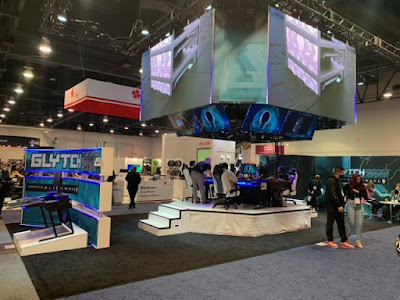
CES 2022: Welcome to the Future

Photo courtesy Karl Strom
For 20 years I attended the Specialty Equipment Market Association (SEMA) trade show in Las Vegas which takes place the first week of November each year. Many of those years I would be on a shuttle or bus and would here someone say, "CES must be in town." SEMA was one of the few shows that rivaled the Consumer Electronics Show when it came to drawing mobs of that size to Vegas. 

CES is the perfect way to kick off a new year. The scale of this show is mind-boggling. Over 2200 exhibitors were on hand this year, with media representatives in the thousands flying in from 159 countries. 

It must have been around 20 or so years ago that the top six companies in the Fortune 500 were automakers and oil companies. How things have changed. Tech companies like Apple, Microsoft, Google and others have become fixtures as the world's leading brands. Ironically, cars are becoming tech companies. Before 1968, when VW introduced the first transistorized, electronically controlled fuel injection system, cars were essentially mechanical devices. 

Photo courtesy Karl Strom
This year's CES showed just how sophisticated technology has become with regards to motor vehicles, autos and trucks. The future was on display in all its forms. 

I asked Karl Strom, editor-in-chief of The Hearing Review, to send me his impressions of this year's CES. Here's a brief summing up that he provided this past weekend.

"The CES conference is like walking into the future. Lots of dazzling displays from the huge corporations like Sony, Panasonic, and Samsung, but also a couple thousand exhibits from established companies to start-ups. My beat is hearing healthcare but it’s difficult not to get sidetracked by the incredible ideas that range from self-driving cars to watering the lawn. There are essentially 3 giant convention halls with one of them being almost completely devoted to fledgling companies and start-ups from all over the world, often grouped by countries or geography. It’s a physically and mentally exhausting event, but fascinating!"

* * * 
TECHNOLOGY touches us in such a wide variety of ways today. Here are some of the categories of products you will find at CES:

Photo: courtesy Karl Strom
Accessibility

Products and services with innovative features that enable ease of use by disabled persons to improve accessibility for seniors and persons with disabilities, regardless of cognitive, mobile, hearing or visual abilities.


Computer Hardware & Components

All desktop and notebook computer systems and internal components, including tablets, e-readers and mobile computing devices.


Computer Peripherals & Accessories

Products designed to connect to and extend the functionality of desktop or portable computer systems or to enable, enhance, connect, power and/or maintain desktop or portable computer systems.


Cybersecurity & Personal Privacy

Products that serve to protect, enhance, manage or analyze digital security. This is a category that has really grown in recent years. Our next war may be a cyber war rather than nuclear.


Digital Imaging/Photography

Products designed to enhance the visual experience and/or allow the user to capture, store and edit still images or video.


Drones & Unmanned Systems

Consumer drones, consumer UAVs and other unmanned systems that are able to fly, or otherwise move and be operated from a remote location. May include secondary features such as photo/video recording, movement of materials, mapping, wayfinding, search/rescue or other capabilities. It even includes agriculture an energy applications. 


Embedded Technologies

Silicon chips and integrated components designed to provide functionality to finished products or subassemblies.


Fitness & Sports

Products designed to test, monitor or analyze the fitness and/or sports performance of an individual. May also include sports apparel and equipment that incorporate sensors or other technology.


Gaming

Products (hardware, software, services) designed to allow one or more users to interact with electronic games.


Headphones & Personal Audio

Devices that allow users to listen to audio content, such as music, radio, video, TV, gaming and/or telephone conversations. The devices may incorporate microphones for user voice response or input and do not have to be designed for use with any specific type of device. 


Health & Wellness

Consumer devices, mobile apps and other technologies designed to monitor and analyze health, support well-being, manage disease or provide a therapeutic benefit.  


High-Performance Home Audio/Video

Separate audio components and speakers that provide for optimal performance and sound reproduction. Items are typically produced in limited quantities and are often handcrafted.


Home Appliances

Products that have a primary function of being used in the home, including major and portable appliances. Products technology may provide home heating and cooling, comfort, aesthetics, convenience, food storage and preparation, and/or cleaning. Products should have significant electronic functionality as a central part of the item’s operation. 


Home Audio/Video Components & Accessories

Systems and/or speakers designed to provide playback, storage and/or distribution of audio and video signals and content in the home, as well as products designed to enable, enhance, connect, and/or maintain home audio/video systems and components. 


In-Vehicle Entertainment & Safety

Products and components designed to be part of an in-vehicle entertainment and information systems.


Mobile Devices & Accessories

Smartphones (iOS and Android) and other mobile handsets. Also includes accessories designed to work with mobile devices, such as cases or chargers. 


Portable Media Players & Accessories

Well as the accessories for enabling, enhancing, connecting, carrying and/or maintaining them.


Robotics

Programmable or otherwise Intelligent machines capable of performing specific tasks or replicating human movement or interactions.


Smart Cities

Products, applications and technologies designed to be incorporated in a smart city, or smart venue, technology ecosystem. Smart cities are designed to improve and enhance the lives of the citizens and businesses who inhabit them.


Smart Home

Products and accessories that provide a home's inhabitants with sophisticated monitoring and control over the building's functions, and/or enable users to maintain a wired or wireless data network. May also include products and software that provide for remote or conditional access.


Photo credit: Greg Bulla. Creative Commons
Software & Mobile Apps

Programs or operating systems meant to be used on a computer system or mobile device, whether being distributed for free or at a cost.


Streaming

Devices, apps or services that allow a user to transmit audio and/or video over a network. Offerings can be free or at a cost.


Sustainability, Eco-Design & Smart Energy

Innovative features incorporated into products that are environmentally-friendly. For example, efficient and clean energy use, manufacturing processes that reduce use of harmful environment substances (e.g., lead, mercury), durability/end of-life (e.g., reuse, refurbish, remanufacture, recycle), resource conservation, facilitate the powering and/or charging of consumer electronic products.


Vehicle Intelligence & Transportation

Automotive and other transportation products and services that integrate technology into the driving or riding experience, whether by enhancing safety, navigation, improving the passenger experience or enabling self-driving functionality.


Video Displays

Devices whose primary purpose is the display of video content, excluding items marketed and sold primarily as computer monitors.


Virtual & Augmented Reality

Products (hardware) designed to provide a virtual or augmented reality experience for one or more users.


Wearable Technologies

Electronic devices worn by the user that may include sensors, processors, displays or other technology for the purpose of sensory enhancement, measurement, computing or data-collection/transmission.

* * * 

So many things go through my mind when I read through this list. Here are few off the cuff, not in order of importance:

In a world where there has been a fair amount of criticism of consumerism, how much of this technology is necessary and how much is luxury? As we become increasingly immersed in technology--from social media to virtual reality to streaming media and interactive games--is there a danger of becoming so removed from nature and the natural world that it will damage our humanity in some way? 

On the question of luxury and necessity, what are our expectations for the future of consumption and natural resources? How does this impact the have nots of our world? 

I personally find all this applied creativity to be a dazzling spectacle. Will the next generation be dazzled or simply take it for granted? 

When I read about the decline in math skills in our country, what impact will this have in the advances and maintenance of all these incredibly complex systems? When everything we own requires technical knowledge in order to fix it, what then? Auto mechanics who wrench engines will not be qualified to fix EVs. Will we have a shortage of qualified people to keep all our cars and toys running?

What does all this say about the jobs of the future? One thing is apparent, there is going to be no end of opportunity for those willing to hit the books and stay abreast of the changes that are coming. In 20 years from now there will be jobs that don't even have a name yet. 

For optimists, this is an amazing time to be coming of age. For pessimists, the future is shrouded in a fog of doom. 

When I was in school there were doomsayers as well. That didn't stop the possibility thinkers. Its probable that a visit to CES will offer ammunition for both camps. As the saying goes, we'll see what happens. 

How many of you who were coming of age in the Sixties could have imagined Bob Dylan or the Rolling Stones still performing concerts in 2021? 

May you stay forever young!

Monday, January 25, 2021

Amazon, Google, Facebook, Apple and Other Finance-Related Anecdotes

I recently received an email that said Amazon sold 20 million items in 1999 and generated an annual revenue of just over $1.6 billion. Two decades later, in 2019 Amazon, sold over 175 million products in a single day (Amazon Prime Day) and the revenue for the year was a whopping $280.5 billion. Said differently, in 2019 Amazon was generating more revenue every two days than it was making in a full year back in 1999.

When Amazon became a publicly traded company in May 1997, you could have bought shares for $1.50. For $150 you could have owned 100 shares of Amazon stock. Currently, the price of Amazon stock (AMZN) is $3,292 per share, but that does not mean your initial 100 shares  ($150) would be worth $329,200. The company had several stock splits while it was in early growth mode and you would actually now have 12 times that amount or nearly four million dollars. 

You don't have $150 to invest in the next Amazon? You probably spent more than that on Amazon Prime in a couple years or your cable bill in a few months or eating out (before Covid).

* * * 

There really aren't that many Amazons, are there? Ummm...  Actually, there are more than you think.

For more on this topic, read my story in the Data Driven Investor on Medium.  It includes an important reminder about risk.

Here is the Friend Link

* * * 

Monday, December 14, 2020

A Visit with Gen X Tech Maven Stephanie White on Life, Investing and More

A couple weeks ago I met someone on an investment forum who has had a most interesting career. Very early in life she acquired a passion for technology and later became a syndicated columnist as The Digital Diva*. Among other things, she currently assists participants at an online investment forum called Data Driven Investor (DDI) on the Seeking Alpha platform. 

EN: Can you briefly outline your career from college to the present? 


Stephanie White: I was just a kid, my parents were hams as a hobby, they would go have field tests, etc.  (Ham radio, or Amateur Radio, brought communications, technology and people together.) I learned Morse code by the age of 6. Once I saw Ritty CW, I was fascinated. How can people communicate over THIS, and then turn it into text over a monitor through an antenna?


Perhaps, after seeing that, I was born, so to speak, on what my true passion would become. Later, I went to college, which was before my graduation year. There is a really long story that goes along with that, as I was the only female in a soldering class and I blew everyone away, as I had been taught by my father when I was young. 


After that, I got a job. That job propelled me into the monster I am. What happened to me later in the next few years were companies trying to steal not only me, but all of us with any experience. It was the tech boom. At age 24 I made more money than my mother ever did in her life, and she was a star in her own right. She is an ace at sales. My mother is another story.


EN: You say that you were a syndicated columnist at some point. For how long and how did you come to take an interest in writing?


SW: One of my clients happened to be a newspaper. There were actually 2, and they merged. One afternoon I brought up the idea to one of the owners. It worked. I was just there repairing a database issue, if I recall. This idea perked the owner up, and then led to me selling blocks of my column to contacts in the industry. You probably know a little something about that, Ed. I cannot say how long the column was written or sold at this time, I apologize. My photo was on it. People were saving paper copies... many got lost after the flood. I never saved a paper copy.


EN: What were you writing about? Was this during the tech boom and post bubble collapse?


SW: No, after. I was writing a technical column. I also had to make the column entertaining at the same time. If I got too technical, my editor’s eyes would glaze over... You never want people’s eyes glazing over, Ed. I would answer people’s questions, from what to do about viruses to how to.... X... I answered them all. For example, a great question was always “My son was on my computer, and now I have all of this malware, help!”.


EN: Managing money is not something we learn about in K-12 unless our parents teach us. How did you come to learn about investing and handling financial assets?


SW: The hard truth is, you have to learn on your own. Most parents were never taught to teach their children. Schools? Does the teacher know how to invest?


EN: Right.


SW: I’m GenX. I know not one that was taught. I did my research. The boomers weren’t either. It’s sad, really. I often believe that it’s due to the fact that the amount of money one had is such a private thing.


EN: For those who do not know what Seeking Alpha is (most of my readers) what is SA and how long have you been involved with. this platform?


SW: Seeking Alpha is a bit of a crowd sourcing area where a lot of authors can share articles as well, and as a marketplace for selling (investment) services. I learn more from comments. 🙂


EN: A little like Medium, except everyone is talking about investing?


SW: Yes. I don’t read Medium, but I read your article. I believe everyone thinks they can get rich quick. That is not how it works.


EN: What is the Data Driven Investor and what prompted you to become involved here as opposed to other investment groups?


SW: I was doing research, and I am tenacious. I happened upon an article Andres** had written. There was no advertising at the time, I just knew I belonged. Andres may not be for everyone, but I knew he was for me.


EN: That is how I feel. I like his efforts to eliminate all the emotional aspects of investing out of the equation.


SW: A stock should never be personal. (unless it’s Apple, haha!)


EN: Can you briefly talk about the way that greed and fear drive the way a lot of people approach investing?


SW: People sell on fear, smart people buy on their fear.


EN: Would intuition be a better word than emotion?

SW: Intuition and gut, always listen to that. Also never look back at a stock you sold. Pointless to look and see what you may have lost. I know I may sound like a hypocrite. DDI buys and sells the same stocks. I believe it is not a great practice to check in between and worry over what you may have missed out on.


EN: What are the biggest mistakes you see people make when it comes to investing?


SW: Selling on fear. Many people go sell when the market is down. They run in fear while the people that expect this to happen have cash waiting to grab up stocks for sale. The greatest portfolios are those that can’t be touched, by the way. 


* White, who has stopped writing her column, is not to be confused with The Digital Diva who is on the radio.  


* * Andrés Cardenal, CFA. Economist, financial analyst, columnist. Naturally flavored. Founder DDI.

The Data Driven Investor may be found on Seeking Alpha in the Marketplace, or simply use the following link; https://seekingalpha.com/checkout?service_id=mp_1180


Wednesday, April 1, 2020

Apple Develops Downloadable Coronavirus Test App for iPhones

Apple® CEO Tim Cook has announced an app for iPhones that enables iPhone® users to self-test for coronavirus. The app enables people to remain in quarantine so they avoid hospitals where they may acquire other infectious diseases.

Self-testers are instructed to obtain a saliva sample using a cotton swab. Apply the saliva sample onto a pane of clear glass, then select iPhoto to photograph the backlit sample. Select the app and results will be displayed in one of two universal symbols: thumbs up or skull and crossbones.

The app is being offered free to all persons with an iPhone and can be downloaded from Apple’s iStore. Currently the app is not compatible with Android phones, but work is underway to resolve this within the month.

“We’re very close on the development of this app for Androids. Unfortunately, there is a glitch in the code that causes Android phones to incorrectly deliver the skull and crossbones symbol one in three times.,” Cook acknowledged.

Conspiracy theories are already being circulated on Twitter. Expect an update on this story next week.

* * * * 

IMPORTANT NOTE: TODAY IS APRIL FOOLS DAY

Apple and iPhone are registered trademarks of the Apple Inc.

Friday, January 17, 2020

Alphabet Now A Trillion Dollar Company

Photo by Dmitry Demidko on Unsplash
It's the strangest thing to me how much a lot of people hate Capitalism when it's been Capitalism that lifted the world out of poverty. The other day I read that for the first time in history more than half the world is middle class or richer. This is a far cry from the days of feudal lords living in castles while the underlings cleared the land of rocks and served as the equivalent of indentured servants. The growth of a massive middle class in the past century is a story seldom celebrated.

The big complaint by employees in many American businesses today is not that they make too little, but that they make too much money so they can't afford to quit the job situations that they dislike. It's the story of golden handcuffs.

Alphabet is now a trillion dollar company, but not the first. Apple became the first in 2018. Followed by Microsoft and Amazon, the company everybody loves to hate.

I'll say this about Amazon. They did not start by selling books. They started by making is EASY to Buy books. To this day, the business is all about making it Easy and also making it Safe.

* * * *

So, what does a Trillion Dollars look like? I've seen visual representations in the past, and this one is exceedingly effective. (I used Google to find it, of course.) Here is what One Trillion Dollars looks like.
* * * *
Here's another way to look at it. If you spent one dollar every second, that would be $86,400 in 24 hours. At that rate you would spend $31.5 million a year. At that rate it would take you more than 32,000 years to spend a trillion.

To put THAT in perspective, the U.S. national debt is currently more than 17 trillion.

You have to wonder what kind of mojo keeps this machinery running.

* * * *

There is certainly a negative for every positive. The more we own, the more we have to manage. (This is also why it is not good to take over other countries, as in Iraq and Afghanistan, but that's another story.)

America has a lot of poverty still, but we also have a lot of wealth. Only wealthy countries can have as many colleges and universities as we do. And as many lawyers, I suppose.

Individually, people own homes and cars and all manner of "toys" like boats and snowmobiles and motorcycles, garages and storage lockers full of junk. And more debt.

The downside of all this wealth (much of which we simply take for granted) is that the more we have, the more we have to lose. Also the more we own the more we have to worry about. Yet, somehow it seems like we're never quite satisfied.

Let's be careful about becoming envious of the billionaires, and assume an attitude of gratitude for what we have. Yes? No?

* * * *
There's more to say, but for now that's already been too much. Have a nice weekend.

Tuesday, July 19, 2016

Are You Protopian, Utopian or Dystopian?

"The Medium is the Massage is... a collide-oscope of interfaced situations." ~Marshall McLuhan

What makes the heart ask so many questions? Inquiring minds want to know.

Paul Gauguin's most famous painting is a series of questions: Where do we come from? What are we? Where are we going?

These are hard questions. These are life's big questions.

As we think about the future, about where our human species is going, many other questions rise into our thoughts.

Will there one day be colonies on Mars?
Will we one day travel to other galaxies?
Will we ever eliminate poverty on earth?
Will ignorance and hate ever be eradicated?
Will there ever be a world peace, with no more wars?
How could that be achieved?

Is the future becoming brighter, darker or more of the same?

Will humans have the necessary skills to manage the future?
Will intelligent machines eventually rule the world?
Will human brains and machines one day be wired?

Will Chinese be the language of the future?
How long will "the American century" last?

Will the virtual grand canyon be so vivid that people stop going to the real one?

Does anyone really know what time it is? Some physicists do not believe time exists.

* * * *

While reading Calum Chace's Surviving A.I. I learned a new word: Protopian.

The word, purportedly coined by Wired editor Kevin Kelly, has been offered up as an alternative to the two other most common descriptors of the future, Dystopian and Utopian. Utopias strike most of us as fictional fantasies beyond the realm of possibility, even for the most dedicated possibility believers. Instead we've spent a lifetime reading books and seeing movies that predict or portray a vast array of Dystopian futures, grisly, grey and grim.  Nothing to look forward to. Nothing to inspire hope.

Kelly offers a way out. Proponents of a Protopian future believe that technology and progress can move the world toward brighter tomorrows, better futures, even if not a perfect future. It gives hope a resting place. It gives us prospects and invites us to contribute toward bringing about that better tomorrow. It's an alternative to "Let's eat, drink and be merry for tomorrow we die."

If I have to choose between these three futures, I'll cast my lot with the Protopians.

* * * *

A portion of my bedtime reading last night included Shawn Dubravac's Digital Destiny: How the New Age of Data Will Transform the Way We Work, Live and Communicate. The Digital Age is very new and its implications only beginning to be recognized. Here are some mind-blowing stats for consideration. These numbers are from 2014.

Every minute....
...204 million email messages were sent;
...Google received over four million search queries;
...2.46 million pieces of content were shared on Facebook;
...277,000 tweets were sent;
...216,000 photos were posted on Instagram;
...48,000 apps were downloaded from Apple's App Store;
...26,380 reviews were posted on Yelp;
...3,472 images were pinned to Pinterest;
...and 72 hours of new videos were uploaded to YouTube.
>>>2025 Update: Currently 720 hours of new video are uploaded to YouTube each minute!

One can only suppose these numbers are even more astonishing today. Here's another set of numbers.

When I attended the Fourth Annual Robert Wright Writers Conference at Mankato State in 1985, I learned that there were 50,000 books being published a year, 2000 fiction and 48,000 non-fiction. Today, with the advent of digital publishing, there are a million books being published a year. Are we better off? Are they better books? Are they more important books?

The positive aspect of that statistic is that more people's voices can now be heard. The new channels of publishing really have given power to the people. For better or for worse.

As for tomorrow.... what will be will be.

Meantime, life goes on all around you. 

Popular Posts