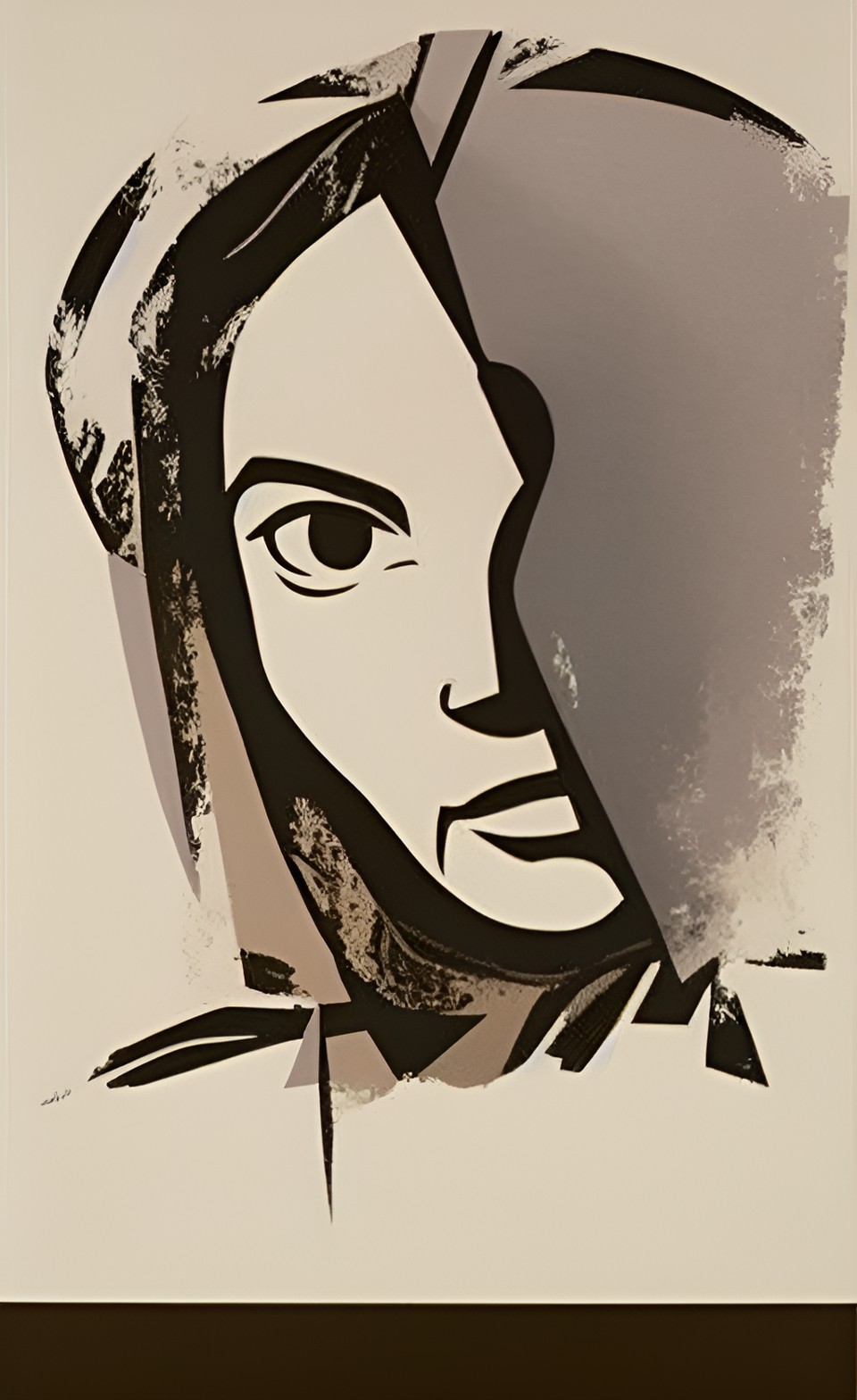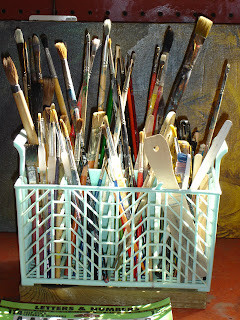
Every trade has its tools, and visual arts is no exception. For drawing I have used a variety of pens, though for more than a decade I favored the Rapid-o-graph with its even lines and
uninterrupted ink flow. If I had more time I would do more with pencils, but they are currently not my strongest suit. Instead, I favor brushes. I simply love the process of applying paint, ink or pigment by means of brushes.
Some of my brushes have been with me since my Ohio University days in the early 7o's. A few have been used so passionately for so long that they are practically nubs.
To the uninitiated a brush is a brush is a brush. But the reality is that brushes vary in type and style because they have different functions. Each applies color or pigment in a different manner, and the brush makes a difference in the outcome. Not only are the styles, sizes and shapes different, but the bristles themselves are made of different materials, from synthetic to camel's hair.
Many brushes are designed for special effects, such as the fan brush or the liner brush. Certain brushes are useful for scrubbing the paint into the canvas and some for laying it on thick, such as the mop brush. (I suppose if you had a really large canvas you might enjoy trying to use a mop itself.)
Some artists are adept at painting with a palette knife, which lays down paints in a thick coat or scrapes off areas for alternative effects.
And
occasionally, the fingertips make a good tool for applying color. I have used my fingertips in many paintings, sometimes to apply the pigment as a woman would apply mascara. And sometimes to spray the paint across the surface for special effects.
Speaking of spraying, I have even used a toothbrush for a few pieces. The stiff bristles make an excellent mechanism for spattering, and even for rubbing it in. I am referring to discarded toothbrushes, not the one I am about to brush my teeth with.
You probably didn't know, though you might have guessed, that the various parts of a brush each have names, from toe, bristles and belly to heel, ferrule (the metal part that holds everything together) and handle. The heel, the portion of the fibers
underneath the ferrule) is not visible. Many of my brushes have had their toes worn off. And a couple have no belly left either. I still love what they can do.
For the record, I love my large paint brushes, too, from my days painting houses and apartments. Maybe some other time I can talk about those dear old friends as well. For the record there is one rule especially important whether working with art brushes or large paint brushes: clean them. You can't ignore this important need. Take the time it takes, don't shortcut this basic maintenance reality. It's like friendship. You just have to give it the time it needs or you will ruin a good thing. Then you'll have to start all over...
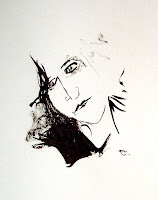
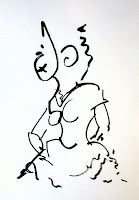
The two images here are ink on paper. I have fallen in love with the way ink works, whether for wet applications or dry brush techniques. And both of these are on the wall at my show this month at The Venue @ Mohaupt, at 2024 West Superior Street here in Duluth. Hope you can make it.