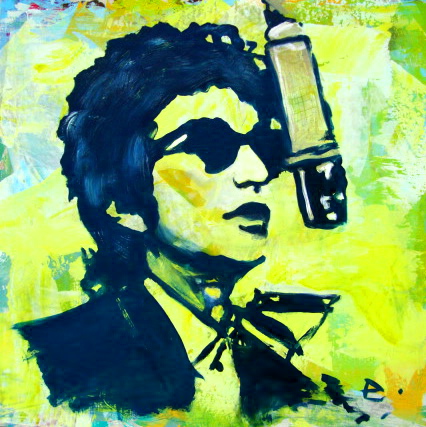
Wednesday, May 30, 2012

Artists Share Experiences From First Year of Phantom Galleries Superior

The first year of Phantom Galleries is officially over. And what a very special year.

As is often the case in life, in order to move forward it is important to look back. For this reason the Superior SPACES team invited all artists involved with the Phantom Galleries Project to gather once more for an informal discussion regarding the effectiveness of this past year’s Phantom Gallery experiences. The aim is to tweak what was clearly a valuable experience to make it even more effective for the local community.

The meeting was held at 1112 Tower Avenue with Tonja Sell's wonderful paintings and sculptures serving as a backdrop for 90 minutes of good dialogue. The purpose of last night's gathering was to seek input from the artists regarding the first year of this important project. I use the word important primarily to express my personal conviction that bringing the arts, the business community, and the wider public together has significant value for the revitalization of communities not only here locally but nationally as well.

Erika Mock moderated the discussion. "I’m so thrilled at how this past year went," she began. The agenda was simply an informal dialogue aimed at discovering what worked and what didn’t.

The observation was made that even though all the Phantom Galleries were within eight blocks of one another here on Tower Avenue, each gallery space was situated in a different neighborhood. That is, the businesses around each space each had a different character.

Kathy McTavish shared how setting up her space adjacent to the Androy Hotel drew people in. "While installing my work I talked to a man who had never been to an art gallery. He helped us set up and got involved."

Screen printer and painter Gary Reed, the famous Phantom of the Gallery at some of the openings, noted that many of the people who saw the art in these spaces would never go to an art museum. Many have never seen an art book or read an art magazine. There is a certain sort of innocence in the manner in which some of the visitors to these spaces approached the art on display there.

Jeredt Runions concurred, adding that this is part of his motivation for having shows in restaurants and other public spaces. Runions brought a copy of Juxtapoz magazine to point out that the theme of the recent May issue had to do with this very thing, art in public spaces. He likewise affirmed the value of public art and shared his experience with the mural project last year which got the community involved in a high profile project. The way the kids responded was a thrill for him.

The Red Interactive show received similar comments. Because people invited to the opening were asked to bring something red (for a collaborative sculpture) and to wear something red, "it made us feel part of it," someone said. 

It was also interesting how the various artists used the spaces in which their works were displayed. Kathy Kollodge held painting classes in the New York Building space. Red Interactive collaborators John Heino and Ed Newman conducted a brown bag lunch discussion that circled around questions regarding art in a post-modern world. John Heino led the discussion, titled "Engagement or Chaos," which sought to get clarification with regard to what art is. Is everything art? Or is art only art after it has been "blessed" by some authority? The dialogue was intended as a starting point for future discussions regarding the relationship of art, commerce and culture.

In 2011 Phantom Galleries Superior (PGS) was one of six Phantom Gallery initiatives in the state of Wisconsin supported by the Wisconsin Arts Board with funds from the state of Wisconsin and the National Endowment for the Arts. PGS is a unique partnership between Superior Public Art Creating Community Environments (SPAC2ES) and Superior Business Improvement District (BID), the property owners, the artists, and the community. Use of properties is generously donated by the owners. Additional support comes from multiple artistic resources, the BID, and the Morgan Fund of the Duluth Superior Area Community Foundation.

"The circle of art includes bringing it to the world," Mock said. It will be interesting to see how it far can go.

Tuesday, May 29, 2012

Five Minutes with Dublin Artist John Nolan

I "met" John Nolan through social media last year Red Interactive art show event hosted by Phantom Galleries Superior. Artists from all over the world participated including Nolan, a Dublin artist whose recent show this past weekend featured a hand-painted guitar called "Rhapsody In Colour" which he created for the Musical Youth Foundation.

All his work seems to be a rhapsody of color and it is my privilege to share him here with you.

EN: What caused you to first take an interest in art? 
John Nolan: My father was a huge influence from an early age. He regularly encouraged me, I watched him painting and we would visit art galleries weekly.

EN: Did you have any formal training? 
JN: Yep, all my formal training was at home with my father. I attended art college later, but dropped out in order to pursue a career in art. Might sound strange but I discovered art college had nothing to do with becoming an artist, It was basically a 3 or 4 year course which qualified the student to teach art and continue the cycle.

EN: How did you come to master your craft? 
JN: Not yet… still striving and struggling.

EN: Many of your paintings have a distinctive look. Do you have a name for your style? 
JN: My style is basically stylized, hugely influenced by Van Gogh, Bernard and Gauguin. Flat colour separated with bold dark delineations. It is called Cloisonnism. The approach is to simplify the composition in order to focus on line and colour. As we know it is more difficult to simplify something than it is to complicate it. Also, all art is derivative. There is nothing original except for perhaps cave paintings.

EN: Who have been your favorite artists over the years? I see homages to Degas and Modigliani. 
JN: My favourite artists are, Modigliani, Matisse, Van Gogh, Degas, Pollock, Rouault, Lichtenstein, Picasso, Irvin, the list is endless.

EN: What’s your favorite subject matter and why? 
JN: My favourite subject is any subject that can push the artistic process even further. At the moment I am exploring the still life subject in conjunction with my Homage Series, trying to contrast my motifs with the great icons of art history in the still life format.

EN: How can people see more of your work? 
JN: Best place to see and buy my work is here at my website. Also, people can visit my studio in Dublin, 106 Griffith Avenue, Drumcondra, Dublin 9, Ireland. The Latest News link on my site will inform people regarding various exhibitions.

* * * * 
Sorry I could not attend your show this past weekend. Thanks for your time. 

Monday, May 28, 2012

This Day In History

Births
Jim Thorpe (126 years ago)
Ian Fleming (104 years ago)
Gladys Knight (68 years ago)

Deaths 
Noah Webster (169 years ago)

Military exercises, World War II
History has always been fascinating to me. It started, I think, when I was in the fourth grade. Years later I would learn that before a certain age children have no concept of time, so they have difficulty grasping stories about history. It makes sense that part of being a young child is wrapped up in "living in the now." Around fourth or fifth grade young minds begin to understand that the past is something back there and the future out ahead of us. 

It was in Miss Morse's fourth grade class at Stafford School that I developed an interest in the Civil War. The chief cause of this fascination was a very large, colorful book (published, I believe, by American Heritage) at the back of the room with maps of every battle. The maps had details of the terrain and showed where the various army battalions were stationed or moving. I remember very little from that year of schooling other than that book at the back of the room, which I visited frequently.

Books of all types are endlessly fascinating, especially biographies and autobiographies. When we read peoples' stories we discover how much we have in common, or how very different our experiences have been.

Chopping onions, Bud Wagner, left.
70 years ago today sugar rationing began in the United States. The war effort was having a major impact on many industries. Sacrifices were being made across the board because something large was at stake. Our young men were now overseas.

In 1999 my father-in-law Wilmer A. "Bud" Wagner published his war memoirs, with notations. Hard to believe it has been 70 years since he was stationed in Ireland, preparing for the North Africa Campaign. Though never a soldier myself I know that the phrase "hurry up and wait" is a common one. The soldiers were assembled, trained and now waiting for marching orders. Many of these men would never see their families again.

Here's an excerpt from Bud's book And There Shall Be Wars. It's an ordinary man's daily observations for three-and-one-half years of service. Wagner was the second man in Northern Minnesota to be drafted into the war. He carried a small pocket camera and kept a diary from beginning to end, from Camp Claiborne to Ireland to North Africa and the Italy Campaigns. His keen day by day observations have been amplified with a lifetime of research and reflection to provide readers with important insights through the eyes of a young soldier from rural Minnesota.

The format of the book is diary entries followed by commentary, designated here by italics.

Wednesday, May 27,1942 
On again this forenoon. Raining on and off. Hurley and I went to Limavady. Got a ride in with an army truck. Went to several places, until 7:30, then we took Nancy and Dorothy to a show, Toppers Return. A fantastic story, but enjoyed the picture. Left the girls at 11:30 and walked to camp. Two letters today.

Dorothy had been staying with Nancy a few days on vacation. They came from Belfast. Both were well-educated, with high standards, and real nice to talk to. Hurley kept in contact with Nancy the whole time we were in Ireland. 

 Irish girls like these two would never think of inviting boyfriends to their apartment after a move. Dorothy and I weren't excited about each other, but I was a good fill-in once in a while, and she gave me a good reason to go to town, instead of just to walk around. 

Thursday, May 28, 1942 
Slept until 9:30. Read a little. Hurley and I were on together this p.m. We hurried through tonight. We each got a pass. I borrowed Don's bike, and we went to Limavady again. We went for a walk with Nancy and Dorothy, across the river and in a park. Dorothy took pictures. She can get film. We just talked a lot, and I had a Time magazine that we discussed. We walked back again. To camp at midnight.

Friday, May 29, 1942 
Didn't get to sleep until 1:30. Hurley overslept. I really had to move on the double to get breakfast out on time. We had fried potatoes, French toast, braised beef for dinner. Off this p.m. Had to load all our things, the kitchen truck and leave the kitchen and our hut real clean. Hurley wanted me to go with him to Limavady again, but lucky for me, no passes were given out. I'm just getting tired out.

* * * * *
This matter-of-fact style of daily notation becomes quite dramatic once the war kicks into high gear. Here's a portion of a letter from retired General John W. Vessey, former head of the Joint Chiefs of Staff. Vessey received orders of his promotion to captain while in Bud's jeep, his first bump toward the top.

"Dear Bud, ... Thanks not only for the copy of the book, but also for putting those wartime notes into a permanent record. It is an important addition to all the "stuff" historians record. I couldn't put the book down once I got into it. It brought back a lot of memories reading about times, places, and people from 55+ years ago."

And There Shall Be Wars is available at Savage Press. Wagner will soon be 93. His service to his country will be remembered.  

Photos by Wilmer Wagner. Click images to enlarge.

Sunday, May 27, 2012

Eight Minutes with Richard Hansen and the DuSu Film Festival

It’s certainly exciting how much percolation is taking place here in the music and arts scene, including theater and dance. In the realm of film we also have something very special going on, Duluth Superior Film Festival which kicks off this week. If you can be part of it, it will be time and money well invested. This year the price for an all-access pass is only $20, an astounding value considering all that is being offered in film and music.

A principle force behind the DuSu Film Festival is Richard Hansen, a Duluth newbie who has fallen in love with the town and all it offers. 

EN: What’s your title and role with Sound Unseen and the Duluth Superior Film Festival?
Richard Hansen: I am the Director and Founder of The Duluth Superior Film Festival. Up until about 2 months ago I was Director of Sound Unseen-Minneapolis and Sound Unseen International Duluth. I have resigned my position with Sound Unseen and have renamed Sound Unseen International Duluth to The Duluth Superior Film Festival.
EN: How did you become interested in film?
Wildrose
RH: I made a short VHS Video in a Comm Arts class in high school which won second place in the WI State HS Video Competition. Never thinking that anyone could actually find a job working with film, I started college looking for a business degree, which became a BA in Communication and Political Science. Post college, I worked for the Clinton Campaign and kicked around until I landed in Minneapolis where I became the Film Curator at Red Eye Collaboration. I discovered The U Film Society, then MN Film Arts and The Minneapolis St. Paul Film Festival, started working for those organizations... learned and connected my way into becoming the Director of Sound Unseen in 2007. I started Sound Unseen International Duluth in 2010 and now The Duluth Superior Film Festival for the coming spring of 2012.

EN: How does film differ from other forms of art and art making?
RH: It's tricky for me to say because I've never really considered myself an artist. I've always been the Arts Administrator guy. Administrating art feels pretty similar to me across the board.  
When I hear artists and filmmakers discuss this, they usually say the collaborative effort required to make films is significantly different from making 'traditional' (I'm not even sure what that means, really) art. I hang around enough artists and filmmakers to know that's probably true.

EN: What prompted you to link arms with these other young men to form the PROVE Collective?  And what is your title in the group?
RH: I banged around art galleries for fun while living in Minneapolis, and had quite a few gallery owners as friends. When I moved to Duluth I wanted to see if there was that type of arts vibe around and I wanted to include more art into the Film/Music/Art slogan of the film festival. Right before last year's festival I met Steve Read who invited me to come to the European Bakery art shows.  I was really impressed with the level of organization of this pop-up exhibition, but more importantly was blown away by the quality of the work.  Steve and I just stayed in touch, I met all the other guys, Steve found the space, we concluded to take a shot at this gallery thing, we made the presentation to The Sons Of Norway Board Of Directors, they bit, we handed over some rent and started fixing the place up.  

Again, I am the group's Administrator, as I cannot make art nor know how to use a radial arm saw... but my title is Co-Founder with Steve Read, Nick Monson, Anthony Zappa, and Justin Iverson.

EN: I believe this is your third year for the Film Festival. What prompted you to change the name? 
RH: If you count the first two years of Sound Unseen, then yes, this is the 3rd year. Changing the name came as a result of some very solid feedback from friends and people I respect who told me there was a bit of a 'Minneapolis coming up to Duluth to show us how to have fun' vibe around Sound Unseen. After moving here, I completely understand this sentiment and the level of pride the Twin Ports has in its own music and art scene. I hated feeling like a carpetbagger, so it became a bit of a no-brainer to name the event after the region.  Not only does it give the festival a regional pride, but it also pays tribute to what's happening here.  


King Kurling was billed as best Norwegian comedy of the year.
EN: What’s on the docket for this year?
RH: Part of changing the name of the festival was also to put some of the focus on films that are made right around the region.  Just about every film will have some sort of regional influence to it. The great part about it is that there was so much to choose from.  There are a half a dozen films that are working their way around the film festival circuit and having tremendous success that have been made in MN or WI.  I have 2 MN-made World Premieres, a pair of archived films from internationally celebrated filmmaker John Hanson (Wildrose & Northern Lights) who makes his home in Bayfield, WI as well as some fun stuff shot in the area from the recent past. We still have our slate of international festival hits... most notably our Opening Night Film-KING CURLING, and a great line up of groovy music acts at Duluth Tycoons, but it's nice to put the focus of DSFF on the filmmakers who do their work right in our backyard.
EN: For more information about the film festival and how to get tickets, visit:

facebook.com/dusuff
 
Hope to see you at some of the events.

Saturday, May 26, 2012

Uprooted: A Story of Estonia (Part VIII)

This story is based on a true account of events that occurred in Eastern Europe from 1939 to 1944. For narrative purposes the time frame of these events has been condensed without — this writer believes — violating the spirit of that time.

Arrival of the Nazis

The tension was continuous those two years of hell during the Soviet occupation. Though the Western powers never recognized Soviet authority over the Baltic states, the peoples themselves were powerless to do anything about it; so, too, the rest of Europe. While the German Reich flexed its muscles, the United States remained neutral, and watched from an idle distance.

In the summer of 1941 Hitler made Stalin his target and sent the German army marching East. Once again the people of the Baltics were subjugated by a new regime, a new landlord with new rules. The initial response by many was jubilation. The Nazis were liberators. The dark cloud of Soviet oppression had been lifted. But this sentiment was not shared by all.

In June, when the Soviet army retreated, so too did many of Estonia's Jewish families. Ralph might not have noticed except that a co-worker named Leo failed to show up for his shift at the brewery. The following day his absence began to cause a stir. When Ralph sought details he obtained the curt reply, "He's Jewish"

No question things had changed. There was no more fear of midnight raids to fill the plundered ranks of Red Army. There were no more visits by secret police whisking away agitators or accused enemies of the state. At least not initially. Eventually the Germans began pillaging goods for the war effort, but it was not very long before the rumors of executions were being circulated.

One weekend in early Ralph had gone to his Uncle Andre's to see family and to get away. While returning to the train station late Sunday evening he was startled by gunfire just beyond a small stretch of trees near the river. He feared missing the train but as the trains were often late he went to explore, creeping up to an embankment covered with brush. Below he saw German soldiers hastily shoveling dirt onto a line of bodies in shallow graves. An officer watched and Ralph slipped back and away, his heart sick with fear and confusion.

The next day, when he told his mother what he had seen, she replied, "They were Jews." Ralph then understood why Leo's family had fled.

As he listened for news from the BBC, a pinpoint of illumination began to pierce him in a strange new way. Despite his homeland's respite from the horrors of Stalinist oppression, these liberators were not heroes. This world as he understood it was very broken. And the freedom he had known only a few short years previous now seemed a lifetime ago.

CONTINUED

Friday, May 25, 2012

Blood on the Tracks Express Has Something For Everyone

The Freelwheelers filled the American Legion dance floor with rockin' renditions of Dylan favorites. There were plenty of smiles to go around.
I was told that I really shouldn't miss the last night's Blood on the Tracks Express, and I didn't. What a great capstone to a great week of events here in the North Country where Dylan's birthday was celebrated by fans young and old alike. Yesterday Bob turned 71.

The train boarded at Fitgers Brewery Complex at 5:30, departing promptly at 6:00 p.m. for Two Harbors. Six bands or all stripes performed on the way up and back on the train and at the American Legion once stopped at the other end of the line.

There were far more rail cars than I expected, perhaps eight or more. Two styles of performance took place. At one end of the train there were acoustic musicians like Sarah Krueger and Jim Hall. At the other end Dirty Horse and the Black-eyed Snakes took the crowd away and back. The Bitter Spills and Silverback Colony also performed, with the heart of the night being devoted to a fantastic set by the Freelwheelers (a.k.a. the Boomchucks) at the Legion. 

John Bushey never ceases to amaze.
Highlights for myself included being able to do a few harmonica riffs with Jim Hall and seeing John Bushey dazzled friends and fans with a bit of mind-befuddling magic along the way, including what must be a favorite, Little Bunny's Card Trick. Most know Bushey as host of KUMD's Highway 61 Revisited radio program, which airs Saturday evenings on 103.3 here in Duluth and re-airs Mondays at five, but he is also a well-known professional magician. Interestingly enough, I learned last Sunday night at the Dylan trivia competition that Dylan once said if he could go back and time to see one event it would be to see Harry Houdini perform his famous underwater escape at New York's East River. My guess is that Bushy, too, would have loved the opportunity to see Houdini perform.

As for the music, it was top-notch all around, though Alan Sparhawk's Black-eyed Snakes took the crammed front car to the limits of capacity and borderline insanity before it was all over. Lots of wriggling and writhing in that jammin' little space. 

If you've still got the gumption for more, head up to Hibbing for the weekend where Dylan Days is underway. Here's the page where you'll want to begin.

And if you're not heading north, there's still plenty happening here in the Twin Ports. The Ochre Ghost Gallery is having an opening with details at their Facebook page. Also, at Teatro Zuccone there is another night of local writers reading Zenith City Tales. $5 will get you a seat for something that promises to be exceedingly satisfying, thought provoking and entertaining. On Sunday there is the traditional Battle of the Jug Bands at Amazing Grace, with a pre-Battle evening of jugband music Saturday night.

In short, you just might want to get out this weekend and drink in some music an entertainment. Have a good time... and enjoy.

Thursday, May 24, 2012

Dylan's Influence Continues As He Celebrates 71 Years Today

In case you haven't noticed, this week is Dylan Fest here in the North Country. Events have been varied, but there's been one constant: music throughout. Tonightlocal Dylan fans will be boarding the Blood on the Tracks Express for a whole night of music on a North Shore adventure with live music by Black Eyed Snakes, Dirty Horse, Sarah Krueger, Silverback Colony, The Freewheelers, The Bitter Spills and Jim Hall. I think six or more people asked if I was going to be on the train, and the answer this year has to be yes.

The Wave in today's DNT has details on where to board, and when you'll be returning.

* * *

Today Robert Allen Zimmerman, whom the world knows as Bob Dylan, has turned 71. For this reason I take one more blog moment to tip my hat to a man whose songs have been been a part of our culture in ways we don't even see.

Time does not permit a fully elaborated essay on Dylan's influence, as countless books and millions of words have failed to fully reflect the man, the meaning of his life or simply the meanings of his songs. Just for the fun of it you should visit one of the many "song meanings" forums and see the discussions there on songs like All Along the Watchtower, Changing of the Guard and Ballad of a Thin Man.

At the panel discussion Monday regarding The Dylan Effect, I noted that his influence has been something akin to the influence on fashion of the Paris Runway. Very few of us have ever been there but, as Meryl Streep points out in The Devil Wears Prada, all of us are wearing echoes of what emerges there. In the same way, the songs that emerged from Dylan's pen have permeated our culture for more than a generation.

What a contrast between Dylan and the culture he was swimming in. In 1965 he wrote/produced the visceral "Like a Rolling Stone" with its audacious venom and pointed social commentary. Who out there even considered writing songs like that?

"You used to be so amused
At Napolean in rags and the language that he used
Go to him now, he calls you, you can’t refuse
When you ain’t got nothin’ you ain’t got nothin’ to lose,
You're invisible now, you got no secrets to conceal....
 How does it feel?"

This was so raw, nevertheless it did reach number 29 on the pop charts for the year. Ahead of this we find songs like The Game of Love, Help Me Rhonda, Hang On Sloopy, Mrs. Brown You’ve Got a Lovely Daughter, This Diamond Ring, I’m Henry the 8th I Am and Wooly Bully, all of which were higher on the Top 100 that year.

This is not a slam at lighthearted cheerfulness and silly love songs. There's a place for all that. But there was a lot of pain happening in the hearts of adolescents who were confused by the violence in our culture that stood at odds with all those smiling faces on the tube and on billboards and in pop music. Dylan the wet blanket was a breath of fresh air for many of us. Someone was out there expressing the inner turbulence we were feeling as we saw brutality against blacks on our TVs, a war that made no sense in Viet Nam, actual footage of our own president being assassinated and the accused gunman being shot to death on live television...

Dylan spoke a different language at the time. His roots had stretched deep into all kinds of musical traditions and he wove them together in a new way, a manner we can only call Dylanesque. 

Who but Dylan could write a song like "Ballad of a Thin Man" with its pensive, "Something's happening, but you don't know what it is, do you Mr. Jones." And it isn't just the lyrics but that snakebite manner in which they're delivered.

A year later, Stephen Stills would open one of his own songs with these words, "Something's happening here, what it is ain't exactly clear." (For What It’s Worth)  A nod to Dylan? Maybe. John Lennon's is more direct, of the dots you connect. Cut two, side three on the Beatles' White Album is Yer Blues:

"The eagle picks my eye
The worm he licks my bones
I feel so suicidal
Just like Dylan's Mr. Jones."

Dylan's songs do not always carry this volume of weight. There's tenderness, there's reflection, there's challenge, there's airiness and there's continuous food for thought and for the soul. But at that time, when many of us were in need of a lament, he put it in words that captured something ethereal and simultaneously universal, the alienation and angst many of us famously felt yet had no idea that we were not alone. Isolated as we were, we discovered that we were in this thing together. 

A song like "It's All Right Ma (I'm Only Bleeding)" sounds dreadfully harsh to one generation, but so liberating to another because it shoves aside the fog and illuminates dark squirmy things usually hidden under rotted timbers. It caught our attention and spoke volumes. From then till now, we've been together through life.

See you on the train.

Paintings on this website by Ed Newman unless otherwise noted.

Popular Posts