Showing posts with label Eric Dubnicka. Show all posts

Monday, February 18, 2019

Local Art Seen: Eric Dubnicka is on the Move


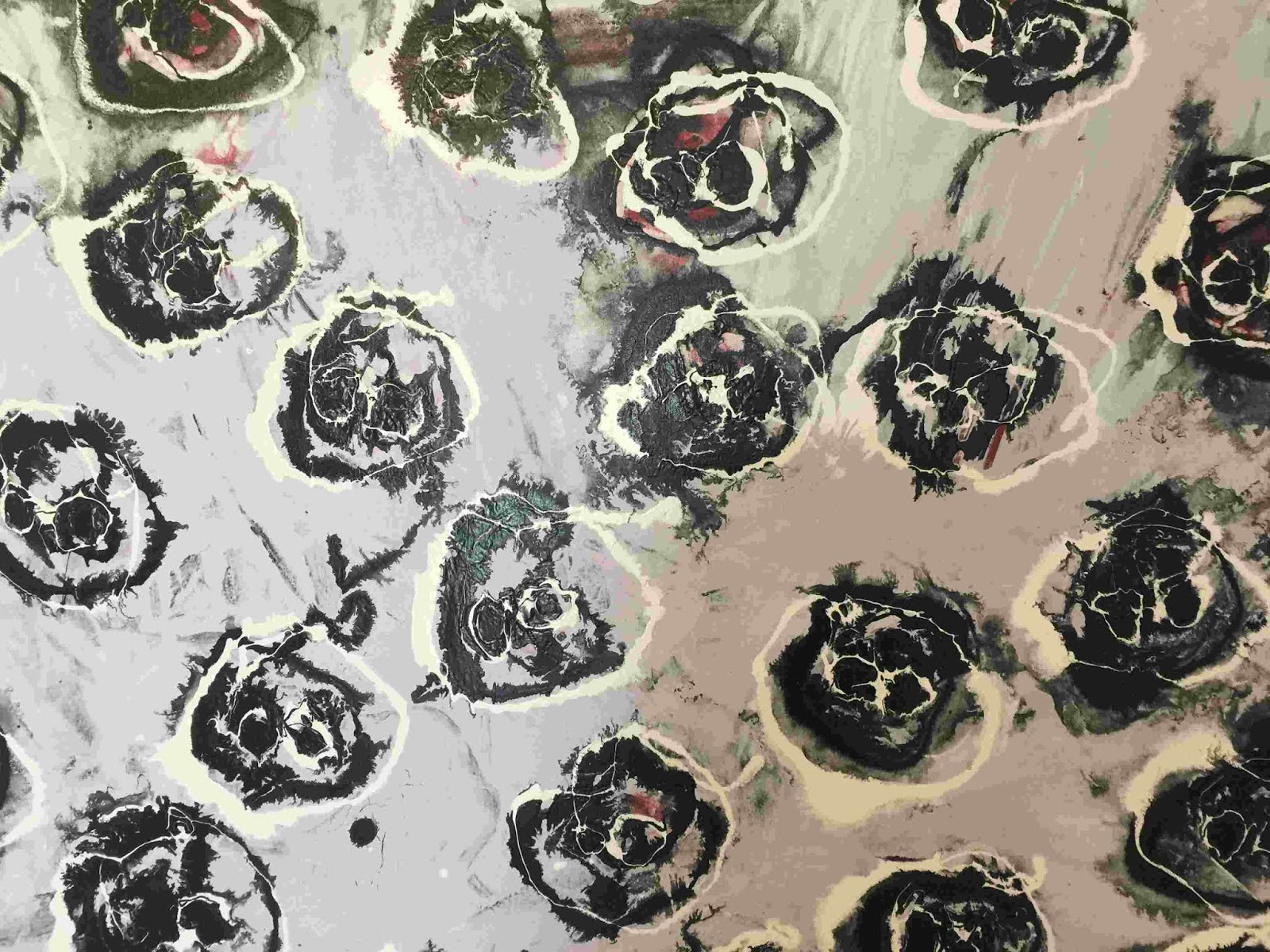
For many of us, Eric Dubnicka has developed a signature style as recognizable as a fingerprint. The textures, color selection and imagery are readily identifiable. This weekend he opened his house for a fire sale of sorts, as he is now leaving the region. Over the next several weeks he will be wrapping up here. It's my understanding that if you are interested in purchasing something, the doors are still open. Give him a shout to check things out.


FWIW Department
Spring Classes at the Duluth Art Institute are beginning this weekend. Instructors include Patricia Canelake, Bill Wise, Erin Endsley, Ann Price, Peter Prudhomme, Matt Kania, Erika Mock and others.
Visit the DAI Website for contact information.

Have a great week. 

Wednesday, August 29, 2018

Eric Dubnicka: "Learning My True Art Work"

Monday I had an opportunity to visit the home and studio of Eric Dubnicka, local artist and former curator at the Tweed Museum of Art. The conservation swept over a wide swath of topics from work-life balance to the current state of the Duluth arts scene.

Dubnicka is the kind of artist who subscribes to the idealist maxim, "If I only had five dollars left I would buy art supplies before food."

He made observations about . some of the changes taking place as the local art scene undergoes a generational shift. He himself has been greatly appreciating the older (75+) makers who have been singularly dedicated to their craft like Jerry Ott and Pat Joyelle. At another point he also expressed concern about artist's tendency to play it safe and the resultant loss of spontaneity. Other topics included concerns about patronage (or lack of) for the arts and the financial challenges artists face.

A question we also explored was the matter of permanence. Institutions and collectors look for art that will last because it is an investment. This devalues temporary art and pop-up shows that are intentionally temporary yet beautiful, Dubnicka's two-hour pop-up show on the Summer Solstice being an example of this stripe.

The conversation wove in and out amongst many other themes. To retrieve them you will have to find that fly on the wall and see if she/he had a tape recorder.

What follows are a variety of images from my two-hour visit. You will note a several recurring themes including fascinations with symmetry and textture. The layered wire work has become his latest exploration.

* * * *

On the beach... front page of the DNT.
Am looking forward to my next studio tour. 
What have you been working on these days?

Meantime, art goes on all around you. Get into it.

Monday, May 7, 2018

Local Art Seen: Homegrown Illustration Show at The Prøve

This being the 20th Anniversary of Duluth's Homegrown Music Festival, the Prøve Collective assembled a special Illustration Show to commemorate the occasion. The show featured illustrations of 20 cultural lluminaries from the region dressed in the Homegrown Chicken mascot, as envisioned and created by 20 different local artists. It was a way of honoring individuals who have contributed to  making Homegrown a success and the regional arts scene vibrant.

The Prøve chose artists from a variety of sectors--teen, emergent, established--with an opening reception on Friday April 27 to kickoff the 2018 Homegrown. The show will remain on view through May 18. The Illustration Show is a first-time collaboration with the Duluth Art Institute. who also shares a common mission to engage the community through contemporary art.

There were 20 artists and thus 20 illustrations. Each was presented with a quality paper of the same size and instructed to produce a piece in any medium. The pieces were then affixed in idential displays with borders created to showcase the art.

The show took place the same evening as the 2018 Goin' Postal Spring Art Show in Superior, so I had to capture these images earlier in the evening. Here's some of what I saw.

Chris Monroe

Brian Ring

Eric Dubnicka

Jillian Dollars

by Erica Pauline
Nelson on Nelson
by Moira Villiard
And last but not least...
Illustration by Devon O'Shaunnessey
Maybe our former mayor can start a Homegrown in D.C.
and make America great again through art and music.
Stay current on all PROVE Shows at ProveGallery.com
* * * *
With Homegrown in the rear-view mirror, where objects are closer than they appear, it's time to look forward to the next big fest which includes still more music, art, poetry and all things Dylan. For more information visit BobDylanWay.com


Meantime, art goes on all around you. Get into it.

Friday, July 14, 2017

Local Artist Eric Dubnicka's New Directions

The cig is a prop. Eric doesn't smoke.
I first noticed Eric Dubnicka's work in 2012, I believe, at a joint show called Cahoots. I've been following his work ever since.

When Russ Gran passed away recently, it was Dubnicka and a friend who stepped up to curate a show of Gran's paintings at an event designed to honor the long-time resident of Washington Studios on the Hillside. Having crossed paths a few times recently made me wish to share more of Eric's story as well as some of the new work he has been doing.

EN: How did you come to take up art as a career?

Eric Dubnicka: I followed the cliched Robert Frost-ian path less traveled. From a small town in NW Wisconsin, being an artist was never a career option and frankly I made attempts to avoid it so as to not muddy up my options... that is until I began failing out of the local college due to the lack of structure. Attempting to avoid a life at the local farm implement business where I worked, I took art classes because I knew I could get A's in attempts to raise my GPA above the 0.81 and 1.80, respectively, of my first two semesters. Don Ruedy was the long time art professor there and he immediately took me under his wing. I was young, untrained, and as is the case with most young male artists, I used my painting substrates as a punching bag for my angst.

Technically my first exhibit was in 1994, but still believing it was not a career option, I ended up in a Wildlife Biology program and subsequently moved to Juneau, AK to run a crew of data collectors on week-long data collecting missions for the Forestry Sciences Lab, a branch of the Forest Service. A close friend and mentor there eventually encouraged me to take a couple of art classes at the local college and he and my two instructors heavily pushed me to attend an art school. Defiant, I did a stint at a brown bear sanctuary in remote SE Alaska before a serendipitous series of events landed me at the College of Visual Arts in St. Paul, MN. It was there I knew I was on the right path and with my kind of people. After graduating I chased a gal to Duluth in 2002 and began making and showing paintings, sculpture and photography and through a long and winding path am still here making and exhibiting, being mentored and mentoring, and curating the occasional show or two. Is that a career? I dunno, but it's my life and I love it. I'm an artist and maker, love other artists and makers and if I don't make a dime doing it, I'm content with that. Making and creating is my lifelong marathon.

EN: You spent ten years at the Tweed. What were the highlights of that experience?

"untitled(connected/grounded series)", acrylic
and latex paint, ink on paper, 22x30"
ED: My time at the Tweed was a remarkable learning experience and critical to my development as an artist. I began there naive, uneducated and driven and though I still could be accused of that, I learned process, materials, teamwork and the business of art. It was like a ten year long masters program. I was allowed to use my ability to visualize space to design unique and creative exhibitions as well as the opportunity to research and curate many exhibitions. The greatest highlight of my tenure there was meeting an incredibly wide spectrum of artists, art enthusiasts and art geeks, many which I'm still in contact with.

EN: Tell us about the Tweed collection and what makes it so special?

"The Moment Two Opposing Views Meet in Understanding"
birch, 28x6x4"
ED: The collection of the Tweed Museum of Art is a real regional gem. The George Tweed's collecting practices of buying works they enjoyed as well as being part of a subscription-like art dealing service in the early 20th century created a unique base of Barbizon and other late 19th century artworks to start the collection from. With time, shifting influences and the generosity of many patrons, the collection has grown to well over 13,000 objects ranging from Glen Nelson ceramics to contemporary South American photography to the late Dick Nelson's gift of Native American baskets to name a few. As a collecting institution it is uniquely positioned to capture a sense of Twin Ports visual artistry on a chronological level, as well as the ability to offer nationally known artworks to our local audience.

EN: There is a lot of talent here in the Twin Ports and a lot of really fine work being produced. How is it that there are so many artists here?

"untitled", plaster, metal strap, aluminum wire, 8x8x12"
ED: It's the perfect storm of the right people, circumstance and all with a bit of a chip on the shoulder. In a nutshell, the Twin Ports art scene is a unique phenomenon driven by a long history of arts patronage originally driven by early 20th century wealth, supported by a robust art and visiting artists program at UMD in the 60s and 70s, and has a new found renaissance in the transition of Duluth's economy from the ending of the blue collar age to an economy driven by the beautiful natural resources surrounding us. Through it all there has been an influx of motivated individuals, diverse pool of talent, an eager and open-minded audience and fortunately venues that offer the opportunity to display a wide variety of artwork. I call us all one big dysfunctional family, although it has or quickly will outgrow that moniker with all the new talent moving to or developing in this area. The greatest strength the community has is artists supporting artists.

EN: What's missing that might help the arts move to yet a higher level?

ED: Expanded patronage and broader community support. We're slowly moving culturally to understanding the impact that artists have on the economy; progress is slow but steady. There are large areas of untapped patronage, grants and business opportunities that could greatly benefit artists, the communities and the overall region if properly done. I site two examples, look at the impact one small motivated group did to create the Lincoln Park arts district. The energy there is amazing and it's just begun. And secondly, the mountain bike group COGGS has raised hundreds of thousands through fundraising and grants, now with city tax money support to create the Traverse Trail and others. A small motivated group can make big changes in this area, and as artists we're actually a very large contingent of business owners and nonprofits, and as that coalesces so too I'm hoping that momentum carries into long term broad support of the Duluth Art Institute as well as local galleries and public arts programming.

EN: What are you working on now?

"bird series", cedar and rock
ED: After a number of years of deadline after exhibition deadline, personally and at the Museum, I've refocused my efforts on painting and drawing and reestablishing a tempo in life that's sustainable, while also attempting to broaden my reach regionally. Currently my artworks are focused on the energy that exists and interacts between two people, which has been a fun challenge to conceptualize. One current piece examines the space within a hollow core door that was kicked in during a domestic dispute. A series I currently exhibited are paintings of ephemeral core bodies with a carved sculptural element demonstrating the connection between them. I'm fascinated by that energy flow and impact we have on each other, knowingly or otherwise. Beyond that I've been working on similar concepts but in wood and other sculptural materials as well has having a little fun carving abstracted birds and developing public art proposals.

* * * *

You can see why Eric Dubnicka is one of our local artists whose work I follow, and enjoy sharing. Thanks, Eric, for taking time to share yourself here.

See more of Eric's work at www.ericdubnicka.com/

* * * *
Tonight at 5:00 p.m. is the opening reception for the Plein Air Duluth festival that has been taking place this week around the region. The work will be on display at Blacklist Artisan Ales downtown and remain on view through August.

Meantime, art goes on all around us. Engage it. And have a great weekend.

Sunday, December 28, 2014

Year in Review: Artist Interviews 2014 -- January thru June

Inside the studio of Eric Dubnicka
Another year is coming to a close. Everywhere you look there are magazines touting the top news stories of 2014, top people, most important events and all the rest. In keeping with previous years I like to summarize the artist interviews I've had the privilege of sharing. Bring your laptop to the fireside and curl up with your favorite libation. Here are some of the interesting people I've enjoyed getting to know a little better in 2014.

Karen Sunderman of the Playlist.

Local painter Adam Swanson has gained increased visibility this year.

Eric Dubnicka remains productive.

Here's part one of Teresa Kolar's two-part interview, which continues here.

"Stewardship" by Marian Lansky
Marian Lansky continues to impress.

Sarah Riley discussed the value of art in therapy.

Karen Owsley Nease brought her vision to the North Country this year.

Andrea Boyadjis also shared insights about art therapy and its importance.

EJ Arnold's background is apparent in his drawings.

Painter/sculptor Erik Pearson completed a new mural in Superior.

Kathy McTavish broke new ground with her multi-media expressions.

Joel Moline shared the secrets of printmaking with four other artists in May including Cecelia Lieder and Joel Cooper.

The Sister Mary Charles exhibit that Peter Spooner curated was a highlight of the Tweed this year.
(Here's the second half of the Spooner interview.)

Performer Gretchen Seichrist talked about her painting, her gallery and her music.


Teresa Kolar, inspired by horses.

Tuesday, February 11, 2014

Five Minutes with Local Artist Eric Dubnicka

I'm not sure when I first noticed Eric Dubnicka's art, but I remember well when I first noticed the strength of his work in a show at the Duluth Art Institute titled In Cahoots, a collection of collaborative pieces in conjunction with Jeremy Schock. At the time, fall 2012, he was laying down some stimulating images.

Dubnicka has played an active role in the local Twin Ports arts community, formerly associated with the Washington Studios and now affiliated with the Tweed Museum.

Instinct Gallery in Minneapolis started its new year with Still the Sky on Saturday January 25, running until March 15 and featuring 8 artists including the Tweed’s own Eric Dubnicka. Dubnicka took time to explain in more detail the ideas behind his art.

EN: So, what is Eric Dubnicka’s art all about?

Eric Dubnicka: I'm an easily distracted problem solver by nature, so making problems to solve with the tools that are in front of me in the moment is the backbone of my creative process. I enjoy experimenting with new processes. It is also why I tend to work serially. I'll set up parameters such as, I have fifty pieces of blue matboard, a few supplies and an hour. Go! Or, I'll manipulate a lens so that I have to determine the best way to use it so that I may get the aesthetically strongest work from it. Or even the act of working reductively in whatever sculptural medium is an enjoyable challenge, deconstructively building a form to achieve some unknown aesthetic goal. I'm always thinking or tinkering and wondering, "how can I make this medium work for me?" The reality is 99% of that effort is never seen, as there are failures around every corner, but I believe as a maker of things I'm better off working in a quantity over quality model, allowing the stronger works to percolate to the top. I'm not an artist to be efficient, I'm an artist because I have a need to create. Nothing is sacred.

EN: What is it about “ugliness” that interests you (as an artist) and why?

ED: The human condition harbors unending content, particularly the ugliness in us that stems from greed, jealousy and societal pressure. It intrigues me the length to which we harm ourselves and those around us with selfish intentions, subconscious or otherwise, and I can't help but to observe it on a daily basis. I find drawing this pain, making a mockery of situations I've witnessed, brings a dark humor to it and makes it a little less depressing. My challenge then through mark-making is to get the viewer's attention with the initial impact of a piece then draw them in so they will begin to see the marks, the paint strokes, pouring and the interaction of materials which all can really be quite stunning.

EN: What did the College of Visual Arts teach you that would be absent in your life had you never had that experience?

ED: First, the loss of the College of Visual Arts in St.Paul, MN last year will have an unending negative impact on Minnesota arts and culture, and sadly its closing was avoidable. As a school it created a home where creative misfits of society could find comfort and acceptance. With a strong adjunct faculty of working artists and wide cross-section of humanity attending, nothing was out of bounds. I could make a realistic graphite drawing of an apple in one class and the next use deer intestines to make a landscape. Besides acceptance and giving relevance of any and all artwork, what they taught was: learn the rules first, then break them. Because of that, strong aesthetics, using the basics such as color, composition, etc. run through my work. And finally, I learned the importance of critique and how to accept critique. It's critical to any artist who wants to be looked at as a professional in any media to be able to articulate their work as well as give and receive input.

EN: Tell us about your current show.

Dubnicka's Studio
ED: John Schuerman, artist and curator, opened the Instinct Gallery in downtown Minneapolis last fall. He has shown a number of group exhibitions since then and I was asked to be involved in this show Still the Sky which opened January 25th. I have a selection of small figurative works in the show that's best described in John's words: For us city-dwellers there is still the sky, we just look up and there it is. We can easily forget the vastness of the universe and get caught up in our human accoutrements which seem vast and perhaps consumptive of the natural environment. This “Big Sky/Little Man” exhibition recalibrates the natural/human-made lens through which we see the world. Here, sweeping skies above plains of the earth and vast environments are tugged upon by the many, minute people.

EN: What’s your role at the Tweed and what impact has it made on your development as an artist.

ED: Though wide and varied, my primary role is as Preparator. I prep for and install the exhibitions as well as oversee collection care. Besides being privileged to see the many art objects behind the scenes, I've had an opportunity to gain appreciation for artworks that I never would have thought to seek out. Additionally, I've met many artists and art-types and it's reassuring to meet these folks who also quietly slog away in the studio. It's funny, we tend to have an immediate rapport, regardless of age or background. I've met many kindred spirits and fellow dreamers.


Follow this link to see more work by Eric Dubnicka.

Popular Posts