Showing posts with label Grant. Show all posts

Monday, September 15, 2025

Lucius Quinctius Cincinnatus: The Roman Ideal of Civic Virtue

The significance of George Washington's inspirational career can't 
be overstated. As the first U.S. President, Washington lead the nation’s formation, setting an example for governance, and commanding the Continental Army to victory in the Revolutionary War, thereby securing independence from Britain. He was self-aware regarding his preeminent leadership position in that he knew he was setting precedents in nearly every decision he made. One of his most consequential was establishing a tradition when he chose to relinquish power rather than maintain it after his second term as president. 

Where this idea stem from? From the prominent Roman statesman, consul and twice-appointed dictator Lucius Quinctius Cincinnatus (c. 519–c. 430 BCE). Cincinnatus is celebrated in Roman tradition as a model of selfless leadership, humility, and devotion to the republic over personal power.


Cincinnatus lived during a turbulent period shortly after the overthrow of Rome's monarchy in 509 BCE, when the young republic faced threats from neighboring Italic tribes like the Aequi and Volsci. As an upper-crust aristocrat, he served as consul in 460 BCE but later retired to a modest farm following financial hardships (possibly due to the death of his son Caeso in exile). 


His legendary story centers on his appointment as dictator in 458 BCE during a military crisis. A Roman consular army, led by Lucius Minucius Esquilinus Augurinus, was trapped and besieged by the Aequi on Mount Algidus near Rome. With the city in peril, the Senate offered Cincinnatus—then in his 80s—the extraordinary powers of dictator (magister populi), a temporary office granting absolute authority for up to six months to resolve emergencies. 


Statue of Cincinnatus in Vienna
According to the ancient historian Livy, Roman envoys found Cincinnatus plowing his small farm (some accounts say digging a ditch) when they arrived with the summons. He reportedly donned his toga, accepted the role without hesitation, and led a swift campaign that defeated the Aequi in a single day, liberating the trapped legions. Upon returning to Rome in triumph, Cincinnatus disbanded his army, relinquished his dictatorship after just 15–16 days (well short of the six-month limit), and famously returned to his plow, rejecting any rewards or prolonged power. 


A second tradition, less corroborated, claims he was reappointed dictator in 439 BCE to investigate and suppress a potential coup by the wealthy plebeian Spurius Maelius, who was accused of using grain distributions to amass monarchical ambitions. Cincinnatus again resolved the crisis quickly and stepped down. 


How did George Washington come to be familiar with these and other stories from ancient times? They were readers. I believe it was David McCullough's biography of John Adams that told a story about the leading book store in London in the 1770s. He wrote that more than half of the sales there had been to the American Colonies. Adams, Jefferson, Washington and others were dedicated students of philosophy, economics, history and the accumulated wisdom of the ages.


Cincinnatus himself became a symbol of the ideal citizen-soldier and republican leader, embodying humility and civic responsibility. In Roman lore, he represented the virtues of an agrarian past over urban corruption. 


His story profoundly influenced the American Founding Fathers, who saw parallels in their own republican experiment. George Washington was dubbed the "American Cincinnatus" for resigning his military commission after the Revolutionary War and declining kingship, prioritizing civilian rule. 


The title "American Cincinnatus" was first applied to George Washington by his contemporaries, notably during and after the Revolutionary War. The nickname is most commonly attributed to Henry "Light-Horse Harry" Lee, who, in his eulogy for Washington in 1799, praised him as a modern embodiment of the Roman leader Cincinnatus— a farmer who reluctantly took power to save his country and then returned to private life.


This led to the naming of the Society of the Cincinnati (1783), a fraternal order of Revolutionary War officers, after him. The city of Cincinnati, Ohio, also derives its name from the society.  Today, Cincinnatus remains invoked in discussions of ethical leadership, contrasting with figures who cling to power, and underscores themes of temporary authority in democratic systems. 


There are lessons about power to be gleaned from this story.


EdNote: U.S. Grant's favorite horse was name Cincinnati. There is also a statue of Cincinnati to this day.

Saturday, November 25, 2023

Putting Napoleon in Perspective: Insights, Notes & Quotes from "The Campaigns of Napoleon"

How significant was Napoleon? How large was his footprint on history? Is Napoleon worthy of a "big" Hollywood epic like Ridley Scott's latest production? 

In answer to the last question, Napoleon is indeed a worthy subject for a major motion picture. It waits to be seen if Hollywood can produce a film worthy of the man himself.

I myself became interested in Napoleon after reading the intro to James A. Arnold's Grant Wins the War: Decision at Vicksburg. In his prologue Arnold wrote that according to military historians there were only two military campaigns from the U.S. Civil War worthy of comparison to the genius and skill of Napoleon, Stonewall Jackson's Shenandoah Campaign and Grant's conquest of Vicksburg. Naturally this sparked in me a desire to learn more about Napoleon, so I did a little research and found the best book I could find, Chandler's 1200 page The Campaigns of Napoleon. His battlefield exploits were so astonishing that twelve of his battles are cited in the top twenty military campaigns of all time. For more than twenty years the battles of Napoleon consistently rose above the expected.

The quotes and observations below were primarily taken from the 120 page introduction to that volume.  

* * * 

"His powers were his own, but circumstances rendered them effective."
--Hudson  

"All that is to happen is written down. Our hour is marked and we cannot prolong it a minute longer than fate has predestined."
--Napoleon


His great skill: Translating (War) Theory into Activity.

· Napoleon was a Man of Action... not necessarily Original. He borrowed from history.

· He was "a developer and perfecter of the ideas of others." (p. 135)


He drew his major ideas from books.

· "I have fought sixty battles and I have learned nothing which I did not know at the beginning."

· "Read and meditate upon the wars of the great captains. This is the only means of learning the art of war."


Importance of Speed

· Seize the initiative & Keep it at all costs.

· The Objective: Swift destruction of the enemy's will to resist.


Importance of Planning

· Napoleon was "extremely thorough in his planning. Very little was left to chance.

· Yet, at the same time, he recognized Chance as a variable and believed

every plan should allow a period of time to remedy or exploit the unpredictable.


Importance of Time

· The loss of time (in war) is irreparable.

· Strategy is the art of making use of time & space. However, "space we can recover, time never."

· "I may lose a battle but I shall never lose a minute."


Importance of Moral Force

· The Moral is to the Physical as three is to one.

· Moral force, rather than numbers, decides victory.


Two Main Qualities of a Soldier

· "If courage is the first characteristic of a soldier, perseverance is the second."


Summing Up

I took an interest in battle strategies not because I wanted to be a soldier some day but, rather, because of a book by Al Ries & Jack Trout called Marketing Warfare, which AMSOIL founder Al Amatuzio loaned me more than 35 years ago. The twin topics--marketing and battle strategies--became a lifelong interest. 


Many people remember Napoleon only for Waterloo. Few Americans realize that Napolean was the most written about human being of the nineteenth century, with more than 100,000 books devoted to analysis of the man, his actions, his ideas and his life.


Bonus Tracks
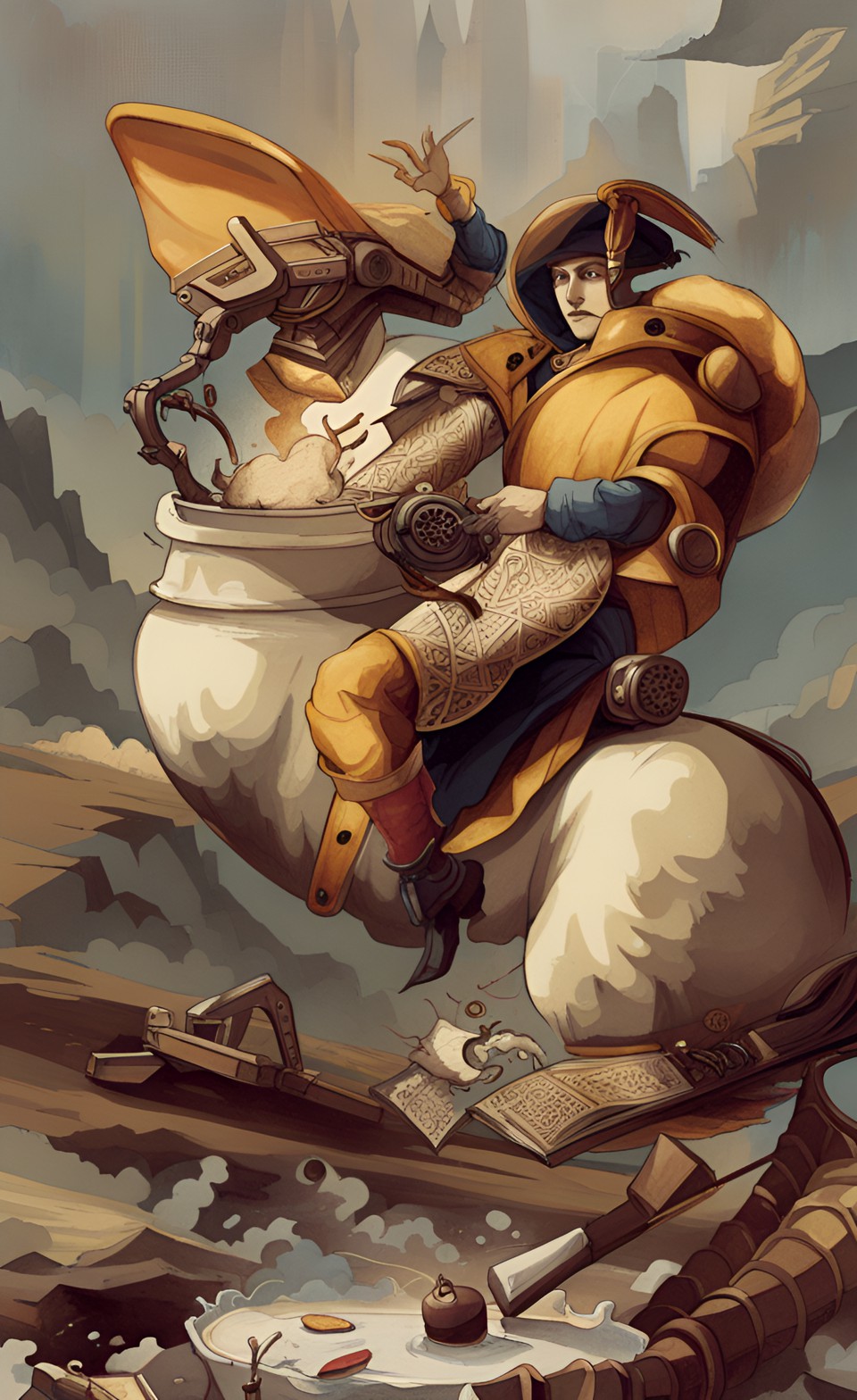
A.I.-generated images based on Jacques-Louis David's Napoleon Bonaparte


Friday, February 18, 2022

Flashback Friday: Presidents Day Trivia Contest

FLASHBACK FRIDAY
This Trivia Quiz was created in 2012, 
but should be just as much fun today.

With this coming Monday being Presidents Day, this is as good a day as any to think about presidents. By presidents we're talking about U.S. presidents here. Sorry, I mean no offense to my readers in Germany, Britain, France, Italy, Mexico, Brazil, Zambia or Laos who were not required to memorize U.S. president-trivia in their schools while growing up. For the rest of you, here's a quiz to help keep your brain cells from atrophying. You can check your answers against my guesses at the end of this quiz. Be sure to keep score.
 
Disclaimer: This quiz is for entertainment purposes only and should not be construed as having any usefulness for passing your U.S. citizenship exam. 
 
1. Which president was nicknamed His Accidency? 
a. Harrold Wilson 
b. John Tyler 
c. Chester Arthur 
d. Grover Cleveland Alexander 

2. Which President was called The Do-Nothing President? 
a. Pat Buchanan 
b. William Buckley 
c. William Howard Taft 
d. James Buchanan 

3. Which president was sometimes called The Big Lub? 
a. Grover Lightfoot 
b. William Howard Taft 
c. Teddy Roosevelt 
d. Herbert Hoover 
 
4. Who was the only president with a Ph.D.? 
a. Charles Smedley 
b. Woodrow Wilson 
c. Calvin Coolidge 
d. Benjamin Harrison 
 
5. Who was the first president to actually dine with a black man in the White House? 
a. Abraham Lincoln 
b. Ulysses S. Grant 
c. Teddy Roosevelt 
d. John F. Kennedy 
 
6. Teddy Roosevelt was evidently into pets. Match the the following pets to their names. 
a. Guinea Pig 
b. Snake 
c. Bull Dog 
d. Chesapeake Retriever 
Their names were: Pete, Father O'Grady, Emily Spinach, and Sailor Boy... but in which order? 

7. Who was the first president's wife to be called the First Lady of the Land? 
a. Letitia Tyler 
b. Lucy Hayes 
c. Eliza Johnson 
d. Frances Clara Cleveland 
 
8. Who was the first president to fly in a helicopter? 
a. Silent Cal 
b. FDR 
c. Ike 
d. Harry S. Truman 
 
9. Who was the first president to fly in an airplane? 
a. Herbert Hoover 
b. Teddy Roosevelt 
c. FDR 
d. Calvin College 

10. This president raised 11 children, none of whom were his own. (He is one of three presidents to have had adopted children.) 
a. Chester Arthur 
b. Andrew Johnson 
c. Andrew Jackson 
d. James Polk 
 
11. When he was vice president, he presided over the Senate wearing a pair of pistols, as a precaution against the frequent outbursts of violence. (See? Contentiousness in the congress is nothing new.) 
a. Hebert Hoover 
b. Andrew Johnson 
c. Martin Van Buren 
d. Lyndon Johnson 
 
12. Which president was the first to see a baseball game and saw the Cincinnati Reds beat the Washington Senators 7-4? 
a. Benjamin Harrison 
b. Teddy Roosevelt 
c. William McKinley 
d. Woodrow Wilson
 
13. How many presidents did not win the popular vote yet won the election? 
a. 5 
b. 8 
c. 15 
d. 11 
 
14. How many Americans understand how the Electoral College works?
a. 5
b. 8
c. 15
d. 11 
 
15. Who was the first president not born on the continental United States?
a. George Washington
b. John D. Rockefeller
c. Andrew Johnson
d. Barack Obama
 
Bonus: Which website did I borrow all this information from?
a. ClassroomHelp.com 
b. NationalGeographic.com
c. Infoplease.com
d. None of the above. I took good notes in school and remembered all this stuff. 


ANSWERS
1. (b) 2. (d) 3. (b) 4. (b) 5. (c) TR dined with Booker T. Washington. 6. Some of the pets TR had in the White House for his family included a Bull Dog named Pete, a Guinea Pig named Father O'Grady, a snake named Emily Spinach and a Chesapeake Retriever named Sailor Boy. 7. I think it was Lucy. 8. (c) 9. There is a dispute here as my sources conflict. One source says it was Teddy, the other says FDR. 10. (c) Yes, Jackson had 11 adopted children. 11. (c) 12. (a) 13. (c) 14. Trick question. Nobody knows how it works. 15. (d) He was born in Sasketchewan. No, wait, Rio. Actually it was Hawaii, which was not a state until I was in elementary school. Bonus Question: a, b and c. Score five points for having read this all the way through, and one point for each correct answer. If you did better than 18, you're pretty sharp. Take a bow.

Sunday, July 18, 2021

Memory Games: How Well Do You Know Your Presidents? (Part I)

Purple martin. (Public domain)
I have a problem with names. Unfortunately, as I get older it seems to be getting worse. When my mind reaches for a name, it often seems to find a hole there. It's like the brain is a pantry with shelves of products, but when you look for the one you need, it seems to have been moved. At that point, I don't know where to even look.

Anyways, there are techniques one can use to improve your memory. What I plan to share here is an easy way to remember the first 20 U.S. presidents. You should be able to accomplish this in a relatively short time, especially since you probably already know the first few.

One way people remember lists of things is to use mnemonic devices. A mnemonic device is a technique that enables you to more easily retrieve information. One such device is to assign images to correlate to the numbers in a list. Then, as you recall each image you pair it with the thing you want to remember. Here are the first ten images in my mnemonic list: 1 is a gun, 2 is a shoe, 3 is a tree, 4 is a door, 5 is a hive, 6 is for sticks, 7 is heaven, 8 is a gate, 9 is a vine and 10 is a hen. If memorize this, reciting the first ten presidents is a snap. 

1. Picture a gun shooting one dollar bills. George Washington is the president on the one dollar bill, though this is easy because everyone knows he was first anyways. Nevertheless, if you did not know that, the one dollar bill is a clue.

2. Picture a shoe being studied under a microscope by a scientist. The microscope is so powerful it can actually see the atoms in the leather. John Adams is the second president.

3. The tree you picture here is decorated with ornaments which are all in the shape of Monticello. Monticello was Thomas Jefferson's home near Charlottesville, Virginia. If you prefer another image, maybe you can picture a Chef serving a plate with a tree growing on it. Chef-erson.

4. Four is a door, and for this image I have stapled Mad magazines all over the door. James Madison was our fourth prez.

5. For this one, I picture two men in suits rowing a boat with a beehive in the back of the boat. They are trying to get away from it as fast as they can. The one man is shouting, "Row, mon, row!" James Monroe was our fifth president.

6. For this one, I envision a wreath made of sticks floating in the air. There are sticks intersecting the wreath on the lower right, forming the letter Q. The Q reminds me that John Quincy Adams was our. sixth president.

7. Up on a cloud we see the Pearly Gates. (Seven is Heaven.) In front of these there are a couple children playing jacks. Andrew Jackson was our 7th commander-in-chief.

8. Now we come to a gate. Sitting on the gate is a purple bird. The purple bird is a purple martin. Our 8th president is Martin Van Buren. 

9. For this one I picture a hairy vine. You can make it a giant Jack-in-the-beanstalk vine if you want, but it is really hairy, which is the operative clue for William Henry Harrison. If want to picture the vine growing fast, then wilting, it will be a reminder that President Harrison died one month after taking office, the shortest term of any U.S. president.

10. Ten is a hen, a giant hen wearing a tie. I envision a necktie, but you can put a polkadot bowtie on this hen if you wish. The tie stands for John Tyler. 

Now, I'm going to switch to a different kind of mnemonic device, once again using unusual or absurd images but in a different manner. For presidents 11 thru 20 I will picture a humorous sequence of images as if in a movie. The movie begins with Tyler, the giant hen wearing a tie. 

John Tyler
The giant hen (wearing a tie) is poking a tailor with a stick, while the tailor is busy sewing a button onto a dapper pinstripe suit worn by another man. The tailor puts down his needle and thread to take a trowel and begins filling this other man's pockets with dirt while that fellow is shouting "More!"

Suddenly an arrow pierces this man's thigh and we see that it has been fired from a cannon.

This little visual sequence covers the next five presidents: Polk (11), Taylor (12), Fillmore (13), Pierce (14) and Buchanan (15).

Since we all know Lincoln was 16, no need for a tool to remember that, but we will use Lincoln as a starting point for the next set. 

Picture Lincoln sitting by a fire pit cooking Johnson brats over an open fire with his left hand while signing a document  with his right that says Land Grant at the top. There's a smoky haze wafting around Lincoln's face which we think is from the fire pit, but as the camera pans we see it is actually from a giant cigar lying in the field behind him.

That's it. If you visualize this scene you will recognize Lincoln (16), Johnson (17), Grant (18), Hayes (19) and Garfield (20).

* * *

OK. Test yourself. Have you nailed it? Here's the full list if you want to make your own humorous mnemonic images to memorize the rest:

https://en.wikipedia.org/wiki/List_of_presidents_of_the_United_States

* * * 

Saturday, April 27, 2019

This Week's Top Five Stories On Medium (by ennyman)

Here are the stories I've written which received the most pageviews this week on Medium.

Four Marketing Lessons from the Battle of Vicksburg
Here are four important marketing and leadership lessons that stand out from this battle. Each could be elaborated on with illustrations from businesses today. Published on Medium at The Startup.
Read More


Add Martin Guitar Factory to Your Bucket List
Every business has a story, a starting point and a history. Martin Guitars just happens to have a story that leaves none of us untouched. That is, anyone for whom music or pop culture has been a part of their lives, this company’s products have produced sounds that enhanced your life.
Read More


Life is the Artist’s Pallet
Artists, whether their medium is words or paint or cameras or music, discover at some point in time that they are themselves a medium, a vessel through which observation and experience is transmuted and shared.
Read More


Remembering Kurt Vonnegut
A Vonnegut tribute and re-cap of my interview with the author.
Read More


“Go Away Bomb:” — Dylan Writes A Song for Izzy Young
An original manuscript which Dylan wrote for and at the request of Israel “Izzy” Young, will be on display this coming month along with numerous other items from the Bill Pagel Archive. Young owned a music store called the Folklore Center in Greenwich Village. This original document from the Bill Pagel Archive will be on view through much of the summer here.
Read More

* * * *

Popular Posts