Showing posts with label Writing Exercises. Show all posts

Friday, May 23, 2025

On Writing Well

Writing has changed the world more than almost any other activity. Ideas are passed on from one generation to the next through the written word.


Political movements may begin with a fire in the breast, but it is the written word that distributes this fire far and wide. The American Revolution was successful in large part because of the printing press. The sacred truths of Judaism, Christianity, Buddhism, Hinduism and Islam have influence today because their holy books were preserved in writing.


Why do we remember Marco Polo’s travels to China but know nothing of his uncle’s previous journeys to this exotic foreign land? The answer is self-evident when we learn that Marco Polo spent time in jail with a writer who recorded his stories and preserved them for posterity.


In the business world, it is almost impossible to be a person of influence without writing skills. Whether crafting business plans or sales presentations, memos or ad copy, the written word is the coin of the realm.


For the most part our young peoples’ future influence will be in direct proportion to their skill with the written word

* * * 

Writing is one of those magical skills that not only helps us communicate with others, it also helps us understand ourselves. Writing forces us to clarify our thoughts. As our language becomes more precise in the reflection of our thoughts, feelings and observations, we get better at understanding and articulating our innermost selves. Once writing well begins to matter to us, we’re forced to think with greater care about the words we choose, and the nuances of language. 

* * * 

Available on Amazon, or locally at Chester Creeks Books on 14th Avenue East.

Photo by Thom Milkovic on Unsplash

Thursday, January 16, 2025

Throwback Thursday: How to Teach Writing, plus a Poem by a Little Guy

When our kids were growing up we home schooled for a several years. Susie did the yeoman's work. I created weekly quizzes, which kept me in the loop regarding our kids' progress. I also taught writing, which led to my writing a short book called Writing Exercises: How to Teach Writing and Prepare Your Favorite Students for College, Life and Everything Else. The book's real value stems from the approach that I developed and was encouraged to share.

It's a book for English teachers of all stripes, but especially homeschoolers, about how to teach writing. Here's one suggestion from the book: if you can figure out ways get you children and students to start writing, then you will have something to edit. If they enjoy the exercises they are more likely to produce copy (words on paper) that you can then use to praise while also correcting.

One assignment I gave my kids was for them to describe a room in our house, but from the point of view of being one inch tall. The whimsical Shel Silvertsein poem below might have been his solution to such an assignment.

One Inch Tall
If you were only one inch tall, you'd ride a worm to school.
The teardrop of a crying ant would be your swimming pool.
A crumb of cake would be a feast
And last you seven days at least,
A flea would be a frightening beast
If you were one inch tall.

If you were only one inch tall, you'd walk beneath the door,
And it would take about a month to get down to the store.
A bit of fluff would be your bed,
You'd swing upon a spider's thread,
And wear a thimble on your head
If you were one inch tall.

You'd surf across the kitchen sink upon a stick of gum.
You couldn't hug your mama, you'd just have to hug her thumb.
You'd run from people's feet in fright,
To move a pen would take all night,
(This poem took fourteen years to write--
'Cause I'm just one inch tall).

Shel Silverstein

Monday, July 11, 2022

The Importance of Writing

As our kids were growing up we became frustrated with some of the shortcomings of public education. We tried a private school for two years but it had some different kinds of problems. As a result we began homeschooling our children, which turned out to be a perfect solution for our situation. We were fortunate to be in circumstances that enabled us to pursue this course.

Susie, my wife, handled the primary responsibilities, but I also remained in touch with what the kids were learning by creating tests and quizzes for most of their classes. I also taught writing, creating writing. exercises and a unique method of "grading" the work that addressed the biggest problem I had with grading in school: the pain of being handed your paper back all covered with red marks. Ouch, ouch, ouch.

Years later, when our children had left the nest, I found a folder containing many of the writing exercises I'd created. Susie suggested I turn them into a book. As I considered this it seemed necessary to also outline my philosophical approach to teaching young people how to write well. This was woven into the first half of the book. 

My attempt to obtain a publisher failed, so I self-published the book which, to my dismay, has sold very few copies. No doubt part of the reason is its boring title. (The idea of a clickbait title grated on me.) Perhaps, too, I didn't make a sufficient effort to get connected to the homeschool community here. 

Nevertheless, the book has valuable insights not only for homeschool teachers but also for teachers of all stripes. This is a passage from early in the book.

Chapter 1: The Importance of Writing

Writing has changed the world more than almost any other activity. Truth is passed on from one generation to the next through the written word.

Political movements may begin with a fire in the breast, but it is the written word that distributes this fire far and wide. The American Revolution was successful in large part because of the printing press. The sacred truths of Judaism, Christianity, Buddhism, Hinduism and Islam have influence because their holy books have been preserved in writing.

Why do we remember Marco Polo's travels to China but know nothing of his uncle's previous journeys to this exotic foreign land? The answer is self-evident when we learn that Marco Polo spent time in prison with a writer who recorded his stories and preserved them for posterity.

In the business world, it is almost impossible to be a person of influence without writing skills. Whether crafting business plans or sales presentations, memos or ad copy, the written word the coin of the realm.

For the most part, our young peoples' future influence will be in direct proportion to their skill with the written word. 

* * * 

Writing Exercises is available for purchase Here On Amazon.com

For info about my other books visit:
https://pioneerproductions.blogspot.com/2014/09/seven-books-by-ed-newman.html

Saturday, September 18, 2021

An Approach to Teaching Your Children How to Write. Why Every Homeschooling Parent Should Buy This Book.

I believe writing well is one of the most important skills any homeschooling parent can teach their children.

The written word has changed the world more than almost any other human activity. Truth is passed on from one generation to the next through the written word. Political movements may begin with a fire in the breast, but it is the written word that distributes this fire far and wide. The American Revolution was successful in large part because of the printing press and the printed word.

Learning how to communicate by means of the written word is an essential component of any successful career. Children who write well will obtain more career opportunities and find more open doors than those who neglect this vital skill. But good writing is more than simply writing technically correct sentences with proper verb tense and punctuation. Good writing is writing that engages readers. 

Writing Exercises was originally written with homeschoolers in mind, but its essential principles have universal application. The subtitle is 
How to Teach Writing and Prepare Your Favorite Students for College, Life and Everything Else.


The book's aim is to arm parents and teachers with a philosophical approach to teaching writing skills along with exercises to help implement it. The three goals of this method and the accompanying exercises are:

  • To build students' confidence as writers.
  • To improve students' creative thinking through creative writing prompts. 
  • To provide useful strategies for teaching invaluable writing skills.
  • To make sure that whatever career your child pursues, he or she is not left behind.

The book also addresses practical matters such as research skills, attribution and handwriting matters. Equally important is the matter of grading the work. Motivation is a key feature of both the exercises themselves and the grading approach.

Writing Exercises is currently available at the largest store in the world, Amazon.com, where 38% of all internet commerce takes place.  


FAQ

Photo by Hannah Olinger on Unsplash
Q: What age or grade level is this book written for?

A: I think students from 7th to 9th grade will benefit most, though the principles apply to any student learning to write. The goal is to instill a love of writing, not to make children hate it. 


Q: Is the book in bookstores?

A: No, but you can find it here on Amazon: https://tinyurl.com/82m8kvs2

I have deliberately given it a low price to make it easy to purchase. If you apply the principles here to your homeschooling efforts, you will be rewarded 100-fold.


Q: How did you come to write this book?
A: My wife Susie and I homeschooled our children when it became apparent that public schools were coming up short with regards to meeting their educational needs. Because I'm a professional writer I took on the task of teaching writing. (I also wrote all their tests, which enabled me to stay in touch with what they were learning as well as the progress they were making.) After the children had grown, Susie encouraged me to create a book so that others would benefit from the exercises and grading approach I'd created.


If you have additional questions, feel free to leave them in the comments or email me at ennyman3@gmail.com

Friday, March 3, 2017

A Different Angle On Grading (Chapter 9 from my book Writing Exercises)

What follows here is an amplification of chapter nine from my book Writing Exercises: How to Teach Writing and Prepare Your Favorite Students for College, Life and Everything Else.

For what it’s worth, I do not have teaching degrees. Nor do I have any scientific studies to back my teaching approach. Everything here stems from personal observation regarding my own experiences as a student, a parent and a reader, with a dose of applied critical thinking a.k.a. common sense.

By grading, I mean the process of working alongside the student and conveying your observations, corrections and encouragement. Correcting your student’s writing is probably the most important part of the teaching process. Going over the assignment together gives you an opportunity to engage the mind of your child or student and should always be done privately, one on one. First off, criticism and correction can be painful enough when done privately, so doing it in front of others, whether siblings or public school classmates, can be especially so.

It does not have to be time consuming, but it does require taking the time to sit together and go over the work (as opposed to simply returning assignments with red marks all over them.)

When I was young I had a supervisor who believed one should say ten positive things to a person before saying something negative. He was always concerned that criticism would discourage employees rather than help. No employee is without shortcomings, neither will your student’s writing be.

That is why my approach to grading involves a variety of criteria so that one can give high marks on aspects of the work, which serve to soften the critical comments. In our home I used the following standards when evaluating work:

Creativity
Originality
Accuracy
Spelling
Grammar
Punctuation
Neatness

I always gave encouragement when our kids became emotionally engaged or psychologically involved in their work. Praise aggressively when you see this. This praise is very important because the first thing writers of all ages notice are those red marks. Those blemishes can breed discouragement. This is why I start each grading session by grading intangibles like creativity and originality.

As already noted, when students are writing essays, articles or stories I try to place myself “alongside” them so I'm on their team as they attempt to communicate an idea or feeling. I ask questions like, “Is this really what you meant? Would another word help describe that better? Would re-organizing these sentences produce a stronger statement? Can you tell me why you chose to end it this way?”

Spelling, grammar, punctuation and neatness all need proper attention, and by keeping the student motivated to write, you create ample opportunities to resolve all these technical aspects of their work.

* * * *
One of the basic premises of my book is that a student is not a good writer just because he or she makes no spelling errors or grammar mistakes. Good writing is writing that engages readers. The reason we learn to use proper spelling, punctuation and grammar is because mistakes can cause readers to stumble over what one is trying to say. That is, we write to communicate and because we care about our readers we should eliminate as many distractions as possible so they can follow where we're going, can hear what we're trying to say.

Does that make sense? Do you know what I mean?

* * * *
Writing Exercises is my eighth book. You can check out my others here at Eds-Books.com. Enjoy your weekend. 

Friday, February 10, 2017

A Note About Typing Skills

My first manual typewriter looked like this.
My mother told me there were three things she never learned while young that she wanted to make sure her four boys learned. They were: how to swim, how to drive and how to type.

I'm especially grateful that she had me take a typing class in high school I received my first typewriter as a graduation present. Even if typewriters are dinosaurs now, mine proved invaluable when I attended college. To this day I love the QWERTY keyboard.

There are many ways to tell one's life story. One way could be to follow the thread of one's relationships to their typewriters. Mine began with that first cool blue Smith Corona.

When I was in Bible school eight years later I did an internship in Puerto Rico and did not bring my typewriter. A classmate named Maggie Godward, who was doing prison ministry here in Minnesota, said there was a fellow there who would benefit from having a typewriter because he wanted to write his life story. So it was that my Smith Corona went to prison. (Ironically, when I got to Puerto Rico, I was invited to help do some prison ministry there, at the Bayamon Prison outside of Old San Juan.)

My Olivetti looked like this.
When I returned from Puerto Rico for my senior year at Bethany, the Bible school, I acquired a typewriter for the year from another student who was leaving for his internship. (Thank you, Ray Heath!) When he returned I bought a used Olivetti manual typewriter that was so flat that it could be slid under the front seat of my car when we went to Mexico after graduation. I loved that Olivetti. It was so compact, a well-engineered machine.

But manual typewriters had certain limitations, and eventually I bought a Brother electric typewriter as I became more serious about my writing. This was the 1980s and though we were on the threshold of the digital we weren't quite there yet. In 1987 all that changed. I acquired my first McIntosh, a 512Ke. That is, a small box with 512K of computing power, and 1 MB of temporary memory. With no hard drive to write to at all, one had to have a second disc drive to save your work to a floppy. This was 30 years ago, but that Mac still works to this day.

* * * *

Typing Skills Still Matter

There was a time when literacy was not a necessary survival skill. In today's world, however, reading and writing skills are assumed. Job postings often outline the software programs now required for these openings.

What about typing skills? I recently heard someone say that with the advent of voice-recognition software, typing will become a thing of the past. I'm willing to wager that this won't happen in my lifetime, and it may not happen in your children's either. In a country where we have difficulty even feeding a large swath of the population it is hard to imagine a day when everyone will own computers with voice-recognition software.

It takes time to learn how to type well, but there's a payoff. The ability to type well is empowering. Good typing skills means more than just being a fast typist. Accuracy is essential.

For home school teachers who want to help their children become faster and better on a keyboard, there are plenty of software programs that can assist. Do a little research first, though. Make sure it's compatible with your operating system. And, if available, read reviews of others' experiences, especially with tech support if a complication should come up. There are also free online tutorials that don't require a download.

* * * *
Some of the information on this blog post was excerpted from my book Writing Exercises: How to Teach Writing and Prepare Your Favorite Students for College, Life and Everything Else. Writing Exercises was written to help homeschoolers teach the important skill of writing. The books is $7.95 and I promise that any homeschool parent who applies its principles will see improvement in their children's writing skills.

Meantime... life goes on. Have a great weekend and stay warm.

Friday, February 3, 2017

Handwriting Matters

Have you ever had the experience in which you couldn't read someone's handwriting? Perhaps it was a note from your spouse, or maybe even a note from your boss. Hmmm. You're at the grocery store and you have to pick up... what?

I've even had the experience where I couldn't decipher my own handwriting. (I sometimes get up in the night and write notes to myself, like this one. In the morning a few of these scribbles appear to be hieroglyphics.)

One of my favorite scenes in Woody Allen's Take the Money and Run involves poor handwriting.  The hapless Virgil Starkwell, played by Allen, attempts to rob a bank. He hands a note to the teller. She has trouble deciphering it. "You have a gub?" He tries to explain that he has a gun. She disagrees and calls another teller over. "Does this look like 'gub' or 'gun'?" The second teller says it looks like "gun" ... "But what does 'abt' mean?" And so it goes.

Because handwriting matters, I included a chapter on this topic in my new book, Writing Exercises: How to Teach Writing and Prepare Your Favorite Students for College, Life and Everything Else. Here are a few points I made there.

* * * *

Good handwriting is becoming lost in our modern society. With the advent of online news forums and digital books, print and concrete handwriting skills may seem unnecessary. Computers and other devices are replacing the pen.

Developing good handwriting, however, is still important for a variety of reasons. Good handwriting shows courtesy toward those reading what you write. It’s also something of a necessity when filling out a job application. And, if the teacher can’t read the pupil’s work, then there's going to be a problem when going over it together.

* * * *

Since the beginning of literacy, handwriting proficiency has developed and changed in lockstep with changes in society and technology. Some forms of handwriting are artistic, such as calligraphy or graffiti. Others are more utilitarian, such as the near-illegible scrawl used in a doctor’s office. All handwriting, being the medium in which a message is conveyed, is affected by both the writer and the reader. For example, a dinner invitation written in pristine calligraphy will be received differently than one written in a sloppy scrawl. Each note will elicit a different response. While one note may imply a formal dinner with suit and tie, the latter indicates that jeans and a t-shirt will be adequate. In this way, it is important to be aware of handwriting and the affect it has on others.

Furthermore, it is courteous for handwritten messages to be easily legible to the recipient. Your student will likely one day secure a job in which written notes may be a necessity. Handwritten notes are still an important form of communication in most employment settings. For example, you may be a boss scribbling written corrections on a proposal. If your notes can't be accurately interpreted, the proposal may end up conveying misinformation with the result that your company loses an important contract. Developing good handwriting throughout an academic career could be very important in future careers.

Developing good handwriting is also useful in developing linear thinking. When using a computer, it is easy to edit the format of sentences and whole paragraphs with a series of clicks. Word order is entirely flexible. Conversely, handwriting with pen and paper requires the mind to sequentially order the thoughts and plan further ahead when writing, sharpening critical thinking skills. This type of brain development is not present when solely typing on a computer. In fact, it turns out that current brain research is affirming that writing by hand is important.

At the same time, maintaining good handwriting forces students to be disciplined in writing out their ideas. While computers maintain pristine uniformity with absolutely no effort on the part of the writer, precision in handwriting requires both attention and discipline. (This is not to imply that good writing using a computer is effortless. It only resolves the legibility issue.)

In these ways, it is easy to see that handwriting is an important skill to develop in the student. Here are a few tips to help improve handwriting:

1. Practice. Begin when your students are young. Our writing exercises here assume the student has already developed a certain measure of legibility. If not, have the student make a conscious effort to improve this skill.

2. Develop good handwriting muscles. The muscles that should primarily be used in handwriting are muscles in the forearm and back. Too much finger muscle use in handwriting will produce small, cramped handwriting as the writer painstakingly draws each letter individually.

3. Strive for uniformity. The key to good handwriting is consistency. If the student really needs help in this area it may be necessary to have a separate notebook for the students to practice each letter until they can easily maintain a uniform shape for each. I know it sounds tedious and boring, but there’s a lifetime payoff.

* * * *

The book was written to help homeschoolers become better writers, but much of the content applies to all kinds of schooling. And if your student has absolutely atrocious handwriting even after working at it, you may take this as a sign that he or she has a future in medicine. For sure, don't encourage them to go into bank robbing.

Meantime, life goes on... Read any good books lately? 

Friday, January 20, 2017

The Mirror Of Our Acts Reveals Who We Are

"...leaning over the mirror of our acts, our souls will recognize what we are."
--Andre Gide, Journals


For nearly all of us mirrors play a role in our morning rituals. Whether for shaving or make-up, fixing one's hair or straightening one's tie, the mirror is a useful tool, presenting to our eyes a true reflection of what is there so we can fix it as we primp and preen.

On other occasions, a reassuring glance in the mirror before a job interview or an important date gives us confidence that at least the external things are taken care of -- our hair isn't mussed, collar turned right, no food crumbs on our chin.

At the end of the day there's another mirror which is equally valuable to us, and perhaps even more so once we practice using it. We can call it the mirror of our acts. As we quiet ourselves and reflect on the day, we discover that our actions reveal our souls as surely as the bathroom mirror reveals our faces.

The mirror of our acts reveals us as we truly are, giving a more precise picture of ourselves than we may wish to see. For it reveals not only our strengths, but also our limitations; it shows not only our inward beauty, but also the defects that mar that beauty. When I look back on my day, standing honestly before this mirror of my soul, what do I truly see reflected there? Thoughtfulness and sensitivity? Selfishness? Duplicity and deceit? Laziness? Industriousness? Courage? Courtesy? Foolish pride? Pettiness? The character defects we see need not discourage us. Recognizing one's shortcomings is the essential first step to the cure.

Taking time for reflection is an essential facet of personal growth, as important to our souls as diet and exercise are for our bodies. Whether it be at day's end, the middle of the night or early dawn, it can be a most useful tool to help us grow to our full stature as human beings.

* * * *
The above originally appeared in my unpublished 1993 devotional Nightfall: A Time To Reflect at the End of the Day. Over the next few weeks, I will be sharing excerpts from my newest book, Writing Exercises: How to Teach Writing and Prepare Your Favorite Students for College, Life and Everything Else.

It's my conviction that being able to write well is an essential skill in your career toolkit. Writing Exercises is more than a collection of writing prompts to help students learn various tricks and techniques to improve their writing, it also presents a methodology, a new way of teaching writing in order to get better results.

Meantime, guess what? It's Friday. Enjoy your weekend.


Friday, September 26, 2014

Nine Books By Ed Newman

Bob Dylan in Minnesota
Although this is not a book I wrote entirely myself, I did contribute seven chapters. Most Dylan fans  know that 
Bob Dylan was born here in Duluth, grew up in Hibbing and cut his musical teeth in the folk scene of Dinkytown in the Twin Cities's Midway.

This travel guide brings together stories from these key locations as well as the roots and early life of Bob Dylan. You will also introduce you to four Minnesota contributors who live in Dylan’s homeland and play an active part in promoting everything Dylan.

Thus far the book has received a number of positive reviews. It is available locally at Zenith Books in West Duluth. Otherwise you can find it here online.

 *
The Red Scorpion
--- My haunted house story with a supernatural twist. Lord of the Flies meets Stephen King. One Amazon reviewer called it "a good mystery/suspense/science fiction thriller... carefully crafted and realistically portrayed." A Nook reader wrote, "This book kept me reading straight through till the end. It kept me guessing and wondering what would happen next."

BEST VALUE: $2.99 here on Kindle. 


* * * *
CHILDREN'S PICTURE BOOK, AGES 6-9
A Remarkable Tale from the Land of Podd
The good people of Podd are a strange lot. Everyone in the kingdom thinks himself or herself to be somehow odd or weird—and considers everyone else to be perfectly normal. Some worry they have funny hair; others don’t like the shape of their noses; and still more think their eyes look strange.

When an enemy threatens to march his army into Podd, the king (who thinks he has very odd-looking feet) looks for a hero to defend the country. But everyone he asks refuses to lead Podd’s army, arguing their problems make them too weird to save the kingdom. Will the citizens of Podd learn to accept themselves for who they are and find the courage to defend the realm, or are the land of Podd and its people doomed?

Written by Ed Newman and illustrated by Ian Welshons, A Remarkable Tale from the Land of Podd uses wry Seussian humor, rhyme, and captivating illustrations to teach an important lesson about self-awareness and self-worth. No matter how we perceive ourselves, we can make the most of what we’ve got—and others probably won’t even notice what we don’t like about ourselves anyway.

Ideal for children in 1st through 4th grade, though engaging for all ages. Do you have nieces, nephews, grandchildren or children of your own? Makes a great gift. Is available signed and at a discount if you know me personally. 

Available at Amazon.


SHORT STORY COLLECTIONS
Unremembered Histories
This book contains some of my favorite short stories. 
The paranormal becomes the common denominator in these six original tales. An Amazon.com reviewer wrote, "If you value the short-story form, written in a way that entertains, informs, and prompts you to think, then there's a lot to appreciate in this little gem."

In the 1990's one of my favorite stories, Duel of the Poets, was translated into Croatian to be a cornerstone for a poetry site there.

NOW AVAILABLE IN PRINT and as an eBook at Amazon.com

Newmanesque
Newmanesque is my second collection of original short fiction. This set of stories includes The M Zone, A Poem About Truth, The Unfinished Stories of Richard Allen Garston, The Nose, and Terrorists Preying, which has been translated into French by Aude Fondard. One reader of these stories wrote, “My very first impression is that there's a certain style in some ways similar to Franz Kafka which is good and intense… very mysterious for one doesn't know where the whole thing is going to go, but it's sure that there's a message to be captured from the many moments stated in the short sentences that are all poignant to the story."

Purchase a Kindle version of the book here.
ONLY $.99 but worth every penny.

The Breaking Point and Other Stories
This, my third collection of short stories, features my winning 1991 Arrowhead Regional Fiction Competition story "The Breaking Point" plus four other stories. The stories here are more conventional, with the usual twists. One reader wrote that the stories "contain insight into relationships" with "subject matter regarding love relationship's emotions, expectations, illusions, and delusions in the most mundane characters." In the midst of their ordinary lives there is a decisive extraordinary event.

Available as an eBook on Amazon.com here.


Especially For Homeschoolers 
Writing Exercises
How to Teach Writing and Prepare Your Favorite Students for College, Life and Everything Else.
Good writing skills are essential to success. This book outlines my philosophy for teaching writing which I nearly guarantee will make a difference in your child’s life. This is a book originally written to help home school teachers but is actually for anyone interested in helping kids improve their writing skills. Essentially the book offers an original teaching approach that helps unstop critical barriers that inhibit young students. The exercises are designed to teach critical skills and tactics, and to make writing fun.

AVAILABLE HERE ON AMAZON

Free STEAMPUNK/SCI FI eBook Intergalactica
In the spring of 2012 I was involved in an exhilarating collaborative art project called Artist Kamikaze IV. This was my second year and I was initially paired with clothing artist Patricia Mahnke. The project we undertook was ambitious so we didn't waste any time meeting to outline a plan. What we decided was to create a character and costume, whom I would then paint. Eventually this evolved into two characters and costumes.

As the project evolved we had the good fortune of being able to obtain a third partner, Kate Dupre, who brought photography and Photoshop skills to the project. I found the completed project so cool that I felt it shouldn't be such a temporary piece. With assistance I had the story and images re-assembled into an eBook which is available Free on iTunes.

You can read the beginning of the story here without downloading.

* * * *

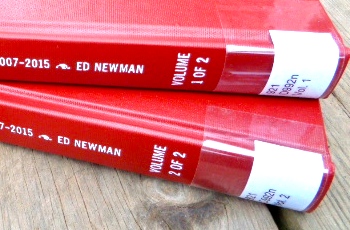
Reflections from the North Country, 2007 – 2015
Notes, observations and impressions about the music, art and life of the Northland’s Bob Dylan

Reflections is a compilation of all my Dylan-themed blog posts from 2007 to December 2015. A reference librarian from the Duluth Public Library asked if I might like to have my blog posts about Bob Dylan bound and placed in the permanent archives. The library routinely collects and preserves books by local authors for posterity, but in this case not only would it be a collection of blog posts by a local author, the subject matter was Dylan and Dylan is, naturally, a Duluth Native Son.

Although this 2-volume set is not for sale, it can be found in the biography section of the Duluth Public Library along with numerous other books on Bob. As time permits, look for volume three sometime within the next year.

* * * *

Meantime, keep reading. Books are  a gateway to life.

Popular Posts