Showing posts with label poems. Show all posts

Friday, August 11, 2023

Imaginary Interviews: A Visit with Jorge Luis Borges, the Master of Magical Realism

Jorge Luis Borges was an Argentine short-story writer, essayist, poet and translator. He is regarded as one of the most important figures in Spanish-language literature. I first encountered his work in an old issue of The Antioch Review. And I was blown away.

The influential Argentine writer was born with congenital glaucoma, which left him nearly blind in his right eye and severely impaired his vision in his left eye. This condition would have a profound impact on his life and work.

Borges began writing at a young age and published his first book of poems in 1923. He went on to write dozens of short stories, essays, and poems. He was also a translator who translated works from English, French, German, and other languages into Spanish. Being a scholar of literature and philosophy, his work is often influenced by these fields.

He famously excelled in a form of storytelling called Magical Realism. In this imaginary interview I hope to introduce more readers to one of my favorite writers and primary influences.

EN: Magical realism is a defining feature of your works, blending fantastical elements with reality. How did you come to embrace this literary style, and what do you believe it adds to your stories?

Jorge Luis Borges: I appreciate the question. Magical realism, for me, was a natural way to explore the blurred boundaries between reality and imagination. Growing up in a multicultural environment and being exposed to various myths, legends, and philosophies, I realized that the extraordinary can exist within the ordinary. This realization led me to embrace magical realism as a means of capturing the inexplicable beauty and complexity of existence.

Magical realism allows me to express the ineffable aspects of human experience that often elude rational explanation. By seamlessly integrating magical elements into everyday settings, I aim to create a sense of wonder and provoke contemplation. This style enables me to explore philosophical questions, challenge preconceived notions, and reflect on the mysteries of existence in a way that straightforward realism might not allow.

In my view, magical realism enriches my stories by infusing them with a sense of enchantment and inviting readers to question reality's limitations. It encourages us to perceive the world from different angles, to question the boundaries between what we consider real and what we deem fantastical. This fusion of the ordinary and the extraordinary underscores the idea that life itself is a tapestry of paradoxes and that reality can be much more than meets the eye. Through magical realism, I strive to celebrate the complexity of human experience and offer readers a lens through which they can appreciate the enigmatic beauty of the world.


EN: Many of your works draw from diverse cultures and traditions. How do you approach incorporating these elements into your stories, and what role do they play in creating a global literary tapestry?


JLB: Incorporating diverse cultures and traditions into my stories has always been a deliberate and enriching process. I believe that literature has the power to transcend borders and connect people by highlighting our shared human experiences and the multiplicity of perspectives that exist around the world.


When I explore different cultures and traditions, my approach is one of respect and curiosity. I approach these elements not as mere ornaments, but as windows into the profound variations of human thought, belief, and expression. I delve into myths, folklore, and histories to uncover universal themes that resonate across cultures, such as love, loss, identity, and the pursuit of meaning.


By incorporating these diverse elements, I aim to weave a global literary tapestry that reflects the richness and complexity of human existence. This tapestry serves to challenge narrow perspectives and promote understanding among people from different backgrounds. In doing so, I hope to remind readers that, despite our apparent differences, there are underlying threads that connect us all.


Ultimately, the incorporation of diverse cultures and traditions adds depth and universality to my stories. It offers readers the opportunity to explore the world through different lenses, fostering empathy and expanding their horizons. It is my hope that my work contributes to a broader understanding of the human experience, transcending cultural boundaries and fostering a sense of unity amidst our diverse tapestry of life.


EN: Your writing often explores the labyrinthine nature of human existence. Could you share how this theme reflects your personal philosophy and why it resonates so deeply with your readers?


JLB: The exploration of the labyrinthine nature of human existence has been a central theme in my writing, reflecting both my personal philosophy and my fascination with the intricate layers of reality. To me, life itself often feels like a labyrinth, a complex network of paths that lead to unexpected revelations, dead ends, and profound insights.


Our understanding of reality is often limited by our perspectives and perceptions. We navigate the labyrinth of existence, seeking knowledge, meaning, and connection, yet often finding ourselves confronted with mysteries and paradoxes that challenge our comprehension. Through my stories, I seek to capture the essence of this journey, the perpetual search for understanding in a world that seems both ordered and chaotic.


Using the labyrinth as a metaphor for the enigma of existence, I hope to provoke introspection and contemplation in my readers, inviting them to ponder the myriad paths we traverse in our quest for knowledge and meaning.


This theme resonates with readers because of its universal relevance. The labyrinth is not confined to any one culture, era, or belief system—it's a concept that transcends boundaries and speaks to our shared experiences as humans.


EN: Do you see the mind itself as a labyrinth?


Photo by Maksym Kaharlytskyi on Unsplash
JLB: Indeed, the mind is a labyrinth, a vast and intricate terrain that holds within it the echoes of countless thoughts, memories, and perceptions. Just as the physical world is filled with paths, twists, and turns, so too is the landscape of our consciousness. The mind is a realm of discovery and contemplation, a place where ideas intersect and diverge, forming intricate patterns of thought.


Like the labyrinth of existence that I often explore in my writing, the mind presents us with challenges and mysteries. It invites us to navigate the corridors of memory, to seek understanding in the maze of our emotions, and to venture into the depths of our imagination. Just as the traveler within a labyrinth confronts uncertainty and the unknown, so too does the thinker grapple with the complexities of their own mental landscape.


Yet, within the labyrinth of the mind, there is also the potential for revelation and insight. Just as explorers of physical labyrinths may discover hidden truths, those who journey through the labyrinth of their thoughts can unearth profound understandings of themselves and the world around them. The mind's labyrinth is a place of creativity, where the paths we tread can lead to new ideas, connections, and revelations.


The idea of the mind as a labyrinth resonates deeply with me because it mirrors the themes I've explored in my writing—our quest for knowledge, the tension between order and chaos, and the simultaneous beauty and complexity of existence. By recognizing the mind as a labyrinth, we embrace the endless potential for exploration and discovery within ourselves. This concept continues to inspire and influence my work, as I strive to capture the essence of both the inner and outer labyrinths that shape our understanding of reality.


EN: Your influence on literature extends far beyond your native Argentina. In fact, I consider a number of my own stories to be inspired by your work, especially those in my book Unremembered Histories. How does it feel to have your ideas and techniques shape the work of writers from various cultures?


JLB: To witness my ideas and techniques resonating with writers from diverse cultures is a profound and humbling experience. Literature, as an art form, transcends borders and languages, uniting minds through the exploration of universal themes and human experiences. Knowing that my work has contributed to this global dialogue is a testament to the power of storytelling and the interconnectedness of human thought.


EN: One last question. As a writer who's navigated blindness, how has this condition influenced your creative process and your perception of imagination and reality?


JLB: Navigating blindness has been a profound and transformative aspect of my creative journey. While it initially presented challenges, it ultimately reshaped my perceptions in ways I could never have anticipated.


Blindness, in a sense, became a metaphorical labyrinth within which I had to navigate. As my visual world diminished, my reliance on imagination and memory grew stronger. The boundaries between the external and internal worlds began to blur, and I realized that perception is not confined to the physical senses alone. This realization profoundly impacted my writing, as I sought to convey the intricate interplay between what is seen and what is imagined.


In this new realm of limited sight, I discovered a heightened awareness of language itself. Words became my palette, allowing me to paint vibrant landscapes of thought and emotion. Imagination became my guide, enabling me to explore realms beyond the confines of the visible world. The act of storytelling became a way to bridge the gap between the tangible and the intangible, between the known and the unknowable.


Blindness compelled me to reexamine the nature of reality. I came to understand that reality is a subjective construct, shaped by individual perceptions and interpretations. This insight allowed me to embrace the idea that reality is malleable, that it can be reshaped and reimagined through the creative act. I found that the limitations of sight were not limitations of vision—they were invitations to delve deeper into the recesses of the mind.


Blindness, paradoxically, illuminated the vastness of the inner world, inspiring me to navigate the labyrinth of imagination with renewed vigor and a profound sense of wonder.


Related Links

The concept for this interview was first explored in my imaginary interview with John S. Hall, the Blind Poet of Ritchie County.

Here are some other Borges links.

Jorge Luis Borges: An Introduction

Tribute to Borges' Garden of Forking Paths

The Mind of Borges 

A Yellow Rose


Saturday, June 24, 2023

Duluth: Jan Chronister's Poetic Visions from the Zenith City and Beyond

A BOOK REVIEW

Duluth: Zenith City & Beyond by Jan Chronister is an entertaining and thought provoking catalog of observations. You can tell right off that she's a writer, ever drawing inspiration from what's going on around her, surveying and cataloging. I'd be interested in her "writer's notebooks." 

That's what poets do. They carry a butterfly net in their heads, eyes scanning the terrain like a predator seeking prey, observations that glisten. Catch them before they flutter away, then pin them in your writers notebook. (Forgive me for mixing metaphors, but that's the way the the ball bounces after it falls off the table like a lead pencil.)

There are more than 17,000 species of butterflies in the world, and butterflies are but a subset of the Leipodptera classification of insects of which there are more than 180,000 species. Ideas for poems are something akin to this, too numerous to number, and challenging to catalog. But poets do it anyways. Some ideas are big, some small, some brilliant, some whimsical. Chronister's poems vary as well, whether humorous or serious, lively or pointed. Here's the opening stanza from the first poem in the book, titled "Urban Renewal."

In a certain year 
all the wooden stairs downtown
must have been painted
by the same man.

It sets a tone.

Many of these poems are sketches of various people she's observed--a bag boy at the grocery store, a father and son buying a Mother's Day card, a June wedding, an actress with a broken leg, a newspaper designer from Miami, a waitress at an unnamed restaurant. 

The book is divided into four sections: Town Life, Almanac, Waterways, and Roads. Almanac is a waltz through the seasons. I also liked the quotes she selected to accompany each section. A George Santayana quote leads off the Almanac section:

"To be interested in the changing seasons is a happier state of mind than to be hopelessly in love with spring."

There are so many nice touches here. Like this one from a poem titled "Golden Delicious."


I see our tree

obscured with blossoms, 

courting pollinators.


Or this image from "Keeping Secrets."


I hear secrets, keep them frozen,
knowing what torrents

would flow if I thawed.


I suppose we all read poetry for different reasons. For me, it's little gems like these that make reading poetry so rewarding. (Rilke, Billy Collins and Robert Frost come readily to mind.)


Poetry can serve as many purposes as public speaking or journalism. Virgil's 9,896 lines of dactylic hexameter, The Aeneid, is an ambitious, comprehensive overview of the birth of Rome out of the ashes of Troy. Chronister's Duluth is a gathering of snapshots from this Northland territory hugging the shores of the world's largest freshwater lake.


In the midst of serious contemplation, there are often amusing pieces that can't help but make you smile. For instance, "The Summer We Bought the Farm" is about stumbling across a forty acre farm with an artesian well and a trout stream, the "inside joke" being the title, which has become a euphemism for something else.


Speaking of inside jokes, Chronister embeds numerous subtle references to things you might only be aware of if you'd lived here awhile. I suspect these make the poems especially rewarding for the locals who are paying attention.


* * * 

Jan Chronister is an award-winning regional poet whose new book was published in mid-May. A retired teacher (University level and several technical schools), Chronister is well-known in local poetry circles. 


If you don't live near a Northland bookstore, you can find Duluth: Zenith City & Beyond online, along with several other poetry collections from her six decades of enriching readers.

Tuesday, January 17, 2023

ChatGPT Generates A Poem About Football

Like many if not most kids in high school I was introduced to poetry in one or more of my English classes. I recall, perhaps in my junior year, having to read and study The Rime of the Ancient Mariner by Samuel Taylor Coleridge. I never did get why the word Rhyme was spelled Rime. (Clue: the story involves getting off course and in the vicinity of the South Pole. It was not a typo.)

I think it was while "studying" T.S. Eliot's The Hollow Men that I began to take a greater appreciation in poetry. Mr. Harris' English class inspired me even more as he selected lyrics from some of the songs we were listening to; songs by the Beatles, Simon and Garfunkel, and others. 

In one of these classes, if not more, we were giving the task of writing poems ourselves. Though nothing remains of the poems--or stories--I wrote as a teen, I do vividly remember the opening lines of a couple of these. The first was a poem about a street gang called the Tigers. It opened like this:

The Tigers are rough, the Tigers are tough, 
They'll beat you till you've had enough. 


I'm pretty sure I came across it several years later somehow and when I read it I had to laugh. It was so bad. As in poor. 


The opening line to another poem I wrote went something like this:


Yellow walls in yellow room, 

I see no beauty in this wretched place.


The rest is lost but the image I began describing was of an abandoned room at the top of a flight of stairs in an old building, the peeling wallpaper yellowed by age.


* * * *

Frankly, I've actually seen some pretty interesting poetry emerge from the last AI program I used (Sudowrite), though the program seemed to rapidly descend to rather dark places at times. Example here: Two Versions of The Comet, Light and Dark


Well, I expected something better from ChatGPT. Then again, maybe the topic I asked it to write a poem about thought the theme too juvenile to be taken seriously. What do you think?


Me: Can you write a poem about football?


ChatGPT:


The field is green, the crowd is loud,
The players take the field, proud and proud.

They've trained so hard, for this one game,

To bring their team, eternal fame.


The whistle blows, the ball is kicked,

The players clash, they're all committed.

They fight for yards, they fight for score,

Their hearts are in it, forever more.


With every play, the crowd roars on,

Their team's success, is never gone.

And when the game is finally won,

They'll lift their helmets, to the setting sun.


For football is more than just a sport,

It's a battle fought, with all support.

It brings us together, one and all,

For football, we'll always stand tall.


Now you would think that a machine with super-intelligence would recognize how juvenile this poem is. "For football, we'll always stand tall?" Then again, we all started somewhere, and as these programs learn from their past mistakes it shouldn't be long before.... Wait.


Do you think ChatGPT or another AI can write sonnets like Shakespeare? Will an AI win a Nobel Prize some day?  It's hard to wrap my head around that one. The bigger question is will future readers even know the difference between good and bad literature? 


C'est la vie.


Illustrations by DreamAI

The football theme was selected because I have been watching the NFL playoffs.

Saturday, December 31, 2022

ChatGPT Delivers A Poem About Nothingness

The Future and the Past. (Produced w/Photoleap)
As some of you may know I have been fascinated by the possibilities and limitations of Artificial Intelligence these past several years. As early as 2016 I wrote about a pair of Calum Chace's books on the impact AI will have on white collar jobs. Last year I played around with an AI bot called Sudowrite, producing a story and quite a bit of poetry. 

Kazui Ishiguro's book Klara and the Sun explores many of the issues associated with AI-powered robotics, and lots of digital ink has been spilled writing about the latest iterations of an AI writing program called ChatGPT.

In the art realm I have likewise been fascinated by a pair of programs that utilize AI to create illustrations and images. At the end of this page I will include links to some of the above essays and explorations. 

ChatGPT is not yet perfect. I asked it to write a short essay about the Duluth music scene and it included a venue that is shuttered and has been so for two or three years. 

Till an hour ago I essentially asked it questions and ChatGPT produced short essays. Then I asked it to write a poem for me on Nothingness. Here's what the machine produced.

A Poem About Nothingness


Nothingness, a vast and empty space

Where thoughts go to be erased

No sound, no light, no time, no place

Just an endless, blank erasing


A void of emptiness, a lack of form

A space that's never-ending

No beginning, no end, no seed, no norm

Just a boundless, endless, never-mending


No memories, no dreams, no hope, no fears

Just a limitless, endless, boundless, never-clearing

No past, no present, no future, no tears

Just a timeless, spaceless, endless, never-appearing


Nothingness, a realm of pure oblivion

Where all is lost and nothing is given

A realm of pure and utter nothingness

Where nothing exists and nothing is living

* * * 

Things I especially like about the poem include the assonance (e.g., oblivion / given) and also the structure. Notice the third line of each of the first three stanzas, and then a slight variation as we reach the conclusion. 

The opening grabbed me right off. "Nothingness, a vast and empty space where thoughts go to be erased." It's not an image that would immediately pop into my head. 

What do you think? I find it fascinating.

Related Links
My 2016 review of Surviving AI by Calum Chace
A Visit with Futurist Calum Chace on His New Book The Economic Singularity
Two Versions of The Comet, Light and Dark
Ishiguro's Klara and the Sun Is Another Stellar Achievement

I've also been collaborating with a pair of AI "art" bots. You can see some of the things "we" have created here on my Instagram page.

Tuesday, January 4, 2022

A Battalion Agent: War Poems Tell Stories

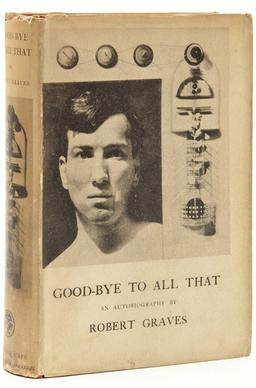
I recently mentioned that since Christmas day I've been wading through several books on World War One. In addition to Poilu (Barthas) and The Great War (G.J. Meyer), I've been dabbling in Goodbye To All That by Robert Graves. 

Graves, who was an officer in that First World War, became a career writer and poet. It's interesting to me how many soldiers were inspired by their wartime experiences to write poetry. Somehow simply writing descriptive sentences feels inadequate to the emotions unearthed by life's biggest disruptions, whether it be love or standing on death's door. 

Hence the great number of poets that emerged from those inexpressible experiences on the Western Front. Graves is numbered among a long list of poets from that war, many whose lives ended there. Wilfred Owen, Siegfried Sassoon, Charles Sorley, Edward Thomas, Rudyard Kipling, Ford Maddox Ford, Jessie Pope, Guillaume Apollinaire, Robert Service, Archibald MacLeish and countless others felt a compulsion to capture their inward angst in poetic verse.

Robert Graves served as an officer at the nightmare known at the Battle of the Somme. He was so badly wounded in this conflict that a notice was sent home to his family that he had died. Days later he wrote a letter home and the family announced in the paper that he was not dead, but alive. 

* * * 

Reading about Robert Graves has led me to read some of the poetry of others from that war. Ultimately this brought to mind the poetry my father-in-law wrote during his 3+ years of service in World War Two. 

Wilmer "Bud" Wagner was a cook, machine gunner and ultimately a battalion agent in the North Africa and Italy campaigns. Throughout the war he kept a diary in pocket-sized notebooks. He also took photos and wrote poetry. The following is titled The Battalion Agent. You will notice that he uses the word "peep" here and throughout his memoir And There Shall Be Wars. When the soldiers returned to the States after the war, they were surprised to find these all purpose vehicles were now called jeeps. 

Here is his poem about life as a battalion agent.

A Battalion Agent


He works at night, in rain and grime,

Moonlight or not, he tries to find

His Battalion's position, it's quite a game.

Good roads or bad, it's all the same.


He's tired as heck, when he lays down at night,

Then someone wakes him, he's in for a fight.

He's given a message, what he doesn't know.

He starts for his peep, he's off to the show.


The road is rough, and it might be wet,

But he's rough and tough, he's always set.

His peep will respond at the slightest touch,

For he's bound to get there, it matters much.


If the road's under shell-fire, or being strafed by a plane,

Through wheat or mine field, it's still the same.

His faithful peep must take him through,

It's his very best friend, he keeps it like new.


He can use the lights, but he'd rather not,

Perhaps they would get him on the spot.

He travels along at a pretty good clip,

In spite of the roads, with all those dips.


He's wide awake now for he has to be,

There's a truck stalled on the road, so hard to see.

He slams on his brakes, missed it by an inch,

Turns to his left, off again, this job is no cinch.


It's still the right road, seems he tells by the smell,

With all these turns and trails, it's hard to tell.

He gets through the bomb craters, lucky as yet. 

Lucky this African Campaign hasn't cost him his neck.


There's the road, that he takes to the right,

But what meets his eyes, is an awful sight.

A bridge blown out, where the water is deep,

But nothing can stick his faithful peep.


He throws it in low, the motor roars,

Shoves the front wheels in gear, as he nears the shore.

Puts the transfer in low range, tramps down the gas,

He's going through, and he's going fast.


Now where is the place where this officer  lives?

He has a sealed message to him he must give.

There's his pup tent, but he's sound asleep.

How can he do it, with the noise of that peep?


The message is taken, and he starts back,

It's cold and raining, the night is still black,

So again he goes through, it's the same either way,

Oh, why can't he do this during the day?


He finally gets back, his nerves are on edge,

Turns off his peep, heads for his bed,

Drops on the ground and prepares for a snooze.

Leaves on his clothes, he's too tired to move.


He awakes in a daze, someone yelling his name,

"You have a message to deliver, don't mind the rain."

He jumps in his peep; his mind is still hazy,

For he's a Battalion agent, and it's driving him crazy.


Wilmer Wagner
And There Shall Be Wars


* * * 

I think it noteworthy that at the war's end he received a commendation for always having gotten the message through. A portion of the citation reads:
o
"Cpl. Wagner continuously drove blackout over unfamiliar roads that were almost impassable due to rainfall. Cpl. Wagner furnished valuable information as to the conditions of the roads and the location and use of short cuts. Frequently roads traversed by Cpl. Wagner were subjected to heavy enemy harassing fires and information regarding minefields was lacking, but Cpl. Wagner never failed to reach his destination in time for operational changes and new plans to be effected. Cpl. Wagner's
 courage and devotion to duty reflect great credit upon himself and the military service."

Charles L. Bolte
Major General, U.S. Army,

Commanding.

Popular Posts