Showing posts with label Third Man. Show all posts

Saturday, July 27, 2024

Intrigue and Illusion in War-Torn Vienna: Graham Greene's The Third Man

I discovered Graham Greene through a somewhat unusual path. I was on a quest to see all of Orson Welles' films. This proved to be an impossible task, but it did introduce me to a number of fine films, one of them being The Third Man, starring Welles along with Joseph Cotton, Trevor Howard and Alida Valli. I have never tired of the film with its Graham Greene DNA. 

Compelling plots, complex characters and atmospheric settings are all hallmarks of Graham Greene's novels. Recurring storylines revolve around universal themes--betrayal, corruption, moral failure, dignity, faith and redemption. 


While researching for this review, I learned that Greene himself had experience in the film industry previous to seeing his books translated to the silver screen. He worked as a film critic and wrote screenplays, which gave him an understanding of the cinematic medium and connections within the industry. (Ah, connections!) His experiences undoubtedly made it easier for his works to transition to film.

He was also one of several British writers who served in the British Secret Service (M6). This experience provided a level of authenticity to his writing. [Other well-known authors who were spies include Somerset Maugham, John LeCarre and Ian Fleming, creator of what is now the James Bond franchise.]


* * *

Graham Greene's novella The Third Man is a moral labyrinth as complex as the underground waterways of its setting, post-World War II Vienna. First published in 1949, it's a gripping tale of intrigue, deceit, and moral ambiguity. The story revolves around Rollo Martins, a hack writer of pulp Westerns, who arrives in the war-torn city at the invitation of his childhood friend, Harry Lime, superbly played by Welles in the film. Upon his arrival, however, Martins learns that Lime has been recently killed in a mysterious car accident.

Martins's initial grief quickly turns to suspicion when he hears inconsistencies in the various accounts of Lime's death. Determined to uncover the truth, Martins embarks on an investigation that leads him through the divided and corrupt city, encountering a host of intriguing characters, including the enigmatic Baron Kurtz and the weary British police officer, Major Calloway.


The novella masterfully captures the atmosphere of Vienna, a city struggling to recover from the devastation of war. Greene’s depiction of the bombed-out buildings, the black market dealings, and the pervasive sense of distrust and desperation adds a layer of realism and tension to the narrative. The setting is not just a backdrop but a character in its own right, reflecting the fractured and morally complex world in which the story unfolds.


As Martins delves deeper into the mystery of his friend's death, he discovers that Lime, far from being the innocent victim he imagined, was an illegal racketeer selling diluted penicillin on the black market, resulting in numerous deaths. This revelation forces Martins to confront the stark difference between the idealized image of his friend and the harsh reality of his criminal activities.


The novella's title refers to the elusive "third man" who was reportedly seen at the scene of Lime’s accident but whose identity remains unknown. This mystery propels the plot forward and symbolizes the hidden layers of truth that Martins must uncover.


The character of Harry Lime, charming yet deeply flawed, embodies the blurred lines between good and evil. Martins' disillusionment and loss of innocence resonates with readers and film buffs alike.


In the end, The Third Man is not just a thrilling mystery but a profound commentary on human nature and the consequences of moral compromise. Greene's vivid prose and intricate plotting keeps the pages turning, leaving readers to ponder the complexities of friendship in a world marked by chaos and uncertainty.

Monday, August 22, 2022

The "Orson Welles In Hollywood" Maze

Here's a maze that reflects the career of Orson Welles who once described his passage through Hollywood like this: "I started at the top and ended up at the bottom." His first picture in Hollywood was Citizen Kane in which he wrote, directed and starred in this epic film. By the end of his storied career he was doing television commercials, endorsing products for pay. Alas.

Here are hotlinks to a pair of blog posts I've written about The Third Man, a film in which he famously played a part. When I looked back through my archives just now I noticed that I'd begun several blog posts about other films featuring Welles including Compulsion, Touch of Evil, The Eyes of Orson Welles and F is for Fake

1. A Film Noir Favorite: The Third Man

2. Graham Greene's The Third Man Continues to Satisfy

Here is a link to the Orson Welles Wikipedia page


If you're interested in having your own career mapped out in the form of a maze (with ups, downs, dead ends and expanding horizons) send me an email and I'll see what we can work out.

Keep on keepin' on.

Thursday, August 19, 2021

Throwback Thursday: A Film Noir Favorite, The Third Man

This week I again watched one of my fave film noir movies, The Third Man. Film noir was a style of Hollywood film, popular in the 40's and 50's that sought to expose and exploit the dark side of life. Themes were ambiguous, often not pretty, and occasionally considered scandalous. 
 
They were primarily black and white and gritty. Many have been resurrected less successfully than intended (eg. Cape Fear), though some have emulated the genre with superb flare (eg. L.A. Confidential). 

The Third Man 
The film -- starring Joseph Cotten, Orson Welles, Alida Valli and Trevor Howard -- is based on the novel by Graham Greene. The zither soundtrack is playful and somber simultaneously. If you've seen the film before the opening strumming will give you a lift as you know you're entering a story that has previously moved you. I have never tired of this interaction of these well defined characters with competing motives. 

 Unrelenting fascination is what I experience every time I watch this movie. It never seems old. It remains alive in my mind, haunting me, with its unearthly music, its dark, oblique photography and crisp, well-crafted storyline. 

Orson Welles excels, delivering some great lines and also one the best entrances in movie history to go along with a superb exit as well. It couldn't be better. I can't even express how I feel in words. If you've seen it it's worth re-visiting, and worth seeing if you haven't. 

The music track is Anton Karras on the zither. It greets you at the open and carries you through. When I hear the opening notes it awakens anticipation and memories simultaneously. 

Here's an informative review of the film from imdb.com 
Of all the movies during the studio era (pre-1960ish), there are three movies with cinematography that always stick out in my mind: Gregg Toland's work in Citizen Kane, Russel Mety's work in Touch of Evil, and Robert Krasker's work in The Third Man (all starring Orson Welles). 

I just recently saw a restored 35mm version of The Third Man. The vivid black and white visuals of a bombed out Vienna are breath-taking. Shadows are everywhere, a metaphor for the period detailed in this story. The unique way Krasker tilts the camera in some shots adds to the disorientation of the plot. And who can forget the first close-up of Welles with the light from an apartment room above splashing onto his face; one of the great entrances in movie history, made still more effective by the foreshadowing in the previous scene. Lime gives his old friend a smile that only Welles could give.

Here's my 2011 review of the film:  
Graham Greene The Third Man Continues to Satisfy
THIS REVIEW CONTAINS SPOILERS

Ten days ago I saw Graham Greene's 
The Third Man on someone's list of the fifty greatest films of all time and I felt compelled to rent it again. I've read the book at least twice, Greene being among my favorite novelists. I can't say how many times I've seen the film but invariably each time it's an enriching experience.

The story takes place in Vienna after World War II. The narrator is a hack writer of Westerns, Holly Martens (Joseph Cotton) from America who has come to Vienna to find his old college chum Harry Lime (Orson Welles). Upon arrival in the divided city (there is an American, French, Brit and Russian sector, as partitioned by the Allies) he learns that Lime has been killed in an accident outside the apartment house where Martens had been expecting to meet him. The witnesses, however, share conflicting details and Martens begins to suspect foul play.

It's not just the exotic settings that make a Graham Greene story such a thrill to read, but also the incredible way he allows the reader to see the story, even when the narrator doesn't get it. In this case Holly Martens, saturated with sentimentalism, believes only the best about his old friend, resisting all evidence to the contrary.

The third star in this film is the beautiful and somewhat unheralded Alida Valli as Anna Schmidt. Martens loves his friend because he doesn't know the truth about Harry; Anna is smitten by Harry in spite of the truth about him. Tumultuous tragic love smashes itself against the rocks with resigned futility.

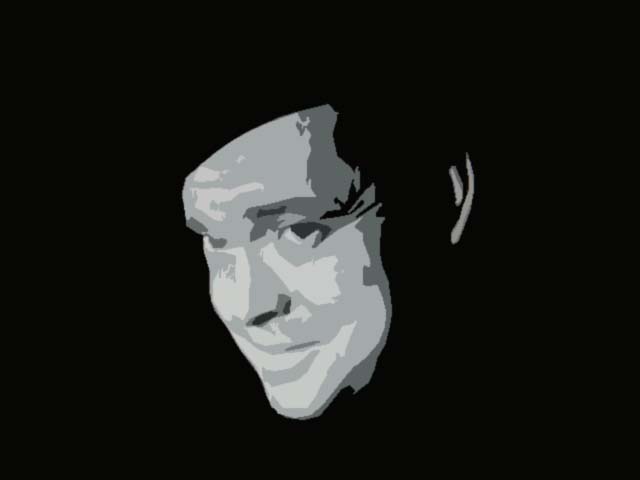
I must also take a moment here to extol the cinematography. Shot in black and white mostly on location in Vienna, every frame is a work of beauty. So much of the film is at night, allowing wonderful contrasts and surrealistically stark scenes. This all works perfectly to set up the first appearance of Welles hiding in a dark doorway, his face suddenly illuminated when a light across the street flames to life.

At certain points in all our life stories light strikes from a new angle, revealing things we didn't previously understand. The clues were there all along, but until there is light nothing can be fully seen for what it is... whether we wish to see it or not.

* * * 
In case you can't tell, I really enjoyed this film. Each time I watch I catch subtle touches I'd missed previously. It's a film that has everything. Find it if you haven't seen it.

Saturday, December 22, 2018

Two Film Noir Favorites: The Third Man and Sweet Smell of Success

This fall I again watched two of my fave film noir movies, The Third Man and Sweet Smell of Success. Film noir was a style of Hollywood film, popular in the 40's and 50's that sought to expose and exploit the dark side of life. Themes were ambiguous, often not pretty, and occasionally considered scandalous.

They were primarily black and white and gritty. Many have been resurrected less successfully than intended (eg. Cape Fear), though some have emulated the genre with superb flare (eg. L.A. Confidential).

The Third Man
Joseph Cotten, Orson Welles, Alida Valli and Trevor Howard, based on the novel by Graham Greene. The zither soundtrack is playful and somber simultaneously. If you've seen the film before the opening strumming will give you a lift as you know you're entering a story that has previously moved you. I have never tired of the play of characters with competing motives.

1. Unrelenting fascination is what I have every time I watch this movie. It never seems old. It's in my mind, haunting me, with its unearthly music and its dark, oblique photography. And that great Orson Welles' speech, and also the best entrance in movie history to go along with the best exit in movie history. It couldn't be better. I can't even express how I feel in words. It's worth re-visiting, if you've seen it, and worth seeing if you haven't. The music track is Anton Karras on the zither. It greets you at the open and carries you through. When I hear the opening notes it awakens anticipation and memories simultaneously.

2. Of all the movies during the studio era (pre-1960ish), there are three movies with cinematography that always stick out in my mind: Gregg Toland's work in Citizen Kane, Russel Mety's work in Touch of Evil, and Robert Krasker's work in The Third Man (all starring Orson Welles funny enough). I just recently saw a restored 35mm version of The Third Man. The crisp black and white visuals of a bombed out Vienna are so breath-taking. Shadows are everywhere. The unique way Krasker tilts the camera in some shots adding to the disorientation of the plot. And who can forget the first close-up of Welles with the light from an apartment room above splashing onto his face; one of the great entrances in movie history (Lime gives his old friend a smile that only Welles could give.)
>>>Source: Reviewer at imdb.com

Here is my 2011 review. 

Sweet Smell of Success
The thick jazz intro by Elmer Bernstein is a perfect setup for this big film about power and influence. Who's got it? J.J. Hunsecker. Who wants it? Sidney Falco. Sidney's a publicity man from the slimeball school. He purportedly has the power to get PR for his clients, though the real power lies in J.J.Hunsecker's palm. And Hunsecker (Burt Lancaster) takes pleasure in crushing people. "Hunsecker is the golden ladder to where I want to get," says Falco (Tony Curtis). Oh the games people play.

There are four main characters in the story. Falco, Hunsecker, Hunsecker's sister Susie, and a jazz guitarist whose stage name is Steve Dallas.

In scene one Sidney Falco finds that a story he promised a client will not appear in tomorrow's Hunsecker column. Falco knows why. Susie is in love with the jazz guitarist and Hunsecker is expecting Falco to break it up. So within the first ten minutes we see what everybody wants. The music and the gritty black-and-white texture of the film are a tip-off.

The screenwriting is A-plus, line after zinger line. Acting is spot on, too. The emotional tension tightens with each turn of the screw.

Here's my 2016 review of this powerful story.

* * * *
If you like Film Noir and you're looking for films to add to your queue, check out this list of 100 All Time Film Noir Favorites 

Three of my favorites from that list besides the aforementioned: The Killing (Kubrick), Touch of Evil
and Chinatown.

* * * *
Though this blog post is about films, the two films cited above were also powerful books, which I also enjoyed immensely and have read more than once each.

While thinking about books it dawned on me that eBooks do seem to have a shortcoming when it comes to Christmas. No one will buy my eBook The Red Scorpion and place it under a Christmas tree. On the other hand, if you get some Christmas money and own an eBook reader, it's currently only a $2.99 download for this YA suspense thriller. (I'm raising the price by a dollar in January, fwiw.) More info here.

Monday, February 22, 2016

Graham Greene's The Tenth Man

This weekend I watched again The Tenth Man, a made for TV film based on Graham Greene's novella of the same name. I'd been a huge Greene fan in the 1980s when I read anything of his that I could put my hands on. Favorites include The Third Man, A Burnt-Out Case, The End of the Affair, The Quiet American and The Heart of the Matter, among others.

A singular feature of his stories is their global settings, especially in regions of unrest. As it turns out, he worked for the British government as a spy, not unlike Ian Fleming, John Le Carre and a few other well-known Brit authors. The Tenth Man takes place in mid-century France.

It's a story about a wealthy French lawyer named Chavel who confronts his existential reality. That is, the book was written at a time when Existentialism held sway as a dominant philosophy, defined and re-defined by authors like Camus, Sartre and situation ethicist Joseph Fletcher. The story opens in Paris during the Nazi occupation of France. Chavel, played by Anthony Hopkins, is minding his own business heading to the office when suddenly a dispatch of Nazi soldiers blocks the streets to take captive a couple truckloads of men. The men are arrested randomly, for no other reason than the fact that they were "there."

Chavel, being the attorney that he is, cries out, "Whose in charge here," as if the normal laws of social justice should apply. But his appeals fall on deaf ears. This is man's lot, Greene seems to say. Chavez is caught up in circumstances beyond his control.

As an aside, this opening scene of Nazi-occupied France so reminded me of the current series The Man in the High Castle based on a story by Philip K. Dick in which the Axis powers won World War II and divided North America between them. It is 1950's America without Leave It To Beaver.

The next twist in Chavel's story comes when it is learned that several Nazis were killed in an incident involving the French Resistance, including an officer, and several prisoners must be shot in return, another form of absurd justice. The Nazi guards leave it to the prisoners themselves to determine who will be handed over to be shot. One in ten is the number.

There are thirty in the cell, and in the end they decide the fairest way here would be to draw lots. Chavel bristles at this, but accepts it, only to draw death by firing squad as his lot as well. Whereas the other two men who drew the same fate have resigned themselves to it, Chavel protests. And then he grovels. Being a man of wealth and property, he turns to his fellow captives and offers all he has to anyone who will switch places with him. The others are disgusted by this and point out that it is a ridiculous deal since the person who accepts it is going to die anyways so how could they enjoy it.

But a man accepts. He's ill and perhaps soon to die anyways, so he figures that if he takes the estate he could bequeath it to his mother and sister. Chavel the lawyer draws up the papers and has witnesses sign the document, after which he has second thoughts. But this change of heart is too late, as well, and the deed is done.

The story moves to after the war, and in time Chavel can't resist returning to the estate which once was his. What he finds is somewhat shocking. The place is in disrepair, the gardens neglected. As luck should have it, because he knew her brother, the mother and sister permit Chavel to stay on as caretaker. In short order Chavel discovers the degree to which Therese Mangeot hates the man who allowed her brother to die on his behalf.

At one point they are talking and she makes a statement of how much she hates the scoundrel, and senses that Chavel feels the same.

"Sounds like you hate him, too," she says.
Chavel replies, "No, I don't hate him. I just despise him for what he did."

As the story evolves the tension mounts when another man shows up at the house claiming to be Chavel. It's terrific storytelling. Like all Graham Greene's works the books keep you turning the pages, eager to see what happens next. Good books are like that. And good films the same.

To say more than this is to say too much, but it;s a compelling story and a really fine film.

If you can find it, you should take the opportunity. 

Sunday, January 23, 2011

Greene's The Third Man Continues To Satisfy

THIS REVIEW CONTAINS SPOILERS

Ten days ago I saw Graham Greene's The Third Man on someone's list of the fifty greatest films of all time and I felt compelled to rent it again. I've read the book at least twice, Greene being among my favorite novelists. I can't say how many times I've seen the film but invariably each time it's an enriching experience.

The story takes place in Vienna after World War II. The narrator is a hack writer of Westerns, Holly Martens (Joseph Cotton) from America who has come to Vienna to find his old college chum Harry Lime (Orson Welles). Upon arrival in the divided city (there is an American, French, Brit and Russian sector, as partitioned by the Allies) he learns that Lime has been killed in an accident outside the apartment house where Martens had been expecting to meet him. The witnesses, however, share conflicting details and Martens begins to suspect foul play.

A reviewer who calls himself Snow Leopard wrote this about it:
This is a rare film that is flawless in every respect. It combines great acting and memorable characters with a fascinating story, taking place in an interesting setting and adding a creative musical score. "The Third Man" is remembered for many things - for Orson Welles' wonderful performance in his appearances as Harry Lime, for its wonderfully appropriate musical score, and for its nicely conceived plot surprises. Adding to these is Joseph Cotten's fine portrayal of Holly Martins, which holds the rest of it together - it is his character who initiates most of the action, and also through whom we view everything and everyone else.
Of this last statement I must comment. It's not just the exotic settings that make a Graham Greene story such a thrill to read, but also the incredible way he allows the reader to see the story, even when the narrator doesn't get it. In this case Holly Martens, saturated with sentimentalism, believes only the best about his old friend, resisting all evidence to the contrary.

The third star in this film is the beautiful and somewhat unheralded Alida Valli as Anna Schmidt. Martens loves his friend because he doesn't know the truth about Harry; Anna is smitten by Harry in spite of the truth about him. Tumultuous tragic love smashes itself against the rocks with resigned futility.

I must also take a moment here to extol the cinematography. Shot in black and white mostly on location in Vienna, every frame is a work of beauty. So much of the film is at night, allowing wonderful contrasts and surrealistically stark scenes. This all works perfectly to set up the first appearance of Welles hiding in a dark doorway, his face suddenly illuminated when a light across the street flames to life.

At a certain point in all our life stories, lights go on and reveal things we didn't previously understand. The clues were there all along, but until there is light nothing can be fully seen for what it is... whether we wish to see it or not.

Popular Posts