Showing posts with label film noir. Show all posts

Thursday, August 19, 2021

Throwback Thursday: A Film Noir Favorite, The Third Man

This week I again watched one of my fave film noir movies, The Third Man. Film noir was a style of Hollywood film, popular in the 40's and 50's that sought to expose and exploit the dark side of life. Themes were ambiguous, often not pretty, and occasionally considered scandalous. 
 
They were primarily black and white and gritty. Many have been resurrected less successfully than intended (eg. Cape Fear), though some have emulated the genre with superb flare (eg. L.A. Confidential). 

The Third Man 
The film -- starring Joseph Cotten, Orson Welles, Alida Valli and Trevor Howard -- is based on the novel by Graham Greene. The zither soundtrack is playful and somber simultaneously. If you've seen the film before the opening strumming will give you a lift as you know you're entering a story that has previously moved you. I have never tired of this interaction of these well defined characters with competing motives. 

 Unrelenting fascination is what I experience every time I watch this movie. It never seems old. It remains alive in my mind, haunting me, with its unearthly music, its dark, oblique photography and crisp, well-crafted storyline. 

Orson Welles excels, delivering some great lines and also one the best entrances in movie history to go along with a superb exit as well. It couldn't be better. I can't even express how I feel in words. If you've seen it it's worth re-visiting, and worth seeing if you haven't. 

The music track is Anton Karras on the zither. It greets you at the open and carries you through. When I hear the opening notes it awakens anticipation and memories simultaneously. 

Here's an informative review of the film from imdb.com 
Of all the movies during the studio era (pre-1960ish), there are three movies with cinematography that always stick out in my mind: Gregg Toland's work in Citizen Kane, Russel Mety's work in Touch of Evil, and Robert Krasker's work in The Third Man (all starring Orson Welles). 

I just recently saw a restored 35mm version of The Third Man. The vivid black and white visuals of a bombed out Vienna are breath-taking. Shadows are everywhere, a metaphor for the period detailed in this story. The unique way Krasker tilts the camera in some shots adds to the disorientation of the plot. And who can forget the first close-up of Welles with the light from an apartment room above splashing onto his face; one of the great entrances in movie history, made still more effective by the foreshadowing in the previous scene. Lime gives his old friend a smile that only Welles could give.

Here's my 2011 review of the film:  
Graham Greene The Third Man Continues to Satisfy
THIS REVIEW CONTAINS SPOILERS
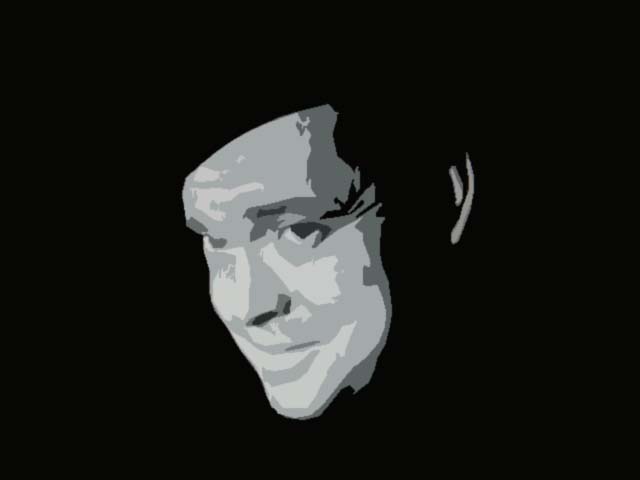
Ten days ago I saw Graham Greene's 
The Third Man on someone's list of the fifty greatest films of all time and I felt compelled to rent it again. I've read the book at least twice, Greene being among my favorite novelists. I can't say how many times I've seen the film but invariably each time it's an enriching experience.

The story takes place in Vienna after World War II. The narrator is a hack writer of Westerns, Holly Martens (Joseph Cotton) from America who has come to Vienna to find his old college chum Harry Lime (Orson Welles). Upon arrival in the divided city (there is an American, French, Brit and Russian sector, as partitioned by the Allies) he learns that Lime has been killed in an accident outside the apartment house where Martens had been expecting to meet him. The witnesses, however, share conflicting details and Martens begins to suspect foul play.

It's not just the exotic settings that make a Graham Greene story such a thrill to read, but also the incredible way he allows the reader to see the story, even when the narrator doesn't get it. In this case Holly Martens, saturated with sentimentalism, believes only the best about his old friend, resisting all evidence to the contrary.

The third star in this film is the beautiful and somewhat unheralded Alida Valli as Anna Schmidt. Martens loves his friend because he doesn't know the truth about Harry; Anna is smitten by Harry in spite of the truth about him. Tumultuous tragic love smashes itself against the rocks with resigned futility.

I must also take a moment here to extol the cinematography. Shot in black and white mostly on location in Vienna, every frame is a work of beauty. So much of the film is at night, allowing wonderful contrasts and surrealistically stark scenes. This all works perfectly to set up the first appearance of Welles hiding in a dark doorway, his face suddenly illuminated when a light across the street flames to life.

At certain points in all our life stories light strikes from a new angle, revealing things we didn't previously understand. The clues were there all along, but until there is light nothing can be fully seen for what it is... whether we wish to see it or not.

* * * 
In case you can't tell, I really enjoyed this film. Each time I watch I catch subtle touches I'd missed previously. It's a film that has everything. Find it if you haven't seen it.

Saturday, December 22, 2018

Two Film Noir Favorites: The Third Man and Sweet Smell of Success

This fall I again watched two of my fave film noir movies, The Third Man and Sweet Smell of Success. Film noir was a style of Hollywood film, popular in the 40's and 50's that sought to expose and exploit the dark side of life. Themes were ambiguous, often not pretty, and occasionally considered scandalous.

They were primarily black and white and gritty. Many have been resurrected less successfully than intended (eg. Cape Fear), though some have emulated the genre with superb flare (eg. L.A. Confidential).

The Third Man
Joseph Cotten, Orson Welles, Alida Valli and Trevor Howard, based on the novel by Graham Greene. The zither soundtrack is playful and somber simultaneously. If you've seen the film before the opening strumming will give you a lift as you know you're entering a story that has previously moved you. I have never tired of the play of characters with competing motives.

1. Unrelenting fascination is what I have every time I watch this movie. It never seems old. It's in my mind, haunting me, with its unearthly music and its dark, oblique photography. And that great Orson Welles' speech, and also the best entrance in movie history to go along with the best exit in movie history. It couldn't be better. I can't even express how I feel in words. It's worth re-visiting, if you've seen it, and worth seeing if you haven't. The music track is Anton Karras on the zither. It greets you at the open and carries you through. When I hear the opening notes it awakens anticipation and memories simultaneously.

2. Of all the movies during the studio era (pre-1960ish), there are three movies with cinematography that always stick out in my mind: Gregg Toland's work in Citizen Kane, Russel Mety's work in Touch of Evil, and Robert Krasker's work in The Third Man (all starring Orson Welles funny enough). I just recently saw a restored 35mm version of The Third Man. The crisp black and white visuals of a bombed out Vienna are so breath-taking. Shadows are everywhere. The unique way Krasker tilts the camera in some shots adding to the disorientation of the plot. And who can forget the first close-up of Welles with the light from an apartment room above splashing onto his face; one of the great entrances in movie history (Lime gives his old friend a smile that only Welles could give.)
>>>Source: Reviewer at imdb.com

Here is my 2011 review. 

Sweet Smell of Success
The thick jazz intro by Elmer Bernstein is a perfect setup for this big film about power and influence. Who's got it? J.J. Hunsecker. Who wants it? Sidney Falco. Sidney's a publicity man from the slimeball school. He purportedly has the power to get PR for his clients, though the real power lies in J.J.Hunsecker's palm. And Hunsecker (Burt Lancaster) takes pleasure in crushing people. "Hunsecker is the golden ladder to where I want to get," says Falco (Tony Curtis). Oh the games people play.

There are four main characters in the story. Falco, Hunsecker, Hunsecker's sister Susie, and a jazz guitarist whose stage name is Steve Dallas.

In scene one Sidney Falco finds that a story he promised a client will not appear in tomorrow's Hunsecker column. Falco knows why. Susie is in love with the jazz guitarist and Hunsecker is expecting Falco to break it up. So within the first ten minutes we see what everybody wants. The music and the gritty black-and-white texture of the film are a tip-off.

The screenwriting is A-plus, line after zinger line. Acting is spot on, too. The emotional tension tightens with each turn of the screw.

Here's my 2016 review of this powerful story.

* * * *
If you like Film Noir and you're looking for films to add to your queue, check out this list of 100 All Time Film Noir Favorites 

Three of my favorites from that list besides the aforementioned: The Killing (Kubrick), Touch of Evil
and Chinatown.

* * * *
Though this blog post is about films, the two films cited above were also powerful books, which I also enjoyed immensely and have read more than once each.

While thinking about books it dawned on me that eBooks do seem to have a shortcoming when it comes to Christmas. No one will buy my eBook The Red Scorpion and place it under a Christmas tree. On the other hand, if you get some Christmas money and own an eBook reader, it's currently only a $2.99 download for this YA suspense thriller. (I'm raising the price by a dollar in January, fwiw.) More info here.

Wednesday, August 12, 2009

Port of New York

"Hey, do you want to make a deal?" ~Bob Dylan

One of the things that set Dylan apart when he emerged on the scene was his grittiness. At a time when the airwaves were alive with sweet little love ditties and cheery faced folk singers, Dylan approached subjects too nakedly and unsettling. This line, "Hey, do you want to make a deal," from Like a Rolling Stone has a context. It's cold. Like the scene in Ironweed where Streep, reduced to being a street tramp, has to produce a sexual favor to get a needed place to sleep out of the cold... in an abandoned car. It'ugly, but it is an indignity experienced by women on a near daily basis in this world.

Film noir was a style of Hollywood film in the 40's and 50's that sought to expose and exploit that dark side of life. Themes were ambiguous, often not pretty, and occasionally considered scandalous. I just finished watching Port of New York, a movie about smuggling drugs into the Big Apple. Yul Brynner stars as the lead bad guy, the top of the food chain. Ever smooth, careful, calculating and ruthless. He's even got hair.

An old fashioned black and white, the film opens with a narrative along the lines of the Dragnet television show, something akin to "This is the city." The narrator has that serious deadpan, no funny business approach, implying a serious topic is being discussed. In this instance, narcotics being smuggled into New York through its ports. It's a good B-movie for entertainment value, but what a contrast to films on this same theme to films of a more recent vintage. All good guys and bad guys are in suits and ties. You never see anything related to the effects of the drugs themselves. When the final sting occurs, what a small quantity of dope to be getting in such a lather about. The entire shipment was in a satchel.

French Connection with Gene Hackman broke new ground for earthiness and realism. Same theme, intensely different.

But today's drug trade films really bump it up. American Gangster with Denzel Washington and Russell Crowe shows the whole drug scene with such vividness it blinds. Blow, with Johnny Depp, likewise shows a full panorama and puts the drug world into a perspective. Yes, there is glamour for some but at great expense in human suffering. Customers of the drug dealers are harrowingly desperate. One must have a cold ruthlessness in the heart to be a player in that game.

Which leads us to Anton Chigurh, the ultimate personification of evil, and relentless pursuer in No Country For Old Men. A brute? Not quite the right word. Disturbing? Definitely. He is a by-product of the times and someone you don't want to mess with. I've encountered his kind a few times, people with no conscious, dangerous and unpredictable. You meet these people when you're somewhere you don't belong. And they are out there.

For a "dark" movie, Port of New York was pretty clean and easy, a short, tight little package of 82 minutes. Like Scorcese's The Departed, the plot involves placing a cop in the inner circle of the gang that controls the ports. It's hard to get too emotionally entangled in the film because it is more about plot than character, unlike Gangster where you actually feel empathic toward both Crowe and Washington because you understand their motivations, understand where they were each coming from.

What's your favorite in the oldie from Hollywood's film noir school? Double Indemnity is a classic that still holds. I had a friend who liked D.O.A. What about you?

Popular Posts