Showing posts with label poverty. Show all posts

Friday, November 1, 2024

Orwell Observations from Life on the Margins: Down and Out in Paris and London

Life at the bottom is no piece of cake. This is one fact you notice from reading George Orwell's memoir Down and Out in Paris and London. The book details what a life of menial labor and poverty consists of. 

The book is divided into two parts, the first being Orwell's experiences in Paris and the lessons he learned, such as how the starving manage to subsist, as he was one of them. In the latter part of his Paris life, Orwell works as a dishwasher in a hotel restaurant kitchen and lives in a slum. He also writes about the conditions at a charity hospital in Paris. 

Much of the book features stories about the array of characters he meets along the way along with details of the squalor and indignities people endure to survive. Occasionally, however, he steps back to interpret what he's seen, sharing conclusions he's drawn from his experiences. What's fascinating, disturbing or discouraging (depending on yout point of view) is how relevant these matters remain,

In chapter 22 he questions how there has come to be such a disparty between rich and and poor. More importantly, why do the middle classes side with the rich and separate themselves from the "vermin" who slave away all their waking hours doing work that is demeaning and sometimes useless?

Orwell concludes: I believe that this instinct to perpetuate useless work is, at bottom, simply fear of the mob. The mob (the thought runs) are such low animals that they would be dangerous if they had leisure; it is safer to keep them too busy to think. 

A little further on he elaborates.

They (middle class) side with the rich because they imagine that any liberty conceded to the poor is a threat to their own liberty. Foreseeing some dismal Marxian Utopia as the alternative, the educated man prefers to keep things as they are. Possibly he does not like his fellow-rich very much, but he supposes that even the vulgarest of them are less inimical to his pleasures, more his kind of people, than the poor, and that he had better stand by them. It is this fear of a supposedly dangerous mob that makes nearly all intelligent people conservative in their opinions. 

Fear of the mob is a superstitious fear. It is based on the idea that there is some mysterious, fundamental difference between rich and poor, as though they were two different races, like negroes and white men. But in reality there is no such difference. The mass of the rich and the poor are differentiated by their incomes and nothing else, and the average millionaire is only the average dishwasher dressed in a new suit. Change places, and handy dandy, which is the justice, which is the thief? 

Everyone who has mixed on equal terms with the poor knows this quite well. But the trouble is that intelligent, cultivated people, the very people who might be expected to have liberal opinions, never do mix with the poor. For what do the majority of educated people know about poverty? In my copy of Villon's poems the editor has actually thought it necessary to explain the line "Ne pain ne voyent qu'aux fenestres" by a footnote; so remote is even hunger from the educated man's experience. From this ignorance a superstitious fear of the mob results quite naturally. The educated man pictures a horde of submen, wanting only a day's liberty to loot his house, burn his books, and set him to work minding a machine or sweeping out a lavatory. "Anything," he thinks, "any injustice, sooner than let that mob loose."

* * * 

What. are your thoughts about Orwell's observations? How are things different? And how are they the same? One thing that appears to have changed over the past century: we seem to have a lot more bread and circuses.

I'm interested in your thoughts. Comments welcome.

* * * 

Related Links
Orwell-related blog posts

George Orwell's "How the Poor Die": Exploring Themes of Inequality, Neglect and Other Grim Realities

https://pioneerproductions.blogspot.com/2024/09/george-orwells-how-poor-die-exploring.html

George Orwell on Wells, Hitler and "Patriotism vs. the World State"

https://pioneerproductions.blogspot.com/2021/07/george-orwell-on-wells-hitler-and.html

Orwell on Media Mischief

https://pioneerproductions.blogspot.com/2021/11/orwell-on-media-mischief.html

Orwell's Homage to Catalonia Is Instructive on Many Levels, Plus a Good Read

https://pioneerproductions.blogspot.com/2021/08/orwells-homage-to-catalonia-is.html

Public Introspection: George Orwell's Why I Write

https://pioneerproductions.blogspot.com/2016/08/public-introspection-george-orwells-why.html

Shooting an Elephant
https://pioneerproductions.blogspot.com/2011/05/shooting-elephant.html

Friday, August 2, 2024

An Important Conversation about Global Energy

“Energy won’t end poverty, but you can’t end poverty without energy.”
--Scott Tinker

This past winter while working on an article for Business North (titled Is Our Energy Grid At Risk?) I stumbled across this talk which I conisdered so imortant that I felt compelled to share it. It is titled An Honest & Sensible Conversation about Global Energy by Scott Tinker. https://www.youtube.com/watch?v=aTfwqvNuk44


What does the future look like for those opposed to nuclear energy? 
What I've learned in reading and talking with people about these matters is that most people take it all for granted. In America, energy is not "top of mind" as a major concern. 


It's become apparent that in this year's election cycle many people are motivated by fear. For many, their perceptions are driven by news media and online social platforms. On the list of top fears we see cyber-terrorism, gun violence, crime, financial instability, personal health issues, environmental pollution, World War, identity theft, government surveillance, climate change and public speaking. 


On my own personal short list, the collapse of our energy grid is right near the top, which I did not see it on any list. Perhaps it's because most Americans are unaware of the fragility of the grid. And why? In part, because mainstream media has been hyping the bright future of solar and wind, EVs and the end of dependency on fossil fuels.


Whle discussing this issue recently with my brother-in-law, he compared our situation to the same illogical thinking as the folks on the Titanic. "Well no, we don't have enough life boats to accommodate everyone but don't worry, that's in our 10 year plan. By the way, the designers say there isn't room for any more life boats anyways, but don't worry, the engineers say it's unsinkable. Now just take your seat and enjoy the ride. We've got this."


Should we ignore the red flags, or get serious about addressing the need for reliable, affordable and safe energy? 


* * * 


Related Links 

Top Issues Americans Are Anxious About

Is Our Energy Grid At Risk? 

Interview with David Watson: Putting Nuclear Power in Perspective

Grid Fragility and a Book by Meredith Angwin

Small Reactors, Big Potential Impact


Sunday, April 24, 2022

Ideas on How to Help the Homeless, and a New Thought About the Unforgivable Sin

The problem of poverty has become increasingly pronounced in our time, in part because of the ever expanding gap between the haves and have nots. The lack of affordable housing in most of our cities exacerbates the problem.

Yesterday I had a long insightful discussion with Eric Ringsred, a retired Duluth doctor who has also been a landlord with experience in this area. We began by sharing stories about a mutual friend, a street person who occasionally lived in the basement of one of his properties downtown. 

While discussing some of his experiences with down-and-out people, he asserted, “I really believe everyone has something to offer," following up with, "The Need is not complicated: a healthy environment, role models and something meaningful to do."

If ever there was a formula for helping needy people, this is one of the most concise and clear statements I've ever seen. In nearly every case where communities, government agencies or programs come up short, it will in some way violate one of these three principles. For many people it may be all three. 

    1.  A healthy environment.
    2.  Role models
    3.  Something meaningful to do.
A safe, healthy place is a starting point. Role models can become mentors who show the way to a healthier, productive life. Meaningful work builds self-esteem, an essential mindset or attitude for survival. When we hate ourselves, we'll beat ourselves up till we self destruct. (Each of these can be elaborated on.)

Dr. Ringsred also shared another pearl. A friend of his once asked Eric what the "unforgivable sin" was. It was a rhetorical question, but I think you will agree it is a big, big question. The unforgivable sin, this man said, was waste, when we waste our lives and fail to do the meaningful work for which we're made.  


What are we currently doing to make the world a better place? We've all heard how evil triumphs when good people do nothing. Are there things we can do in our local communities to be useful?


Eric's last comment before we parted: “We should be the best we can be." 

Wednesday, March 30, 2022

Lewis Lapham's Money and Class in America

Lewis Henry Lapham is an American writer. He was the editor of the American monthly Harper's Magazine from 1976 until 1981, and from 1983 until 2006. He is the founder of Lapham's Quarterly, a quarterly publication about history and literature, and has written numerous books on politics and current affairs. --Wikipedia
* * * 

For years I was a subscriber to Harper's Magazine during the second period Lewis Lapham served as editor of the publication. Many, if not most, magazines have an opening letter from the editor, and Lapham's lengthy editorial was always something I looked forward to reading. George Plimpton called him a cross between Mark Twain and H.L. Mencken. Even when not in alignment, his prose was pointed and insights worth chewing on, even when sad and cynical. 

For this reason I went on to acquire his book Money and Class in America. Its subtitle: Notes and Observations on the Civil Religion. 

While reading yet another story about California, wealth and poverty recently, Lapham's California pedigree came to mind. I pulled it off the shelf in search of a couple comments he made about his family. Now I'm re-reading it and appreciating it even more than the first time I'd held it in my hands.

The factoid I was looking for I haven't found yet, but it went something like this: his family once owned about one-fourth of the real estate of California. What I did find was that his great-grandfather was a co-founder of Texaco and his grandfather was once mayor of San Francisco. Lapham came from money -- as in Big Money -- and understand the paradoxes associated with wealth.

Here's an overview of the book's contents. 

Money and Class in America

Creative Commons license. Author uncited.
Never in the history of the world have so many people been so rich; never in the history of the world have so many of those same people felt themselves so poor.

Chapter One: The Gilded Cage
Seeking the invisible through the imagery of the visible, the Americans never can get quite all the way to the end of the American dream.

    Chapter Two: Protocols of Wealth
    The history of the United States is synonymous with the dream of riches.

    Chapter Three: The Golden Horde
    At this late stage in the history of American capitalism I'm not sure I know how much testimony still needs to be presented to establish the relation between profit and theft.

    Chapter Four: The Romance of Crime
    The pose of innocence is as mandatory as the ability to eat banquet food and endure the scourging of the press.

      Chapter Five: Social Hygiene
      Once having proclaimed our loyalty to the abstract idea that all men are created equal, we do everything in our power to prove ourselves unequal. Among the world's peoples, none other belongs to so many clubs, associations, committees and secret societies.

      Chapter Six: The Precarious Eden
      The rich, like well brought up children, are meant to be seen, not heard.

      Chapter Seven: Descent into the Mirror
      Since the eighteenth century the immense expansion of the world's wealth has come about as a result of a correspondingly immense expansion of credit, which in turn has demanded increasingly stupendous suspensions of disbelief.

      Chapter Eight: Holy Dread
      Wars might come and go, but the seven o'clock news lives forever.

      Chapter Nine: Coined Souls
      That the obsession with money dulls the capacity for feeling and thought I think can be an axiom requiring no further argument.

      Chapter Ten: Envoi
      Surely they knew that the very idea of the future came in an American box - complete with instructions for assembling a Constitution, a MacDonald's hamburger franchise, a row of Marriot hotels and a First Amendment.

      * * *

      The book is a pretty scathing indictment of American values. Today there are more riches than ever being showered on sports stars, Hollywood celebrities, Silicon Valley whiz kids and Wall Street bankers. Lapham asks, "What's the point of all this wealth without Character?" Hence we see the self-destruction emblazoned across headlines, Tweets and supermarket tabloids. 

      "If we could let go of our faith in money, who knows what we might put in its place?"

      Wednesday, November 17, 2021

      Joanna Deming On Homelessness: The View from Pittsburgh

      Photo by Ev on Unsplash
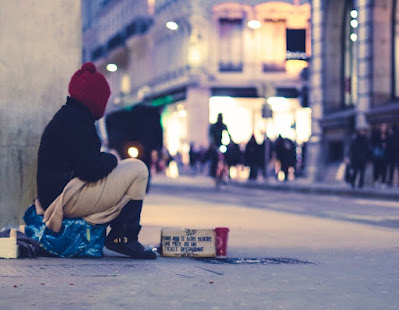
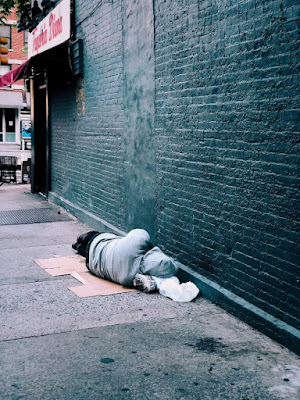
      After years of reading news stories about homeless, both nationally and locally here in Duluth, I decided to make a more serious effort to understand the causes and, if such is possible, solutions to this perpetual issue. Early last year I was quite surprised at how large the tent cities had grown in parts of South Minneapolis. Despite the inhospitable weather and initiatives to reverse the trend, the number of homeless in Duluth and St. Louis County have been steadily growing for years.

      Seeing that this is a national problem, I have been reading about what other cities are doing. What follows are some insights from Pittsburgh. Joanna Deming Executive Director of Fineview and Perry Hilltop Citizens Councils. She has more than 15 years experience in the housing and community development sector.

      ADDRESSING HOMELESSNESS IN PITTSBURGH  

      Pittsburgh is not a wealthy city, but it does have an affordable housing issue particularly due to low wages. This is especially true for residents of color. However, as Pittsburgh's economy has been picking up and new housing is being built, more wealthy people are moving into the city which is adding to this affordable housing issue. A 2016 study said there is a shortage of 17,000 affordable units in Pittsburgh. There is a shortage of 423 affordable units in the neighborhoods where I work.


      Affordable housing is a tricky term which often begs the question "Affordable to WHOM?" 
      The US Department of Housing and Urban Development (HUD) sets income guidelines for each geography based on area median income. If you are 30% income your area is very low income for example. Housing affordability is also defined as whether someone is "cost-burdened" by their housing. According to HUD, if you pay over 30% of your income on your housing costs (rent, utilities, etc), you are cost burdened. The lower your income, the more likely you will be cost-burdened. The more expensive housing is in your area, the more likely you will be cost-burdened regardless of your income, but those with the lowest income will be challenged the most.


      One solution to homelessness and the lack of affordable housing is to pay people more. 
      Make sure everyone has access to changing economies and can afford to stay in their homes or purchase homes as values go up. As long as we have low wage jobs and as long as schools only prepare adults for low wage jobs, we will have a need for more affordable and subsidized housing. 


      The Housing Market is there to reward property owners financially for their housing investment.
      As prices go up home and property owners win, renters face higher costs and homelessness and low/moderate-income people who would like to buy a home are unable to purchase one.  


      To have a balanced Housing Market, systems need to be put in place to protect affordable rental housing and affordable homeowners.

      Examples that have worked around the country are below:

      1. State and Local Housing Trust Funds: Public resources dedicated to affordable housing solutions. I helped establish these with various housing coalitions and serve on the City of Pittsburgh's Housing Opportunity Fund Advisory Board. The realty transfer tax is a potential funding stream.


      2. Community Land Trusts: Community owns the land, sells the building, and places a restriction on the property which limits the amount of funding that can be earned by the buyer when they sell that building. This allows buyers some equity, while preventing them from benefiting from a windfall of profit due to changing land values in the area that will make future low/mod buyers unable to purchase the same property. This works for homeownership and rental housing. My two neighborhood Community Development Corporations, Fineview Citizens Council and Perry Hilltop Citizens Council, are partnering with the City of Bridges Community Land Trust to advance this model in our community. This organization is based partially off of a large CLT in Minneapolis. City of Lakes CLT.


      3. Protection of Naturally Occurring Affordable Housing: As affordable rental properties come onto the market, mission minded organizations/companies can purchase the property and keep the rents affordable. We are working on using this model to get to scale with protecting affordable rental homes in our community. We are partnering with an organization called Rising Tide Partners to help with acquisition (purchase) and disposition (sales).


      4. Housing Authority Solutions: Some housing authorities are purchasing high end housing and when units become available, then they lease them to someone with a lower income. 


      5. Low-Income Housing Tax Credits (LIHTC): This is a very popular bi-partisan funding mechanism for building more affordable units. It tends to be expensive ($300K per unit) and the number of units that can be built is limited based on tax credit availability based on limited corporate demand and capped government allocations. In other words, the state only allocates a specific number of tax credits and there are only so many corporations who want to invest in this program based on their need for the tax credits.


      * * *


      My initial focus when I started thinking about these issues was on resolving homelessness issues. It wasn't long before I saw the link between homelessness and the need for affordable housing. As with many issues, the devil is in the details. Here's more from Joanna Deming:


      Photo by Jon Tyson on Unsplash
      Housing and homelessness often get put into two different buckets, when really the solution to homelessness is housing. Many homelessness programs fail, because they focus on temporary shelter and place restrictions on people (e.g. no drug/alcohol use) which deter people from staying there and keep people on the street.  The US Department of Housing and Urban Development has moved towards permanent housing as a focus in the past 10 or so years. There are some effective models out there:


      1. Housing First: These types of programs allow people to live somewhere without restrictions. This way they have a roof over their head, while they search for a job, meet with their doctor/therapist/social worker, and start their new life.


      2. Rental Assistance:  Can be provided by a government or nonprofit to reduce the cost of housing for a resident. Housing Choice Vouchers (known as Section 8) is one form of rental assistance. Departments of Human Services also provide rental assistance for vulnerable populations (e.g. veterans)


      3. Master Leasing: Where landlords are skeptical about having vulnerable populations live in their units, nonprofits or governments "Master Lease" the units--they are the tenant on record reporting to those landlords and providing support to the residents.


      4. Affordable Housing: Increase supply


      Ideally, people get help to STAY in their home BEFORE they are homeless. This is called Homeless Prevention. Most people have support systems, so they may face challenges, but they have a friend or family member that may help them pay rent or make a mortgage payment. Other people need private or public programs that can step in to assist with rent or mortgage payments.  Some people also need legal help to prevent eviction. Once someone is evicted it is MUCH harder to find a new place to live, so it is critical that people can stay where they are if they have an affordable place to live.


      Lastly, property tax relief is needed for seniors in changing markets, so they can stay and age in place. It makes no sense to pay off your house and then risk losing it due to rising tax rates.


      Here's a publication I worked on a while back that may be useful. The Housing Alliance of PA, where I used to work has a lot of great resources.


      Also, here is my community's 5 Year Affordable Housing Plan, which is our roadmap for protecting and expanding affordable homes, while preventing the displacement of low-income residents and people of color from our community. We have already made good progress advancing this plan, by expanding our real estate capacity and attracting a $450K Choice Neighborhoods Planning Grant from HUD to work with our Housing Authority on a redevelopment strategy that protects public housing residents in our community.  

      * * *

      Thank you, Joanna, for sharing these insights from your many years of experience wrestling with these important issues.

      Tuesday, April 30, 2019

      What Wealth Really Brings

      The lead article in this morning's Hyperallergic eNewsletter is about the relationship of wealth and art. More specifically, the Hakim Bishara piece is titled A Study Says High Family Income Significantly Increases Likelihood of Becoming an Artist.

      There were several reasons the Bishara article caught my eye. First, upon reading the title I thought of my own life and how growing up in the Bridgewater 'burbs was a significant step up from the near abject poverty of my father's upbringing. I pursued an art major. He pursued a career in which giving his children a better life than he experienced was a priority.

      Having recently watched The Grapes of Wrath, based on John Steinbeck's novel of the same name,  it was apparent that the Joad family was more focused on survival than on encouraging the children to go to art school.

      But the second notion that entered my thoughts upon reading this story had to do with wealth and suicide. Just this past weekend I heard someone say that wealthier nations have a higher suicide rate than poorer nations. When you hear something in passing you seldom ask for sources, so I took a minute to Google a few stories to support this assertion. It wasn't difficult.

      Here's the first, from Business Insider: 'Keeping Up With The Joneses' Could Lead To Suicide

      The second is a study from the psych department at the University of Illinois at Urbana-Champaign: The wealth of nations revisited: Income and quality of life. Here's an abstract of the research by Ed Diener and Carol Diener:
      Does economic prosperity enhance the quality of human life? Across 101 nations, 32 indices were analyzed that reflect a representative sample of universal human values (e.g., happiness, social order, and social justice). Wealth correlated significantly with 26 of the 32 indices, indicating a higher QOL in wealthier nations. Only suicide and CO2 emissions were worse in wealthier societies. Basic physical needs were met early in economic development, whereas advanced scientific work occurred only when basic physical needs were fulfilled for almost all people in the society. Limitations of the conclusions are discussed.

      This TIME article by Josh Sanburn makes a similar assertion: Why Suicides Are More Common in Richer Neighborhoods.

      * * * *
      My thoughts return to Frankl's Man's Search For Meaning. Money as an end helps keep a roof over our heads but can't fully satisfy the hunger in our hearts. Just a little food for thought.

      Related Story
      A Lesson from 29 Golden Gate Suicide Attempts

      Friday, August 17, 2012

      The Leisure Class and the Arts

      Every now and then I make observations that I do not know fully how to process. One of these is in relation to our notions of wealth and poverty, and especially wealth and the arts.

      It occurred to me as I was reading the diaries of Andre Gide that his "situation" was far different than mine. The Nobel Prize winning French author produced 80 books, many of which were self-published small circulation pieces that were shared with friends. Some diary entries mentioned playing piano for six hours during the day. When he traveled to Tunisia he had fourteen large trunks of belongings. In short, he was not like me. He was from a different class of people.

      Having last weekend visited the Duchamp collection at the Philadelphia Museum of Art stimulated questions about the man who many acknowledge now to be the most influential artist of the twentieth century. The Duchamp story is interesting because he achieved so much fame, created such a stir in his earlier life and then abandoned it all to play chess for the second half of his life.

      It made me ask questions as regarding his employment, or rather how he supported himself. Some would call playing chess all the time the same as being a do-nothing. I find it astonishing that he did this amazing work before World War I commenced and yet lived quietly out of the public eye right through to the Viet Nam War, passing away in October 1968.

      The phrase "leisure class" came to mind and I decided to see what Google had to offer. First, this desciption from Answers.com.

      Consuming, parasitic class, represented by an idle elite engaged in continuous public demonstration of their status. Idea particularly associated with the American sociological economist, Thorstein Veblen, who published The Theory of the Leisure Class in 1899. Veblen saw the fundamental human motive as the maximization of status rather than orientation towards any monetary variable. In establishing status, expenditure was more important than income, enhanced status being often achieved by ‘conspicuous consumption’. Thus a leisure class comes into being which dominates and trivializes leisure within a culture, though this pattern of consumption may be a necessary feature of the working of the economic system. Veblen's theories belong in the category of critical analysis of consumer society, a form of discourse embracing such writers as Lewis Mumford, J. K. Galbraith, and J. B. Priestley. — Lincoln Allison 

      This passage lead me to Veblen himself and this passage from Wikipedia.

      The Theory of the Leisure Class: An Economic Study of Institutions (1899), by Thorstein Veblen, is an economic treatise and detailed social critique of conspicuous consumption, as a function of social-class consumerism, which proposes that the social strata and the division of labor of the feudal period continued into the modern era. The lords of the manor employed themselves in the economically useless practices of conspicuous consumption and conspicuous leisure, whilst the middle and lower classes were employed in the industrial occupations that support the whole of society; economically wasteful activities are those activities that do not contribute to the economy or to the material productivity required for the fruitful functioning of society. (emphasis mine)

      As for Duchamp, his obsession with chess was all part of his mystique. On one occasion he went to Buenos Aires for nine months and played chess with game pieces he carved himself. He actually became a Chess Master, and algorithms of all his games were fed into a computer so that you yourself can play against Duchamp (or what purports to be his strategic play) online today. Here's how the invitation reads...

      Marcel Duchamp is widely recognized for his contribution to conceptual art, but his lifelong obsession was the game of chess, in which he achieved the rank of Master. Working with the records of his chess matches, I have created a computer program to play chess as if it were Marcel Duchamp. I invite all artists, skilled and unskilled at this classic game, to play against a Duchampian ghost.

      Do you want to play Duchamp?

      As for the "leisure class"... which bears a striking resemblance to one percenters, what painter would not like to have a patron who has oodles of money to buy up one's works? Well, think again. Some of these are people with so much money that a forty million dollar Picasso doesn't make a dent in their pocketbooks. Why would they buy your art when they can own a Warhol? If they bought everything you have ever created, they would then simply have a problem of knowing where to store it all. And that would not be very conspicuous, would it?

      For what it's worth, most of us who wish to make art need to support ourselves with other vocations. And that may not be a bad thing. It keeps us in the loop was regard what is really going on in the human race.

      Hope your weekend is a great one. Do something creative. And keep in touch.

      Disclaimer: The author of these blog entries is both an amateur philosopher and amateur art historian.

      Saturday, July 3, 2010

      Author Julia Dinsmore on Homelessness (Part 3)

      This is the closing portion of an interview with Julia Dinsmore, author of My Name is Child of God... Not "Those People": A First Person Look a Poverty.

      E: One of the problems that I think we have here in America, is that people who are middle class, the majority, have too much to lose to want to overthrow the system. They can see the injustice, they can see the wrongs, but they fear risking their livelihood, their all, for something like that. It's unfortunate. So part of your fight is to eliminate poverty but the reality is, do you ever see it happening? Because I feel like our politicians don't have the gumption or they're too afraid to do whatever it takes.

      Julia: Yeah. They're handcuffed to their constituencies. But so often they're handcuffed to big corporate wealth, and to this ridiculous idea of the free market job. We have chosen an economic system that doesn't even work, by definition, at full employment. When I learned that I thought, “Oh my gosh, the poor have been doing the world a great service in our poverty, for a very long time. You'd think they would have been treating us better. You know? So that someone's kid can get fat and lay by a swimming pool. When you really want to break it down, I'm amazed. I never ever learned that for it to work right, it starts going haywire any time we reach full employment.

      E: Some economists have said that a healthy economy is 5% unemployment. Well 5% is 5 million out of every 100 million so you've got 5 million people who are struggling to find meaningful work for their lives and a place to fit in that doesn't exist, and right now unemployment is 10%.

      Julia: I know! And in our economy it's so important and so valuable and that goes back to my storytelling and midwifing others’ stories from generational poverty. I have felt called to do that. And that's why I work with the kids and the poets and always encourage other people who have not been completely destroyed by this experience to learn how to tell their stories, because there's so much value to this world that we can bring.

      E: Well I appreciate the time that you gave me here, I will email you when I go ahead and blog it. I'll transcribe some of what we talked about and maybe I'll even ask more questions later.

      Julia: Yes, because we're just scratching the surface.

      E: Yes, we're just scratching the surface. I'm just trying to draw some attention to your book.

      Julia: I love that, thank you. Could you mention, to0, the Give Us Your Poor CD?

      E: Is that available on Amazon.com?

      Julia: Yes it is. Give us your Poor. We've got Bon Jovi, we've got Bruce Springsteen, we’ve got Natalie Merchant… she chose a song by a girl from Duluth, my son's ex-girlfriend. She was only 14 when she wrote her song. I had just gotten home from Washington DC at the national coalition for the homeless conference, and I said, “Can you write a song?” because she had experienced a lot of homelessness, and she wrote this song, and we recorded it and sent it in. Natalie Merchant picked it and it is a hot track. And then Danny Glover does two of my pieces that are on that CD as well. There's a beautiful, beautiful 19 tracks. There's a cut called Land of 10,000 Homeless that is interviews with men women and children on the streets of the Twin Cities set to music.

      E: I see that Pete Seeger's on it, as well as Tim Robbins, John Sebastian…

      Julia: I think that it's so valuable to look at progress like this because it shows what we can do. This is a CD to end homelessness, and to let people who are experiencing homelessness get together with rich famous people to collaborate and do something. When we had our world release party in Boston, we raised 20,000 dollars to send little Kyra Middleton, who sang Boll Weevil on it, to college. And her family is permanently housed now. It's my dream to have a Give us Your Poor concert in the Twin Cities with Bon Jovi and Natalie Merchant and local musicians. It’s important to see what we can do.

      E: Thank you.

      The rest of the interview involved off topic discussions about my upcoming art show and other things. Julia has a good spirit, is thoughtful and perceptive. But as I post the last piece this morning, it feels as if the task she has set before us -- eliminating homelessness -- is truly insurmountable. The problems are so entrenched, the systems so broken. But this is an essential first step... being aware of the extent of the problem, and the need to keep it in front of us, not swept into a corner or under the rug. Be sure to check out the CD Give us your Poor. And have a reflective Fourth of July weekend.

      Sunday, October 26, 2008

      More Numbers

      My September 23 entry on Numbers got good reviews, so I looked forward to the next slow news day as an excuse to assemble another list of numbers. Every picture tells a story, they say. Some numbers tell pretty vivid stories as well.

      $9.6 Billion
      Amount of money Warren Buffet has lost in his investment holdings in 2008.

      $52 Billion
      Current value of Warren Buffet’s holdings.

      $3 Billion
      The current value of Rupert Murdoch’s holdings after losing $3.9 billion in 2008.

      1500
      Number of employees Yahoo last week announced they will lay off.

      7200
      Number of workers Merck is laying off in its current restructuring.

      24
      Number of megacities over eight million in 2004.

      1
      Number of cites of this size in 1950.

      300,000
      Population of Lagos in 1950.

      13,500,000
      Current population of Lagos, Nigeria.

      193,800,000
      Number of Chinese currently living in urban slums.

      35,600,000
      Number of Pakistanis currently living in urban slums.

      84.7
      Percentage of population of Bangladesh living in slums.

      5.8
      Current percent of U.S. population living in urban slums.

      99.4
      Percentage of Ethiopians living in slum conditions.

      200,000
      Estimated number of slum communities in the world today.

      4
      Number, in millions, of people living in Mexico City’s largest megaslum in 2005.

      320
      Number of children per thousand who die before age five in Luanda, Angola.

      34
      Number of inner city slums in Karachi, Pakistan.

      66
      Number of Karachi slums on the city’s periphery.

      107,000
      Number of people evicted from slums in Hong Kong in 1950.

      In addition to the problems of overcrowding, inadequate access to safe water and sanitation, the poor must deal with the constant insecurity of not owning their homes. In recent years, enforced evictions by the State have caused untold disruption in countless lives. Here are some numbers from a few famously awful slum evictions of the past two decades.

      1988 ~ Seoul, Korea… 800,000
      1990 ~ Lagos, Nigeria… 300,000
      1995-96 ~ Rangoon, Burma… 1,000,000
      1995 ~ Beijing, China… 100,000
      2001-03 ~ Jakarta, Indonesia… 500,000
      2005 ~ Harare, Zimbabwe… 750,000
      2007-08 ~ Beijing, China… 350,000

      Less than 300
      Number of toilet seats available to the 480,000 people in 1100 Delhi slum settlements.

      Sources
      Wall Street Journal, October 23, 2008.
      Planet of Slums, Mike Davis
      Elements of a slum for the purposes of this report: Overcrowding, poor or informal housing, inadequate access to safe water and sanitation, and insecurity of tenure.

      Saturday, December 1, 2007

      A Baby Ripped Out His Heart

      "When we took off from Port Au Prince we had been deeply immersed in the Haitian culture and the appalling poverty, crying, starving orphans, and near complete hopelessness. The day before leaving to come back to the States I spent a portion of the day at Mother Theresa's Orphanage with Beth and Chris just holding babies, changing diapers and playing with the toddlers. One baby ripped my heart out and kept a piece for herself. A piece I was glad to leave behind. She was maybe 1 year old and so frail and so beautiful with one small earring in her left ear.
      Jon Lacore
      http://www.jdlacore.net/

      On Thanksgiving my blog entry here dealt with how we take so much for granted as Americans. It is almost impossible to convey this in just a few words. Images and stories and, best yet, a period of time spent in the presence of Third World poverty will all conspire to break your heart if you allow it.

      We have all had glimpses of it. We all know there is need out there, that there are people hurting in ways we can't even fathom. But because we do not know how to react to it we tend to shut it out.

      What prompted my Thanksgiving day entry was seeing a presentation of images from Haiti's Cite Soleil, an impoverished section of Haiti on the outskirts of Port-au-Prince. Jon Lacore, the son of some friends of ours, had just returned from a nine day trip to The Haiti Orphan’s Project and shared some of what he had seen and experienced there. (http://www.haitiorphansproject.org/)

      Thursday of this week I followed up by having lunch with Jon who said, "After seeing Haiti I have decided to focus much more of my attention on that country due to it’s extreme poverty unlike anything I have seen before."

      The twenty-five year old has seen a lot in his short life. At thirteen he was involved in a summer mission trip to Pakistan, followed by shorter but similar trips to Nicaragua and Trinidad. As a medic in the U.S. armed forces he spent nine months in Bosnia, and most recently 16 months in Iraq where, among other things, he served as a medic responsible for providing emergency medical treatment for the base, clinical duties for the soldiers and civilians on base, and aid at the trauma center for mass casualty incidents.

      Even with this background, nothing had quite prepared him for what he experienced in Haiti.

      Thursday, November 22, 2007

      Much To Be Grateful For

      We take so much for granted. Hence there is value each year on Thanksgiving day to reflect on how much we have to be thankful for. Friends, family, loved ones, a home, a job. It is a good tradition to make a list, to write it down. Writing forces you to clarify even further, and this process makes you even more appreciative.

      But if you are an American, when you have finished your list you will have still not recorded some things that are so basic, so part of our lives, yet we take them for granted. One way to deepen your appreciation for how good you have it is to visit an impoverished Third World nation.

      We did not do such a thing this week, but we did go there in pictures when the son of a friend of ours shared photos from his recent nine day trip to a slum called Cite Soleil outside Port au Prince. Having lived in Puerto Rico and Mexico, I have seen slums. But I'd not seen anything that closely compared to this (except perhaps some very poor sections of Mexico City.)

      The shanty towns stretched far as your eye could see. No yards, no electricity, no running water, disease infested stenchwater and muck all through the streets, makeshift homes of corrugated steel and miscellaneous scrap materials, and death. One in four children never see their fifth birthday. Reality is grim, and hope is difficult to imagine.

      Haiti is the most impoverished nation in the Western Hemisphere. For a bed, many people sleep on cardboard. AIDS is rampant. Food is lacking. And for most, even if you want to work there are no jobs. What is there to look forward to?

      Without electricity, if you had as cell phone, there would be no way to re-charge the battery. No microwave ovens. No way to read this blog post because you would not have internet access, or a computer. Was that a mosquito bite or a malaria infection you just received?

      The mission of The Haiti Orphans Project is to improve the lives of orphaned children in Haiti by providing medical care, access to education and equal access to basic services. If you wish to do more than "give thanks" you can visit their website and see what a few handfuls of good people are doing out on the front lines where poverty reigns.

      http://www.haitiorphansproject.org/haiti/english/home88.html

      Popular Posts