Showing posts with label Steve Jobs. Show all posts

Saturday, June 13, 2026

An Afternoon with Congressman Jim Oberstar, Including Four Insights for Young Writers

"My father told me when I graduated from high school, 'You have two choices. You can work in the mines, or go to college to create for yourself a better life... And it better be one that helps other people." 
Congressman Jim Oberstar

* * *

When Susie and I moved to Duluth in 1986 I was able to land a job as a writer at AMSOIL, a small but growing manufacturer of synthetic motor oils. I achieved this with a strong portfolio, four years of published work from our time in the Twin Cities where we'd bought our first house with money earned by painting apartments. Evenings, however, were devoted to freelancing with the hope that one day I'd be a full-time writer. 

During that time I attended two writers conferences that proved exceedingly helpful, and also joined a writers group, which led to a lifetime friendship with the late John Priin who took me under his wing, serving as a mentor for the early years of my fledgling writing career. 

In early 1988, a publisher in Minneapolis sought to assemble a magazine-sized voters guide that would provide an in-depth look at the Republican and DFL candidates for Congress. The aim was 5000 words on each canditate and "report card" style of Q&A for the various issues important to voters at the time. They had lined up seven writers for the seven Congressional districts but didn't have any ideas for Duluth. Someone evidently said, "Ed Newman moved to Duluth."

Out of the blue I received a phone call. The publication was to be called People and Politics. I was told that they would make arrangements with the candidates and I would only need to find a photographer who could get some photos. It became the highest paid freelance job of my career. 

Over the years I have several good meetings with Jim. His chief of staff, whom I ran into atthe library the following year, told me that Jim liked the article very much and said it was the best article ever written about him. (EdNote: Perhaps Inside-the-Beltway journalists aren't as concerned about being Minnesota nice.)

Congressman Oberstar had originally arranged for me to interview him at the Chisholm City Hall. After fifteen or twenty minutes he suggested we go to his mother's house and continue after. He wanted to call is wife in DC who was dealing with cancer. 

It seemed apparent that the neutral location had been chosen for our meeting in the event that I was maybe a journalist out to skewer him. Instead, I spent an hour with his mother and daughters who were cleaning up after their Sunday dinner. Oberstar and his family were so down-to-earth, thoughtful and kind. When he emerged from the other part of the house where he'd been on the phone, we headed off for an afternoon at Iron World.

The most memorable moment at Iron World, for me, was when the car came to a stop in the parking lot, it seemed like Jim's eyes changed. It was like the clear eyelids that go over a frogs eyes just slid over his expression so that he was transformed from the son/spouse/father persona into a public figure. There were crowds at the gate all greeting him, some calling out his name as if seeking recognition, and Jim waving, approaching, shaking hands, becoming the politician.

Looking back on the experience, I can see a few lessons for young writers. Here are three that come to mind.

1. Be Connected
I never did learn how my name came up for consideration to do this story for People and Politics. I've always assumed it was someone from the writers group I'd been part of, though it may have been one of the two writers conferences. I met a variety of editors at each. Perhaps I'd made a good impression with one of these?

2. Reputation Matters
I've always attempted to maintain a high standard for my work. Even more important, from an editor's point of view, would be the writers ability to meet deadlines. My first published article was heavily edited. No one saw that except H.K. (the editor) and me. One thing an editor cannot do it edit a blank page. When it comes to writing assignments, I can honestly say I've never missed a deadline.

3. Initiative
Chance favors those who prepare. Besides accumulating bylines, I worked hard to produce good work. Over time I've continued to read books and listen to lectures about writing. You're never too old to learn a few new tricks. 

4. You Never Know Where Things Will Lead
If you're motivated (for me I believed it was a calling) writing can land you a job as a writer. Once inside the door, If you're at a good company you'll have opportunities to fan your cards and get noticed. My career in advertising/PR/marketing began with taking initiative.

When I asked Congressman Oberstar how he got into politics, he said, "It was just all by accident. Robert Louis Stevenson wrote, 'The greatest adventures in life are those we do not go forth to seek.'" He then shared how he intended to become a missionary in Haiti. He learned French as part of that preparation. After meeting his wife he ended up in Washington, and the world of politics. 

There's an interesting twist here. Steve Jobs famously audited a class in calligraphy after dropping out of college. Years later, this exposure to fonts led to the MacIntosh with its more elegant graphical interface. Once Jim Oberstar was in Congress, the Quebec media, seeking out people who could address audiences in their native tongue, soon found their inside man. 

President U.S. Grant began his autobiography with this same sentiment: "Man proposes, God disposes." 

* * * 

This past week I came across an envelope with these photos from that day, photography by Dan Grandmaison. It triggered a batch of memories and a few thoughts about that time in my writing career. The Republican candidate was Jerry Shuster. 

One of the questions I asked each was, "What are your strengths?" This gave each man a lob pitch to hit a home run if they wished. (These interviews were at separate on separate days.) I then followed up with, "What's your greatest weakness." Jim, a seasoned veteran of hard questions, replied, "Chocolate."

Thursday, April 9, 2026

A Dozen Quotes to Mull Over on a Dreary Day

The weather outside is dreary and grey. As for me, I draw my strength from the weather within. Right now it's blue skies and, yes, here comes the sun.

When I lived in Mexico I bought a notebook in which I began recording quotes from my readings. It was nice having them all in one place, like a personally curated Bartlett's Familiar Quotations, which every serious writer was encouraged to acquire before the Internet em
erged.

Wikiquote is a website that arranges quotes by both author and by theme. If you are a writer and unfamiliar with it, I believe you'd find it worth your while to explore. 

The quotes on this page are arranged neither by author nor by theme. Their common denominator is that I found them interesting because they give you something to ponder and mull over. It's a bite-sized list to be savored slowly, not gobbled up in a rush to get on with your day.

Recently I discovered an extremely interesting page of quotes about Mathematics that you might want to explore. Harvested and assembled by mathematician James Nickel it's titled Quotable Quotes in Mathematics. James is a longtime friend, and an author of numerous books pertaining to math from a Biblical Christian worldview perspective. This past week I interviewed him about his 30-page collection of math quotes. You can read the interview here.

Without further ado, here my dozen quotes to mull over. Read them all, pick one and roll it around in your mind till it yields fruit.

"Don't you ever wonder sometimes what might have happened if you tried?”

—Kazuo Ishiguro 


“The greatest hazard in life is to risk nothing.” 

—Steve Jobs


“In science, there is only physics; all the rest is stamp collecting.”
--Lord Kelvin


“Don't pay any attention to the critics—don't even ignore them.” 
Samuel Goldwyn


“More law, less justice.” 
— Marcus Tullius Cicero


"Quality is remembered long after price is forgotten."
—Aldo Gucci


"Of all sad words of tongue or pen, the saddest are these, 'It might have been."
—John Greenleaf Whittier


"We cannot solve our problems with the same thinking we used when we created them."

Albert Einstein


"A man hears what he wants to hear and disregards the rest."

—Paul Simon


"Behaviorism is a flat earth view of the mind."

—Marvin Minsky


"Love all, trust a few. Do wrong to none."

—William Shakespeare


"I believe in Christianity as I believe that the sun has risen: not only because I see it, but because by it I see everything else."

—C.S. Lewis


Let the sunshine in!

Wednesday, October 15, 2025

It Takes a Lot of Courage to Be a Contrarian

In a world that rewards conformity, being a contrarian isn't just bold—it's downright heroic. Picture this: You're in a boardroom. An idea is proposed that is clearly off the wall, but to your surprise one by one everyone around the table affirms that this is a good idea, nodding along in agreement. When it's your turn, do you zip it or say, "Wait, this is silly." Or, more tactfully, you suggest that they are pros and cons to everything and you suggest there may be another way to look at this.

Hearts race, eyes narrow. Why? Because challenging the status quo demands courage—the kind that separates visionaries from the herd. 

History is littered with contrarians who reshaped our world. Galileo stared down the Inquisition, insisting the Earth orbited the Sun, not vice versa. He faced house arrest, yet his defiance made a significant contribution to modern astronomy. 


Fast-forward to 2008. Michael Burry, the investor immortalized in The Big Short, bet against the housing market when Wall Street laughed him off. Labeled a lunatic, he profited billions while the economy crumbled. Or consider Rosa Parks, whose simple refusal to move sparked the Civil Rights Movement. These weren't reckless rebels, brave souls who put something on the line to go against tradition.


So, why does contrarianism require such guts? First, the social sting. Humans are wired for belonging. Dissent risks isolation, mockery, or (in our social media age) worse—cancellation. Second, there's a personal toll. Doubt creeps in when you're the lone voice. Self-doubt whispers, "What if I'm wrong?" Or perhaps the more common response, "Is this my line in the sand? Is this an issue I want to be a martyr for?"


It's challenging to stand alone, and sometimes costly. See (or read) Ibsen's An Enemy of the People.


When others are hugging the status quo, being contrarian can be the driving force of innovation. Steve Jobs bucked the trend of button-heavy phones with the iPhone, turning Apple into a trillion-dollar titan. Warren Buffett thrived by zigging when others zag, famously advising to "be fearful when others are greedy."


Being contrarian isn't about being difficult—it's about integrity. It takes courage to question echo chambers, whether in politics, business, or daily life. (Where are the individualist voices in the GOP or Dem parties? What is all this unapologetic party lockstep alignment about?) 


As for courage, yes, it's necessary. Why do we hold back? Someone once said courage is like a muscle that is strengthened with use. And like a virus, it's contagious.


Embrace the discomfort. The world needs more contrarians—not to divide, but to elevate us.  


Illustration: A Gemini 2.5 modified version of one of my doodle drawings.

Wednesday, July 23, 2025

Remarkable Lessons from the Pixar Story: Creativity Inc.

How to Create and Manage a Creative Culture: Lessons from the Pixar Experience


When I first saw the silhouette on the cover of Creativity, Inc. I was stymied. It bore a resemblance to the familiar conductor who appears in Disney's Fantasia, but was not, yet it had a familiar look. It's like that puzzle with the vase and the face, or a number of similar optical illusions. Once you see it, you generally don't un-see. It was Buzz Lightyear, or rather a hybrid of these two iconic images, standing in as symbol for the phenomenal business hybrid of Disney and Pixar.

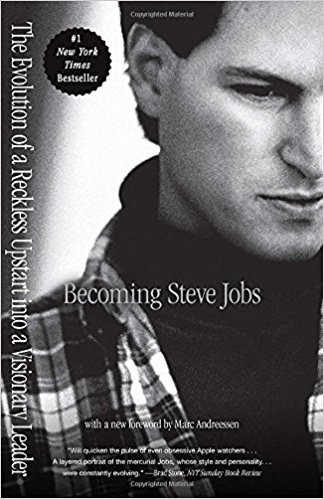
It was Brent Schlender's Becoming Steve Jobs that cued me in to the role Steve Jobs played in saving Pixar Animation Studios from the ash heap of stories that might have been, keeping the company on life support till all the pieces could be pulled together for the Hollywood supernova called Toy Story. Upon completion of this Jobs career and character development story, I felt impelled to read Ed Catmull's insider account of Pixar. The big achievement there, and the basic storyline in this book, was not Toy Story, or its various other superhits. Rather, Catmull's aim is to share a lifetime of insights about management in general, and managing creative people specifically.


How does a company create a creative culture where excellence flourishes, where ideas actually come to fruition and become earth-shaking events? Catmull shares everything, including all the lessons learned through their various failures, and the miracles that rose from those ashes.

The amazing thing is that despite the various mis-steps, Pixar never had a single film that bombed.

The book's subtitle tells the real story of what made Pixar such a superstar: Overcoming the Unseen Forces That Stand in The Way of True Inspiration. Unseen forces means forces can refer to forces that are invisible, like the ice below the surface that sunk the Titanic, or it can mean forces that are in plain sight, like Poe's Purloined Letter, but we do not see them. Catmull states that the management team had to be perpetually vigilant. What they were vigilant about was very different from most organizations.

At the end of the book Catmull does a summing up of his "Thoughts For Managing A Creative Culture." If you Google that title, you'll find that numerous writers have begun sharing these. Though Ed Catmull's stories make it such a rewarding read, his distilled thoughts at the end are well worth deeper reflection. Here's a small collection of notes from this five page reiteration of the book's themes.


--Give a good idea to a mediocre team, and they will screw it up. Give a mediocre idea to a great team, and they will either fix it or come up with something better. If you get the team right, chances are that they'll get the ideas right.

--It isn’t enough merely to be open to ideas from others. Engaging the collective brainpower of the people you work with is an active, ongoing process. As a manager, you must coax ideas out of your staff and constantly push them to contribute.

--There are many valid reasons why people aren’t candid with one another in a work environment. Your job is to search for those reasons and then address them.

--Likewise, if someone disagrees with you, there is a reason. Our first job is to understand the reasoning behind their conclusions. Further, if there is fear in an organization, there is a reason for it— our job is (a) to find what’s causing it, (b) to understand it, and (c) to try to root it out.

--There is nothing quite as effective, when it comes to shutting down alternative viewpoints, as being convinced you are right.

--In general, people are hesitant to say things that might rock the boat. Braintrust meetings, dailies, postmortems, and Notes Day are all efforts to reinforce the idea that it is okay to express yourself. All are mechanisms of self-assessment that seek to uncover what’s real.

--If there is more truth in the hallways than in meetings, you have a problem.

You can find more of these here or if you go ahead and purchase the book here.

* * * *
Healthy organisms and healthy organizations will grow naturally if given the right nourishment and environment. In the case of institutions, there have been plenty of books written about how they fail. Ed Catmull's insider perspective on Pixar's achievements has applications for all types of organizations. But it would be especially valuable for companies working in creative fields like ad agencies, theater, Hollywood, arts communities, new product development, communications and more.

More can be said, but we'll end with this: Read the book.

“Achieving enormous success while holding fast to the highest artistic standards is a nice trick—and Pixar, with its creative leadership and persistent commitment to innovation, has pulled it off. This book should be required reading for any manager.”
—Charles Duhigg, author of The Power of Habit

Originally published in 2017

Tuesday, October 5, 2021

This Day In History: Tuesday October 5

A FEW HIGHLIGHTS FROM THE LAST 60 YEARS 

Here are some October 5 events that have occurred since since my youngest brother was born in October 1960

2011
American businessman Steve Jobs,
 a pioneer of the personal computer era who cofounded Apple and transformed it into one of the world's most successful companies, died at age 56. In fact, at this point in time Apple is #1 in revenue and has a market cap of 2.3 trillion dollars, which makes it the largest company in the world.

A Review of Walter Isaacson's Book on Steve Jobs

Tech Tuesday: Lessons for Leaders from Brent Schlender's Becoming Steve Jobs

1970
On this day PBS aired its first broadcast on American television. Notable programs included Sesame Street and Mister Rogers' Neighborhood. If you've not seen the film with Tom Hanks as Mr. Rogers, you should check it out. 

It's a Beautiful Day in the Neighborhood

1969
On this day in 1969 Monty Python's Flying Circus debuted on the BBC. That same year, astronauts on the moon took one small step for man while Monty Python took a giant leap for comedy.  

1962
The Bond Franchise Begins

Daniel Craig: A more serious Bond.
Hard to believe we're nearing 60 years of James Bond on the silver screen. I doubt that anyone could have imagined that the release of Dr. No on this day in 1962 would launch a nearly endless revenue stream for the Bond franchise. In addition to endless debates over who was the Best Bond, there are probably trivia games in which people identify the which actors played Bond in the various films, as well as who played the various villains and "Bond girls." Of course it all began with Sean Connery, who is still voted #1 by many Bond fans. 

It was probably no accident that No Time To Diethe latest Bond film, was released this past weekend, Daniel Craig reprising the role. That first chase scene in Casino Royale created a lot of enthusiasm for Craig as Bond. In recent interviews he's stated that he's hung up his spurs and is finished with the role. 

It's hard to imagine that the budget for Dr No was barely a million dollars. The budget for No Time To Die exceeded a quarter of a billion dollars. 

Here are a couple blog posts from a decade ago along these same lines. 

Daniel Craig, License To Kill

Devil May Care, a new Bond novel released on the 100th anniversary of Ian Fleming's birthday. (A review.)

LAST BUT NOT LEAST

1962
ON THIS DAY, the very same day as the release of Dr. No, The Beatles released their first single in the UK "Love Me Do" which reaches number seventeen on the British charts. When later released in the US in April 1964 it climbed to Number 1. 

Daniel Craig painting by the author. 18"x 24", latex, acrylic on panel.

Tuesday, April 18, 2017

Tech Tuesday: Lessons for Leaders from Brent Schlender's Becoming Steve Jobs

It's already been five years since Walter Isaacson's biography Steve Jobs became a NYTimes bestseller. When I reviewed the book in 2012 I concluded, "This eye-opening page-turner is as exciting as any novel."

So when I discovered an audio version of Becoming Steve Jobs at our library two weeks ago, I had two immediate thoughts. First, what more can Brent Schlender say that hasn't already been said? Second, even if there's nothing new I would like to read his story again and see what new pearls I might find. It turned out to be a good decision, because there was plenty new to learn.

The full title is Becoming Steve Jobs: The Evolution of a Reckless Upstart into a Visionary Leader. Author Brent Schlender is an award-winning career journalist who made his mark writing profiles of high-profile entrepreneurs and business leaders in the digital revolution, including two decades as bureau chief and editor-in-chief at Fortune magazine. One can tell early on that he has had close up access to Jobs for a very long time.

The structure of the book is linear, beginning with the birth of Apple. But this is not a book about what happened. It is the story of Steve Jobs' education, the events that served to produce one of the great leaders of our time.

In point of fact, according to Jim Collins, author of the bestselling business books Good to Great and Built To Last, there have only been two truly great visionary leaders of the past century, Steve Jobs and Winston Churchill. Each of these men had experienced great failure early in their careers, and each developed a relentlessness and resilience that enabled them to re-emerge as leaders and accomplish great things.

The author's aim was not to assemble anecdotes and Apple trivia. Rather, his stories are shared with an aim to provide lessons that will have value to all of us. One example is the Steve Jobs observation that it's only in hindsight that we can "connect the dots on how things happened," whether in our lives or in business.

It is well known that Steve Jobs was a massive Bob Dylan fan. On one occasion Jobs described to the author the difference between artists and everyone else. "The artistic spirit is willing to take risks." The artist is willing to go out on a limb and risk failure in order to achieve his or her vision. Steve Jobs got this insight about himself, as an artist, by watching Dylan perform. He saw that Dylan was continuously re-inventing his songs, going different places in his performances, challenging himself and his band. It was not about the money. The true artist is always risking failure. Picasso and Dylan were true artists, Steve Jobs pointed out.

* * * *
Lessons

Insights from the Steve Jobs story are too numerous to list. Here are a few to whet your appetite in the hopes that you will find a way to read or listen to this book.

1. Jobs' passion for and investment in Pixar was a key component of its success. Schender shows how putting together a solid team is the foundation for miracles.

2. Many achievements were directly related to key partnerships between Steve and various individuals whose talents were affirmed within this relational context. What they accomplished was remarkable, Jobs being the catalyst. He surrounded himself with people smarter than himself and though he demanded a lot, when he had matured he gave them the freedom to push back. No yes-men. They all had a say and worked together to accomplish what needed to be done.

3. Very early on what Steve Jobs saw in his head was an early version of the Internet of Things (IoT) with the Macintosh at the center of a wheel as the hub, all the other elements connected to the hub like spokes. The consumer goods became consumer touch points.

4. Every consumer touchpoint, whether ads or iPhones or iPods and iPads or iTunes downloads, was part of a whole which Steve Jobs saw as The Apple Experience. This Apple Experience was designed to lead people into discovering how easy it is to interface with Apple products. Both easy and elegant.

5. Possibly the most notable product of his life was the iPhone, a product he personally may have not wanted to pursue, but his team had been given the green light and it went on to transform the applications business.

6.  Steve knew that even he had underestimated the potential of consumer electronics. Once this phase of the company began to explode, Apple steadily improved the experience of enjoying and managing music, photos and videos on personal electronic devices making the various technologies coherent in a way that no other company came even close to matching.

7. "The Apple Experience was an unprecedented merger of marketing and technology excellence" designed to make customers want to come back for more "This was a new kind of quality, something consumers have never experienced before."

The book includes the text to Steve Jobs' commencement speech that he gave in Stanford. You can listen to it here, as nearly ten million others have already done.

In case you haven't already noticed, I became quite enthused about this book. If you get the chance, especially if you are in marketing, I strongly recommend this to you.

Meantime, life goes on all around you. Don't let it pass you by.

EdNote: Becoming Steve Jobs was co-authored with Rick Tetzeli.

Tuesday, September 25, 2012

Up in the Clouds

How do you like them apples?
Yesterday on the radio I heard that Apple had a bad weekend. They only sold 5 million iPhones instead of the anticipated 6 to 10. Uhm, how many companies would call 500 million dollars in sales a bad weekend? Not including all their other products. Nevertheless, the stock market fell a bit on this tragic event.

I doubt anyone is really that worried about this crisis. The company employs over 60,000 people and continues to grow year after year, leading the way toward the future with its iPods, iPads, iTunes, iPhones and iMacs. Now it's the iCloud....

This morning I was thinking how clever the Mac strategy has been, calling everything "I"... but which really means "My." MyPod, MyPad, MyTunes, MyPhone and MyMac. And we enter the new era of cloud computing, Apple is encouraging everyone to use MyCloud. Which really means TheirCloud.

Back in the 90's leaders like Larry Ellison predicted a future where computers would be a "dumb box" and everything would be run from somewhere else, stored somewhere else. This seemed too far out, but as a close friend of Steve Jobs during his Pixar years, Ellison's ideas no doubt made an impression. When Jobs rode back onto the Ponderosa to regain what he'd built, the cloud was with him.

We often think of clouds as something that obscure the sun. They also bring much needed rain and serve to help the earth's atmosphere retain heat. The hard frost we had this weekend fell through a cloudless sky.

Clouds are nebulous, too. They appear very defined from a distance, especially at sunset, but up close you really can't touch an edge anywhere.

The Internet has a similar configuration. It's "out there" somewhere, but exactly where we're not sure. We sort of know what it is, but we don't have to fully understand it to experience its benefits.

When I took an Internet class at UMD in 1994, Netscape didn't even exist yet. The infant World Wide Web was just emerging from the womb. Up till then, the Internet backbone consisted of email programs like Pine, and Veronica searches using Archie, or something to that effect. The instructor gave a demonstration of Mosaic at the end of the day and he seemed blown away by it. Though visually more interesting than a screen full of text, it took forever to load on his screen, and that was with the university's T-3 line. Hmmm. I didn't seem to think it would fly. But what did I know? I was still too down to earth. More impressive to me was my ability to sit in Duluth, MN and explore libraries in Pisa, Italy and Berlin, Germany in a matter of moments.

One of the first pictograms used to illustrate what the Internet really was a diagram of a cloud. I used a similar image in my Screen Net column the following year.

Evidently the cloud image conveyed something, even if that something is a bit abstract for most folks. Clouds can be associated with dreams and poetry and intangibles. And that's what Apple's all about, isn't it? Aesthetics and possibilities, not just technology.

You can be sure we'll be hearing more about clouds in our future. Spread your wings and fly.

Thursday, January 5, 2012

A Review of Walter Isaacson's Steve Jobs

"You must understand that ordinary efforts do not count; only superefforts count." ~Gurdjieff

His name was Steve Jobs. Just when you thought you knew everything important that there was to know about the passionate founder of Apple, you discover through this incredible biography how little you really knew.

Everyone knows about the garage startup, about Woz, about his tantrums and the challenge of working for him, and maybe even where the Apple name came from. And most of us who were there watching the 1984 Super Bowl remember "the commercial" for MacIntosh, as legendary as John Elway's "the drive" for sports fans.

But how little most of us really knew, till Walter Isaacson assembled his story and shared it with the world in a New York Times bestseller this fall, shortly after Mr. Jobs' passing from cancer.

I myself have been a Mac guy since 1987, when I bought my first, a 512Ke. E meant enhanced. When John Sculley was brought in from Pepsi to be head of Apple in the 1980s, I thought it was a good thing, because I read Odyssey, Sculley's book in which he tells he came in as a white knight and saved the company from certain doom.

When you read Isaacson's book you hear the other side of the story. It's possible Steve Jobs had to be pushed aside for a season, but had the genius of Jobs not been re-inserted many years later, the languishing Apple would almost certainly not have become what it is today.

There were many surprises in the book. Steve Jobs had been born to a family in Wisconsin who put him up for adoption. He was raised by a California couple named Jobs. His birth mother was 23 and when he turned 23 he fathered an out-of-wedlock child whom he himself did not raise, an ironic echo of his own life experience of abandonment. Her name was Lisa, which later became an acronym for one of his products preceding the Mac.

Jobs' drug use is detailed and his religious quest, which included going to India for seven months to study at the feet of a guru, becoming a Buddhist vegan who even when an exec at his fledgling company preferred to go barefoot than wear shoes. Anecdotally, Isaacson notes that Jobs smelled because he did not believe in deodorant or the other American amenities of hygiene. His method of de-stressing at work would be to sometimes stick his feet in the toilet. His employees found this a bit icky.

Steve Jobs was a huge Dylan fan and Beatles fan. In fact, he was so much of a Dylan fan he pursued and maintained a two year romantic relationship with Joan Baez who had herself been romantically entwined with Bob. Jobs gave it up when he came to realize he didn't really love her but loved the idea of being involved with his idol's woman.

When the iPod came out, a brilliant Steve Jobs concept that revolutionized music, Jobs was asked the question that Apple's TV commercials were asking: "What's on your iPod." the interviews then said, if you had to choose between the Beatles and the Stones, who would you keep? Jobs replied that that was easy, The Beatles. "But if you asked me to decide between the Beatles and Bob Dylan, that would be a much harder question."

Isaacson's book is endlessly enlightening as he details Jobs' experiences in bring Pixar to the world and thereby forever changing the way animated films are produced. We see his ongoing rivalry with Bill Gates and how the Apple philosophy was 180 degrees opposite of the Microsoft way. We read of his friendship with Larry Ellison, and how the Oracle founder helped him get re-connected to his life again. We learn about Jobs' friendship with Bill Clinton and the advice that he gave President Obama. And we learn about his tears.

When Woz's father confronted young Steve about splitting the fledgling Apple 50-50 between them, he didn't defend himself. Jobs wept. In story after story we read of crying jags, even in board rooms. It's an unusual portrait of the man who was clearly visionary and profoundly influential. At least one reviewer wrote that this book is the story of a "man who put a dent in the universe."

In an interview on Amazon.com author Walter Isaacson describes Steve Jobs this way. "He was a genius at connecting art to technology, of making leaps based on intuition and imagination. He knew how to make emotional connections with those around him and with his customers." It's a good interview and well worth reading.

This eye-opening page-turner is as exciting as any novel.

Steve Jobs and over one million other books are available for Amazon Kindle including my first novel, The Red Scorpion.

Popular Posts