Showing posts with label libraries. Show all posts

Thursday, January 13, 2022

Another Post About Books: New Arrivals at the Duluth Public Library

As nearly everyone knows, I love libraries, and especially appreciate the Duluth Public Library. One of the most challenging parts of 2020 for me was not having access to the library. There is something magical about looking at the spines of books on the shelves, reading titles and occasionally slipping one from its home to check out the cover and flip through its pages.

Our library also has a satisfying variety of DVDs and audio books, historical documents, newspapers, and 20 to 30 computers for internet browsing.

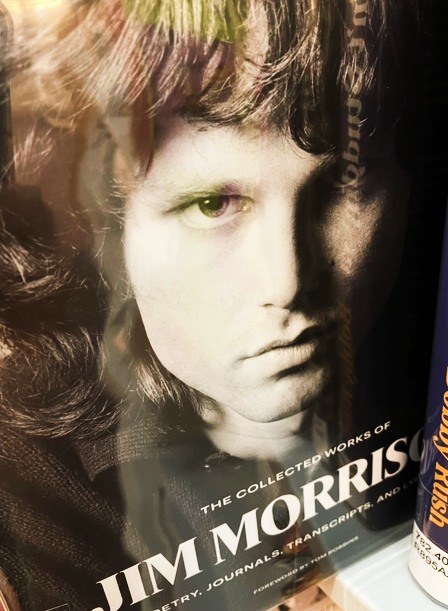
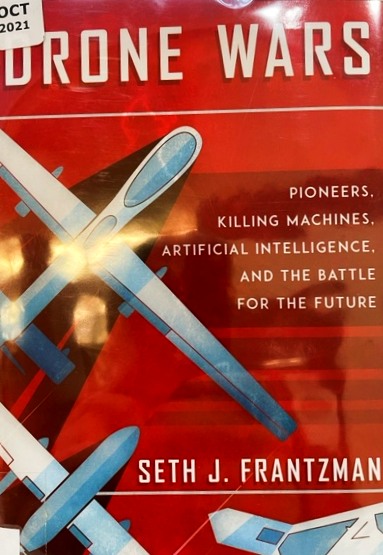
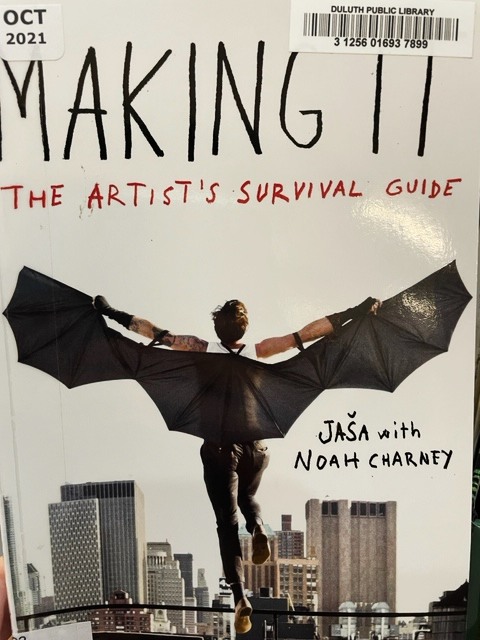
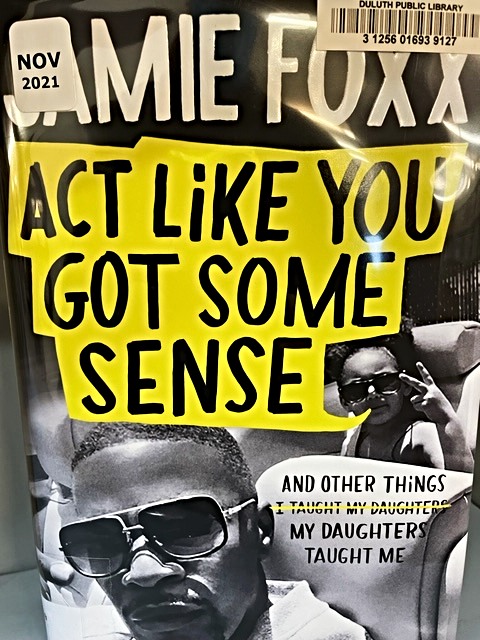
One of my favorite sections is an island of shelves upstairs containing new arrivals. The new arrivals shelves feature both fiction and non-fiction. If you know your Dewey-Decimal System, the 921s are always well represented. Who doesn't love biographies? 


I think that if I were to come back in another life, 
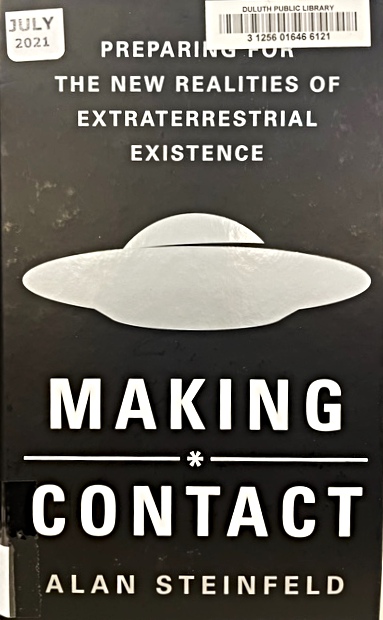
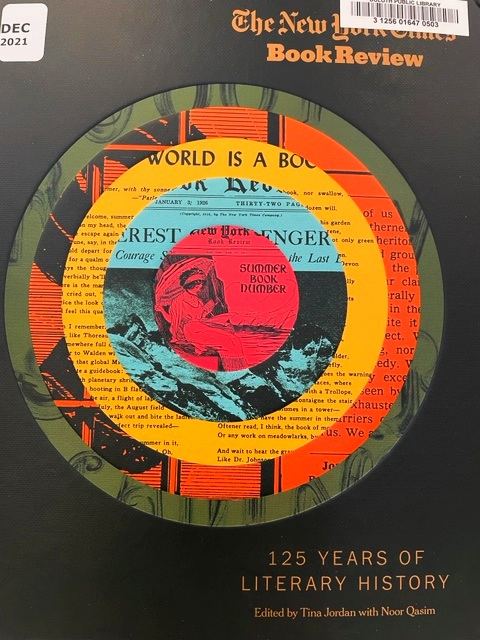
I would like to design book covers.
*

At the Duluth Public Library, the staff is always so helpful that even if you didn't like books as much as me, you would enjoy asking for help simply to put a lift in your step. (I have to interject here that the Superior Library staff is equally helpful. Perhaps libraries have that effect on all librarians everywhere.)

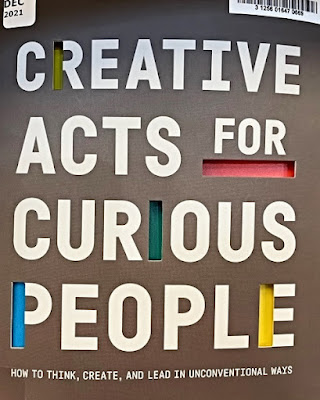
This page of random photos was taken yesterday in various parts of the New Arrivals shelf.

Related Links
So Many Books, So Little Time
Books, Books, Books and a Few Good Quotes (About Books, of Course)
Eight Books by Ed Newman 

Wednesday, January 6, 2021

I was going to do a Wordless Wednesday of Art, but got sidetracked by Dave Barry. Sorry.

One of the best things about our local library (besides all the people who work there) is that it has such a wide array of audio books. I mean, would you rather have what you listen to in your car dictated by Radio Station Program Managers or by you? 

I prefer to be in control. At least when I'm here in my car. That is why for the past three decades I have relied on the local public library for audio books. In the old days it used to be books on cassette. I remember listening to all 48 cassettes on the biography of Elvis. I must have listened to two dozen Elmore Leonard books, though I can't recall how many were cassettes and how many were CDs. I've listened to all three volumes of Mark Twain's autobiography. History, biography, Agatha Christie, animosity, philosophy, Dark Money... it's all there.

Many of those years I worked in Superior, Wisconsin and for a small fee was able to raid both the Superior Library and the Duluth Public Library for their audio content. 

Over the years I've listened to thousands of discs and cassettes, and even if you don't call this "reading" it's a great way to get acquainted with literature of all kinds, whether serious or purely entertainment. In point of fact, Graham Greene classified his own writings as serious and entertainment. Yes, I've listened to all the Tolstoy, Dostoevsky and Solzhenitsyn books available in our libraries, and I've similarly enjoyed all the Dave Barry audiobooks as well. 

I have a brother who used to stop reading my blog posts as soon as I mentioned Dylan, but how can I not quote Dylan now and then. He has lyrics for every moment in time, and this one has been especially been relevant for the past year:

"People are crazy, times are strange."

It is what it is.

When a social media platform can delete tweets by the President of the United States for violating its terms of service (ToS), then we come to realize precisely how much power a U.S. president doesn't have.

* * * *

For this reason, on this January 6 evening, I'm sharing some quotes from Dave Barry's I'll Mature When I'm Dead, which I was listening to as I drove to the local recycle center after supper.

*

If Man A asks Man B for directions, Man B, realizing that Man A is a weak, direction-asking type of male who probably also reads owner's manuals, could decide to attack Man A's village and plunder his women. Man A is not about to run that type of risk.

*

There was a time when the human race did not have technology. This time was called "the 1950s." I was a child then, and it was horrible. There were only three TV channels, and at any given moment at least two of them were showing men playing the accordion in black and white. There was no remote control, so if you wanted to change the channel, you had to yell at your little brother, "Phil! Change the channel!" (In those days people named their children "Phil.") Your household had one telephone, which weighed eleven pounds and could be used as a murder weapon. It was permanently tethered to the living-room wall, and you had to dial it by manually turning a little wheel, and if you got a long-distance call, you'd yell, "It's long distance!" in the same urgent tone you would use to yell "Fire!" Everybody would come sprinting into the living room, because in the 1950s long distance was more exciting than sex. In fact there was no sex in the 1950s, that I know of.

EdNote: This last sentence is evidently hyperbole. Otherwise I'm at a loss at how to explain how my three brothers and I were conceived during that decade. The first test tube babies (in vitrio) were conceived in 1978.


Two invasive species in particular have caused serious concern: Burmese pythons, and New Yorkers. The New Yorkers have been coming for years, which is weird because pretty much all they do once they get to Florida is bitch about how everything here sucks compared to the earthly paradise that is New York. They continue to root, loudly, for the Jets, the Knicks, the Mets, and the Yankees; they never stop declaring, loudly, that in New York the restaurants are better, the stores are nicer, the people are smarter, the public transportation is free of sharks, etc. The Burmese pythons are less obnoxious, but just as alarming in their own way. These are snakes that started out as pets of Miami residents, until one day these residents stopped smoking crack and said, "Jesus H. Christ! We're living with a giant snake!"

*

The American newspaper industry is in serious trouble. How serious? Consider: In 1971, when I was hired for my first newspaper job, there were 62 million newspaper subscribers in the United States; today, there are twelve, an estimated five of whom are dead and therefore unlikely to renew.

*

I think that parents- not all of them, but a lot of them- are sucking the fun out of kids' sports. They're making it clear to their kids that they think sports is about winning, and only winning. This is a reasonable value to instill if you honestly believe your child is going to become a professional athlete. But you need to remember two things: 1. Your child is not, in fact, going to become a professional athlete. 2. There are more important things in life than winning. Such as not being a jerk.

ALAS... Dave Barry has more to say than just booger jokes. 

Related Links
More Dave Barry Quotes
Dave Barry Does Japan


Monday, September 23, 2019

Who Invented the Dewey Decimal System? It Wasn't Who You Think It Was

I love my library. I love the people in my library. I love the books in my library. I love the audiobooks in my library. I love the magazines. I love the movies, the services, the access to Internet.

I love the way that when you want a book and they don't have it, they reach out to other libraries to see if it is available. I live in Duluth, but sometimes I have borrowed a book that was originally in Louisiana.

Andrew Carnegie built 65 public libraries in Minnesota at the turn of the last century up through World War 1. Ours was begun in 1899. What a great gift to any community.

Melville Louis Kossuth "Melvil" Dewey
Information is power, but if you can't find the info you're looking for you're pretty powerless. This is why the Dewey Decimal System was created.

Did you know the Dewey Decimal System was not created by John Dewey? I assumed it so because Dewey was an influential progressive involved in educational and social reform during the first half of the 20th century. And, of course, because his name was Dewey.

Melville Dewey was a librarian, hence his commitment to organizing the contents of libraries. He not only created this system for organizing libraries, he patented it in 1876 after writing a book detailing his ideas. In the acknowledgements he credits Francis Bacon and a classification system developed by Italian philosopher Natale Battezzati.

Very early in my elementary school years I remember being taught how to use the card catalog. That is, every single book in the library was represented by a 3x5 manila card which had the title and where it was located in the library. These cards were kept in narrow drawers in one section of the library. It was called the card catalog.

The cards are long gone, but the organizational system remains. Nowadays we search on a computer database for the books we want. Each is book is still shelved according to its classification. The main classifications are these.

000 --Computer Science, Information and General Works
100 --Philosophy and Psychology
200 --Religion
300 --Social Science
400 --Language
500 --Science
600 --Technology
700 --Arts and Recreation
800 --Literature
900 --History and Geography

I remember learning to memorize this chart above, though the full system is much more in depth. Under each major heading are subheadings (or subcategories.) For example, under the History and Geography heading you will find the following breakdown:

900 History
910 Geography & travel
920 Biography & genealogy
930 History of ancient world (to ca. 499)
940 History of Europe
950 History of Asia
960 History of Africa
970 History of North America
980 History of South America
990 History of other areas

In the 920s you will find the 921 sub-section to contain the most books of all these non-fiction sections. Very early in life, maybe around fourth grade, I discovered that all the biographies were in 921. I loved reading about explorers, presidents and other famous people. (My two volume collection of blog posts about Bob Dylan is shelved here in Duluth's with the call number 784.092 D992new, filed under the subcategory Music.)

You can find the full breakdown of Dewey's classifications here.

All this is apart from the whole Fiction section of the library, organized alphabetically by author. Everything is laid out for maximum ease of use by you, the library patron.

And as if this were not enough, they always have a reference desk where reference librarians exist for the sole purpose of answering questions and helping patrons.

Before the existence of Google, I used to have the reference librarians phone number pinned on the wall next to my phone. As a writer I was in constant need of a detail, or some fact checking. I would call this number and they would do everything in their power to answer. Fortunately, they are still there answering questions, though I'm certain the phones don't ring as much as they used to.

* * * *
NO MORE FINES
A couple weeks ago the library announced a new initiative that was actually quite bold. No more late fees. Also included in this initiative was the absolution of all past fines. 

One of the key features of a public library is that it is intended to be for everyone. It was discovered that many people, especially the poor, were no longer utilizing the library because of their debts. 

Our library (and many others) have wonderful Children's Library sections. I have often seen people checking out whole bags of books for their kids. This is great! Reading skills are 140.6* times better than television viewing skills in terms of preparing children for life.

Mayor Emily Larson released the news at an early September press conference. The DNT article went on to point out that, "In some of Duluth’s lowest-income neighborhoods, large numbers of children have lost their library privileges due to unpaid fines. In Duluth’s downtown and Central Hillside neighborhoods, three in every 10 children have lost the ability to check out materials. And in Lincoln Park, four in 10 children have been similarly affected."

For what it's worth, while looking for the Dewey Decimal designation for my book of Dylan-themed blog posts I discovered that two of my other books can be found here. A Remarkable Tale from the Land off Podd is in the Juvenile Fiction section, and Unremembered Histories is in the West Annex.

* * * *
Afterword
It should be noted that the achievements of Melvil Dewey that brought him to become head librarian at Columbia University and other major roles, including a stint as head of the American Library Association, ultimately resulted in his becoming a Hall of Fame librarian of such stature that a medal was named after him, until 2019.

This summer, the American Library Association Council voted to remove Dewey's name from its top honor, the Melvil Dewey Medal. The resolution cited Dewey's history of racism, anti-Semitism and sexual harassment. The resolution was passed overwhelmingly with no debate.

* * * *
Much more can be said, but this is enough for now. If you are not a regular at our libraries or their branches, it's a great habit to cultivate. Especially if you have young children. I remember the libraries of every place I've ever lived. Thanks, Mom!

FWIW Dept
Books by Ed Newman

*Obviously a bogus number, but it's probably close

Saturday, July 27, 2019

Neil Gaiman: Art Matters and Other Insights for Writers

Neil Gaiman. (photo: public domain)
“We have an obligation not to bore our readers.”—Neil Gaiman

Last week I was talking with my daughter and asked if she had ever read Neil Gaiman. She replied that she’s heard a lot about him and has been intending to, but hadn’t. Which was precisely where I was at, until last week. I’d just finished reading Art Matters: Because Your Imagination Can Change the World. And then I read it a second time.

It’s actually a very short book and I listened to the audiobook version. But it’s got many great thoughts to savor, which is why I gave it a second read, and will even listen to it again before returning it to the library.

Or as one Amazon reviewer succinctly put it, “This is a book that you can read quickly and yet spend a lifetime thinking about.”

(EdNote: The printed version is illustrated with four-color artwork by Chris Riddell.)

* * * *

One of the things Gaiman said that rang true with me from my lifetime of freelance writing was the following bit of advice for writers.

There are three things necessary to make it as a writer. First, the ability to make good art. That is, be a good writer. Second, be easy to get a long with. And third, always meet deadlines.

I can’t say enough about the importance of meeting deadlines. Nor the basic requirement of honing your skills, constantly applying yourself to improve. And I know one writer who lost a potentially big deal by losing his temper before the contract was signed. Alas.

* * * *
The book isn’t just for writers. In one portion of the book he makes an impassioned plea on the importance for children of reading. He shares how he grew up in the library and the difference it made for him.

He insists that its not what they read but they simply fall in love with reading. When people enjoy reading they will find their way through the vast world of books. Efforts to direct them to what we think they should read can backfire and be de-motivational.

* * * *

After reading Art Matters I  half wanted to see if I could find him somewhere and meet to talk about writing.  Here are some Neil Gaiman excerpts that I resonated with from the Wiki Quotes page dedicated to this contemporary writer.

* * * *

“Everybody has a secret world inside of them. All of the people of the world, I mean everybody. No matter how dull and boring they are on the outside, inside them they've all got unimaginable, magnificent, wonderful, stupid, amazing worlds. Not just one world. Hundreds of them. Thousands maybe.”—Neil Gaiman

* * * *
“You get ideas from daydreaming. You get ideas from being bored. You get ideas all the time. The only difference between writers and other people is we notice when we're doing it.”
—Neil Gaiman

* * * *
Insider Look at the Writing Life
“Writers may be solitary but they also tend to flock together: they like being solitary together. I knew a lot of writers in London and many of them were award-winning writers and many of them were award-winning, respectable writers. And the trouble with being an award-winning, respectable writer is that you probably are not making a living. If you write one well-reviewed, well-respected, not bad selling, but not a bestseller list book every three years, which you sell for a whopping 30,000 pounds, that's still going to average out to 10,000 pounds a year and you will make more managing a McDonald's. With overtime you'd probably make more working in a McDonald's. So there were incredibly well-respected, award-winning senior writers who, to make ends meet, were writing film novelizations and TV novelizations under pen names that they were desperately embarrassed about and didn't want anybody to know about.”

* * * *
“The world always seems brighter when you've just made something that wasn't there before.”
—Neil Gaiman

* * * *
“Chesterton and Tolkien and Lewis were, as I’ve said, not the only writers I read between the ages of six and thirteen, but they were the authors I read over and over again; each of them played a part in building me. Without them, I cannot imagine that I would have become a writer, and certainly not a writer of fantastic fiction. I would not have understood that the best way to show people true things is from a direction that they had not imagined the truth coming, nor that the majesty and the magic of belief and dreams could be a vital part of life and of writing. And without those three writers, I would not be here today. And nor, of course, would any of you. I thank you.”
—“Mythcon 35 Guest of Honor Speech", in Mythprint (October 2004)

* * * *
“Make good art.”—Neil Gaiman

Thursday, November 29, 2012

Support Your Local Library

Chef Zander prepared a great spread.
From my earliest days libraries have been part of my life. I can still picture in vivid detail the library at my elementary school in suburban Cleveland. It was small by library standards, but I loved the books there. I took one book out so many times that I believe the librarian thought something was wrong with me. I still derive pleasure from re-reading favorite books.
I don't recall whether I was in fourth or fifth grade when my mother brought me with her to the Maple Heights Public Library. I was amazed by the quantity of books, as well as the narrow aisles between the ceiling high shelves. What a world!

We moved to New Jersey in 1964, and soon learned where the Somerville Public Library was. I also remember the exact location of the dictionary in my Hillside elementary school library where I looked up the meaning of an embarrassing word that was used to make fun of me, the "new kid."

Bridgewater-Raritan High School had a campus-style layout with nine separate buildings sprawled in a large arc. The library was in a building of its own. I was then of an age where I could appreciate and hone in on a specific author's catalog of works. I remember reading Pierre Boulle's Bridge on the River Kwai, finding it so gripping that I read all of his books that were parked there, which included Planet of the Apes before it became a film.

My dad was an avid reader, seldom without a book in his hand after dinner or when visiting relatives. My grandmother, too, was a reader and collector of books. Her science fiction collection was extensive and she let me read some of those books, many of which later became films after I'd read them, including Andromeda Strain and Fantastic Voyage. In their retirement home there were book shelves in every room, and one room downstairs that contained floor-to-ceiling book shelves on all four wall, all filled to overflowing.

My Scott Quad dorm at Ohio University was one of the closest on campus to the university library, a seven-story home for seemingly infinite quantities of books and magazines.  researched everything there from the Hatfield-McCoy feud to the varieties of modern artists.

All this to say that I appreciate libraries and what they are about. I've often heard myself say, "Libraries are the one thing I don't mind paying taxes for," and I meant it.

These memories are intended as an introduction to a few comments about a very special event we attended Tuesday evening called Libations at the Library. Now personally, I love our local library here in Duluth, and am also a member on the Superior side of the bridge. Not only do they house books, patrons check take out art for their homes or offices, magazines, DVDs and audio books as well as surf the internet and just plain hang out in a warm space all day. It's all free and free for all.

The invitation for the event read, "Join us for a glittering party of wine and hors d'oeuvres in support of literacy and lifelong learning! An after hours evening of fun at the library in good company--and with books!"

Naomi Yaeger-Bischoff with Dan D'Allaird.
The good company included all members of the Duluth City Council, members of the Library Foundation Board and friends of the library. It was the first time alcohol has been served in this space, with wine and even mixed drinks. (I had the Mayor's Manhattan, which I sipped while looking at books in the 300 section upstairs.

We usually are asked to be quiet in libraries. We learn the meaning of the expression "shhhhh" there. By way of contrast, Tuesday evening was anything but quiet. Very early on the string quartet had to be moved to a location right in the midst of the party because with all the chatter we were unaware that there was live music present. 

The food service was 4-star, prepared and presented by Chef Ryan J. Zander of JJ Astor, the restaurant with a view atop the Radisson across the street. This contribution and the wine were all served from the magazine section, another of my favorite spaces here.

Eventually city councilors Dan Hartman and Linda Krug welcomed us, on behalf of the mayor who regretted his absence, and introduced Dan D'Allaird who spoke briefly about the achievements of the library these past few years, as well as the purpose of this event. Many of us were aware that library hours had been shortened for a while due to budgetary considerations, but now had been restored in all three library branches thus making the library more available and accessible. This past year the library added over 7000 new patrons as a result.

Libations at the Library was a brainchild of the Duluth Library Foundation, which was founded to help support the library and underwrite programs and support the libraries efforts to serve the community. Their current goal is to raise a million dollars to help further this mission.

One thing I learned Tuesday that I did not know before was this. When you give money to the foundation, they keep records and your cumulative giving accrues toward whatever your objectives are. That is, people who give $500 dollars become Emily Dickinson givers. This could be all at once or ten years of fifty dollar donations. The $1000-$2500 range is the Mark Twain level, etc. Evidently they want to make your giving fun, and associated with great literature.

The point of this little discourse is to encourage you, wherever you are, to support your local libraries. Libraries serve a great function in society, and taxes help lay the foundations, but opportunities exist to do much more, and many things require money. It's a great resource. Let's support it.

Sunday, September 13, 2009

Andrew Carnegie’s Noblesse Oblige

"For unto whomsoever much is given, of him shall be much required: and to whom men have committed much, of him they will ask the more." ~Luke 12:48

He has been labeled as one of the Robber Barons. His defenders would advocate that he has been libeled to be tagged thus. History is filled with many shadows that complicate its accurate portrayal. Though some of his practices as he built his fortune in the steel industry are outlawed today, at the time they were not restricted. Like the other “robber barons” he was an opportunist.

On the positive side of the ledger, he is to be commended for a very strong belief in the concept of noblesse oblige, a French term which is understood to mean that nobility and wealth have moral obligations and responsibilities. Carnegie believed, and publicly stated, that it is morally wrong to die rich. In this matter Carnegie led by example. By the end of his life Carnegie, a Scottish immigrant who made good in America, had generously given back all of his fortune to help the less fortunate.

Before Carnegie died (ninety years ago this summer), he had already given away over 350 million dollars, the equivalent of 4.3 billion in today’s dollars. Upon his death, the last thirty million were given to foundations, charities and pensioners.

I myself am a lover of libraries, as anyone who knows me knows. Carnegie, too, was a believer in the power of books and education to help people improve their lot in life. For this reason, in addition to contributing heavily to many academic institutions he also built public libraries across the country.

When I first came to Duluth, I was struck by the beautiful architecture of the Carnegie Library here, and surprised that Carnegie’s wealth flowed even to this little corner of the universe. (The library moved to a larger facility shortly after.)  

Whatever people think of the man himself, a businessman who became the richest man in America, for his example of noblesse oblige Andrew Carnegie should be remembered.

Popular Posts