Showing posts with label psychology. Show all posts

Friday, July 29, 2022

Recipe for Nervous Breakdown Soufflé

While rummaging through old folders (am on another cleaning binge) I came across this recipe I'd forgotten about. If you try it, let me know what you think.

* * * 

Nervous Breakdown Soufflé

calum-lewis-vA1L1jRTM70-unsplash
Ingredients: 

One case of Neurotic Pride

2 cups Basic Anxiety

1 fistful Self-Reproach 

1/2 teaspoon Self-Doubt Extract 

A dash of Legitimate Shortcomings 

One ounce Self-Hate 

One can Deep Depression 

A pinch of Sharp Criticism

* * * 

Directions:

Peel and dice Neurotic Pride. Mash pulp with fork. Strain and set aside.

In large container, combine Basic Anxiety, Guilt, and Self-Reproach. Blend in Self-Doubt Extract and Shortcomings. Agitate.

Add Self-Hate and Neurotic Pride. Stir until completely mixed up.

Simmer for one year in an atmosphere of intimidation and fault finding.

Slowly stir in Deep Depression. Bring mixture to a rapid boil.

Ignite with a pinch of Sharp Criticism. 

* 

Serve with spilt milk, burnt toast, or sour grapes. 

* * * 

If you liked this, then check out my Recipe for a Disaster

Friday, July 1, 2022

Memory Lane: A Life Lesson from Chinese Handcuffs

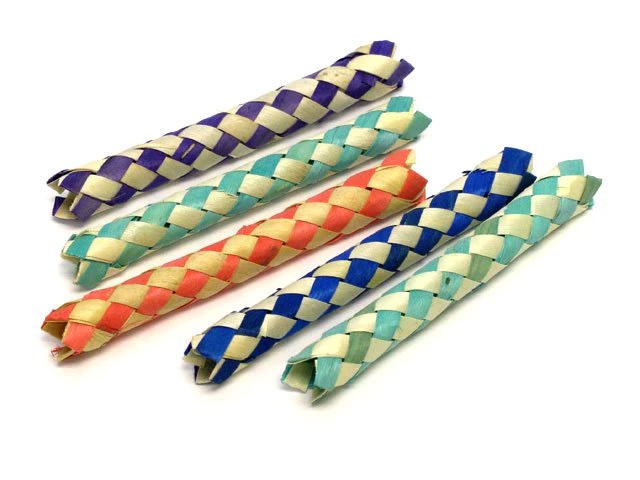
Remember these? When I was a kid they were called Chinese Handcuffs. 
What I remember is that the harder you tried to pull your fingers out, 
the more they tightened their grip. Escape was easy if you knew how. 

How many of our own problems are like these simple finger traps?

 
While pondering this matter of "Chinese handcuffs" as a metaphor for many of life's problems, I decided to Google "Chinese handcuffs as metaphor" and discovered my idea was already incorporated into a therapeutic application. The first article I found is titled "What you can do when everything you try makes things worse."

The solution to many of our problems, according to this source, is ACT. That is, Acceptance and Commitment Therapy. Julian McNally writes: The Chinese Fingercuffs Metaphor is an Acceptance and Commitment Therapy (ACT) intervention we use to help you approach that kind of problem in a way that can make a lasting difference – a transformation of the way you see the problem – not just a solution to it.

In 2013 the Portland Psychotherapy website published an article about these Chinese Finger Traps. Their article was titled "Chinese Finger Traps: What a Novelty Item Can Teach Us about Acceptance." As it turns out, this psychologist also practices and teaches Acceptance and Commitment Therapy. 

Near the conclusion he writes, When we accept, we let go of the struggle against what we’re feeling—in this very moment. In the next moment, we get a choice about what to do next. Acceptance frees us from the struggle with pain and allows for new possibilities. 

 
* * * 
For the record, there are other kinds of handcuffs that aren't so easy to escape from. You can see photos of some of these on my blog post  titled The Handcuff Kings.

Meantime life goes on... 


Saturday, June 25, 2022

The Four Kinds of Regrets

Ray Bradbury's Something Wicked This Way Comes has been made into at least three Hollywood films. The first, in 1972, was so mediocre that a second effort was filmed in 1983 starring Jason Robards. This was a better effort but it failed to make half its money back. In 2018 Hollywood made another go of it and this one got worse ratings than either of the previous efforts. Perhaps the theme is too dark. I myself found the 1962 novel to be both vivid and disturbing. Perhaps Hollywood just can't compete with the images a good creates when mingled with our imaginations.

The story is about Mr. Dark's traveling Pandemonium Circus that upends Green Town, Illinois like a furious funnel cloud. The tag line for the film sums up the main point of the story: "After he fulfills your deepest, lifelong dream... he'll tell you the price you have to pay."

For me, I have no memories of the film at all except one. Jason Robards, the father, gets lost in a Hall of Mirrors where he is weeping because it is a hall of regrets.

AND SO when I stumbled across the title of an article on The 4 Major Kinds of Regrets, it grabbed my attention because like many people I have carried with me regrets from my past.  It never occurred to me that there could be different kinds of regret, so I was curious. Here are the categories, according to this article in Psychology Today.

Foundation Regrets
These regrets pertain to a failure to be responsible, conscientious or prudent. Things like getting old without having saved for retirement. Or regrets about having neglected your health. Or your teeth. 

Boldness Regrets
I'm guessing that this one pairs up with the proverb about good intentions. For example, an opportunity that came our way passed us by because of our inaction. Why didn't we say something, or do something? Why were we so passive?

Moral Regrets
This is when we choose the low road rather than the high road. There are a hundred ways we can fail ourselves and our ideals.

Connection Regrets
This, researchers say, is the largest category of regret. It happens when we neglect people who are important to us, when we allow fractured relationships to remain fractured.

* * * 

Some of my biggest regrets revolve around things I've said. I'm ashamed to admit that there were a few times when I deliberately said something hurtful. And there were other times I unintentionally hurt people by stupid things I'd said carelessly. What's painful is that there is often no second chance.

The article goes on to examine how people respond to their regrets. Some say, "I have no regrets." Others, and I count myself among these, say, "I  have regrets but I have learned from them."

Life is for learning, through all our experiences, good, bad and ugly. 

Thursday, January 2, 2020

Our Tendency to Think the Worst: Why Does Our Self-Talk So Often Default to the Negative

Illustration by the author.
Philosophers and psychologists have long studied how the mind works, how our thinking relates to our behavior and how our beliefs impact our moods. In more recent years scientists have entered the game, examining the manner in which our very synapses fire or fail to fire, getting an inside look at the electrical impulses that zing through that grey matter we carry inside our skulls.

The nature of neurosis and how memory works are two themes that I've often pondered, and today's theme is similarly a lifelong companion. Why do our minds so frequently veer toward the negative? How is it that when something happens, or doesn't, we automatically think the worst.

The Beatles' White Album has a song that exemplifies this tendency, albeit in an almost hilarious way. Do you know which one I am talking about? It's written and sung by Ringo Starr, his first solo composition. He actually played it for the group in 1962 when he first joined The Beatles.

The song begins with the singer waiting for his girl friend to show up. When she remains absent, he thinks the worst.

I listen for your footsteps
Coming up the drive.
Listen for your footsteps
But they don't arrive.
Waiting for your knock, dear
On my old front door.
I don't hear it,
Does it mean you don't love me anymore?

Who hasn't been there? Waiting for a call. Waiting for a letter.

Illustration by the author.
In the film Immortal Beloved, Gary Oldman as Beethoven finds his wagon wheels stuck in the mud due to a heavy rain while attempting to reach a woman in waiting for a tryst. The anguish of this moment is expressed in the film score which plays the agonizing Second Movement of his Seventh Symphony.

Don't Pass Me By continues with Ringo lamenting, home alone, listening to the clock tick, and wondering where she is.

If you know the song, then you know the rest of the story. I can still remember watching my dad laugh out loud when the third verse was sung.

I'm sorry that I doubted you,
I was so unfair.
You were in a car crash,
And you lost your hair.
You said that you would be late
About an hour or two.
I said, "That's alright, I'm waiting here,
Just waiting to hear from you."

I know, it sounds awful--the car crash part--but it's sung in a country honk style that you can't take seriously. My point is that this tendency to think the worst, which my psychologist brother calls "awfulizing," is nearly universal.

THE TRIGGER for this blog post was a statement that Transition Life Coach Yana Stockman made in a talk she gave in December. She noted that we have two voices in our heads, the negative "Survival" brain and our true self.

Inc magazine recently published an article on the negativity bias. According to neuroscience our brains are actually wired to veer toward the negative as a protective device. Fortunately, we can break the spell negative thinking has on our minds. The first step is to Notice when we're doing this.

Introspection helps us recognize when we're feeding our minds with negative inputs. Next we Shift gears. That is, we choose a positive input. This can be something as simple as a choice to adopt an attitude of gratitude. After shifting we then Rewire. You can find the full article below in the Related Links.

Sometimes we can laugh at ourselves afterwards. In truth, once we get on that negative track it can take us right down a rabbit hole. Examples abound, and you no doubt have a few yourself.

Years ago I remember reading a book titled Telling Yourself the Truth, in which the author stated that much of what happens to us is directly related to our thinking. I just looked it up and the back cover blurb makes this statement: "Wrong thinking produces wrong emotions, wrong reactions, wrong behavior--and unhappiness! Learning to deal with your thoughts is the first step on the road to healthy thinking."

Much more can be said, but this enough to give you a nudge in the event your thinking is stuck in a rut.

Related Links
The Neuroscience of Breaking Out of Negative Thinking
A Visit with Transition Life Coach Yana Stockman

Sunday, July 28, 2019

McMindfulness: Are You Lovin’ It?

One of the big “new words” of 2018 for me was the Danish word Hygge, which is pronounced something like hoo-ga, and carries a meaning one might associate with mindfulness, creativity and flow. Another translation associates the word with coziness and contentment. Think of being nestled before a warm fireplace with friends, being laid back, reflective.

The word was even on the front page of the newspaper shortly after I blogged about it, but the concept has been around longer than last year. After a late career layoff, a friend of mine decided to call it retirement. When I asked what he was doing, he said he was pursuing mindfulness.

This week I came across an interesting Aeon article that dredged up some of my own thoughts about the Mindfulness movement of recent years. The piece by Sahanika Ratnayake is titled The Problem of Mindfulness.

I liked the title because it immediately begs the question, “What could be wrong with Mindfulness?"

The author, raised as a Buddhist in New Zealand and Sri Lanka, is a grad student in philosophy at Cambridge working on her Ph.D, studying the history of philosophy and contemporary psychotherapy.

A premise of her article is that mindfulness, as practiced in Eastern philosophy, is at odds with Western cognitive therapies and self-understanding. She writes, “To understand why mindfulness is uniquely unsuited for the project of real self-understanding, we need to probe the suppressed assumptions about the self that are embedded in its foundations.”

The article is a deeper dive than you will find here, so I’ll link to it at the end. Here are a few items of note as regards Eastern and Western ideas.

In Western philosophy, Self-Understanding is a virtue.
In Buddhist thought, there is no Self to understand.

In Western philosophy we take responsibility for our choices and feelings.
After a certain point, in Buddhist thought, “mindfulness doesn’t allow you to take responsibility for and analyze your feelings.”

Having spent a lot of time reflecting on these things since the Seventies, I condensed this into the following contrasting statements:
In Judeo-Christian meditation, the mind reflects upon the Word, engages the meanings of the sacred texts and their application to the broader world and our relationship to that world.
In Eastern meditation, the mind is the enemy standing in the way of non-thinking, as we lose ourselves in the process of our breathing and “being.”

In Judeo-Christian philosophy, the world is broken and we have a responsibility to engage its suffering and injustice.

* * * *
After reflecting on the Aeon piece I decided to compare it to a couple other stories on this them, stumbling next upon a Straight Talk article by Dr. Jeremy D. Safran titled McMindfulness: The Markeing of Well-Being. a 2014 blog post at PsychologyToday.com.

The author opens with my precise sentiments:

“McMindfulness.” I wish I had coined the term. It would be nice to be able to make a claim to originality. But coming across the term is almost good enough.

He starts with the all-important defining of terms.

Mindfulness practice is a meditative discipline, originating in Buddhism, that involves the cultivation of a type of present centered, nonjudgmental awareness of the ongoing flow of one’s emerging experience. While mindfulness enjoyed some popularity in the 1960’s as a countercultural phenomenon, in recent years it has surged into mainstream prominence to be embraced with gushing enthusiasm by both popular culture and mainstream psychology.

The reference to the Sixties (which carried over into the early 70’s) brings to mind authors like Alan Watts, and the popular Be Here Now by Baba Ram Dass, Dr. Timothy Leary’s co-host (formerly Dr. Richard Alpert*) from Harvard in introducing the LSD movement to mass culture.

Next, Dr. Safran defines the newly coined word, McMindfulness.

So what is McMindfulness? It’s the marketing of mindfulness practice as a commodity that is sold like any other commodity in our brand culture. “Mindfulness really works.” It reduces stress, cures depression and anxiety, and manages pain. We know so because research proves it.

The research is more pseudoscience than real, though. But the reason it’s so popular, is that it "satisfies spiritual yearnings without being a religion. It’s backed by brain scientists at Harvard and MIT. It’s magic without being magic. It even transforms corporate culture and increases market share!”

McDonald’s coined the phrase “Lovin’ It!” to create an association between the slogan and its Golden Arches. The McMindfulness marketers offer us a new drug from Dr. Feelgood’s bag of tricks, and it’s natural. What’s not too like?

Here’s Sahanika Ratnayake’s response:

“With its promises of assisting everyone with anything and everything, the mistake of the mindfulness movement is to present its impersonal mode of awareness as a superior or universally useful one. Its roots in the Buddhist doctrine of anattā mean that it sidelines a certain kind of deep, deliberative reflection that’s required for unpicking which of our thoughts and emotions are reflective of ourselves, which are responses to the environment, and – the most difficult question of all – what we should be doing about it.”

* * * *
I don’t doubt living mindfully is a good thing as long as we can find the Golden Mean with regards to  our responsibilities toward the broken world outside us and around us.

Here are links to the two article:
The Problem of Mindfulness
McMindfulness

*I met Dr. Alpert’s nephew when I was at Ohio University. He described his uncle as “the black sheep of the family.”

Saturday, December 29, 2018

A Visit with Michael K. Anderson: Unassuming Gift to the Community

Musician Jim Hall. Photo by Michael Anderson.
I can't recall precisely when I first met Michael Anderson, though my guess is that it was about five years ago. The occasion was a Duluth Dylan Fest concert with Scarlet Rivera, Gene LaFond and a host of others. I could see by the camera gear he wore like a necklace that he was probably a pro photographer, and when I learned that he was documenting the concert for the Armory, it wasn't hard to come to that conclusion. As a blogger also playing the documentation game, I was please to learn he would be happy to share with me his photos afterwards.

So began a relationship of several years duration in which I would be on the receiving end of Michael's generosity on behalf of the community.

Over time, I learned that photographer Michael Anderson, like most of us, has many other facets and upon learning of some of these varied interests I wanted to shine a light on this man who has been so self-sacrificing, whom so many know but really only know in a very narrow way.

EN: Briefly outline you career path from college to present.

Ryan Lane. Photo Credit: Michael Anderson.
Michael K. Anderson: I finished my undergraduate work in 1992, a 23-year process between a couple of semesters after high school through a couple of decades working as a journeyman millwright at a local industrial plant. The bachelor’s degree was a big goal for me as I never believed I was smart enough to ‘make the grade,’ graduating in the lower half of my high school class. I initiated college classes while I was still working full time and the confidence and momentum continued to grow until I was close enough to finishing the degree (start of my senior year) and I had vested myself in the retirement program with 20 years at the plant.

After finishing the Bachelor’s degree I started singing principal roles in local musical theater and grew quickly as an actor/singer (a potential I’d always had but did not have the confidence or incentive to move in that direction).

At the same time I was developing a reputation as a photographer with an initial focus on the Superior Municipal Forest & The St. Louis Estuary. I was working as a canoe/kayak instructor with The UMD Kayak & Canoe Institute and the Trek & Trail program in Duluth. I had also initiated a guide service into the Municipal Forest Called Urban Wild. My intention at the time was to let people know of the significance of the Forest and the value of an urban wild within the city boundaries. The Forest totals over 5,000 acres of Boreal Forest as well as 27 miles of shoreline: part of the St. Louis River Estuary System. I was able to take two of the Superior mayors into the forest by canoe to let them know of its beauty and significance. At that time there were issues with potential development in The Forest and I figured the greater the awareness of its significance the better opportunity to stop the development.

Over time the Wisconsin Department of Natural Resources took an interest in establishing a State Natural Area in half of the forest & waterways, considering it an ‘exquisite’ natural area and, a few years after, the National Oceanographic & Aeronautical Association (NOAA) chose the St. Louis River Estuary as the second fresh water National Estuarine Research Reserve (NERR) in the nation. I acted as a resource with my experience guiding in the area as well as sharing my photography.

This is a history of the unfolding after finishing the Bachelor’s degree. Even with the opportunities as a singer & photographer I had the opportunity to go back to work as a millwright at the hardboard plant for financial reasons. The plant closed 5 years later, burning that bridge, opening other options in my life. At this point I was able to step into the masters in social work program at UMD with re-training funding available for dis-placed workers ( a program Paul Wellstone made possible).

Josie Langhorst. 2018 Singer/Songwriter performer.
Photo: Michael Anderson
EN: We met through your photography work on behalf of the Armory. I then discovered you have been shooting all variety of subjects. How did you come to take a serious interest in photography?

MKA: With the social work degree (and a commitment to digital photography equipment) I started photographing many social justice events, volunteering my services to gain experience & increased recognition. This has facilitated publication of my work nationally & internationally.

I also enjoy portrait photography, looking to capture the ‘character’ of my subjects.

EN: In addition to psychology and photography you’re something of an outdoorsman. How does canoeing and being out on the water inform your other interests?

MKA: I have always been connected with the outdoors and, with a painful break up in the early ‘80s, my time on the waters of the St. Louis River & The City Forest increased significantly to facilitate healing. This retreat into nature lasted for years & enhanced my creativity as a writer & photographer.

Water washing kindly, gently through my life
Calming my concerns, removing my fears
Clarifying a vision, a direction in life

My watercraft is guided
Floating gracefully on a sea of complexity
And I, in my place, paddle in hand
Have become an observer, calmly over-seeing

Like the process of sanctification

This deepening spiritual connection lead me to facilitate/guide others into a similar connection with nature. I was able to do this as canoe guide/instructor, photographer, and occasional writer.

"Shakespeare's in the Alley" Dylan tribute by the artist Skye.
Photo: Michael Anderson
EN: You mentioned the importance of breathing properly, which pertains to both singing and yoga. Why is breathing correctly so important?

MKA: My mother was quite the singer who had a passion for music. She wanted the 4 of us kids to take piano lessons to at least have a foundation of musical awareness. I suppose I also was gifted with a voice but I spent years not following that path of vocal development until later in life, especially after leaving the industrial plant the first time & finishing the under-graduate degree. I connected with a voice teacher from New York 15 years ago who was in town. He recognized the potential in my voice but said it needed more foundation: the deep belly breath which connects with the potential (which I believe is found in the belly: our energy center), supporting the vocal expression.

Over the next years with an increased focus on breath & voice work I realized the connection with the physiological & psychological components of vocal expression. I incorporated the work of Reich (a student of Freud) and Alexander Lowen in my master’s thesis on The Effects of Breath & Vocal Training on Self-Expression, Self-Esteem, & Self-Efficacy. This thesis related breathwork with counter-acting sympathetic autonomic nervous system reactivity to external & internal stimulus. We can consciously alter breathing patterns toward belly breathing/yogic breathing to relieve stress stuck in the physiological & psychological body. (Recent studies on trauma & shame support this.)

Facilitating belly breathing to support the vibrational tone has made a significant difference in my ‘voice’ as well as freeing me from the issues around ‘self-expression.’ I have also incorporated bits & pieces from a plethora of ‘routes of knowing’ to continue supporting my thesis and to bring into my work as a psychotherapist, focusing on releasing anxiety (bound up energy) and depression, often leading to other mental disorders. All under the auspices of Voice Work!

* * * *
Related Links
Michael Anderson's Photo Galleries
Bob Dylan Way home page

Meantime, Life goes on all around you. Engage it.

Thursday, September 6, 2018

Online Therapy: A Creative Solution for the Depressed and Disconnected

As friends and regular readers are aware, my brother Ron is a professional psychologist in New Jersey. Over the past three decades he's introduced me to authors, insights and noteworthy research. One study that he shared two-to-three decades ago took place in England where the researchers striated patients into three groups, from mild to extreme. (A, B, C) What they attempted to prove was that mental health could be improved by simply having someone who loved them and listened to them. What they learned, and published in their report, was that both the mildly needy and very needy could be helped immensely simply by being loved and listened to. The latter group (C), they found, had more serious issues that required professional help.

This study, whose name I've forgotten for now, came immediately to mind when I read about an online mental health service called TalkSpace. The website/organization features over 2000 certified licensed therapists whose services can be utilized no matter where you live. Connecting to another human being who will listen can make a difference between making it through a rough patch and not making it.

There seem to be several benefits with the service, not least of which is the cost savings. A second benefit, it seems, is their effort to match patients with the right therapist. I'm guessing that this includes values that harmonize with the patient's core values, and possibly life experience. Another benefit for patients is that you can actually get 24/7 interactions with your chosen therapist if necessary.

It's also nice to know you're not working with rookies. Therapists are required to have 3000 hours hands-on experience to be part of this team. And, as with all approved contemporary medical care, TalkSpace is HIPAA compliant, using SSL encryption for protection.

I've not inquired but I'm guessing there may be benefits for the staff as well. Perhaps it is a way for some stay-at-home moms or dads to raise children or just let go of the expense of maintaining an office.

As a blogger who has been blogging daily for 11+ years I was impressed that the TalkSpace blog is similarly active, with daily contributions from both the doctors as well as their patients. Topics include addiction, anxiety, anger management, depression and practical tips for relationships, such as Five Ways to De-Escalate a Fight With Your Partner. The site addresses relevant issues with themes both useful and on target.

* * * *
Mental illness can be a devastating career impediment, not to mention the disruptions that occur in relationships. With next week being National Suicide Prevention Week I am reminded of numerous loved ones who are no longer with us or who attempted to end their lives in one way or another at one time. So many times we get so boxed in or burdened by our life load that we lose perspective. More than anything I'm convinced one of the great needs of our time is hope. It's probably cliche but I will say it anyways: suicide is a permanent response to a temporary problem.

A Newsweek columnist once wrote that suicide doesn't solve problems, it lays them on the broken wings of those left behind. It may be that the one most in need is a loved one and you need help to know what to do. Brian Wilson comes to mind. I think of another friend who retreated into his room and into himself and his parents didn't know what to do or where to turn. Perhaps they were ashamed. Or felt powerless. (He shared this with me after he recovered from nine months of remaining isolated upstairs in the house where he was raised.) Other stories come to mind where services like TalkSpace could help, or could have. The concept of online therapy is something that couldn't have been imagined 50 years ago, but I would imagine that it's been helping many people today.

* * * *
Related Links
Olympian Michael Phelps' Mental Health Story 
Dr. Ronald S. Newman  
National Suicide Prevention Hotline
Tina Mion’s New Year's Party In Purgatory For Suicides
TalkSpace Home Page

Disclaimer: This blog occasionally accepts forms of compensation for writing about certain topics. In all cases it is my intention to provide honest opinions, findings, beliefs, or experiences on those topics, events, or products. The views and opinions expressed here are my own. The references to TalkSpace are "sponsored content" but I would not write about them if I were aware of any red flags.
EdNote: TalkSpace is not the sole online counseling service, though it is my understanding that they are the largest. This blog post is for awareness purposes and should not be construed to be a recommendation. 

Thursday, January 19, 2017

Insights from the Marshmallow Experiment

"Sometimes when I consider what tremendous consequences come from little things... I am tempted to think there are no little things." ~ Barton Sutter

The other day I stumbled on an article about a Stanford research project that attempted to correlate a single aspect of human behavior as an indicator for future success or failure. The series of studies conducted by professor Walter Mischel came to be known as The Marshmallow Experiment.

The experiment was essentially about deferred gratification as a predictor of future achievement. James Clear describes the setup like this.

The experiment began by bringing each child into a private room, sitting them down in a chair, and placing a marshmallow on the table in front of them.

At this point, the researcher offered a deal to the child.

The researcher told the child that he was going to leave the room and that if the child did not eat the marshmallow while he was away, then they would be rewarded with a second marshmallow. However, if the child decided to eat the first one before the researcher came back, then they would not get a second marshmallow.

The researcher would leave for 15 minutes and then return. The team filmed the kids fidgeting, staring, and frequently succumbing.

What makes the experiment famous is that these children were then checked in on for the next 40 years. Mr. Clear summarizes the results:

The children who were willing to delay gratification and waited to receive the second marshmallow ended up having higher SAT scores, lower levels of substance abuse, lower likelihood of obesity, better responses to stress, better social skills as reported by their parents, and generally better scores in a range of other life measures.

* * * *

Take a minute to reflect on the ramifications of this experiment. And then consider this.

Can delayed gratification be taught? If the answer is yes, then success can be taught. Or at least the odds of achieving more successful life outcomes for our children can be favorably influenced.

When I was growing up in the Fifties our elementary school had some kind of arrangement in which we could deposit money in a bank account. Beginning in second grade my father gave me a dime for every A I received on my report card. The dimes were deposited in the bank. I also began to receive an allowance of a quarter a week.

What I learn with that allowance was powerful. We had a candy store a few blocks away, and if I wanted to I could ride my bike there and buy candy. My dad also brought my brother and I to the Lawson's Milk Store fairly frequently and they had a magazine rack there that was fun to peruse. Once a month the new Mad magazine came out and my quarter would be used for that. On the other hand, if I saved my quarter and waited till I had fifty cents, I could then buy a Famous Monsters of Filmland magazine. And if I skipped candy altogether and somehow saved four quarters, I could buy a model Revell battleship to assemble to put on a shelf in my room.

Delayed gratification, or deferred gratification, is the ability to resist the temptation for an immediate reward and wait for a later reward. Generally, delayed gratification is associated with resisting a smaller but more immediate reward in order to receive a larger or more enduring reward later.

Is this a behavior that parents can teach? Or were those children wired for failure as a result of genetic dispositions?

In psych 101 students learn that even pigeons can be taught to do a surprising number of things by means of incentives, including playing a primitive form of ping pong, by means of stimulus-reward arrangements. On the other hand, how many times have you seen parents in a grocery story line attempting to restrain a screaming four or five year old brat who wants a candy bar, and instead of making this a teachable moment, they reward the child's ranting. "I want it now!"

What about now, as adults? Is it too late for us if we've been poorly wired as kids? There's plenty of evidence to support a belief that inner change is not only possible but in most cases desirable. Here's that article on The Marshmallow Experiment.

Once we're set in our ways change is not easy. It begins with awareness. To quote the Little Engine That Could, it begins with an affirmation: "I think I can." If we persist, we will succeed. 

Popular Posts