Monday, April 25, 2022

Thoughts from the Mind and Heart of French Thinker Blaise Pascal

Creative commons, France.
He had a sharp mind and an influential pen. Blaise Pascal's primary fields were mathematics, logic, physics and theology. And like many others who achieve significance, the secular thinkers of his day wished he'd left his theological aspirations off to one side. Similar complaints were made about Sir Isaac Newton. "Think about all he could have accomplished had he left all that religious stuff in the closet," they'd say, not realize that his religious beliefs gave him confidence in an orderly universe and a foundation for his secular explorations. Pascal was cut from the same cloth.

For some today, "Pascal" is simply a computer programming language developed around 1970. I remember reading about it even if I never used it. The name was assigned to this early programming language because of Blaise Pascal's early success in creating a machine that could do calculations. In 1642, at age twenty, he invented the calculating machine pictured at the top of this page.

In the broader public, I think he is more famous for what has come to be known as Pascal's Wager, a philosophical argument that attempts to use logic to answer questions about God's existence and our purpose in this incomprehensible mystery called life. Here is a pithy distillation of the idea: "If God does not exist, one will lose nothing by believing in him, while if he does exist, one will lose everything by not believing."

    You can find a more elaborate explanation here.

    What follows are some insightful statements by Blaise Pascal from his letters and books.

    * * * 

    "I would have written a shorter letter, but I did not have the time."
    (How many of  you thought Hemingway said this?)

    * * * 

    "It is not well to be too much at liberty. It is not well to have all we want."

    * * * 

    "All the excesses, all the violence, and all the vanity of great men, come from the fact that they know not what they are."
    (EdNote: Am reading about General Douglas MacArthur in David Halverstram's The Fifties. It's stunning the degree to which big egos can lose all touch with reality.)

    * * * 

    "It is a natural illness of man to think that he possesses the truth directly…"
    --On the Spirit of Geometry

    * * * 

    "The art of persuasion consists as much in that of pleasing as in that of convincing, so much more are men governed by caprice than by reason!"

      * * * 

      "People are generally better persuaded by the reasons which they have themselves discovered than by those which have come into the mind of others."

      * * * 

      "Those honor nature well, who teach that she can speak on everything, even on theology."

      * * * 

      "Few friendships would remain, if each knew what his friend said of him when he wasn't there."

      * * * 

      "Make religion attractive, make good men wish it were true, and then show that it is. Worthy of reverence because it really understands human nature. Attractive because it promises true good."

      * * *

      "All good maxims are in the world. We only need apply them."

        * * *

        If you wish for more, here is a link to Pascal on Wikiquotes.

        Sunday, April 24, 2022

        Ideas on How to Help the Homeless, and a New Thought About the Unforgivable Sin

        The problem of poverty has become increasingly pronounced in our time, in part because of the ever expanding gap between the haves and have nots. The lack of affordable housing in most of our cities exacerbates the problem.

        Yesterday I had a long insightful discussion with Eric Ringsred, a retired Duluth doctor who has also been a landlord with experience in this area. We began by sharing stories about a mutual friend, a street person who occasionally lived in the basement of one of his properties downtown. 

        While discussing some of his experiences with down-and-out people, he asserted, “I really believe everyone has something to offer," following up with, "The Need is not complicated: a healthy environment, role models and something meaningful to do."

        If ever there was a formula for helping needy people, this is one of the most concise and clear statements I've ever seen. In nearly every case where communities, government agencies or programs come up short, it will in some way violate one of these three principles. For many people it may be all three. 

          1.  A healthy environment.
          2.  Role models
          3.  Something meaningful to do.
        A safe, healthy place is a starting point. Role models can become mentors who show the way to a healthier, productive life. Meaningful work builds self-esteem, an essential mindset or attitude for survival. When we hate ourselves, we'll beat ourselves up till we self destruct. (Each of these can be elaborated on.)

        Dr. Ringsred also shared another pearl. A friend of his once asked Eric what the "unforgivable sin" was. It was a rhetorical question, but I think you will agree it is a big, big question. The unforgivable sin, this man said, was waste, when we waste our lives and fail to do the meaningful work for which we're made.  


        What are we currently doing to make the world a better place? We've all heard how evil triumphs when good people do nothing. Are there things we can do in our local communities to be useful?


        Eric's last comment before we parted: “We should be the best we can be." 

        Friday, April 22, 2022

        Jacques Ellul on Christian Anarchy

        Ellul's last book, important as always.
        It might be worthwhile to make a differentiation between Christian anarchy and Marxism, which looks to anarchy as the path to a new world order. Marxism endorses violence. Christianity cannot. 

        Jacques Ellul, in his book Anarchy and Christianity (Eerdmans, 1988), notes that the achievements of both Gandhi and Martin Luther King were accomplished by virtuous means. By way of contrast, the Black Panther movement did not advance the cause of black liberation that it purportedly intended. 


        Political power corrupts. And against this corruption people of conscience must take a stand. 


        Ellul notes that once we rule out violence as an option, we must resort to persuasion, “the creation of small groups and networks, denouncing falsehood and oppression.” 


        Dr. Glenn Martin, in his book Prevailing Worldviews, points out how the institution of slavery was ended in England without violence through persuasion, and the tireless efforts of a few important voices. Even though it took more than forty years, spearheaded by the Society of Friends (Quakers) and politician/philanthropist William Wilberforce, the abolition of slavery was ultimately  accomplished without bloodshed. 


        By way of contrast, the U.S. experienced a torrid Civil War as a result of the activist revolutionary approach to the problem of slavery. Yes, there were some who sought slavery’s termination by peaceful means, but the revolutionary approach ultimately superseded the tireless efforts of the persistent persuaders. According to Martin, actions like the Nat Turner rebellion, which left eighty persons dead, set back the cause of peaceful negotiation, and helped fortify the deeply entrenched status quo of slavery. 


        It reminds me of the story of the wind and the sun. Each made a bet to see who could force a desert traveler to remove his cloak. The wind went first, blowing fiercely, but the more savagely the wind assaulted, the more firmly the man clutched his linen. Then the sun took his turn, and we all know how that story ends. 


        Lest I babble indefinitely, let me cite two additional observations from Ellul’s challenging book.


        1. “Our experience today is the strange one of empty political institutions in which no one has any confidence any more, of a system of government which functions only in the interests of a political class, and at the same time of the almost infinite growth of power, authority, and social control which makes any one of our democracies a more authoritarian mechanism than any Napoleonic state.” ~ p. 22


        2. “Most people, living heedlessly, tanning themselves, engaging in terrorism, or becoming TV slaves, ridicule political chatter and politics. They see that there is nothing to hope for from them. They are also exasperated by bureaucratic structures and administrative bickering.” ~ p. 23 


        Let’s not be lulled into the stupor of non-thinking, quasi-acceptance of all that is, as if it cannot be any different. 


        Thursday, April 21, 2022

        Throwback Thursday: Rivers

        "All rivers run into the sea, and yet the sea is not full."
        ~Eccles. 1:7 

        At one time rivers were the roads. Before the infrastructure of highways and byways, of rails and roads, the rivers were our transportation routes. In other words, geography played an important role in the generation of wealth.  

        In Herman Hesse's novella Siddhartha, the river is a symbol. As he encountered the river in various stages of his life, its wisdom was revealed to him as it reflected his soul. 

        At one time in my life, the word "rivers" meant Larry Rivers, an artist whose paintings made an impression on me when I was a young art student at Ohio University, Athens, which itself was located on a river--the Hocking.

        Larry Rivers. (Creative Commons)
        The best part about one's college experience is the vast sea of influences one gets exposed to. University libraries are just the ticket for getting that exposure. I lived in Scott Quad my first year at school which was possibly the closest you could get to the school's library without sleeping as a vagrant on the main green. Row upon row of large fat books filled with full color photos of art seemed to reach out to me. I explored, found that the number of artists I'd never heard of was countless, and so much of their work fascinating. In this manner I encountered painters and sculptors from all periods of history, favoring the moderns at the time.

        To call Larry Rivers my favorite artist would be a misnomer, but for sure I identified with the originality and passion with which he created his work. As a young art student, I found inspiration when viewing his work. He had studied with Hans Hoffman but rejected abstract art, choosing instead an approach that gave viewers something to grapple with, figures and forms rather than fields of color or designs. 

        A Ukrainian Jew born in the early twenties, he emerged as a successful painter of central influence in the 1950s New York circle with numerous shows and accolades. In the early 1960s Rivers lived in the Chelsea Hotel, the selfsame residence as many other notables like Bob Dylan, Leonard Cohen, Janis Joplin, Dylan Thomas, Arthur C. Clarke and others. 

        If nothing else he was exceedingly productive. Making art is what he did, and I liked the liberated sense with which he attacked his work. You can see examples of his work here.

        Originally published April 2010.

        Wednesday, April 20, 2022

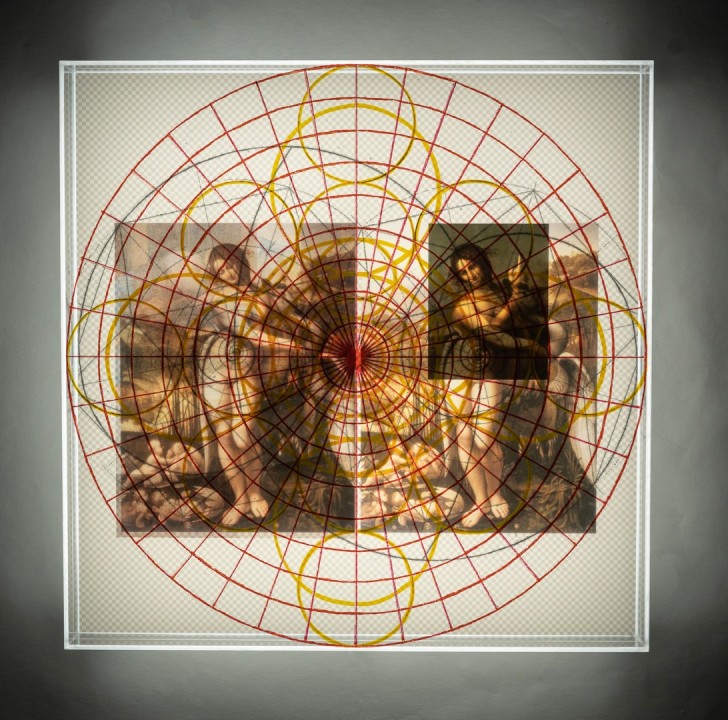
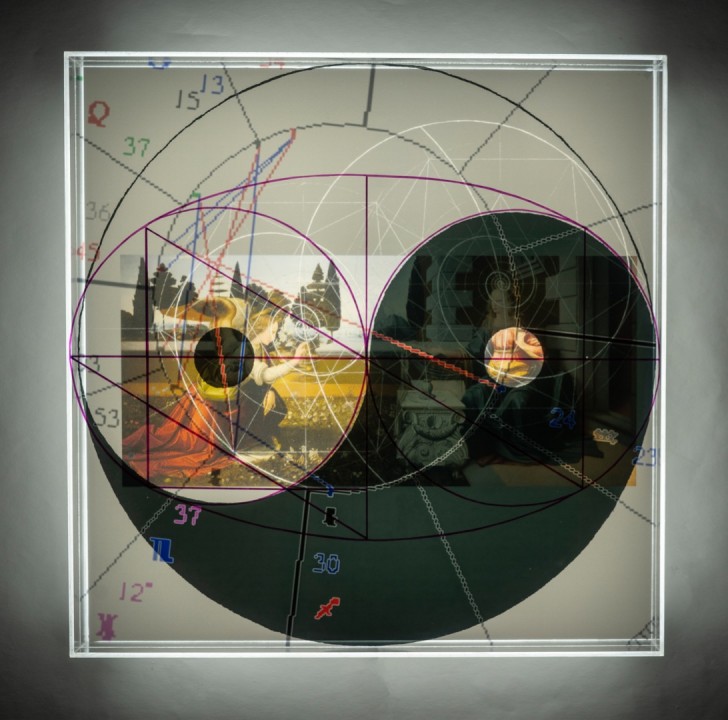
        Margarida Sardinha's Da Vinci Simulacrum: Catch It If You Can

        #10 Heart Sound
        We're all familiar with the story of Christopher Columbus who in 1492 set out to find a passage to India by traveling westward across the sea. While listening to a lecture today regarding the significance of this man's conviction that the earth was round and the challenges he faced, the lecturer made a reference to American author Washington Irving. Most Americans know him best for stories such as The Legend of Sleepy Hollow and Rip Van Winkle. He was also one of the first magazine editors to publish Francis Scott Key's "The Star Spangled Banner."

        In 1815 a financial disruption prompted him to cross the Atlantic to salvage his family's trading company. After two years he was forced to declare bankruptcy. Instead of returning to the States, he remained in Europe and pursued a writing career, inspired in part by Sir Walter Scott, author of the novel Rob Roy, whom he'd spent some time with in 1817.

        Irving left England to explore the Continent. At one point, while in Paris, he received a letter from a friend encouraging him to come to Spain. He was told that a number of manuscripts had been recently been made public. Like any real writer that I've ever known, he was always on the lookout for good stories. Being given full access to a remarkable collection of books and documents pertaining to Spanish history, Irving began several books at once, the first being A History of the Life and Voyages of Christopher Columbus.

        As I listened to the lecture on Christopher Columbus, Irving's time in Spain was commented on, specifically his time spent staying at The Alhambra in Granada. Naturally, as soon as I heard mention of The Alhambra, a unique palace/fortress in the Andalusia region, I immediately thought of Margarida Sardinha's richly rewarding 2015 art exhibition titled Symmetry's Portal which was inspired by this self-same place. 

        This memory/connection was fresh on my mind due to a recent press release regarding her latest installation titled Da Vinci Simulacrum, which will be opening this coming Saturday, 23 April, at the Museu Ibérico de Arqueologia e Arte de Abrantes (MIAA). The show is curated by Hugo Dinis and supported by Garantir Cultura and Abrantes Municipality, Portugal, in partnership with Figueiredo Ribeiro Art Collection. It will be on display through 25 September.

        The Lisbon-born Sardinha has been receiving much-deserved recognition for her labors in the arts these past two decades. I first became aware of her work circa 2010 and have been perpetually impressed ever since. What impressed me (or attracted me to her ideas) was the manner in which she synthesized and distilled concepts from literature, philosophy, religion, science, mathematics, technology and art. The concepts she wrestles with are expressed in a range of mediums including experimental film and other formats.  

        The imagery on this page is from her current show, Da Vinci Simulacrum. You can see more by visiting https://www.margaridasardinha.com/work/20

        Other themes from past shows include Wave-Particle HyperLightness, Oxymoron Tiling, Hyperbolic Hyparxis, Symmetry's Portal, London Memory and Darkness Reflexions. 


        To learn more about Margarida Sardinha visit 

        Tuesday, April 19, 2022

        The Surf Ballroom In Clear Lake: A Hall of Memories

        On January 27, 2009, the Rock and Roll Hall of Fame dedicated the Surf Ballroom as a historic rock and roll landmark as part of their ongoing Landmark Series, identifying locations significant to the origins of rock and roll. The Original Surf Ballroom opened on April 17, 1933. When the Surf burned to the ground in 1946 a new Surf Ballroom was quickly rebuilt across the street to replace it by the following year. Yesterday, 18 April 2022, I finally had an opportunity to go inside and see the place where Buddy Holly performed his last concert.

        Selfie with my Buddy Holly tour guide, Mike Tefft
        In some ways, the venue reminded me of the Historic Duluth Armory, where Bob Dylan and other Northlanders say the Winter Dance Party a few days earlier. No, the two venues bear little visual resemblance to one another. Rather, their connection is more historical. Each became a showcase for countless familiar names, singers and performers. 

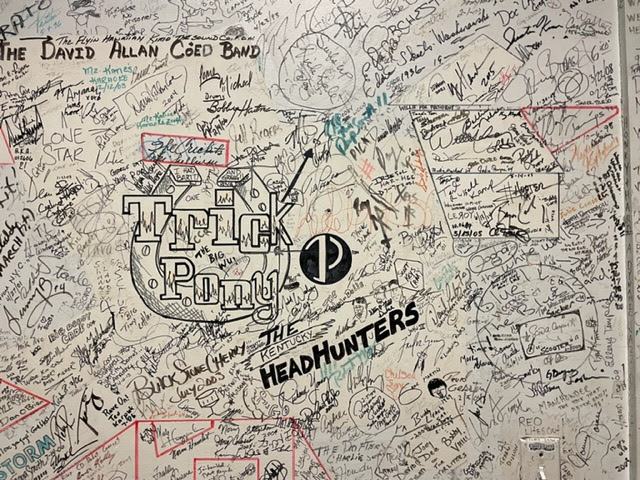
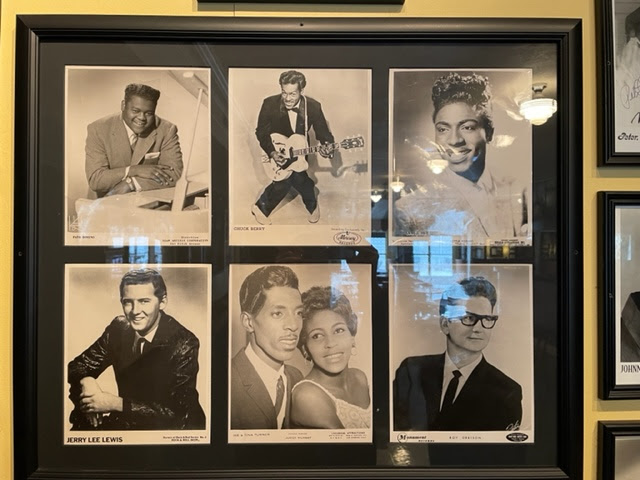
        The Surf has plenty of memorabilia for fans of music history. In the thirties and forties, it was a major "go to" for big bands. Count Basie, Benny Goodman, Duke Ellington and a ton of others performed here. With the birth of rock and roll, a whole new generation of performers made this part of their stomping grounds.

        Inside the Green Room. Many a famous personality prepped
        in this place. They not only left an indelible mark on their fans,
        they also left initials, doodles and other memorials.

        Saturday, April 16, 2022

        Long Day's Journey Into Night

        "Obsession is nothing more than a trick of the mind, an attempt to reattain something that may never have existed in the first place."

        A couple weeks ago I watched an unusual film titled Long Day's Journey Into Night. When I took it out from the library I expected it to be a film based on Eugene O'Neill's Pulitzer Prize-winning play by the same name. The only thing the film and the play have in common is that each has an unusual story around it.

        The story behind O'Neill's play is that he wrote it in 1941, but locked it in a vault to be read (and performed) posthumously. O'Neill died in 1953, and the play was performed in 1956. Very personal and autobiographical, the story takes place in one single day from 1912.

        The film by the same name opened in theaters on December 3, 2018. Somehow the public got the wrong idea about this film. This is not a typical movie. Rather, it is an "art house" film. On its first day it generated 38 million dollars in revenue. Because it's the internet era, the online backlash against the film was so great that it had almost no sales after the opening weekend. That is, post opening weekend it earned 3 only million dollars more.

        Frankly, there is much to like about this movie. The director has taken a keen interest in surfaces and textures. The settings are lush, not like polished silver, but more like deteriorating walls, peeling paint in the shadowlands, the kinds of surfaces I used to enjoy taking photos of. 

        The story takes place in China, the main character seeming to be on a quest to find a lost love. It's an altogether different storyline from the Bill Murray film Broken Flowers. Perhaps it's a little surreal for some but many reviewers at imdb.com absolutely loved it. The pace is slow, but the unpredictable nature of the story is satisfying for those who are willing to just go with the flow. 

        The theme revolves around memories, real and imagined. It's territory many of us have trod as we got older.

        The only thing I really didn't like is that the central character had a pistol which he brandished at times. I thought of Chekhov's dictum that If in the first act you have hung a pistol on the wall, then in the following one it should be fired. Otherwise don't put it there.”

        If you happen upon it and want to try something different, have at it. I enjoyed it enough to consider watching it again, even if it is not a perfect film to some extent. 

        https://www.imdb.com/title/tt8185182/  

        Popular Posts