Thursday, August 19, 2021

Throwback Thursday: A Film Noir Favorite, The Third Man

This week I again watched one of my fave film noir movies, The Third Man. Film noir was a style of Hollywood film, popular in the 40's and 50's that sought to expose and exploit the dark side of life. Themes were ambiguous, often not pretty, and occasionally considered scandalous. 
 
They were primarily black and white and gritty. Many have been resurrected less successfully than intended (eg. Cape Fear), though some have emulated the genre with superb flare (eg. L.A. Confidential). 

The Third Man 
The film -- starring Joseph Cotten, Orson Welles, Alida Valli and Trevor Howard -- is based on the novel by Graham Greene. The zither soundtrack is playful and somber simultaneously. If you've seen the film before the opening strumming will give you a lift as you know you're entering a story that has previously moved you. I have never tired of this interaction of these well defined characters with competing motives. 

 Unrelenting fascination is what I experience every time I watch this movie. It never seems old. It remains alive in my mind, haunting me, with its unearthly music, its dark, oblique photography and crisp, well-crafted storyline. 

Orson Welles excels, delivering some great lines and also one the best entrances in movie history to go along with a superb exit as well. It couldn't be better. I can't even express how I feel in words. If you've seen it it's worth re-visiting, and worth seeing if you haven't. 

The music track is Anton Karras on the zither. It greets you at the open and carries you through. When I hear the opening notes it awakens anticipation and memories simultaneously. 

Here's an informative review of the film from imdb.com 
Of all the movies during the studio era (pre-1960ish), there are three movies with cinematography that always stick out in my mind: Gregg Toland's work in Citizen Kane, Russel Mety's work in Touch of Evil, and Robert Krasker's work in The Third Man (all starring Orson Welles). 

I just recently saw a restored 35mm version of The Third Man. The vivid black and white visuals of a bombed out Vienna are breath-taking. Shadows are everywhere, a metaphor for the period detailed in this story. The unique way Krasker tilts the camera in some shots adds to the disorientation of the plot. And who can forget the first close-up of Welles with the light from an apartment room above splashing onto his face; one of the great entrances in movie history, made still more effective by the foreshadowing in the previous scene. Lime gives his old friend a smile that only Welles could give.

Here's my 2011 review of the film:  
Graham Greene The Third Man Continues to Satisfy
THIS REVIEW CONTAINS SPOILERS
Ten days ago I saw Graham Greene's 
The Third Man on someone's list of the fifty greatest films of all time and I felt compelled to rent it again. I've read the book at least twice, Greene being among my favorite novelists. I can't say how many times I've seen the film but invariably each time it's an enriching experience.

The story takes place in Vienna after World War II. The narrator is a hack writer of Westerns, Holly Martens (Joseph Cotton) from America who has come to Vienna to find his old college chum Harry Lime (Orson Welles). Upon arrival in the divided city (there is an American, French, Brit and Russian sector, as partitioned by the Allies) he learns that Lime has been killed in an accident outside the apartment house where Martens had been expecting to meet him. The witnesses, however, share conflicting details and Martens begins to suspect foul play.

It's not just the exotic settings that make a Graham Greene story such a thrill to read, but also the incredible way he allows the reader to see the story, even when the narrator doesn't get it. In this case Holly Martens, saturated with sentimentalism, believes only the best about his old friend, resisting all evidence to the contrary.

The third star in this film is the beautiful and somewhat unheralded Alida Valli as Anna Schmidt. Martens loves his friend because he doesn't know the truth about Harry; Anna is smitten by Harry in spite of the truth about him. Tumultuous tragic love smashes itself against the rocks with resigned futility.

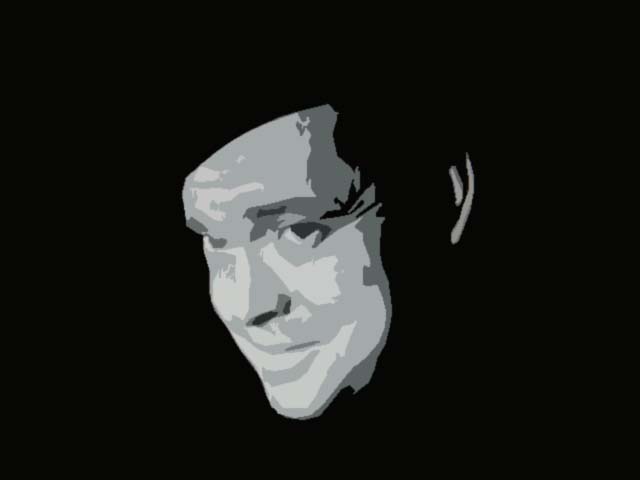
I must also take a moment here to extol the cinematography. Shot in black and white mostly on location in Vienna, every frame is a work of beauty. So much of the film is at night, allowing wonderful contrasts and surrealistically stark scenes. This all works perfectly to set up the first appearance of Welles hiding in a dark doorway, his face suddenly illuminated when a light across the street flames to life.

At certain points in all our life stories light strikes from a new angle, revealing things we didn't previously understand. The clues were there all along, but until there is light nothing can be fully seen for what it is... whether we wish to see it or not.

* * * 
In case you can't tell, I really enjoyed this film. Each time I watch I catch subtle touches I'd missed previously. It's a film that has everything. Find it if you haven't seen it.

Wednesday, August 18, 2021

Just a Few Comments About the Dylan Allegations

Adam Swanson painting based on opening scene in 
D.A. Pennebaker's Dont Look Back
By now nearly everyone has heard the story. An unnamed woman has filed a lawsuit in New York Supreme Court stating that Dylan sexually abused her at his New York apartment over a six-week period between April and May 1965. She was 12 years old at the time.

What's silly about these allegation is that Bob Dylan is probably the most documented human being on the planet. In May he was on tour in England, filmed endlessly by documentarian D.A. Pennebaker whose epic Dont Look Back is considered by many to be the best rockumentary ever.

Dylan's whereabouts and activities have been observed and recorded from the earliest days of his career. ExpectingRain.com has links to a year by year summary of his entire career...  concerts, recording studio activities, album releases and other significant whereabouts. 

Here's an outline of Dylan's 1965 calendar. 1965 was an incredible year for Bob. It began with the recording of Bringing It All Back Home, the first of a trio of albums that is unmatched in the history of music. In June he would record Highway 61 Revisited, following up with Blonde On Blonde in the first half of 1966.

There are still more details about that spring at ThreadReaderApp. 

Still from Dont Look Back
In March 1965, Bob Dylan had left his home in New York for an American concert tour with Joan Baez. At the end of March, he played Santa Monica and Berkeley, with a second Berkeley show on April 3. On the 9th, he was in Vancouver, British Columbia, and played Portland, Oregon on the 23rd. In the intervening month, he was in California most of the time with Sara Lownds. On April 26th, Dylan arrived in London for an English tour. For the first two weeks of May, 1965, he was on tour in England. The Guardian reported they were asked to leave their Sheffield hotel on May Day. Bob didn't like any misbehavior on the tour. The tour was being filmed by D.A. Pennebaker. In mid-May, Dylan went to Portugal with Sara on holiday — "drinkin' white rum in a Portugal bar." Returning to London on the eve of his May 24th birthday, Bob was sick enough to be hospitalized. He and Sara, and his film crew and fellow musicians, stayed in London through June and perhaps into July (experts disagree). 

The civil lawsuit says Dylan sexually abused her at his New York apartment over a six-week period between April and May in 1965, “leaving her emotionally scarred and psychologically damaged to this day”. 

It doesn't make sense. Most of April he was on the West Coast, a long ways from New York. He was preparing for his concert tour in England that would be fully documented. He was also preparing to marry and start a family with Sara, a beautiful woman he would soon take as his bride. 

*

It's fairly well known that Bob Dylan was into magic. In his new book Bob Dylan: On a Couch & 50 Cents a Day, Peter McKenzie tells about Bob showing him some magic tricks with a deck of cards. I've also shared here how much Dylan was into the magic of Harry Houdini. 

It's a given that Bob Dylan has performed miracles when it comes to songwriting and performing. Yet no matter how skilled he was as a magician, it is highly unlikely he was able to be two places at one time. Whether the other side of the Continent or the other side of the ocean, simultaneous appearances in New York City do not add up.

*

ExpectingRain.com has plenty of stories about this if it matters to you. Personally, I think it's silly.

Tuesday, August 17, 2021

Staying Human Is What's Important

"It's not enough to stay alive. It's staying human that is important."
--Winston, in Orwell's 1984


"It is beyond dispute that the state exercises very great power over human life  and it always shows a tendency to go beyond the limits laid down for it."
--Nicolas Berdyaev, Slavery and Freedom


"All violence consists in some people forcing others, under threat of suffering or death, to do what they do not want to do."
--Leo Tolstoy, The Law of Love and the Law of Violence

"Can a man who's warm understand one who's freezing?"
--Alexandr Solzhenitsyn, One Day in the Life of Ivan Denisovich


    So many roads, so much at stake
    Too many dead ends, I'm at the edge of the lake
    Sometimes I wonder what it's gonna take
    To find dignity
    --Bob Dylan, Dignity


    For with much wisdom comes much sorrow;
        the more knowledge, the more grief.
    --Ecclesiastes 1:18

    Sunday, August 15, 2021

    Classic Car Shows Are American as Apple Pie

    The Mustang was introduced at the 1964 World's Fair

    There is really nothing more quintessentially American than the car.
    --Warren Buffet

    As I drove up to the recycle center yesterday I saw that all the fire engines and equipment were lined up in front. The recycle bins are located behind the Munger Volunteer Fire Department.

    I drove past the trucks and clustered fire fighters and saw that the Munger Town Hall parking lot was full of vehicles as well, filled with an array of classic street rods, rat rods, muscle cars and more. 

    Here are a few images that may give you a feel for what these kinds of events consist of: eye candy.

    Saturday, August 14, 2021

    Ammunition for Theorists Who Believe U.S. Moon Landing Was A Hoax

    Photo courtesy NASA
    Because of anticipated delays in spacesuit development, it is "not feasible" for NASA to land humans on the moon by the agency's hopeful deadline of 2024, a new report from the agency's Office of Inspector General (OIG) has found.

    The above notice is from an article at Space.com regarding a new report indicating that NASA may not be ready for it's scheduled 2024 moon launch because the space suits will not be ready in time.  

    "NASA's current schedule is to produce the first two flight-ready xEMUs by November 2024, but the agency faces significant challenges in meeting this goal," the audit reads. However, it adds, given anticipated delays in spacesuit development, "a lunar landing in late 2024 as NASA currently plans is not feasible."

    The cost for these suits alone will be over a billion dollars. Cost isn't the only obstacle, there is also a need to test the suits and verify their effectiveness in protecting the explorer astronauts. The testing and verification process will take 20 months. 

    The way I see it is that if it really takes this much trouble to make a space suit, how did we accomplish those early moon walks beginning in 1969.

    Now I myself am on record as being a believer in that momentous event 50 years ago when Armstrong and Aldrin touched down on the lunar surface. Neverthelsss, stories like this one could easily raise doubts in the minds of those who feel less confident about the historical record. 

    If I'm not mistaken, enough time has passed to open all the sealed documents about these events. The Freedom of Information Act was theoretically designed to provide journalists access to information that had previously been concealed. If it really were a hoax you'd think someone would have uncovered more  "aha!" insights by now.

    Heres the original story from Space.com:
    US astronaut moon landing 'not feasible,' by 2024 due to spacesuit delay, NASA's inspector general finds

    Related Links

    Did Man Really Walk on the Moon?

    Buzz Aldrin's Moon Walk and Its Aftermath

    The New Moon

    The Most Complete History of Man’s Moon Missions That I’ve Ever Seen 

    Friday, August 13, 2021

    What Question Would You Like To Ask God If You Were Able?

    I was on a Bob Dylan fan site where someone asked the question, "If you could talk with Bob Dylan and ask him one question, what would it be?"

    That exchange brought to mind a couple blog posts I'd written in the past. The first, in 2010, had to. do with questions college students were thinking about. I'd titled it Is There A God? The second, from 2013, was titled Life Notes About Nothing.

    Life Notes About Nothing started like this.

    Everything comes out of something. Nothing comes out of nothing. 

    Those were some of my thoughts as I was thinking about the Big Bang Theory. Where did the bang come from? Out of nothing? If there was nothing, how could something happen? In the beginning…

    Yesterday I had an interesting conversation on an airplane. At one point the woman I was speaking with (I'll call her Dee to protect her identity) asked, “If you had two hours in God’s presence where you could ask God anything you wanted, what would you ask?"

    That question didn't come out of the blue, out of thin air, out of nothing. We'd been talking for quite some time before such personal explorations could be broached. A framework had been established. But now, the question was out there.

    Before I share my first reply, I’ll ask you: What questions would you ask God? You have two full hours. (This is for you to answer to yourself. No need to send me anything.)

    I only had one question initially and after that my mind was blank. It's been a decades-long recurring theme for me and it always comes back to this: Why am I here?

    In that moment on the plane I really didn’t know what else I could ask. Later, while driving home from the airport, other questions began to emerge. Where does beauty come from? Why do we respond to beauty? Or rather, why do I respond to it the way I do? Why is beauty beautiful?

    That was the first set of personal inquiries. Many more questions soon followed.

    Maybe you have questions for God. Maybe asking the questions will unlock something for you.

    I have one more for you. When are you going to get around to taking that personal retreat you’ve always promised yourself? Perhaps it’s time to get re-centered.

    The world pushes and pulls us in so many directions. There are so many voices telling us what we should do, who we should be, where we should go. In the midst of all this "noise" there's a still small voice... within. Do you know who you are?

    Thursday, August 12, 2021

    Throwback Thursday: Isolation and Loneliness

    Illustration by the author.
    Since the advent of Covid lockdowns las year, we've been reading much about depression caused by isolation. This is a re-post of a piece I produced in February 2009.

    "Knowing, in a deep-down sense, where you are from contributes not only to your sense of identity but to your sense of community." 
    ~Vance Packard, A Nation of Strangers 

    Last night I picked up the current Utne to read an article called "The Lonely American." The article begins with some grave statistics, cited for you here: 

    Two recent studies suggest that our society is in the midst of a dramatic and progressive slide toward disconnection. In the first, using data from the General Social Survey (GSS), Duke University researchers found that between 1985 and 2004 the number of people with whom the average American discussed “important matters” dropped from three to two. Even more stunning, the number of people who said there was no one with whom they discussed important matters tripled: In 2004 individuals without a single confidant made up a quarter of those surveyed. Our country is now filled with them. 

    The second study was the 2000 U.S. census. One of the most remarkable facts to emerge from this census is that one of four households consists of one person only. The number of one-person households has been increasing steadily since 1940, when they accounted for roughly 7 percent of households. Today, there are more people living alone than at any point in U.S. history. Placing the census data and the GSS side by side, the evidence that this country is in the midst of a major social change is overwhelming.

    The article is excerpted from the book of the same name by Jacqueline Olds and Richard S. Schwartz, whose aim appears to be to show how the American lifestyle leads to social isolation. 
     
    They note that socializing is not the priority it ought to be in our culture. They cite the frenetic pace of life driven by materialistic pursuits as part of the problem. They also note that social isolation is damaging to both health and ecology, though I didn't make the full connection on this last assertion. 
     
    What I found absent in the article, and hope it is not deliberately ignored in the book, was any reference to the groundbreaking work by Vance Packard on this topic, A Nation of Strangers. 
     
    Olds and Schwartz may be correctly sounding alarm bells regarding isolation, but what they're seeing is the fruit of what Packard cited more than forty years ago. In his 1962 analysis, "Personal isolation is becoming a major social fact of our time. A great many people are disturbed by the feeling that they are rootless or increasingly anonymous, that they are living in a continually changing environment where there is little sense of community."

    Before citing more from Packard, though, it could be that this is simply the fruit of acidity of modernity. Existential philosophers like Camus and Sartre observed this "alienation and despair" as an isolating phenomenon which for many is the human condition in our Western world. The problem with the "existential hero" is that he can't connect, and thus claims it noble to stand alone. 
     
    The reality is that we weren't created to stand alone. Families, communities, tribes, clans, associations, friends... we need them because life is hard. And we're not gods, we're mortals who have a lot of hard things to deal with from time to time.

    One of the things I remember most vividly from Packard's book was that people are more mobile in our modern (Fifties/Sixties, USA) society than ever before. With the free-wheeling lifestyle glorified in books like Kerouac's On the Road, young people left their stifling rural communities in droves and went to the big city where the lights are bright on Brodadway. The critically acclaimed Midnight Cowboy (Jon Voigt, Dustin Hoffman) portrayed one pair of lost souls in this exodus. And the theme song by Nillson says it all, "Everybody's talkin' at me, I don't hear a word their saying." Seeker Joe Buck finds himself alone in a big world, and it's a hard world.

    But Packard cited other causes for this rootlessness, much of it work related. In the course of my life I've been aware too that military kids and preachers' kids are often the victims of mobile lifestyles that make it challenging to develop connections. It's almost a byword now to say, rather flippantly, you have to go where the jobs are.

    For more on Packard, and an interesting application of Packard's observations to the Red States / Blue States divide, check out this perspective by the Brothers Judd.

    Popular Posts