Showing posts with label Book. Show all posts

Monday, April 14, 2025

Life Is Not A Spectator Sport: A Weekend Reflection

It's Jay Gatsby Month. 100 years ago, April 1925, F. Scott Fitzgerald's The Great Gatsby was published by Charles Scribner's and Sons, so you may see his story pop up a few times in the next couple weeks.

[Spoiler Alert: All of these Gatsby references assume you already know the story.]

They say that cats have nine lives; we only have one. This singular chance at existence demands that we be more than passive observers. We can choose to sit and watch from the audience, or choose deliberate engagement with the world. The theme “Life is not a spectator sport”--a theme I've reiterated many times over the course of a lifetime--captures this urgency to step beyond the sidelines and shape our own stories through action and courage. 


Whether we're chasing dreams like Jay Gatsby, or standing against injustice as history’s rebels did, the essence of living lies in participation, not detachment. In one sense, this call to action is a plea for purpose, reminding us that life--fleeting and finite--gains meaning only when we dare to act, risk, and truly live.


This idea resonates deeply in literature and life, emphasizing courage, agency, and the pursuit of meaning through action.


In Fitzgerald’s The Great Gatsby, Gatsby is an embodiment of this theme. He's refused to remain a bystander in his own story. Born into poverty, he rejects the sidelines, reinventing himself as a wealthy man to win Daisy’s love. His relentless pursuit shows a life lived boldly, even if flawed. By way of contrast, Nick Carraway, the novel’s narrator, is the lingering spectator, observing Gatsby’s world with detachment. His passivity contrasts with Gatsby’s drive, suggesting that true vitality lies in taking risks, not just witnessing others’ dreams.


The story is more nuanced than that though. The picture Fitzgerald paints is more grim. The American Dream isn't all that it's cracked up to be. There's a power hierarchy in life. The lower classes believe in upward mobility. This is America, where anything is possible. What many don't see is that when you rise above your place,  you become a target. You're a clay pigeon thrust skyward and the uber-rich delight in taking potshots at you, shattering your illusions, putting you back in your place.


Even so, we're not advocating that you abandon your dreams. Quite the contrary. This is an appeal to take action, despite a possibility of frustration, futility and failure. The battle is not always to the strong nor the race to the swift, time and chance happen to them all.


In his song "Father and Son" Cat Stevens wrote this terribly sad line: "You may still be here tomorrow, but your dreams may not." When we've abandoned our dreams, what is left? 


For all sad words of tongue and pen,
The saddest are these, 'It might have been.'

--John Greenleaf Whittier


Thursday, April 18, 2024

A Visit with Sue Dugan Moline, Author of The Lake Turned Upside Down

Because I was born in Cleveland and raised in New Jersey I'm routinely asked how I ended up in Minnesota. Answer: In 1976 I came to attend a Missionary Training Center in Bloomington called Bethany Fellowship. 

Sometime early in my freshman year I heard reference to a traumatic event that occurred several years earlier, a massive F4 tornado which took 15 lives, many of them part of the Bethany community.

When I learned about it, it surprised me at how little information there was. No one talked about it and most people are too polite to pry. We only knew it was something that happened and a lot of people were killed.

Somewhere along the way I learned a few bits and pieces. The story of how Pastor Brokke failed to make it to the cabin and his son lay on top of him became an almost legendary tale, as well as the manner in which the cabin was lifted from its foundation and thrown directly into the lake. The images were vivid and painful, but always in absence of context.

This year I finally had all my questions answered and my narrative corrected. The details had been compiled in a book by someone who was there, Sue Dugan Moline. For some reason I'd thought that the entire Bethany staff had gone to a lake up near Brainerd, like a summer retreat, and this deadly tornado struck. As it turns out, the outing involved only three Bethany families. (And the lake where they had gone was in Outing, MN, the center of the state and not the Northwest.

When I first learned of Sue Dugan Moline's book, I very much wanted to read it. Perhaps in part because I personally knew some of the survivors who experienced it. Though Sue's father was a popular teacher at the school, teaching classes on Homiletics and the Book of Acts, I can't recall him ever making a single reference to it. And although this event was long ago and far away, the book made it feel like yesterday. 
 
EN: The Lake Turned Upside Down is an incredible story of the fifth deadliest tornado in Minnesota history. How many people from Bethany or Bethany related people were there at Roosevelt Lake that day?

Sue Dugan Moline
SDM:
28 people total were at the four Bethany cabins that week. At the time of the tornado there were 22 people on the property. Six had left shortly before the tornado. The 28 were either living at Bethany or were relatives of Bethany staff who had reserved the cabins.  
 
EN: What was the occasion that brought these three families there that week?

SDM: The cabins were available for Bethany staff member vacations for up to two weeks each summer. The Harold Carlson family was in Cabin #1 with two sons (Darrel and Dale) and his in-laws, Rev. Arthur and Minnie Olson.
 
The Dugan family had cabins #2 and #3, one reserved by my parents Toby and Vonnie Dugan, and one reserved by my grandma Edith Dugan with her youngest children Diane and Terry. The Dugans also had brought a Bethany pop-up camper for extra sleeping space. The two-week vacation was a Dugan family reunion with our out-of-state uncles and aunts staying with us -- Ken and Barb Dugan and sons (Ron and Don) from Canoga Park, California, and Rev. Dick and Priscilla Dugan and 3 kids (Sheila, Shane & Sharon) from Huron, SD.  18 of the 28 were Dugans. 
 
The last cabin was reserved by Rev. Harold and Cathy Brokke and their two sons, Dan and Paul.  
 
EN: 15 people were killed in the superstorm. How many died from the Bethany group?

SDM: Seven of the deaths occurred on the Bethany property, 12 total were killed in the Outing F4 tornado. The other three deaths occurred in other tornadoes that same day (The Northwoods Tornado Outbreak, as it is called by the NWS).  
  
EN: What prompted you to write this book?

Divers were called in to search the lake for bodies.
SDM:
 Curiosity is what prompted me to start asking questions. I realized that I had a very limited memory of the event and always wondered what other survivors remembered. But I was a rather shy and self-conscious young person and did not find it easy to ask questions of other survivors. After both of my parents had died, I realized that if I didn't ask questions soon, there would be nobody left to ask or at least memories intact. At that point, five survivors had already died and Harold Carlson and Cathy Brokke were both in their 90s.  
 
Although I never intended to write a book, just the sheer volume of stories that I collected from survivors, first responders and people "up north" compelled me to document them.  I had become a "clearing house" of sorts for the August 6, 1969, tornado and people were very interested in the story. 
 
EN: What surprised you most when you began assembling all these stories?

Debris where one of the cabins had been.
SDM: I was surprised how willing everyone was to talk about their memories. I was also surprised by how interested the central Minnesota area was in the story and information I had collected. I think my story was covered by 7 different newspapers across northern Minnesota and many people responded to me with their individual memories via phone calls and emails.
 
EN: You shared that people chose not to talk about what happened that tragic day. How would have things been different had these stories been shared in the years that followed? I’m thinking of the 70s.

SDM: I have not thought about that. My book might have been longer, or perhaps I would not have written it. I do wish I could have interviewed my parents, my two uncles, and Pastor Brokke. The story would have been more complete. My uncle Dick Dugan did write an article or two after the event and the death of his daughter Sharon. And Dan Brokke wrote an article for a youth magazine. So they were comfortable sharing their stories. 
 
But 45 years later when I met with Bethany classmates for breakfast at Perkins (every 2-3 months), I asked them if they had ever heard the story and they had not. They knew a few details, but we did not talk about it as classmates. I think part of that era was politeness in not bringing up painful issues. In the long run, talking about it was very therapeutic and filled in so many details for our children and grandchildren. 


EN: There were four cabins that the families were staying at. When the tornado suddenly came, most of the people attempted to gather in the one cabin. Why that one? How many were in the cabin when it was lifted up and tossed into the lake? Where was everyone else?

SDM: Cabin #3 was at the bottom of a very, very steep hill. Both cabins #1 and #2 were at the top of the hill, high above the lake. People were taught to run to the lowest area in a storm or tornado. Because of that my Grandma Dugan and family from cabin #1 ran down the hill to our cabin because it was low-lying, right at lake level.  The Brokke's ran over from cabin #4 -- probably mostly to warn us that they had seen a tornado. Their cabin was furthest west and the tornado was coming from the west.  Two of them stayed in cabin #3 (Cathy & Paul), but Pastor Brokke and Dan stayed outside and hit the ground. 
 
EN: Was there any “safe place” there? We have over 10,000 lakes in Minnesota with cabins around them. Can something like this happen again and how can people prepare, to avoid a similar outcome?

SDM:
 There was no safe place on the property. Being thrown into the lake actually saved lives. If we had more notice, we probably would have headed up the hill to cabin #1, the older original cabin that did have a walkout basement facing west. We all would have died. That cabin was also completely destroyed and only 9 cement blocks remained intact in the walkout basement. Evy Carlson and her parents, Rev. Arthur and Minnie Olson, were violently killed. We don't know where they were when the tornado hit -- perhaps trying to get down to that walkout basement via an outside stairway, but they were all killed.  
 
Some people now will build "safe rooms" in their cabins where the high water table will not allow a basement. My daughter and son-in-law built a lake home in Crosslake and we have a "safe room" between the home and garage, totally encased in cement. As well, communication via cell phones allows people to follow the weather and radar. In 1969, there were no civil defense sirens in the town of Outing, Minnesota.


Related Links
Purchase the book Here on Amazon.

Wednesday, February 28, 2024

James Wiita on Bud Wagner's And There Shall Be Wars


Nearly a half century ago, Bud Wagner (who would eventually become my father-in-law) shared with me his diaries from the time he enlisted in the army and went to war in Europe, first in North Africa and on to Italy. He asked my opinion regarding his record from that time, "Would anyone be interested in this?"

I replied, "Absolutely." 

As a market gardener, he had little time much of the year for this project, but each winter he remained dedicated to researching the global context of his personal experience and devoted his time to setting down in writing what I peronally believe is not only an insightful book but also a significant contribution to our understanding of what it was like to be a soldier during the Second World War.

What follows is an email from someone who recently purchased a copy of Bud's book, And There Shall Be Wars.

Just a note to say how much I am enjoying the book about your Father-in-Law.

You strike me as someone who ingests a lot of reading each week. I imagine you are always in the midst of a good book. With all the focus on my own project , I haven’t  read a good, fat book for way too long.
 
I am now just getting back into that swing. 
This book has truly launched the habit.

I’ve just started to dig into the story, and want to pick it up as my first read in the morning. It’s a few days after Pearl Harbor in the story.

Reading Bud is like a daily talk with someone, though one sided. You can pick right up where you left off, it’s so personal it shows his human characteristics, and what to anticipate with each entry.

It seems to show every aspect of “army life “ -- the important details and accuracy mixed with the training -- moments with friends and music, faith, along with frequent headaches and  times of boredom.

You can easily see the kind of soldier he became, and how his superiors and others viewed him. The entries give vivid clues. Not in a slighting way, but this man was definitely on the spectrum. There are so many indicators it’s fascinating.

I could give many examples already of his definers. I’m no expert, but the fastidious behaviors and attention to detail tell a true daily approach to his obsession with detail.
It adds a generous empathy to his storytelling. You feel as fulfilled in his chronicling as he did .

Well, that sounded like a critique, but I wanted you to know I think preserving this story is as important to me as it was to Bud.

Before he ever left he knew he was going to be chronicling, the cameras alone tell the tale. The results are extremely impressive.

Thanks for bringing the book to me.
James
* * * 

HERE'S AN EXCERPT that reflects how the book is organized. Bud recorded each of his daily handwritten diary entries and then added a commentary, amplifying the account recorded in his journals. The additional commentary often included details from other parts of the war theater, thereby giving context to his personal experience. 

Friday, January 7, 1944
Had to go to all battalions at midnight with firing orders. Moonlight so I didn't mind too much. Slept through breakfast. Were shelled twice here today. My nerves aren't able to take it anymore as well as they used to. Some shells came close enough.

151 moved tonight; I moved with them to the other side of San Pietro, a rubbled mess, a battlefield, to be sure. Back here at 10:00, just got nicely to sleep when the guard called, "Wag, get to Message Center," so there was another Firing Order to all battalions. It must have been after 2:00 when I got back.

San Pietro and San Vitorre were two towns literally blown off the face of the earth. There were many trees around that were totally devoid of all branches, and were just sticks left from all the shell fire. The city itself was piles of concrete rubble. I didn't see life of any kind left any time I drove through. About this time the II Corps took Mts. Porchio and Chiaia, two objectives necessary for our Division to have before our ultimate objective of Cassino.


Photo Caption Top: Don and I went to Sbeitia with water truck. Saw 4 German graves, some old buildings that were failing down, and French garrison that had been bombed. --Tuesday, March 30, 1943

* * * 

RELATED LINKS

James Wiita is author of the book Rock On, Duluth

Dogs of War and Liberation Day, Italy


TO PURCHASE A COPY OF YOUR OWN, SEND A NOTE TO ENNYMAN3@GMAIL.COM

Thursday, February 22, 2024

Throwback Thursday: A Brief Visit with David Cane on Happiness

“If you are really thankful, what do you do? You share.” ~ W. Clement Stone


The idea of happiness is something so basic that most of us desire it without knowing why. As Americans it is even written into our national creed as one of our basic entitlements: “Life, liberty and the pursuit of happiness.”

The pursuit alone does not always result in happiness. That might be why there are so many books about happiness on the market. Many of them deal with our internal barriers and others offer practical tools for removing external barriers. The how of happiness, the steps to happiness, the psychology of happiness, the secrets of happiness… So when I was given a chance to review yet another book on this happy subject, The Short Book on Happiness, I took advantage of the opportunity to instead interview its author, David Cane.

Born in 1964, Mr. Cane is a graduate of The American University in Washington D.C. where he received his MBA. His life experience includes overcoming drug and alcohol addictions, unemployment, bankruptcies and other misfortunes. Like many, he knew why he was unhappy, but did not know how to find the happiness he saw others experiencing.

Today he has been a member of Alcoholics Anonymous for fifteen years and speaks routinely on the topic of addiction and recovery. It is apropos that his blogspot includes this quote from Henry Ford: “Whether you think you can, or that you can’t, you are usually right.” Everything really does start right there.

EN: What was your motivation in writing this book?
David Cane: For me, studying and learning about happiness was never enough. I’ve read many books that I thought would help me become happier. I learned a lot, and many of the books I read were extremely well written and valuable as they related to helping me understand why I was experiencing worry, fear, and low self-esteem. What was missing, however, was a simple, short, but substantive approach that I could apply to eradicate worry, acquire more confidence, and become a happier person. My heart was always in the right place, and I knew I could achieve more in my life, and I was certainly ready to do the work, but I just could not figure out the right actions to practice.

It’s my belief that many people unwittingly procrastinate becoming happy due to spending an inordinate amount of time seeking out the reasons for their unhappiness. Too much time is spent figuring things out, and too little time is spent solving the problem. The problem, in essence, is that we have allowed our minds to become our masters, and must reclaim ownership of our minds in order to become happy.

EN: Many people know most of these truths. Why don't they do them?
DC: That is correct. Things such as positive thought, gratitude, forgiveness, and faith are not new. I believe there are a variety of reasons why people do not practice these things and do not receive the associated benefits in their lives. These include:

~ Difficulty in sorting through the vast amount of information and differing philosophies available on these topics
~ People want a quick fix, and give up if it results don't happen fast enough
~ People know what they need to do, but don’t know how to do it to get results
~ It takes a lot of energy and commitment
~ Thinking in a new way makes you "different"
~ It takes people out of their comfort zone

EN: In a world with so much suffering, is it right to be happy?
DC: Yes it is. I believe we deserve to be happy, and that is God’s intention for us. In fact, much of the suffering in the world is created by people who are unhappy to begin with. The more happiness there is, the less suffering there will be. People that are truly happy (i.e., have high self-esteem, are not consumed by worry and fear, and have a strong faith) are in a much better position to reduce suffering in the world.

EN: Discontent can become a prod for motivating us to do something to make a bad situation better. (e.g. in a situation where social injustice is taking place.) Can we be both happy and discontent at the same time?
DC: Yes. In fact, a person who is truly happy understands that happiness does not mean that things around them have to be going well. That is, one can have financial difficulties, health issues, family issues caused by others, etc. and still be happy. Happiness is an “inside job” and is a reflection of how comfortable one is with who they are, not what they have, and for me starts and ends with faith in God.

* * * * 

The full title of David Cane's book is The Short Book on Happiness: Transform Your Life in 10 DaysFor additional information on overcoming secret addictions be sure to check out the late John Prin’s website, appropriately called True You Recovery.

THIS INTERVIEW WAS ORIGINALLY PUBLISHED IN 2008

* * * * 

"Those who do not observe the movements of their own minds must of necessity be unhappy."--Marcus Aurelius

    Monday, September 18, 2023

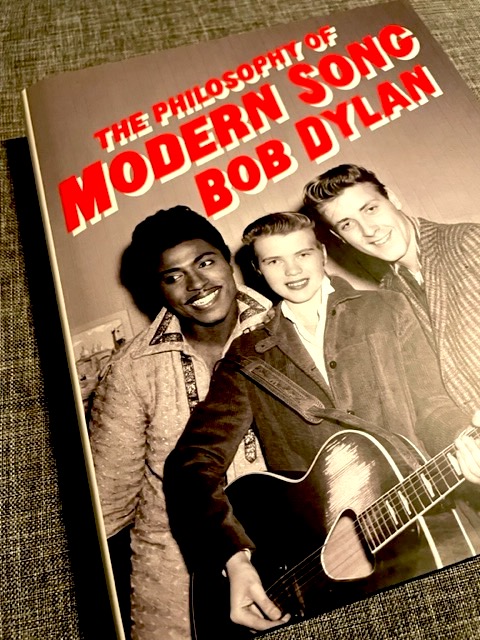
    Weighing In on Bob Dylan's Philosophy of Modern Song

    Despite waiting years for Dylan's sequel to Chronicles: Volume One, I did not order my copy of his Philosophy of Modern Song in advance last year, as I might normally have done. Rather, I requested it as a Christmas present and thus received it after weeks of reviews had already appeared. The "controversy" regarding his "autograph scandal" didn't phase me. Nor did the misogyny brickbats.

    So here it is, sitting before me on the coffee table/wooden chest, beckoning me to express my initial first reactions.  

    * * * 


    The Philosophy of Modern Song is not anything like what most of us expected as the sequel to Chronicles Vol. 1. The writing, however, feels like a Dylan volume. Most Dylan fans who have listened to his Theme Time Radio show will very likely hear Dylan's voice reading it aloud as they read the text.

    The book itself is a collection of essays on 66 songs by other artists, spanning from Stephen Foster to Elvis Costello. It has the look of a scrapbook in some ways. To some extent that makes sense in a pop culture sort of way. (When I was in Italy, I was talking about Dylan with a fellow who owned a craft brewery. He had a couple Dylan posters on the wall so I commented on my surprise at how much Dylan had been imported into Italy. He said, "America gave us two things: Bob Dylan and Pop Culture.")

    According to the text on the inside cover flap Dylan began working on it in 2010. The sales-copy describes it as "a master class on the art and craft of songwriting," though quite a few critics demur on this proclamation. 

    John Carvill at PopMatters.com, for example, wrote, "There’s very little of what we could sensibly consider ‘modern song’ in The Philosophy of Modern Song, and any ‘philosophy’ is strictly of the cracker barrel variety. That’s ok, though, because we’ve learned never to take Dylan at face value, and the title was just too pretentious to have been meant seriously." The subhead to that article calls it "an awful book, awash with misogyny and crusty old man rants."

    I found that last barb to me a little harsh, but having become an older man myself I do understand why folk become "crusty" in their later years.

    Sasha Frere-Jones called it "a fractured memoir and punch list of nightmares." And follows up with "what begins as a set of interpretations ends up as a sour little diary."
    (4columns)

    On the other hand, if you're seeking reviews with a little more enthusiasm for the subject matter (Bob's sequel to Chronicles: Volume One) then here's the place to be: 130+ Published Reviews of Dylan's Book.

    I believe I did see at least one reviewer agree it that was "master class on the art and craft of songwriting." I saw it as something different. 

    I enjoyed seeing the variety of songwriters selected. No surprise to find spotlights on Elvis, Little Richard, Johnny Cash and Hank Williams, as long-time fans know his respect for the music of these giants. Happy surprises include Stephen Foster, Nina Simone and many others. As for Dylan's impressions on pop hits from my own Boomer-era lifetime, there were many, such as "Ball of Confusion" by the Temptations, "Black Magic Woman" by Santana, "By the Time I Get to Phoenix" by Jimmy Webb, etc.  And then there are all the slices and slivers from other assorted musical genres that you probably would not have expected. 

    The writing style is, as I noted, more of a rhythmic impressionism, a Dylan style you find in songs like "Subterranean Homesick Blues," punchy phrases falling all around like shrapnel from a hand grenade. 

    Here's an excerpt from his chapter on Cher's "Gypsies, Tramps and Thieves" which is accompanied by old photos of a Peep Show carnival barker and a Side Show Zoo sign. 

    You've evolved over thousands of years and you're still traveling through, setting up the tent and making ends meet. Hoaxes, tournaments and spectacles, that's your line of business. Drugstore cowboys, girl watchers, night owls--everybody and their uncle, you lighten them up and bleed them with ease. You give nightmares to people while they're fully awake. People whisper behind your back--lampoon you, satirize, mock and ridicule you, make bitchy comments but your place in the sun is secure.

    Some of the book is almost as strange as his Tarantula.

    A novel with a plot this is not. It's entertainment. Dean Martin's "Blue Moon" is accompanied by a cover photo of Robert Heinlein's The Moon is a Harsh Mistress. Carl Perkins' "Blue Suede Shoes" ends with a shoe ad.

    Here's a digression from another chapter.

    You're in an exclusive club, and you're advertising yourself. You're blabbing about your age group, of which you're a high-ranking member. You can't conceal your conceit, and you're snobbish and snooty about it. You're not trying to drop any big bombshell or cause a scandal, you're just waving a flag, and you don't want anyone to comprehend what you're saying or embrace it, or even try to take it all in. You're looking down your nose at society and you have no use for it. You're hoping to croak before senility sets in. You don't want to be ancient and decrepit, no thank you. I'll kick the bucket before that happens. You're looking at the world mortified by the hopelessness of it all.

    In reality, you're an eighty-year-old man, being wheeled around in a home for the elderly, and the nurses are getting on your nerves. You say why don't you all just fade away. You're in your second childhood, can't get a word out without stumbling and dribbling. You haven't any aspirations to live in a fool's paradise, you're not looking forward to that, and you've got your finger....

    In the first paragraph you are you, in a hopeless world. But suddenly, you are an eighty-year old man in a home for the elderly. Is that a pivot? Is Dylan saying what he means or is it the opposite? Is this his take on the sunset years? 

    MY TAKE
    Philosophy of Modern Song is fun, but is best enjoyed if you treat it like a book of poetry 
    next to your easy chair which you can dip into and savor any time of day or night. Don't take it too seriously. Just enjoy it.

    Related Links
    Bob Dylan In Italy
    What Does Charles Trenet's "La Mer" Have to Do with Dylan's Philosophy of Song?

    Postscript
    "an enthralling farrago of fabrications and tangents that occasionally, when it circles back to his early life on the Greenwich Village folk scene, offers rare bits of vivid personal disclosure, including meditations on artists and songs that helped shape him."
    --Bob Dylan, Philosophy of Modern Song

    Illustration Credit: Collaboration with Dream by Wumbo. 
    Photo credits: the author, the latter at the train station in Florence, Italy.

    Monday, June 15, 2020

    Daniel Botkin's Riddles for Fans of Bob Dylan: Riddles and Trivia All Rolled Into One

    Anyone who has followed Bob Dylan's career over the course of a lifetime will agree that Bob Dylan is one of a kind. I think the same can be said for Daniel Botkin, a lifelong Dylan fan, artist and singer/songwriter in addition to being a Bible teacher and conference speaker.

    I first met Mr. Botkin at the 2016 Duluth Dylan Fest and helped orchestrate his one man art show at The Red Mug that year, which also included an artist talk that garnered a good crowd and TV coverage. His creativity extends to performing as well, and he's continued to participate annually in the singer/songwriter contests that have continued in Duluth.

    Botkin, who hails from Peoria, Illinois, also has a sense of humor that reveals itself in both his art and his songwriting. On one occasion he was in his house singing "The Ballad of Frankie Lee and Judas Priest" and his wife told him to sing something his twin daughters would enjoy. He reinvented the song as "The Ballad of Winnie the Pooh and Tigger Priest," which he later performed here in Duluth.

    This spring he assembled a collection of riddles for Dylan fans which he may have intended for distribution at our 2020 Dylan Fest which had unfortunately been cancelled due to the pandemic. I obtained a copy a couple weeks back and found it quite entertaining. There's a sense in which it's not only a book of riddles but also a trivia contest. A few of the answers will be obvious, but many will challenge even the most dedicated fan.

    Here are a handful of riddles so you can catch the spirit of this book. The 57 page volume includes a chapter on where the idea for this book came from, a brief history of Botkin's relationship to the music of Bob Dylan and some other bonus material. For $7.99 I think it's a pretty good value and might make a good gift for the Dylan fan who already has everything else.

    What did the farmer say to his stubborn hen?
    A: Lay, lady, lay.
    Lay, Lady, Lay

    "Motorcycle Black Madonna" -- Painting by D. Botkin
    What did the Dylan fan say when the farmer next-door asked him what time he normally woke up in the morning?
    A: When your rooster crows at the break of dawn.
    Don't Think Twice, It's Alright

    What did Bobby Zimmerman‘s mom say to him when he came home after his curfew?
    A: Where have you been my blue-eyed son?
    Hard Rain

    What do Dylan fans say when they set their clocks ahead for daylight savings time?
    A: The times they are a changin'.
    The Times Are A-Changin'

    What does a Dylan fan do when you ask him for $.15?
    A: Well, he hands you a nickel, he hands you a dime.
    Maggie's Farm

    Why can't burglars break into Bob Dylan‘s house?
    A: His bedroom window it is made out of bricks and the National Guard stands around his door.
    Maggie's Farm

    What did the Dylan fan say to a friend who couldn’t remember his own phone number?
    A: They say that Pat Garrett’s got your number.
    Billy 1

    Self-Portrait with Leopard-Skin Pillbox Hat
    What did the Dylan fan say to the abacus?
    A: Will I be able to count on you?
    Is Your Love In Vain

    What did the surgeon say to the Dylan fan is they wheeled him into the operating room?
    A: You won’t get out of here unscarred.
    Narrow Way

    What did the Dylan fan say to Marie-Antoinette?
    A: You went and lost your lovely head.
    Narrow Way

    You can tell the book is truly "hot off the press." It even has a riddle from "I Contain Multitudes."

    What did the florist say in response to the customers complaint about the wounded flowers?
    A: The flowers are dying like all things do

    You can find links to Daniel Botkin's Riddles for Fans of Bob Dylan as well as prints of his paintings at DanielBotkin.com.

    Related Links
    Interview with Artist Daniel Botkin, Winner of the 2012 Dylan Days Art Competition
    Like Dylan, Artist Daniel Botkin Reconfigures American Classics
    Daniel Botkin's Gallery of Dylan-Themed Art

    Thursday, April 18, 2019

    Six Minutes with Singer/Songwriter Mary Lee Kortes, Author of Dreaming of Dylan

    Mary Lee Kortes with full band. Photo: Jim Marchese
    This past month a friend asked if I'd seen Mary Lee Kortes' Dreaming of Dylan: 115 Dreams About Bob. I'd not, but the concept certainly had me intrigued. When I acquired a copy of the book I was more than impressed. It was seriously fun and I proceeded to write about it.

    The NYTimes and Rolling Stone are among the many who had this to say about Mary Lee the performer:
    "Songs so meticulously crafted they sound completely natural."
    --Jon Pareles. The New York Times
    “Mary Lee Kortes's voice—the high mountain sunshine of Dolly Parton with a sweet-iron undercoat of Chrissie Hynde."
    --David Fricke, Rolling Stone

    The following interview should give you a pretty good glimpse of Ms. Kortes's spirit. There's a link at the end to her website as well as to Amazon where you can get a copy yourself.

    EN: First off, the production values on this book are A++. Who did the design and layout? How did the look and feel of this book come about?

    Photo credit: Barry Sutton
    Mary Lee Kortes: The designer is Mark Melnick. When I conceived the book, I always wanted to have a mix of original art/drawings/paintings to illustrate the dreams, along with some other visuals, like lesser known Dylan photos. I also didn't want it to look tidy; I thought there should be some chaos to it. So as the dreams came in, I gathered up illustrators I knew (Rina Root, Kevin Walters) and got recommendations from friends for some others (Stanley Mouse, Jerry Pagane, Jenny Laden). I didn't want there to be just one illustrator—part of my chaos theory. Then I selected dreams that I thought might match up well with different designers and sent them out, something like a casting agent you could say.

    Also, I'd met up with Mitch Blank several years ago. He's a Dylan archivist with a collection of Dylan memorabilia and artifacts that is quite stunning. (He's now officially an archivist with the Dylan archive in Tulsa, although he still lives in NYC.) At the time I started putting the book together, my publisher, Kate Hyman from BMG, was coincidentally meeting with Mitch about some Dylan photos for another project. We went to his apartment together and realized that we could photograph a lot of his collection and use it as part of the visual component of the book. It was definitely kismet: One of the dreams in the book (dream #12, "A prom with Bob") features both Dylan and Rick Danko. When we were roaming through Mitch's apartment that day, we came upon a glass cabinet with a collection of baseballs signed by famous non-musicians. Side by side, smack dab in the middle of the case, there sat two baseballs—one signed by Dylan, the other by Danko.

    So we brought photographer Daniel Root to the apartment along with Mark and photographed everything we could. That's the source of most of the photos you see. Mark played with some of them to combine other elements, etc.

    EN: The concept is fab, of course. There are a lot of Bob Dylan books, but what’s fun is seeing the variety of approaches. Yours knocks my socks off. When did the concept emerge and did you imagine you could pull it off?

    A bit of Dylanesque playfulness.
    Photo: Barry Sutton
    MLK: I had the idea so long ago I'm embarrassed to get specific! The Foreword tells the origin story, which is really something, particularly with my Dylan connection that came after I'd started having dreams about him, and long, long after my "television hallucination."

    I wasn't sure I could pull it off, although my early efforts were good and encouraging. I was able to collect over 60 dreams and a few illustrations after I first started working on it. I'm not sure how long I had been working on it when someone offered to share the name of an agent with me. I sent it to him/her (I can't even remember anymore if it was a him or her! Been that long.) That person told me it wasn't a book, it was a blog, or something else less substantial.

    I think I was going through a hard period at that point and so the project faded onto the back burner of a back burner and sat there simmering invisibly for quite some time. Then in a meeting with Kate one day she mentioned BMG had started a book division doing books only related to music. I smiled and tilted my head. "I have a book related to music," I said. I reviewed what I'd done and was surprised to realize just how much work I'd already done on the book, sent BMG a sampling, and we were off to the races.

    EN: How did you get all these dreams? Did you just talk to lots of people? Crowdsourcing?

    MLK: Initially, I posted only on ExpectingRain.com and told my friends what I was doing. Later on of course, I used Facebook and everything I could think of.

    Photo credit: Lisa Lyons
    EN: Not only is the book concept original, but also the mixed up way you present the dreams with 106 then 17 and 103. Whose idea was this? What gave you this idea?

    MLK: That idea was actually my husband's, Eric Ambel. Maybe he was feeling my wish for a bit of chaos! He's very smart and very perceptive.

    Mary Lee's Corvette. Photo: Jim Marchese
    EN: While putting this all together, were there some stories that you especially enjoyed? Can you share a couple favorites, or is it like children where you feel obligated to love them all?

    MLK: I do like all these dreams and I have some favorites because they're funny or moving or weird. I love dream #38 "Dig it" because the whole thing is sort of a punch line; it's the zen koan of the book. Another is dream #103 from a dreamer who withheld their name but clearly grew up with the Smothers Brother's TV show. I also love dream #22 "Unwelcome Guest" for how it reflects people's view of the reported grumpier side of Dylan (his hood is up in the dream).

    I'm personally biased towards one of my own, dream #106 "Wrong key." I had this dream after I'd gotten the publishing deal. I was afraid I might stop dreaming of him, but lo and behold I had one of my favorites. I'm rehearsing for a show where Dylan is my accompanist on a Townes Van Zandt song I've sung many times in real life (I always sing it in the key of D). Dylan starts the song in some weird key and I ask him what key he's playing it in. He says, "The key of I." I get horribly perturbed and tell him, "There's no such thing as the key of I." "That's the key I play it in," he replies. Images in these dreams and others were the inspiration for a song I wrote called "Dreaming of Him" (video to be released on Bob's birthday!). I'm really proud of it.

    EN: You opened for Bob… once or on several days or weeks of a tour? Sounds like quite a privilege. How did it happen and what did you learn from this experience?

    MLK: I opened for him once at the Hammerstein Ballroom in New York City. There had been a blackout on the night of the originally scheduled show and the regular opener already had a gig on the night it was rescheduled for. So they called me! He came on stage during my soundcheck, which I didn't know until I turned around to talk to my drummer and saw him standing at the back of the stage. He was wearing a cowboy hat and tipped it to me. What a moment! What did I learn? To enjoy the moment.

    Related Links
    https://maryleescorvette.com/
    Dreaming of Dylan: 115 Dreams About Bob
    Dylan's "You're A Big Girl Now" by Mary Lee Kortes

    EdNote: We're one month away from the 2019 Duluth Dylan Fest. There's a another strong lineup of events in store. Here is the schedule. If you see us, say hello.

    Saturday, March 16, 2019

    Roger DeLoach Shares His Passion for Nostalgia and Cars with a New Book: There Was A Time

    About a month ago I brought my car to Melanson's in Adolph for an oil change and there on the counter was a new book by Roger DeLoach. I met Roger through the church we attended, but really got to know Roger through his involvement in stock car racing. Roger loved cars and enjoyed building race cars, for himself, his sister and later his son, who left the area to work with one of the NASCAR teams for a couple seasons.

    The book is titled There Was A Time, and for car guys it's a pure delight. It's about the size of a glossy hard-cover children's picture book. Each two-page spread features a full-sized photo of a classic car on one panel and a story on the other. I was not only impressed by the beautiful photography, I was equally impressed at Roger's storytelling. He's a guy with a good heart and a passion for cars, and it really comes through.

    EN: I like the title of your book, There Was A Time, where did the title come from?

    Roger DeLoach: When I was young, I was anxious for the future. I had so many dreams that I couldn’t wait to get there. Now the future seems to be here before you know it, and the present slips into the past way too soon. At this age, I have a treasure chest full of dreams fulfilled; a treasure chest with the words “There Was a Time” carved deeply into its aged hardwood exterior. The title expresses my gratefulness for a past I very much enjoy remembering.

    EN: You’ve always been a car guy. What is it that makes Baby Boomers so nostalgic about cars?

    RD: I love this question because it goes to the very heart of the book. The term Baby Boomer was birthed in the aftermath of World War II. December 7, 1941 caused America to change over night. The bombing of Pearl Harbor forced men to war, women to factories and children to paper drives. Money once spent on creature comforts now went for War Bonds while factories stopped making toys and began making bullets. 1941 through 1945 became years of sacrifice. When the war ended, America took a deep breath and dove back into life with gusto. Our parents were ready to work hard and play hard. The price of freedom had been burned into their souls.

    We Baby Boomers were blessed to be born in a time when people were happy to be alive. For most Americans, family time was valued: road trips, camping trips, trips to Grandma and Grandpa’s, visits with cousins who lived two hundred miles away, extended family picnics where grilled hamburgers and swimming made us believe life could never get any better. And all of these wonderful times had one common denominator…the family car. To a kid the family car was more than a mode of transportation to the next outing; it was a vehicle of anticipation for the next great adventure.

    Not all Baby Boomers are car guys or gals. For many it’s not the love of the car, but the love of what the car represents. We are nostalgic about old cars because they spark a memory of a time and place we yearn to go back and visit.

    EN: There are so many decisions that go into creating a book. This one is a picture book. How did you select your photos, and what was it like writing a story for each one?

    RD: Sometimes I think the photos selected me. There were photos that just had a story to tell. Because cars have been such a big part of my life, it’s hard for me to look at one without being reminded of something. I can walk a car show and come up with a personal story for about ninety percent of the cars I see. In a way, writing this book was a wonderful release; it allowed me to put on paper things that have been rolling around in my mind for years. Of course, there were some stories that needed pictures. That began another adventure, hunting down the right picture for the story I had already written.

    The challenge to this book was writing 25 one-page stories that had a beginning, middle and end, and, at the same time, convince the reader a complete story had been told. I read two books on writing short stories before I even attempted to put my thoughts to ink. Truth be told, though, I enjoyed this project more than most others I’ve done. This was not laborious; it was more like hanging out with old friends.

    EN: Which are your favorite cars in the book and why?

    RD: Picking a few favorite cars in the book is easy: The ‘59 Chevy, the ‘57 Oldsmobile and the ‘58 Corvette. The reasons simply come down to styling. I think they are beautiful cars to look at. The Chevy is the only one of the three I have personally owned, but the Olds was a family car and part of my childhood. The Vette, well, that’s something to dream about. My favorite car of all, though, is not in the book, but I am happy to say that it is in my garage. It was love at first sight, and I was only six years old at the time. The 1958 Chevrolet will always be first in the carport of my heart.

    EN: Do you have a favorite story?

    RD: Now this is a question that is harder to answer. It’s like asking which of my children I like the most. When you spend intimate time with each child you begin to see them as individuals that don’t compare to the others. I have favorite thoughts or maybe even a favorite sentence in each story. Some stories are true to my life, other stories I wrote because I knew they would be true to a reader’s life. The “Christmas Truck” that I end the book with, though, probably holds the most meaning. Yes, I did exercise some literary license in the telling, but the core of the story is true, and it was a life changing moment for me even though the full extent of its meaning wasn’t realized until some years later.

    EN: My grandfather was supervisor of the Packard Plant in Warren, Ohio in the 50s and 60s. What makes the Packard so special?

    RD: I have a feeling you threw this question in because you know the answer. If my grandpa was Supervisor of a Packer Plant I think I would know the answer. I do quite a bit of reading on automotive history, but I have to be honest and say I have not read up on Packard yet. You have sparked my interest, though, and now the Packard is the next car I am going to spend some time with.

    EN: Was there a “best year” for Cars? Some might say 1957 because the ’57 Chev, ’57 Olds and ’57 Ford were all rewarding to drive and look at. What years were your favorites?

    RD: Oh, golly, when we were kids we thought every new year was the best. I bet a lot of your readers can remember the advertising blitz that hit the airwaves and magazines as the new models were rolled out. The designs and innovations of the fifties and sixties were, at times, beyond our imaginations. Government regulations and gas shortages put the brakes on in the seventies. I couldn’t say which year was best, but I would be willing to argue that the fifties was the best decade. And if I ever did find a time machine, well, I know where I would be right now!

    EN: Where can people buy your book?

    RD: My website is cdmproductions.net. This is set up for single sales. If anyone is interested in multiple copies they can reach me at rjdeloach@juno.com to save some money on shipping. If brick and mortar retail stores are interested in carrying the book, I do offer wholesale pricing on bulk orders. “There Was A Time” retails for $19.95.

    Related Links
    Hood Ornaments
    One of my Pinterest Boards: All About Cars

    Popular Posts