Showing posts with label insights. Show all posts

Thursday, July 16, 2026

Goethe on Napoleon, Revisited

Published in 2010, this was one of my most read blog posts this week.  

Goethe on Napoleon
While driving about in Old Historic Bethlehem yesterday we discovered The New Street Book Shop on New Street with its collection of used and out of print books. Susie and I each found a few gems. One of mine was a slim volume by Anselm, an 11th century monk, as well as The Napoleonic Revolution by Robert B. Holtman.

Napoleon has been the subject of over 300,000 books which have analyzed the man and his life from a multitude of angles. What caught me here was the quote by Goethe in the introduction. "To make an epoch in the world two conditions are notoriously essential--a good head and a great inheritance. Napoleon inherited the French Revolution."

To some extent it is a variation on the opening line of U.S. Grant's autobiographical memoirs, "Man proposes, but God disposes." Our life situations are not always our own and we must play the hands we're dealt. Goethe notes here that Napoleon's achievements came to pass in part because the circumstances favored his rise. Or as the historian Hudson put it, "His powers were his own, but circumstances rendered them effective."

It is tempting to imagine that great leaders simply impose their will upon history, but history is rarely so simple. Every generation inherits its own revolution, its own crisis, or its own moment of upheaval. Some people are swept along by events, while a few recognize the opportunities hidden within the turbulence. Churchill inherited the rise of Nazi Germany. Lincoln inherited a nation coming apart at the seams. Steve Jobs inherited the digital revolution. None created the conditions they faced, but each responded in ways that altered history. Character may determine what a person can do, but circumstances often determine whether those gifts will find a stage. We do not choose the age into which we are born, but we do choose how we respond to it.

That thought feels especially relevant today. We live in another era of technological disruption, political polarization, geopolitical uncertainty, and cultural realignment.

I mentioned here how Goethe was a contemporary of Napoleon. As truly great men it should not be surprising that they met at some point in the course of their lives. And of Napoleon, the man of action, Goethe, the man of contemplation wrote, ”His life was a stride of the demigod. He was in a state of continual enlightenment. His destiny was more brilliant than any the world had seen before him or would see after him. The story of Napoleon produces on me an impression like that of the Revelations of St. John the Divine. We all feel there must be something more in it, but we do not know what.”*

Fascinating comparison, actually.

Equally fascinating are Goethe's own notes and summary of his meeting Napoleon at Erfurt after the sack of Weimar. For a fascinating read check out Goethe and Napoleon in the Governor's Palace. And if your interest has been peaked by these notes, you might also enjoy reading a brief summation of why I myself have found Napoleon inspirational.

The ball is in your court. Make a difference.

* Napoleon in Russian Poetry of the 19th Century, by Alexander Mikaberidze

Saturday, February 14, 2026

Congratulations, You’re Emotionally Stable (How to Survive a Wellness Visit Without Snapping)

Dan Hansen Self-Explorations  

Dan Hansen was a very private person in many respects. Understandably he was anxious to protect his "self" from abuse or exploitation. In 2016 he shared with me a number of short essays that opened windows into his inner life. I share this one here to give readers an awareness of how we ourselves can sometimes be blind to how we come across in our interactions with people different from ourselves.

"Rampage" -- Illustration by Dan Hansen
I had an experience today that might be good background material for the article or archival material for the book.  I have what they call an SP catheter.  It is surgically installed through the skin into the bladder just above the pubic bone.  Every 30 days I go to the clinic to get it changed out.  Except today I was lined up with a home health care nurse.  This way I don't have to leave the house.  The care agency's insurance that provides my assisted-living care isn't covered in the policy to change out my catheter.  An outside agency must come in or I go to a clinic.

A nurse in her mid 50s came today at around 1:50 pm.  It required over an hour’s worth of paperwork.  The questions get very personal such as: What is your disease?  Does it progress?  How fast does it progress? Do you get depressed?  Have you ever been depressed more than twice in a week?  Do you ever have anxiety?  Do you drink alcohol or use any substances?  Are you single?  What are your religious preferences?  It feels a lot like an interrogation to coerce a criminal confession.  


They just keep hammering away on you as if they want you to snap... So they can write down notes ("subject appears to be emotionally distraught or unstable").  Obviously 70% of the questions I must lie about to protect myself.  Then I got these comments: "You seem very well-adjusted."  "I'm surprised at how well you're doing for your situation."  "Do they have a bus here that takes you out?"  "Oh you have a van?... Who drives you?"  "Are you friends with the residents here?"  


After an hour of this she spent 15 minutes checking my vitals.  Blood pressure, breathing, heart rate.  No one at the clinic does this... maybe a blood pressure strap around the arm. It only takes a minute.  She said my blood pressure was normal but then she held the stethoscope on my chest for several minutes, telling me my heart rate was elevated. She basically wouldn't stop with the stethoscope until I did some Zen Buddhist shit with my breathing to slow my heart rate down.  When it finally slowed down she noted it and stopped. 


When it came time to actually change my catheter it took her 25 minutes with the aid of the PCA here holding my pants open for her.  Normally this process takes two minutes at the clinic.  Then she told me how much sediment was in my urine.  She kept repeating it over and over.  Do you have a fever?  Do you know how much sediment is in your urine?  Again and again.  I Kept saying, "Yeah I need to drink more water...  It's no big deal".  I started to repeat "It's ok, I'll drink more water" every time she repeated herself.  This went on for at least 10 minutes.  


After I was all done she had the nerve to want to chit chat and further interrogate me about what I like to do in my free time. When I said movies she went on and on about Tuesday and Friday deals at the theater. I was just agreeing with everything she said until it turned in to a round of interrogation about which days I prefer, Tuesday deals or Friday deals. I just said I go to the theater on the day I’m there. This went on for about 10 minutes until she finally left and her final comment was "you're very easy going." It was like she was baiting me the whole time to snap and I never did. But I sure as hell am never doing a home healthcare nurse catheter change over again in my life.


It took me about five hours to recover from the 2 hour psychological onslaught. it is quite the dehumanizing process. It makes a person confront their own insignificance as a disabled "unit".  To see in their eyes I'm a commodity devoid of value. Then to imagine how ubiquitous this very sentiment is. You have now entered the Twilight Zone *gulp*.  It's a creepy feeling Ed.  Zombie apocalypse stuff and you're the only one left.


Dan Hansen, Jan 16, 2016

Monday, March 6, 2023

Whatever Happened To Discipline?

To borrow an observation from my 92-year-old mother, "It's funny the things we remember."  This morning I recalled two books I read four and five decades ago. One was called The Disciplined Life, by Richard S. Taylor. The subtitle for this book is The Mark of Christian Maturity. You don't have to be a Christian to resonate with many of the messages in this book. Though written to help Christians reach their full potential, Taylor's observations and advice apply across the board. 

Lack of discipline has many negative consequences in our relationship and in our work lives. Over-reacting to tense situations or criticism has cost more than a few people their jobs. Erractic (undisciplined) emotions can interfere with one's productivity. Tardiness is often due to lack of discipline with one's time. 

The second book is John Hersey's Too Far To Walk. This is a lesser known book by the author of Hiroshima, Hersey's powerful study of the aftereffects of the first atomic bomb. Too Far To Walk is a 1966 novel about the turbulence of the Sixties. The main character is John Fist, who one day decides to skip a class because it is across campus and too far to walk. The novel details his slide into lack of motivation and self-indulgence. 

The benefits of living a disciplined life are many. Do you want to be happy? Change your behavior and you won't have to beat yourself up all the time for your follies.

Here are some of the other advantages of living a disciplined life.

  1. Increased productivity: When you follow a routine and discipline yourself to stick to it, you are more likely to get things done efficiently and effectively. You'll waste less time and have a clearer sense of purpose and direction. Procrastination is the enemy of productivity. We put off doing what isn't "fun" and get less done, because things like getting up in the morning or doing taxes aren't always that exciting.
  2. Improved health and well-being: Increased productivity rewards us with a feeling of accomplishment which can boost your self-esteem and confidence. When you feel good you have more of a spring in your step and it lifts those around us as well. Discipline can help you develop healthy habits, such as regular exercise and a balanced diet. It can also help you avoid unhealthy behaviors like excessive drinking or smoking.
  3. Greater self-control: Living a disciplined life can help you resist temptations and make better choices. You'll be more in control of your impulses and less likely to give in to immediate gratification. To learn more about the benefits of deferred gratification read this article about The Marshmallow Experiment.
  4. Enhanced focus and concentration: A disciplined life can help you eliminate distractions and focus your attention on the task at hand. This also can lead to increased productivity and better outcomes. Tip: How much screen time do you allow yourself each day? How about your kids? 
Writers working on assignment know how important deadlines are. It takes discipline to stay organized and on task, whatever size the project. 

When I was a senior in high school I heard a classmate explaining why he was joining the army. He said that he had no personal discipline and his life felt out of control. He felt like he needed an external force to change this or he would never amount to anything and very likely would self-destruct. It was apparent he had spent a lot of time thinking about his behavior and what he wanted out of life. He knew his future was in his hands.

If your life is out of control, do whatever it takes to turn it around. You only live once. 

Photo Credit: AI modified version of my Portrait of John Cage

Thursday, February 2, 2023

My Life as a Writer: The Writing Cooperative Puts My Writing Career Under the Microscope

The Bobcat who ate the canary.*
This past fall I had the honor of being interviewed by Justin Cox. It was published this week and, for those who may be interested, can be found on Medium at The Writing Cooperative.

Justin's approach is interesting. He's been interviewing writers and authors for a while, asking the same questions of each so as to see the variety of ways different people answer.

The questions he asks are: Who are you? What do you write? Where do you write? When do you write?          This is an interesting question.       Some write after dark, others after dawn. Why do you write?     Another important question, for all. How do you overcome writer's block What do you enjoy doing when not writing?

If ya wanna know, keep reading.

* * * *

Write Now With Ed Newman

Today’s Write Now interview features Ed Newman, lifelong writer, columnist, and author of multiple books.


If you're a writer, check out some of the other writers he's interviewed and the lessons, stories and tips they have to share. https://justincox.medium.com/

Related Links
My 2019 Interview with Cirina Catania, co-founder of the Sundance Film Fetsival
*EdNote: The official mascot for Ohio University (my alma mater) is the Bobcat. Bobcat is also a code word for Bob Dylan fans... who are also Bobcats.

Monday, January 17, 2022

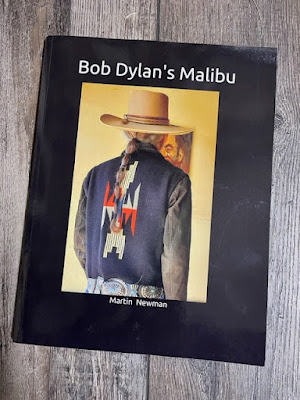
A Few Comments on Bob Dylan's Malibu by Martin Newman

Anyone half paying attention will have noticed a lot of new Dylan books have been appearing in recent years. What's interesting is how each one has its own angle. The history of the Never Ending Tour, the stories behind specific albums, or even specific songs... One of my favorites--as far as an unusual angle for a Dylan volume--was the Mary Lee Kortes book Dreaming of Dylan in which she shares 115 dreams people have had in which Dylan showed up. 

Then there are the contributions from people close to Bob at various sections of his life. I just recently started Suze Rotolo's A Freelwheelin' Time, for example. Peter McKenzie's account of Bob's first months in New York--Bob Dylan: On a Couch and Fifty Cents a Day--similarly adds insights that you won't find in other books because Bob crashed on his family's couch for several months after first arriving at the Big Apple and was like the older brother that he never had. In Dylan & Me (by Herzl Camp friend Louis Kemp during Bob's teen years) I finally learned who Bob was with the night he went to see Buddy Holly and his Winter Dance Party Tour.

All of those books were personal, because they were written by people with a personal relationship to Dylan for a period of time. Which brings us to Bob Dylan's Malibu by Martin Newman. For the record I am not related to Martin Newman. (Neither am I related to Paul Newman, Randy Newman or, to my knowledge, any of the other Newmans associated with Hollywood. 

I acquired Newman's book in the spring of 2021 and read it in a single sitting shortly after our 2021 Duluth Dylan Fest was a wrap. My copy is a large format paperback on what appears to be a Mountie Matte paper, ideal for printing photographs, which is what this book essentially is, a picture book accompanied by anecdotes and related stories. The accompanying subtitle reads, "My time with him in the 1970's."

The author is an obviously multi-faceted man who through a "simple twist of fate" ended up becoming intertwined with Bob Dylan as the famous songwriter/performer took up residence in Malibu. The occasion for this book was Bob's 80th birthday. In it he shares stories and photos of a variety of interesting project he worked with Bob on, including clothing (the jacket Dylan is wearing on the cover of the Basement Tapes album), gifts they shared with one another, and numerous acquisitions for Bob's new digs like fun house mirrors, a 1947 Wurlitzer, special gifts for Sara, etc.

This is the kind of book that would be of interest to fans looking to get a few more rare, intimate glimpses of a more private side of Bob Dylan. You learn a lot more about a person by visiting their home than by having them as a guest at yours. 

The structure seems a bit like that of an old man reflecting on his youth while going through a photo album. The author points to a photo and says a little about the story behind it, then turns to another page of photos, singles out another and tells another story. 

It seems evident that Marty became part of Dylan's life because he could be trusted. He respected Bob's privacy and thereby became an asset in helping make a magnificent piece of property into an even more splendid residence. 

I remember from other reading that the house took three years to prepare for moving in, and seem to recall there was a lot of conflict generated by the delays, possibly contributing to Sara's departure. Because of that memory I look at these photos with a bittersweet sensation. The book, published by EDLIS Cafe Press, does offer fresh insights into a part of Dylan's life history that are only hinted at in other books. 

* * * 

Sunday, January 16, 2022

Insights and Observations from Napoleon Bonaparte: A Baker's Dozen

The Emperor in His Study.
Jacques-Louis David
I once read that Napoleon Bonaparte was the most written about man of the 19th century. More than 100,000 books were penned. This alone should signal that he was more than just a famous general. He began his life as the second son of a minor provincial family in Corsica. Circumstances and ambition helped him rise to become Emperor of France. With a firm hand he ended the insanity of the French Revolution and its beheading of aristocrats. Once France had been stabilized he set about to establish an education system, improve the infrastructure and set in place the Napoleonic Code.

What I found striking was how much of an original thinker he was. According to military historians, of the top 20 most brilliant battles in world history (based on strategy) Napoleon was the general who conceived and executed 12 of these. That's a pretty impressive statement. 

Anyways, all I wished to accomplish here was to share a dozen quotes from this historic figure. (EdNote: I am not attempting to hold him on a pedestal in every respect, for I am conscious of his shortcomings. Most of these quotes still have relevance today, for individuals and for nations.)

* * * 

The reason most people fail instead of succeed is they trade what they want most for what they want at the moment.

EdNote: An early example of the principle of deferred gratification.

                                                * * * 

All great events hang by a hair. The man of ability takes advantage of everything and neglects nothing that can give him a chance of success; whilst the less able man sometimes loses everything by neglecting a single one of those chances.
                                                 * * * 

The barbarous custom of having men beaten who are suspected of having important secrets to reveal must be abolished. It has always been recognized that this way of interrogating men, by putting them to torture, produces nothing worthwhile. The poor wretches say anything that comes into their mind and what they think the interrogator wishes to know.

EdNote: So why were we still waterboarding in the 21st century?

                                  * * * 

A form of government that is not the result of a long sequence of shared experiences, efforts, and endeavors can never take root.

EdNote: How did we think we could somehow turn Afghanistan into a modern democracy?

                                   * * * 

From the sublime to the ridiculous is but a step.

EdNote: Do we not see this born out daily on social media?

                                       * * *  

The word impossible is not French.

EdNote: Is this the origin of Possibility Thinking?

Corollary: Perhaps this is why the French generals kept sending waves of infantry with only rifles and bayonets to assault German machine guns in WWI. 

                                                 * * * 

As a rule it is circumstances that make men.

EdNote: As I look back on my career, it is apparent that my greatest successes were as much due to circumstances that gave me the opportunity to thrive. 

Corollary: Good leaders understand that they can get the best from their team by creating a culture where their employees have the opportunity to really achieve something.

                                    * * *  

Napoleon before the Sphinx. Photo: G. Firstenberg
The only way to lead people is to show them a future: a leader is a dealer in hope.

EdNote: "Optimism is the faith that leads to achievement; nothing can be done without hope."--Helen Keller

                                 * * * 

Conscience is the most sacred thing among men. Every man has within him a still small voice, which tells him that nothing on earth can oblige him to believe that which he does not believe. 

                                     * * *  

Man loves the marvelous. It has an irresistible charm for him. He is always ready to leave that with which he is familiar to pursue vain inventions. He lends himself to his own deception.

Today we call this the "Shiny New Toy" syndrome

                                      * * *  

A man who has no consideration for the needs of his men ought never to be given command.

EdNote: Amen.

                                       * * *  

What then is, generally speaking, the truth of history? A fable agreed upon.

                                        * * *  

My most splendid campaign was that of March 20; not a single shot was fired.

                                         * * *  

EdNote: The painting of Napoleon gazing on the Sphinx is by Jean-Leon Gerome, 1886. It is not a photo by Gary Firstenberg.


For more quotes from Napoleon Bonaparte, visit:

Friday, July 16, 2021

14 Winston Churchill Quotes to Ponder and Digest

My current readings include an excellent audiobook called Churchill & Orwell: the Fight for Freedom, by Thomas E. Ricks. The book goes back and forth from one to the other, sharing details regarding the experiences that formed each one. Neither was remarkable, in this author's view, until they reached the pinnacle of their respective powers -- Churchill to carry England through its darkest hour, Orwell to write the two great novels he's remembered by, Animal Farm and 1984.

I've reached the point in the book where Churchill has taken charge, pretty much against all odds, and must inspire England to rise up or be doomed. Some of his most powerful speeches are shared, and it sent me to seek out more quotes worthy of re-visiting. 

Most of these are excerpts from lengthier passages from his writings, or from his speeches. And I will start with this one because it serves as a justification of sorts for this habit of mine of sharing quotes.

* * * 

It is a good thing for an uneducated man to read books of quotations. Bartlett's Familiar Quotations is an admirable work, and I studied it intently. The quotations when engraved upon the memory give you good thoughts. They also make you anxious to read the authors and look for more.

* * *

What is the use of living, if it be not to strive for noble causes and to make this muddled world a better place for those who will live in it after we are gone?

* * *

Broadly speaking, human beings may be divided into three classes: those who are toiled to death, those who are worried to death, and those who are bored to death.

* * * 

War arises from both sides feeling they have a hope of victory.

* * * 

A free Press is the unsleeping guardian of every other right that freemen prize; it is the most dangerous foe of tyranny.

* * * 

We live in a country where the people own the Government and not in a country where the Government owns the people. Thought is free, speech is free, religion is free, no one can say that the Press is not free. In short, we live in a liberal society, the direct product of the great advances in human dignity, stature and well-being which will ever be the glory of the nineteenth century.

* * *

The shores of History are strewn with the wrecks of Empires.

* * * 

Never in the field of human conflict was so much owed by so many to so few.
--Tribute to the fighter pilots who defended England

* * * 

Here is the answer which I will give to President Roosevelt: Put your confidence in us. ... We shall not fail or falter; we shall not weaken or tire. Neither the sudden shock of battle, nor the long-drawn trials of vigilance and exertion will wear us down. Give us the tools and we will finish the job.

    * * * 

    Never give in — never, never, never, never, in nothing great or small, large or petty, never give in except to convictions of honour and good sense. Never yield to force; never yield to the apparently overwhelming might of the enemy.

    * * * 

    Addressing a joint session of the U.S. Congress, 1943
    The price of greatness is responsibility.

    * * * 

    When I see the present Socialist Government denouncing capitalism in all its forms, mocking with derision and contempt the tremendous free enterprise capitalist system on which the mighty production of the United States is founded, I cannot help feeling that as a nation we are not acting honourably or even honestly.

    * * * 

    Socialism is the philosophy of failure, the creed of ignorance and the gospel of envy.

    * * * 

    Personally, I am always ready to learn, although I do not always like being taught.

    * * *

    I like learning, too. I just seem to be a little slow at it sometimes. 

    Thursday, August 6, 2020

    10 Maxims That Helped Me Through Three Decades in Corporate America, Plus Seven More from the Ether

    Illustration by the author.
    I stumbled upon a web page with 70 Maxims of Maximally Effective Mercenaries and it brought to mind my own article Nine Maxims that Carried Me Through Three Decades in Corporate America. The maxims--sayings I'd internalized over the years--are listed here, but the manner in which I applied them and thought about them are expanded on in the article via the above Friend Link (blue text).

    I added a tenth to this list (#8), which is not included in the article.

    1. An Idea is only as good as its execution.
    2. You can’t manage what you don’t measure.
    3. The butler who folds his hands spills no tea.
    4. A good plan today is better than a perfect plan tomorrow.
    5. Small companies don’t win by spending like big companies.
    6. Listen to the quiet people.
    7. A stitch in time saves nine.
    8. Don't major on minors.
    9. There are no silver bullets
    10. Slow & steady wins the race, so keep that slow and steady pace.

    You can find the amplified version here.

    * * * *

    You can capture the flavor of the 70 Maxims of Maximally Effective Mercenaries by the seven I've pulled out here. I was tempted to change the name to 70 Maxims of Maximally Effective Machiavellians which also plays off the "M" alliteration without significantly altering the intent.

    The Seventy Maxims of Maximally Effective Mercenaries

    12. A soft answer turneth away wrath. Once wrath is looking the other way, shoot it in the head.

    21. Give a man a fish, feed him for a day. Take his fish away and tell him he's lucky just to be alive, and he'll figure out how to catch another one for you to take tomorrow.

    30. A little trust goes a long way. The less you use, the further you'll go.
    (The essence of modern Machiavellian politics in a nutshell.)

    33. If you're leaving tracks, you're being followed.

    42. "They'll never expect this" means "I want to try something stupid."

    43. If it's stupid and it works, it's still stupid and you're lucky.

    66. Necessity is the mother of deception.

    68. Negotiating from a position of strength does not mean you shouldn’t also negotiate from a position near the exits.

    See All 70 Here.

    The book these were extracted from was originally called The Seven Habits of Highly Effective Pirates, but in January 2011, Howard Tayler received a cease and desist letter from Franklin Covey, stating that Franklin Covey has a trademark on the phrase "7 Habits". Tayler then edited all dialog in the strip that mentioned the book's title or its rules, in what he called the Great Retcon of 2011. (I share this last anecdote in the event you were planning a book that begins with the words "7 Habits.")

    PARTING SHOT
    The inspiration for my original 9 Maxims article was Colin Powell's Leadership Primer. You can go to this page and download a great PowerPoint.

    Wednesday, July 15, 2020

    Wayback Wednesday: A Quick Post from 12 Years Ago This Month

    You only live once, but if you do it right, once is enough. — Mae West

    If you bathroom scale broken, turn it into art.
    This post from 25 July 2008 was originally titled Disclaimer.

    Please note... I do not have my philosophy/world view all of one piece. I am inconsistent, both in my life and in my statements. For example, I do not believe in violence, but do believe that it was necessary to oppose Hitler with arms. The U.S. could not have remained isolationist and survived the 20th century. Or so it would appear to me. Ultimately, one does the best one can.

    Ennyman's Territory may likewise contradict itself at times. My aim has been to help people think, and to offer insights, information and new angles for viewing information, events and other cultural phenomenon. I welcome dialogue, and thereby hope to refine and clarify our mutual understanding.

    Knowing how few readers there are here, I realize that I am standing on a very small soap box. It's my aim to use the process of putting my ideas into words as a tool to better understand myself, and in some small way you as a reader will benefit as well.

    Many issues are presented to us as Either/Or which I believe are better considered as Both/And. Here, for example, is one of them.

    LINAG
    Life Is Not A Game.

    LIAG/PTW
    Life Is A Game. Play To Win.

    Namaste.
    I am... your humble servant.

    Monday, April 15, 2019

    Understanding Failed States

    Photo by Seth Doyle on Unsplash
    This past week I stumbled on a Medium article titled Why Some States Fail by a writer named D. Andre. It was immensely fascinating for me because it presented in a fairly concise manner the causes of failed states.

    "Failed state" is one of those phrases that gets bandied about that many people do not have a clear definition of in their minds. In fact, there are a lot of things that get talked about in which words or ideas are used, but people have fuzzy ideas about. For fear of appearing stupid they don't dare ask (let's say it is a meeting or work or just a bull session) and later the moment slides and we're flitting into other topics or activities.

    As a result, people absorb all manner of ideas uncritically, even without fully understanding their implications.

    All this to say, Failed States can be defined in this manner:
    A failed state is a state whose political or economic system has become so weak that the government is no longer in control.

    What I like about the Medium platform, and blogging in general, is the opportunity to engage the author, the ease with which you may comment and request sources or links to additional reading.

    There are people who have studied these kinds of topics in depth, but like economics in general, it seems tedious and boring compared to Monday Night Football or (choose your poison). And yet, 97% of the electorate will make decisions as regards our country's leadership with limited to no understanding of many basics essential to what makes a country succeed or fail. This is a potential downside to democracies.

    * * * *

    THE ACTUAL REASON I want to write about failed states today though was not for political purposes. Rather, it was because as I read Andre's article, along with a Foreign Policy article 10 Reasons Countries Fall Apart, it stimulated my thinking as regards reasons why companies fall apart. I wondered if failed states and failed businesses have some things in common. For example, why did GM and Chrysler require a federal bailout and Ford did not? (There are reasons!)

    If, however, I am to use failed states as a metaphor for failed businesses, it seemed a useful idea to lay the groundwork here so that in my next exploration of this theme (failed companies) I can refer back to these articles and ideas related to failed states.

    Foreign Policy and the Fund for Peace have been annually publishing a Failed States Index, listing the most vulnerable or broken countries in the world. It's eye-opening, and many of the names are familiar to anyone who has been followed the news these past 40 years. Observers have noted that failed states have a number of common attributes.

    A fragile state has several attributes. Common indicators include a state whose central government is so weak or ineffective that it has little practical control over much of its territory; non-provision of public services; widespread corruption and criminality; refugees and involuntary movement of populations; and sharp economic decline.  

    I know that we are unhappy with our potholes in Duluth. Things could be worse.

    TO BE CONTINUED

    * * * *

    Related Links
    10 Reasons Countries Fall Apart
    Failed States Index
    Why States Fail

    Saturday, April 13, 2019

    For My Artist Friends: Rich and Rewarding Insights Directly from the Mouth of Picasso

    Public domain.
    "When I was a child my mother said to me, 'If you are a soldier, you will become a general. If you are a monk, you will become the Pope.' Instead, I was a painter, and became Picasso." (1)

    This isn't the first time I have been to Wiki Quotes, but it is the first time I've explored it. For years, whenever I looked for a Picasso quote I would find the same few, like how it takes a lifetime to learn how to paint like a child again, or this one from Life Magazine in 1964:

    "Art washes away from the soul the dust of everyday life."

    At Wiki Quotes I found a gold mine of Picasso quotes, and furthermore, they reveal deeper layers of this man who by virtue of his fame became a caricature of himself. Here is a great insight from that page as regards understanding Cubism, or any other contemporary art movement.

    Cubism is no different from any other school of painting. The same principles and the same elements are common to all. The fact that for a long time cubism has not been understood and that even today there are people who cannot see anything in it, means nothing. I do not read English, and an English book is a blank to me. This does not mean that the English language does not exist, and why should I blame anyone but myself if I cannot understand what I know nothing about?

    The highlighted part is rich. A lot of people don't "get" modern art or abstract art. As Picasso points out, there is a language to some kinds of art, and if you are not well-versed in the language,  it may not speak to you.

    Here is another insight.

    Picasso in front of his painting L'Aficianado, 1912. 
    I also often hear the word 'evolution'. Repeatedly I am asked to explain how my painting evolved. To me there is no past or future in my art. If a work of art cannot live always in the present it must not be considered at all. The art of the Greeks, of the Egyptians, of the great painters who lived in other times, is not an art of the past; perhaps it is more alive today than it ever was. Art does not evolve by itself, the ideas of people change and with them their mode of expression. (Paris 1923)

    * * * *

    When I read this next quote I thought immediately of Dylan, whose lyrics at times have been often considered obscure and not easily understood. As many Dylan fans and scholars have repeated over the years, Dylan doesn't like to or feel it necessary to explain his songs.

    It isn't up to the painter to define the symbols. Otherwise it would be better if he wrote them out in so many words! The public who look at the picture must interpret the symbols as they understand them.

    Here's Picasso's response when asked to explain the symbolism in Guernica.

    ...this bull is a bull and this horse is a horse... If you give a meaning to certain things in my paintings it may be very true, but it is not my idea to give this meaning. What ideas and conclusions you have got I obtained too, but instinctively, unconsciously. I make the painting for the painting. I paint the objects for what they are.

    * * * *
    Here's another interesting observation about understanding a painting.

    Everyone wants to understand painting. Why don't they try to understand the song of the birds? Why do they love a night, a flower, everything which surrounds man, without attempting to understand them? Whereas where painting is concerned, they want to understand. Let them understand above all that the artist works from necessity; that he, too, is a minute element of the world to whom one should ascribe no more importance than so many things in nature which charm us but which we do not explain to ourselves. Those who attempt to explain a picture are on the wrong track most of the time. Gertrude Stein, overjoyed, told me some time ago that she had finally understood what my picture represented: three musicians. It was a still life!! [Boisgeloup, winter 1934].

    * * * *

    (1) As quoted in Life with Picasso, by François Gilot, 1964, p. 60
    For more details on the quotes cited above, visit Wikiquote Picasso.

    Saturday, January 6, 2018

    Why Bob Dylan Matters: New Book Brings Still More Insight Into His Genius

    2017 was yet another good year for Dylan literature. Late fall as I began reading a friend's copy of Richard F. Thomas' Why Bob Dylan Matters, I put it aside till I could acquire my own copy so I could underline passages and write notes in the margins. Evidently the author, a George Martin Lane Professor of the Classics at Harvard, teaches a class on Dylan which is nicknamed "Dylan 101" and called the "the coolest class on campus."

    I read once that 100,000 books were written about Napoleon, the most written about person in the 19th century. One question this stat brings to mind might be, "What did all these author say that had not already been said?" And even though Dylan literature hardly compares to Napoleon in volume, the same question does emerge. It's probably something akin to scientists sharing new research on an old phenomenon. There's always a new angle or it wouldn't be relevant, and the lens through which Thomas peers does bring new revelations, new insights on Dylan's genius.

    Genius
    1. exceptional intellectual or creative power or other natural ability.
    2. a person who is exceptionally intelligent or creative, either generally or in some particular respect.

    Some may chafe a bit at the use of the word genius, which Thomas uses to describe Dylan, but when you read the dictionary definitions, it's apparent that Albert Einstein was not the only genius of the past century, and that if a word is overused (see my rant against the word awesome) this doesn't necessarily mean it's inaccurate. In point of fact, the Nobel Prize was to some extent a ratification of his genius. (I'm guessing that Dylan himself would shuffle his feet and look a bit self-conscious about all this mumbo-jumbo adulation. Oh well.)

    * * * *
    When you read this book you encounter the mind of a man whose expertise is Classical poetry. When Pro. Thomas listened to Dylan he had a background most of the rest of us did not have, total familiarity with Homer, Virgil, Ovid, Cicero and their Greek and Roman comrades. As a result, he heard echoes, with connections most of us would have never made. At the very beginning of the book Thomas writes:

    For the past forty years, as a classics professor, I have been living in the worlds of Greek and Roman poets, reading them, writing about them, and teaching them to students in their original languages and in English translation. I have for even longer been living in the world of Bob Dylan's songs, and in my mind Dylan long ago joined the company of those ancient poets. He is part of that classical stream whose spring starts out in Greece and Rome and flows down through the years, remaining relevant today, and incapable of being contained by time or place. That's how Dylan matters to me, and what this book is about.

    * * * *
    The book is surprising on several levels. First, it is so accessible. If you fear boring erudition from a Harvard prof, you needn't worry. The guy who wrote it is quite down-to-earth and despite his titles and career, he is a fan who knows how to be one of us. Second, he sheds a brighter light on the plagiarism charges that some leveled against our contemporary Bard, noting that what Dylan was doing has literary precedents and is called intertextuality. Finally, we get new insights into many of the songs which we have been enjoying because, gosh darn, what he has been doing is more amazing than we even realized.

    At this point in time there are few reviews at Amazon.com, in part because it is so new and perhaps in part because... ? It's a small enough quantity of comments that you'll get a good sense of where you find yourself with regard to making this a must have for your Dylan library or not.

    * * * *
    FOR WHAT IT'S WORTH DEPARTMENT
    Preparations for 2018 Duluth Dylan Fest have been ongoing since last summer here in Duluth. A theme has been finalized and a schedule of events assembled. The week will kick off with a concert for the Armory on Saturday May 19 and will continue through Sunday May 27. Music, art, poetry, and more music... Mark your calendars.  Highlights always include the Singer-Songwriter competition and the Blood On The Tracks Express.

    Meantime life goes on all around you. Engage it.

    Popular Posts